



iPadOS 26 Review: What Changed and Who Benefits Most
For power users, three blockers kept coming up whenever the iPad-as-primary-device conversation started: multitasking designed around caution rather than productivity, file management that made basic organization a chore, and the inability to run demanding background processes without babysitting the screen. This iPadOS 26 review tests whether Apple finally fixed all three. What Apple described as its "biggest iPadOS release ever" shipped in September 2025 as a free update, and the honest answer is: mostly yes, with specific exceptions that still matter for specific people.
The update's compatibility is worth stating plainly. Apple made iPadOS 26 available from the 8th-generation iPad through every current Pro model, per Apple's June 2025 announcement. As The Verge wrote, the biggest reason the 2025 iPad Pro feels different isn't the M5 chip but iPadOS 26, which any owner of last year's Pro also received for free.
One scoping note: Apple Intelligence capabilities require M1-or-later iPads or the iPad mini with A17 Pro, per Apple's compatibility documentation. The windowing system, Files overhaul, and Background Tasks framework run on the full supported device list. That's where this review focuses.
iPadOS 26 multitasking: a windowing mode that finally makes sense
The new windowing system is where iPadOS 26 departs most sharply from what came before. Stage Manager, introduced in iPadOS 16, had a concept of "stages" that never mapped cleanly onto how most people think about managing multiple applications. The replacement is closer to how desktop windowing has worked for decades: free resizing to any dimensions, placement anywhere on screen, up to 12 apps open simultaneously in a single view, and Mac-style traffic-light buttons to close, minimize, or expand individual windows, as 9to5Mac described. Apps remember their last size and position when reopened, per Apple's feature documentation, which sounds minor until you stop having to manually resize the same app every time you return to it.
Ars Technica called the system "more powerful, flexible, and predictable" than Stage Manager and noted it runs on a wider range of iPads than Stage Manager ever did. That broader support matters: Stage Manager always felt like a Pro-tier experiment; the new windowing mode is built for the whole lineup.
The iPadOS 26 vs Stage Manager distinction is also visible in how commands are now surfaced. A new menu bar appears with a swipe from the top edge or by moving a cursor there, developer-customizable per Apple's June 2025 newsroom post. That's a direct macOS convention transplanted to iPad. Window tiling to view up to four apps at once takes a single gesture; Exposé spreads everything across the screen for a visual overview. Apple didn't retire Stage Manager either the new system integrates with it for grouped window workflows and extends across external displays. The result is additive rather than a forced replacement.
For anyone who uses a Mac or a Windows PC regularly, the new system will feel immediately recognizable. That's the point.
What still feels unfinished
Apple's transition wasn't entirely clean, and this is where the review earns some credibility.
The initial iPadOS 26 release removed both Split View and Slide Over the older side-by-side and floating-window modes that had been iPad multitasking staples for years. Split View was reproducible in the new system without much adjustment. Slide Over had no obvious equivalent, which left a vocal segment of users without a workflow they'd built habits around. After user objections on Reddit and elsewhere, Apple restored a version of Slide Over in the iPadOS 26.1 developer beta, Ars Technica reported. Apple learned quickly that replacing a habit is harder than replacing a feature.
The restored Slide Over is repositionable and resizable like any other window in iPadOS 26, but it supports only one app at a time. The old version let you stack multiple apps in the Slide Over interface and swipe between them that behavior is gone. For users who kept a calculator, a messaging app, and a reference document rotating through Slide Over during a work session, the new version is a step back in that specific regard.
The episode illustrates something true about software transitions at this scale: the new model is strong enough to handle most use patterns, but not yet complete enough to retire everything it replaced. iPadOS 26.1 was the correction; there may be more refinements ahead.
Does iPadOS 26 make the iPad feel like a computer?
This is the question the update was designed to answer, so it deserves a direct response rather than one distributed across five sections.
For most tasks, yes. The windowing system removes the cognitive overhead that made iPad multitasking feel like a puzzle. Windows behave the way windows are supposed to behave: resize, drag, stack, tile, dismiss. The menu bar gives app commands a consistent location. Exposé provides a real overview of what's open. Taken together, the experience is no longer iPad-specific in a way that requires unlearning desktop habits. That's a genuine shift.
Where the illusion breaks is specific and worth naming. App support for Background Tasks still depends on developer adoption, so the gains for long-running processes are real but not universal. The App Store ceiling is the harder constraint: you cannot download software from outside it, which means your experience is bounded by what developers have built for iPadOS, per 9to5Mac's assessment. No terminal. No full desktop-class development environments. No routing multiple simultaneous audio sources. These aren't bugs Apple will patch they're structural decisions about what iPadOS is.
The Verge summarized it accurately: iPadOS 26 makes clear Apple thinks of the iPad as more or less a laptop, but for someone who needs a general-purpose computer, a Mac remains the better recommendation. Those two things can both be true.
File management and workflows: much closer to desktop-class
Weak file management was, for years, one of the most credible arguments against iPad as a primary work machine. iPadOS 26 substantially addresses it.
The Files app now supports fully customizable column views with resizable, sortable columns matching what Mac users have had in Finder for years and any folder can be pinned directly to the Dock for immediate access to iCloud directories, shared folders, or downloads, per Apple's June 2025 announcement. 9to5Mac called the result "desktop class". The Verge's take was more direct: "You can find things in Files now."
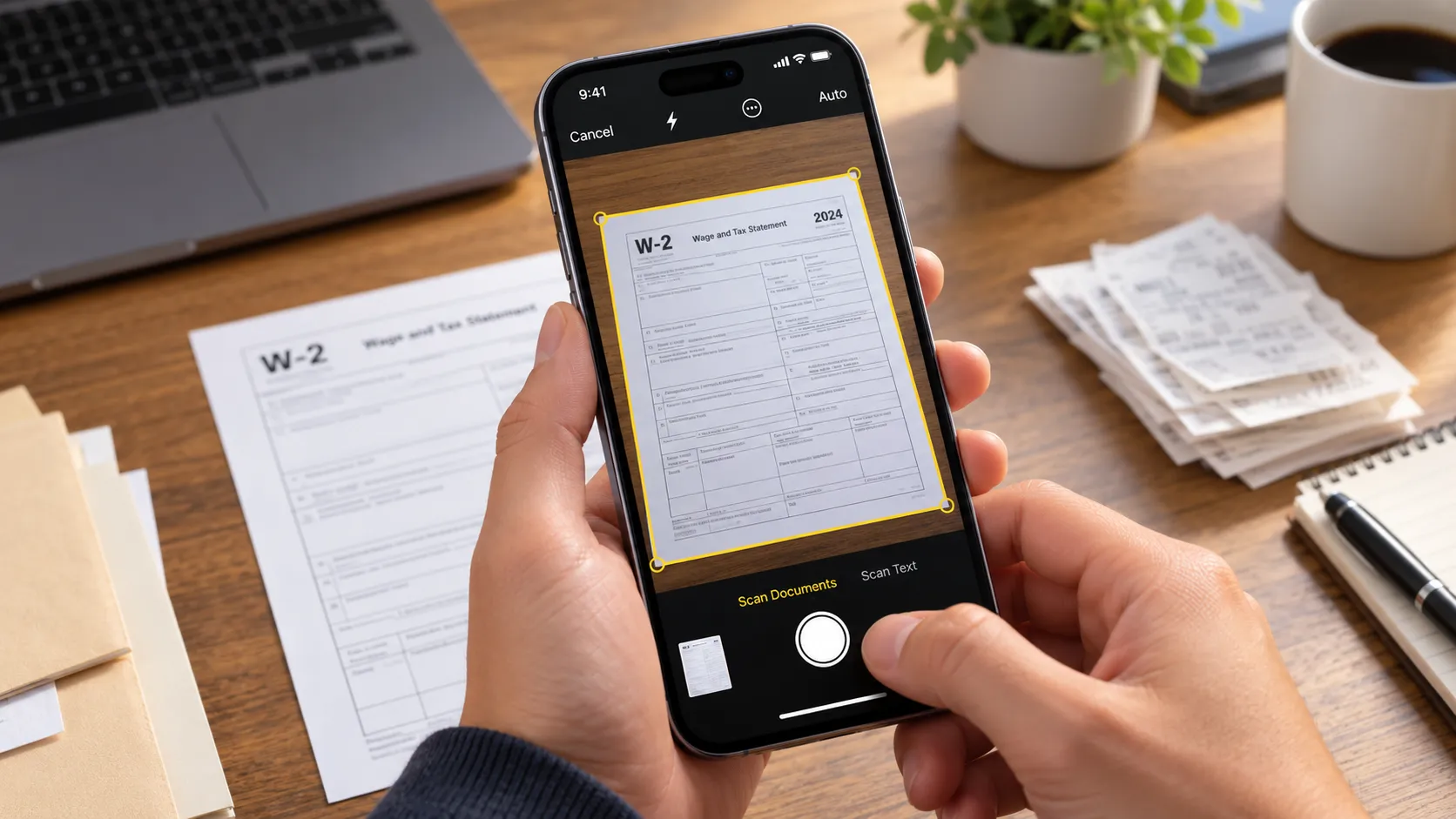
Two additions carry more weight than a feature list suggests. First, users can now designate default apps for specific file types a basic capability every desktop OS has offered for decades, confirmed in Apple's September 2025 feature documentation. Second, Apple brought the Preview app to iPad, enabling native PDF viewing, annotation, Apple Pencil markup, and AutoFill for forms, per Apple's June 2025 announcement. iPad users previously had no first-party equivalent to Preview; its absence was a concrete daily friction point for anyone handling contracts, academic papers, or annotated documents.
Background Tasks are the most functionally significant addition for creative and production work. Before iPadOS 26, running a video export of 10 to 20 minutes required keeping the exporting app in the foreground the entire time leaving it caused the export to fail, effectively locking the iPad for the duration, as 9to5Mac described. Those processes can now run in the background, surfaced through Live Activities, via an updated API available to developers per Apple's June 2025 newsroom post. The important caveat: this works only in apps that have been updated to support it. The capability is real, but its practical reach depends on developer adoption.
For solo audio and video workflows in apps that implement Apple's APIs, the additional granular controls are genuinely useful per-app microphone selection, Voice Isolation for cleaner recordings, and local capture for video conferencing.
Who iPadOS 26 actually changes the iPad for
The case for "yes, the iPad works now" is strongest for a specific set of users: students, writers, document-heavy administrators, and creative professionals whose primary tools have established, well-maintained iPad apps. For those people, windowing that doesn't require memorizing modes, file management that stops fighting you, and the ability to export in the background while doing something else those three changes remove the concrete friction points that previously made sustained iPad work feel like a workaround.
The price accessibility is worth noting. 9to5Mac pointed out that a $299 A16 iPad now runs the same windowing system, the same rebuilt Files app, and the same Background Tasks framework as the $1,299 Pro. The most consequential iPad upgrade of 2025 required no new hardware at all.
The case for "not yet" is equally specific. Developers working in code editors, engineers who need terminal access, advanced audio producers routing multiple simultaneous sources, and anyone dependent on software that simply doesn't exist in the App Store will still find the Mac is the more functional tool. These aren't edge cases they're a real and defined population of users. 9to5Mac was explicit that limited system-level control and the App Store ceiling remain genuine constraints for anyone trying to use iPad as a full-time computer.
To put it as a clean split:
Better fit now: Writers, editors working in supported apps, PDF-heavy workflows, students, administrators, content creators whose production tools have solid iPadOS support.
Still buy a Mac: Developers, audio engineers running complex multi-source setups, anyone whose essential software isn't available on the App Store.
The bottom line
iPadOS 26 doesn't settle the laptop-replacement debate. What it does is change who that question is relevant for. The windowing system works; the file manager works; background processing works for apps that support it. Those things weren't true before, and Ars Technica's description of the new multitasking as "more powerful, flexible, and predictable" than Stage Manager reflects a functional advance, not a cosmetic one.
The remaining limits no terminal, no sideloading, no multiple simultaneous audio sources, no desktop-class development environments are real, but bounded. They define a specific user population, not the whole market.
The more interesting question now isn't whether the iPad can imitate a laptop. It's whether your work depends on the parts of computing Apple still withholds. For a growing range of users, the answer is no. iPadOS 26 didn't turn the iPad into a Mac. It let the iPad stop pretending it was something less than it actually is.



Comments
Be the first, drop a comment!