





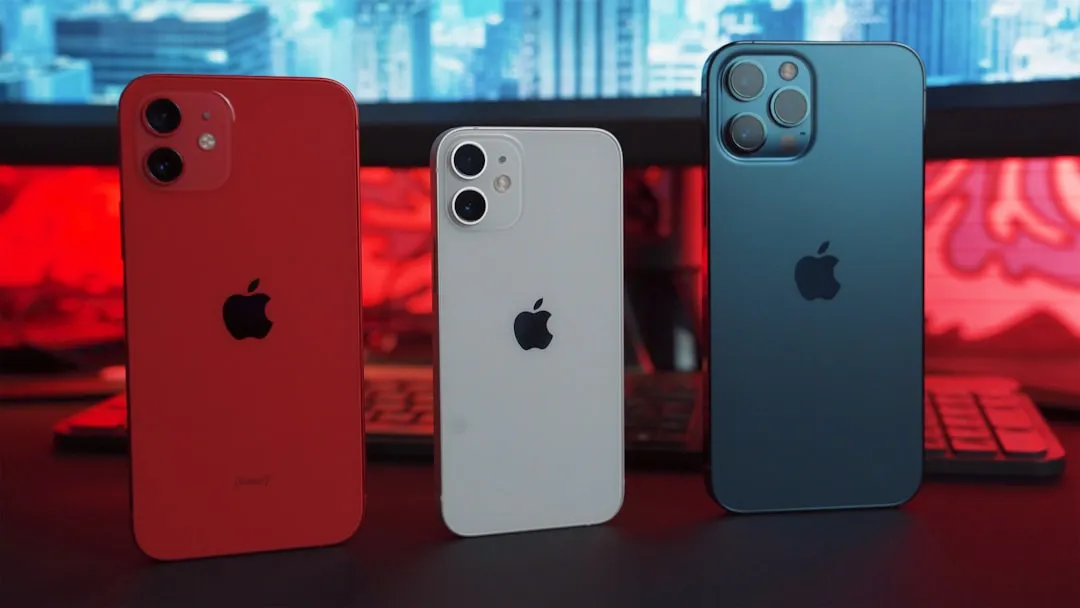
iPhone 17 Pro Fastest Charging Smartphone, CNET Test Finds
CNET ran 33 smartphones through identical 30-minute charging sessions, scored each device on both wired and wireless performance, then averaged the two results into a single ranking. The iPhone 17 Pro came out on top as the fastest-charging smartphone overall. On a cable alone, Samsung's Galaxy S26 Ultra still beats it and understanding that distinction matters more than the headline.
The lab's protocol was rigorous: every device started at 10% battery or lower, paired with a charger matched to its maximum supported speed. For wireless, that meant Qi at 7.5W, Qi2 at 15W, or Qi2.2 at 25W, whichever the phone actually supports. Apple's Qi2.2 compatibility went head-to-head against Android's best-supported wireless standard, not a generic charging pad, per CNET's published results.
The iPhone 17 Pro scored 74% wired and 55% wireless in 30 minutes. The Galaxy S26 Ultra won the wired session at 76% but reached only 39% wirelessly, MacRumors reported. Average those numbers and Apple wins. Whether that outcome maps to your charging life depends entirely on how you plug in.
Why Apple's battery size shapes the numbers before you read the headline
The iPhone 17 Pro carries a 4,252mAh battery, meaningfully smaller than the Galaxy S26 Ultra's. In a test that measures percentage of battery gained rather than absolute energy delivered, a smaller battery reaches higher percentages faster, even when both phones move similar watt-hours in the same window. CNET identified battery size as a contributing factor in the iPhone 17 Pro's overall result, as MacRumors noted.
Digital Trends addressed this directly in a September 2025 charging comparison, using a "mAh per minute" metric that divides battery capacity by full-charge time. The purpose is to separate charging speed from battery size when comparing devices across different capacity classes. CNET's percentage-based scoring doesn't apply that correction, which is worth understanding before treating the headline ranking as a measure of raw power throughput.
The OnePlus 15 makes the gap concrete. It recharged 72% of a 7,300mAh silicon-carbon battery, nearly double the iPhone 17 Pro's capacity, in 30 minutes using a proprietary 80W charger, according to MacRumors. By percentage, the iPhone 17 Pro leads. By actual energy moved in half an hour, the comparison looks quite different. Both facts are true; the ranking table reflects only one of them.
The broader lineup numbers tell a similar story. Apple averaged 54.6% across its five tested phones the four iPhone 17 models plus the iPhone Air while Samsung's nine-phone average came in at 38.5%, with the Galaxy S26 Ultra as its strongest performer and the Galaxy Z Fold 7 as its weakest at 29%, MacRumors reported. Apple's consistency across its lineup is a real advantage, though the smaller battery sizes across that lineup make the fleet average harder to compare directly against Android's more varied capacity range.
iPhone 17 Pro vs Galaxy S26 Ultra charging: wired and wireless tell different stories
The 74% wired result, two points behind Samsung, was earned through steady generational gains. ChargerLAB testing found the iPhone 17 Pro Max peaks at around 36W wired, roughly 20% higher than the iPhone 16 Pro Max's ceiling of approximately 30W, as 9to5Mac reported in November 2025. That same 9to5Mac report noted the iPhone 16 Pro had itself represented about a 20% gain over the iPhone 15 Pro two consecutive generations of roughly 20% wired speed improvements, compounding into the near-top result CNET measured.
Apple claims the iPhone 17 Pro can reach 50% in 20 minutes with a compatible charger, per MacRumors' earlier charger testing. For context, the iPhone 16 Pro took 30 minutes to hit that same threshold. That 10-minute reduction is the most practical measure of how much faster the iPhone 17 Pro actually charges day-to-day, regardless of where it ranks against Samsung.
The wireless result is where Apple separated itself from the field. The iPhone 17 Pro's 55% in 30 minutes reflects both 25W Qi2.2 support and the magnetic alignment system that keeps the charging coil locked in position throughout the session. CNET attributed part of that advantage to the magnets preventing alignment drift, which costs efficiency on Android devices that rely on physical placement alone, per CNET's test data. The next four spots in the wireless rankings all went to Apple: Pro Max at 53%, iPhone 17 at 49%, iPhone Air at 47%, and then the Galaxy S26 Ultra at 39%.
That 16-point wireless gap between the iPhone 17 Pro and the Galaxy S26 Ultra is large enough that it isn't close to being washed out by test variation. Samsung's 60W wired speed is genuinely faster; Apple's magnetic wireless architecture is genuinely better. The CNET methodology, which weights both modes equally, rewards the phone that wins the latter by a wider margin.
One practical detail worth stating plainly: the Dynamic Power Adapter isn't required to reach peak charging performance. Digital Trends measured approximately 35W sustained charging with standard third-party USB-C chargers, and ChargerLAB's testing via MacRumors confirmed peak speeds of around 36W are achievable with Apple's 61W, 67W, 70W, 96W, and 140W adapters. The Dynamic Power Adapter's main distinction is a 60W burst phase for approximately the first 20 minutes before stepping down to 40W. Digital Trends found that the adapter "won't offer a significantly different experience" compared to other capable USB-C chargers tested. A quality USB-C brick most people already own gets you most of the way there.
The iPhone Air offers a useful contrast within Apple's own lineup. It's capped at 20W wired charging, reportedly for thermal management in its ultra-thin chassis, half the speed of the iPhone 17 Pro, yet it still finished fourth in the wireless rankings at 47%, according to Digital Trends. The wired ceiling isn't an oversight it's the cost of the physical design, and the wireless result suggests Apple made up some of that ground through the same magnetic alignment advantage.
What the ranking means for how you actually charge
The iPhone 17 Pro's CNET title reflects genuine hardware progress. Apple cut the time to reach 50% from 30 minutes down to 20 minutes versus the previous generation, finishes within two percentage points of Samsung's fastest wired result, and leads the wireless field by 16 points, per CNET.
The practical answer splits cleanly by charging habit. Cable-first users: Samsung's Galaxy S26 Ultra still leads on wired, 76% to 74%, running 60W against the iPhone 17 Pro's 40W. That two-point margin is narrow, but Samsung wins the test. Wireless-first users: the iPhone 17 Pro's 16-point wireless advantage is the relevant number, and the CNET overall title maps directly to that experience. Buyers upgrading from iPhone 16 or older Android hardware will likely find the 10-minute reduction in time to 50% to be the most meaningful improvement, more so than where Apple sits relative to Samsung.
The longer-term question is battery chemistry. Silicon-carbon cells use a silicon-based anode rather than graphite to enable higher capacities and faster charge rates, and they appeared among several top performers in the CNET test, MacRumors noted. In the U.S. market, they remain limited to OnePlus, RedMagic, and Poco. Apple, Samsung, and Google haven't adopted them. For now, Apple holds the overall charging crown through a combination of a compact battery, a magnetic wireless architecture, and a methodology that weights those strengths equally. When silicon-carbon reaches the mainstream flagships, that calculus will shift.


Comments
Be the first, drop a comment!