





![for iPhone 18 Pro Case Clear [Not-Yellowing]](https://m.media-amazon.com/images/I/714DZnjreeL._AC_UY218_.jpg)
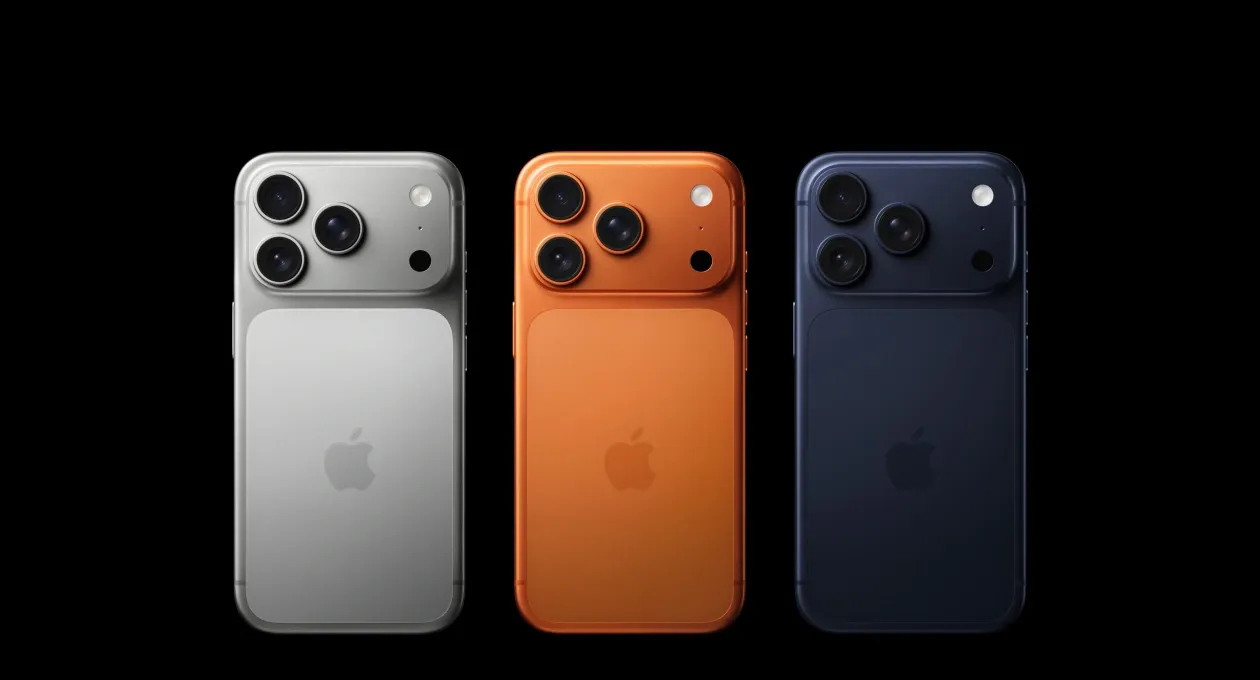
Apple's supply chain is reportedly preparing parts and module production for an iPhone camera the company has never built before. Sunny Optical has started producing actuators for a variable aperture mechanism destined for the iPhone 18 Pro, while LG Innotek is preparing full module assembly at its Gumi facility in South Korea for June or July, ahead of its normal schedule, specifically because the new mechanism raises defect risk, MacRumors reported. That points to supply-chain preparation, not just a leaker's forecast.
Two other iPhone 18 Pro camera upgrades are also circulating: a wider telephoto aperture and a teleconverter. The reporting behind them is considerably thinner.
There's a real cost attached to these upgrades. The iPhone 18 Pro Max appears to be getting heavier and thicker, and that tradeoff runs through the whole story.
Variable aperture: the iPhone 18 Pro camera upgrade already in motion
Every iPhone Pro main camera from the 14 Pro through the 17 Pro has shot at a fixed ƒ/1.78 aperture. The lens stays fully open regardless of lighting, and Apple's computational photography handles the rest. The iPhone 18 Pro is expected to break that pattern with a mechanically adjustable aperture, the first time Apple has attempted this on an iPhone, per MacRumors, which has tracked the feature since analyst Ming-Chi Kuo first flagged it in December 2024.
What changes in practice: A variable aperture gives the camera controls it currently lacks entirely. In dark scenes, the aperture can be opened to let more light reach the sensor; in bright conditions, it can be stopped down to control overexposure optically rather than digitally. Narrowing the aperture also increases depth of field, so a group photo where subjects stand at different distances can stay sharp across the frame without computational guesswork — the mechanism's primary practical benefit.
Whether any of this translates to meaningfully better low-light photography depends entirely on the maximum aperture Apple puts on the lens. If the upper end is wider than ƒ/1.78, the low-light gain becomes real. If the range is narrow, the upgrade functions mainly as a depth-of-field tool. No source has published the actual f-stop values, and Notebookcheck noted that the low-light question stays open until those specs surface.
Why the evidence sits in a different category: Reports indicate Apple has moved supplier planning ahead of its normal schedule. Notebookcheck reported the stated reason is that variable aperture introduces manufacturing complexity and raises the likelihood of defects, a precaution that only makes sense if the mechanism is already committed. LG Innotek is also reportedly absorbing a larger share of module production than it typically handles, again because of that added complexity. Named suppliers, specific facilities, adjusted timelines: this sits in a different evidential class from most iPhone rumors.
The Samsung precedent: Samsung shipped variable aperture on the Galaxy S9 and S10 in 2018 and 2019, then dropped it in 2020. MacRumors noted the reasons were increased device thickness and high production costs. Apple may be preparing to absorb at least some of that tradeoff. That shows up directly in the leaked dimensions.
Confidence: likely. Multiple outlets, named supply-chain partners, an adjusted production schedule, and a paper trail running from December 2024 through active component manufacturing this spring.
The physical cost: why bigger optics mean a bigger phone
The Samsung parallel isn't just historical context. It's playing out in leaked hardware measurements right now.
Side-by-side comparisons of the iPhone 18 Pro Max and iPhone 17 Pro Max show a taller camera plateau and larger individual modules on the new device, according to a PhoneArena analysis published in April. Total thickness, including the camera bump, reportedly rises from 12.92mm to 13.77mm. Body thickness excluding the bump increases from 11.23mm to 11.54mm. The device is also rumored to weigh roughly 240 grams, about 7 grams more than the current Pro Max, PhoneArena reported.
Not all of that bulk traces back to the camera. A larger battery is separately rumored for the Pro Max, and MacObserver noted last December that bigger camera hardware and larger battery capacity likely compound each other in the final dimensions. The camera is a meaningful contributor, but probably not the only one.
The buyer-level question this raises: does a heavier phone deliver noticeably better photos? The honest answer depends on the use case. Photographers who regularly shoot groups, portraits, or low-light scenes would likely feel the difference. Casual shooters who leave everything on auto might never interact with the aperture adjustment at all, particularly if Apple automates it silently rather than exposing manual controls, a detail no source has yet confirmed.
Which iPhone 18 Pro camera upgrades look credible?
Wider telephoto aperture: plausible. The iPhone 17 Pro's telephoto camera jumped from 12 to 48 megapixels but kept its ƒ/2.8 aperture unchanged. MacRumors reported earlier this year that Apple is testing a telephoto with a larger aperture opening, which would improve light intake on zoomed shots, reduce noise, allow faster shutter speeds, and produce stronger background separation at a distance.
PhoneArena flagged the same potential improvement in April. The rumor fits the existing hardware profile: the sensor was upgraded, the aperture was not, and zoom low-light performance remains the iPhone Pro's most obvious remaining camera weakness. It lacks the supply-chain specificity of variable aperture, but the logic is grounded, and the sourcing is consistent.
Teleconverter: speculative. A secondary optical element that would extend the effective focal length beyond what the telephoto lens provides on its own. Beyond those two references, the evidence is sparse. No implementation details, no optical tradeoffs, no clarity on whether it applies to both Pro models or only the Pro Max. Worth tracking, not worth planning around.
A Samsung-made three-layer stacked image sensor also appears in PhoneArena's reporting, but lacks corroboration from any other source in this rumor cycle. It sits at the same low-confidence level as the teleconverter.
What the next three months need to answer
The iPhone 18 Pro and Pro Max are expected to launch in September 2026, reportedly alongside Apple's first foldable iPhone. Three gaps in the current reporting will determine whether the camera story holds up.
The aperture range remains the most consequential unknown. No source has published minimum or maximum f-stop values, and that single detail will define whether variable aperture is a low-light breakthrough or primarily a depth-of-field refinement.
The Pro versus Pro Max split is unresolved. Both models are expected to get variable aperture, but whether the telephoto improvements apply equally to both or favor the larger device hasn't been confirmed. That distinction matters for photographers deciding between them.
How Apple surfaces the controls is the sleeper question. If variable aperture is fully automatic, most users will get better results without changing a setting. If Apple exposes manual aperture controls in the Camera app, the product's appeal shifts considerably toward users who currently carry a dedicated camera. MacRumors' late-April rumor roundup left this unresolved, and nothing since has filled the gap.
What's already clear: the iPhone 18 Pro camera story is not about more megapixels. The iPhone 17 Pro unified all three rear sensors at 48MP, and that count isn't changing. Apple is betting on better glass over larger numbers. One of those bets is reportedly already moving through Apple's supply chain.


Comments
Be the first, drop a comment!