





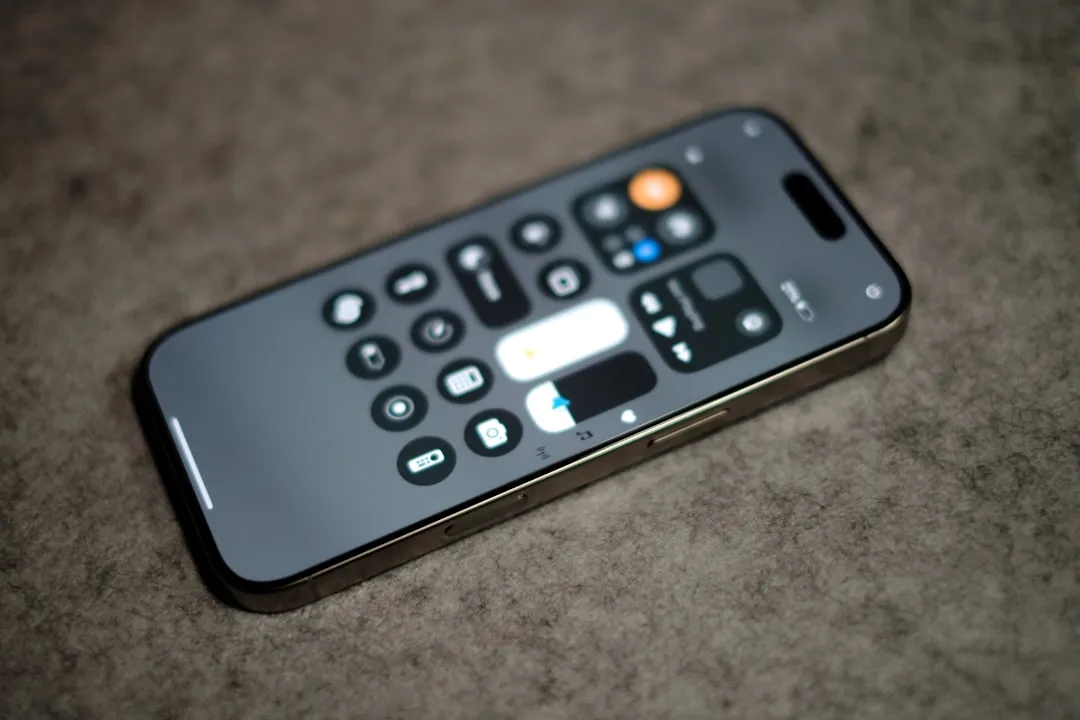
iPhone 18 Pro Smaller Dynamic Island Leak: What the Evidence Shows
Two new pieces of visual evidence surfaced this week suggesting the iPhone 18 Pro will ship with a dramatically smaller Dynamic Island: a screen protector image from leaker Ice Universe and a prototype photo from an X account called @earlyappleleaks. Neither is conclusive on its own. But they land on top of independent reporting from Bloomberg's Mark Gurman and backing from display analyst Ross Young and that combination is harder to explain away than any single source.
The iPhone 18 Pro smaller Dynamic Island leak matters not because a screen protector proves anything in isolation, but because it reinforces a specific and increasingly precise scenario: Apple moving the flood illuminator portion of Face ID under the display, shrinking the pill cutout without eliminating it, as the first stage of a longer engineering migration toward a no-cutout iPhone.
Ice Universe who has a credible track record on Apple hardware shared images this week of an alleged iPhone 18 Pro screen protector showing cutouts significantly smaller than the current pill-shaped opening, per MacRumors (March 30, 2026). Bloomberg's Mark Gurman had already reported independently that the iPhone 18 Pro would ship with a reduced Dynamic Island, the first institutionally sourced confirmation of a claim that had previously circulated only among leakers, per MacRumors (February 24, 2026).
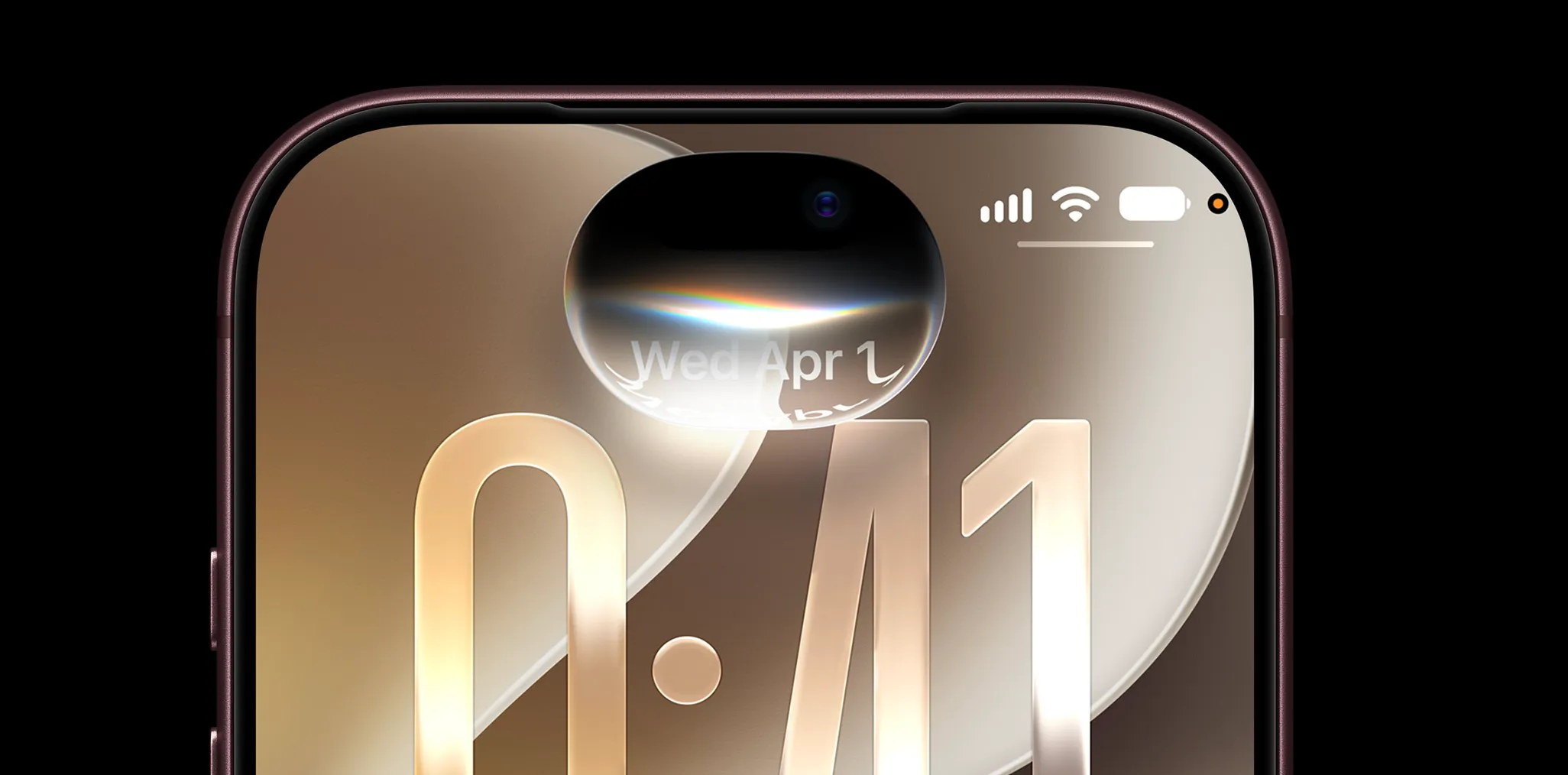
The most frequently cited size target is a width of roughly 13.5mm, down from approximately 20.7mm on current models a reduction of around 35%. That figure refers to the default on-screen Dynamic Island width including surrounding black pixels, not the physical hardware cutout itself, per MacRumors (January 23, 2026).
Why this week's iPhone 18 Pro screen protector leak shifts the probability
One leaker image of a screen protector would barely register. A prototype photo from an account nobody has heard of is weaker still. What makes this week's evidence worth taking seriously is the convergence it joins, not what it shows on its own.
The source stack now runs: Gurman at Bloomberg (institutional, independent reporting), Ross Young of Display Supply Chain Consultants (display industry expertise with a strong track record), Weibo leakers Instant Digital and ShrimpApplePro (credible but not journalists), Ice Universe's screen protector images (a leaker with a reasonable Apple track record), and a prototype photo from @earlyappleleaks (new account, unknown origins, treat accordingly), per MacRumors (March 30, 2026). When differently-sourced signals converge on the same specific claim not just "smaller Dynamic Island" but "smaller because the flood illuminator moves under the panel" that specificity matters. Vague rumors drift; precise ones with matching technical detail tend to be tracking something real.
This doesn't mean confirmed. It means the weight of credible evidence has shifted meaningfully in one direction, and the latest images are part of why.
How the rumor became more precise: from "no pill" to "smaller pill"
The front-panel picture for the iPhone 18 Pro has sharpened considerably since late 2025, and that narrowing is itself part of the story. Early reports suggested Apple might eliminate the Dynamic Island entirely, moving to a top-left hole-punch camera with all Face ID hardware hidden under the display. That account, from The Information, now appears to have been wrong, per MacRumors (January 20, 2026).
What's replaced it is more specific and more technically grounded. Weibo leaker Instant Digital described a Face ID sensor assembly consisting of three distinct modules on a single flex cable: a flood illuminator, a dot projector, and an infrared camera. Only the flood illuminator the simplest of the three optically moves under the display. The dot projector, infrared camera, and selfie camera stay in a reduced but still-present pill cutout. That account was later backed by both Ross Young and leaker ShrimpApplePro, per MacRumors (January 20, 2026).
The @earlyappleleaks prototype image fits this model. It appears to show a small circular cutout beneath the display surface, visible only when a flashlight is held to the screen corner consistent with a relocated flood illuminator, per MacRumors (March 30, 2026). MacRumors flagged the account's unknown origins explicitly. Treat it as corroborating detail, not independent confirmation.
The question has moved from "will the Dynamic Island disappear?" to "how much will it shrink, and through what mechanism?" That's a meaningful evolution and the partial under-display flood illuminator scenario is now the most coherent explanation on the table.
Why the iPhone 18 Pro under-display Face ID rumor now looks more plausible
Moving any Face ID component beneath an OLED display is not a cosmetic change. It's a genuine optical engineering problem, and Apple has been working through it in patent filings for years.
Apple's own patent documentation states that a typical OLED display comprises 13 layers, and that those layers can reduce infrared light transmission by as much as 80%. To compensate, Apple has explored removing subpixels, rerouting horizontal and vertical control lines, and stripping sections of the touch mesh in sensor regions changes designed to reduce diffraction and open clearer paths for infrared light without visible impact on the display, per 9to5Mac (February 2023) and 9to5Mac (January 2025).
The flood illuminator goes first not because it's the most critical Face ID component, but because it's the most tractable. Display Supply Chain Consultants has described a two-stage path for Apple: migrate Face ID under the panel while keeping a camera cutout, then move the selfie camera under the panel in a later generation once image quality meets Apple's bar, per FindArticles (January 19, 2026). The current leak pattern maps onto stage one almost exactly.
Ross Young has said that if the smaller Dynamic Island ships on the iPhone 18 Pro, it will likely persist through at least 2027 Apple views this as an intermediate design phase, not a brief stop, per MacRumors (January 23, 2026). Apple's longer-term goal, per multiple reports, is an iPhone with no front cutout at all, potentially timed to the device's 20th anniversary in 2027, per MacRumors (March 11, 2026).
This is Apple solving a hard problem one component at a time. The Dynamic Island gets smaller because the engineering permits it one piece of the sensor stack at a time.
The contested evidence: why "likely" is the right framing, not "confirmed"
The majority of credible sources point toward a smaller Dynamic Island. A meaningful dissent exists, the history of this specific rumor includes one prior miss, and the freshest visual evidence comes from an unverified account.
Digital Chat Station who has accurately called Apple hardware details in the past and has over three million Weibo followers reported in early March that the iPhone 18 Pro may reuse chassis molds from the current generation and that Face ID and the Dynamic Island will remain "largely unchanged," with the under-display redesign pushed to a future cycle, per MacRumors (March 11, 2026) and iClarified (March 11, 2026).
MacRumors noted "considerable disagreement between reliable sources" on the Dynamic Island question as of three weeks ago an unusual phrase for a feature that would typically be locked in this close to a September launch, per MacRumors (March 11, 2026).
Then there's the precedent. The exact same smaller-Dynamic-Island prediction circulated ahead of the iPhone 17 Pro and didn't materialize the iPhone 17 Pro launched with an unchanged cutout, noted by MacRumors (February 24, 2026). That doesn't disprove the current rumor, but it's a reasonable reminder that this particular claim has already produced one false positive.
None of this negates Gurman's reporting or Young's backing. But Digital Chat Station, the iPhone 17 precedent, and the unverified provenance of the most recent prototype image are collectively enough to keep the verdict at "likely" rather than "done." The preponderance of evidence favors a smaller Dynamic Island on the iPhone 18 Pro. It is not confirmed.
What a smaller Dynamic Island would actually mean for users
If the redesign ships, the immediate impact is more subtle than the engineering suggests. A smaller pill means more usable screen area at the top of the display, a slightly less intrusive footprint during everyday use, and a less prominent presence when Live Activities are inactive. What it doesn't change is how the Dynamic Island functions.
Ice Universe stated that bezels across the iPhone 18 lineup will remain identical to those on the iPhone 17 and iPhone 16, per MacRumors (March 27, 2026). The display doesn't get larger; the interruption in it gets smaller.
The 13.5mm target figure refers specifically to the default on-screen width of the Dynamic Island while active the combined footprint of the physical cutouts and the surrounding black pixels that create the pill appearance. When Live Activities expand the island, it grows beyond that baseline regardless of cutout size, per MacRumors (January 23, 2026). The visual shrinkage users would notice is in the resting state.
The Dynamic Island's software behavior how it surfaces notifications, Live Activities, and system alerts is not expected to change. The interaction model built around it stays intact. Whether Apple adjusts the UI to take advantage of the reclaimed space is an open question not addressed in current leak reporting.
Several things remain genuinely unknown:
- Whether partial under-display placement of the flood illuminator affects Face ID reliability or repairability
- Whether display uniformity is impacted in the cutout region by the modified subpixel structure
- Whether the software UI adapts to the smaller resting size in ways beyond simple scaling
For most users, the practical difference is modest: a less prominent cutout in the top-center of the screen. The significance is mostly what it signals Apple has begun the engineering transition it needs to complete if it wants a cutout-free iPhone by 2027.
What the September reveal will settle
The strongest signals converge on a smaller Dynamic Island enabled by moving the Face ID flood illuminator beneath the OLED panel. Gurman's independent reporting, Ross Young's display-supply-chain expertise, and Ice Universe's iPhone 18 Pro screen protector leak all point the same direction. The scenario is plausible on technical grounds and backed by Apple's own patent work. The balance of credible evidence puts it in "likely" territory, per MacRumors (February 24, 2026).
If the change ships on the iPhone 18 Pro, it represents Apple completing the first stage of a multi-generation display roadmap: partial under-display Face ID now, full sensor integration and a cutout-free design potentially by the 20th anniversary model in 2027, per MacRumors (March 11, 2026). The smaller Dynamic Island is a milestone, not the destination.
Key questions won't be answered until the hardware ships: which specific Face ID components move under the display and which stay in the cutout, whether the 35% reduction refers to width or total visible area, whether the change extends to the full iPhone 18 lineup or stays Pro-only at launch, and what any of it means for Face ID accuracy over time. The iPhone 18 Pro is expected to be announced in September 2026, per MacRumors (January 23, 2026).
The screen protector leak is the latest piece of a picture that's been coming into focus since late 2025. What the supply chain reports between now and September will determine is whether it holds.









Comments
Be the first, drop a comment!