





![for iPhone 18 Pro Case Clear [Not-Yellowing]](https://m.media-amazon.com/images/I/714DZnjreeL._AC_UY218_.jpg)
iPhone 18 Pro Smaller Dynamic Island: What the 35% Leak Means
The rumor that Apple will shrink the Dynamic Island on the iPhone 18 Pro is not new. What shifted this week is more specific: two converging signals, a prototype image and screen protectors designed around a reduced cutout, have pushed this iPhone 18 Pro leak from scattered speculation toward something more technically grounded. Not confirmed. But narrowed in a way worth paying attention to.
Before diving in, it helps to rank the evidence by weight. The anonymous prototype image is the weakest signal. Accessory manufacturers committing real tooling costs to a smaller cutout carries more structural meaning. Repeat reporting from credentialed analysts like Ross Young and Mark Gurman is the strongest foundation. Keeping that hierarchy in mind is the cleanest way to read what this week actually added.
An X account called @earlyappleleaks shared an image purportedly showing an iPhone 18 Pro prototype with a noticeably smaller Dynamic Island. In the image, a flashlight held over the corner of the display reveals a small circular punch-hole beneath the screen, presumably a relocated Face ID sensor, MacRumors reported yesterday. The account is relatively new with no established track record, so the image alone moves the needle modestly. The more structurally significant development: accessory manufacturers have already begun producing screen protectors built around a smaller cutout, treating the design change as settled enough to absorb tooling costs.
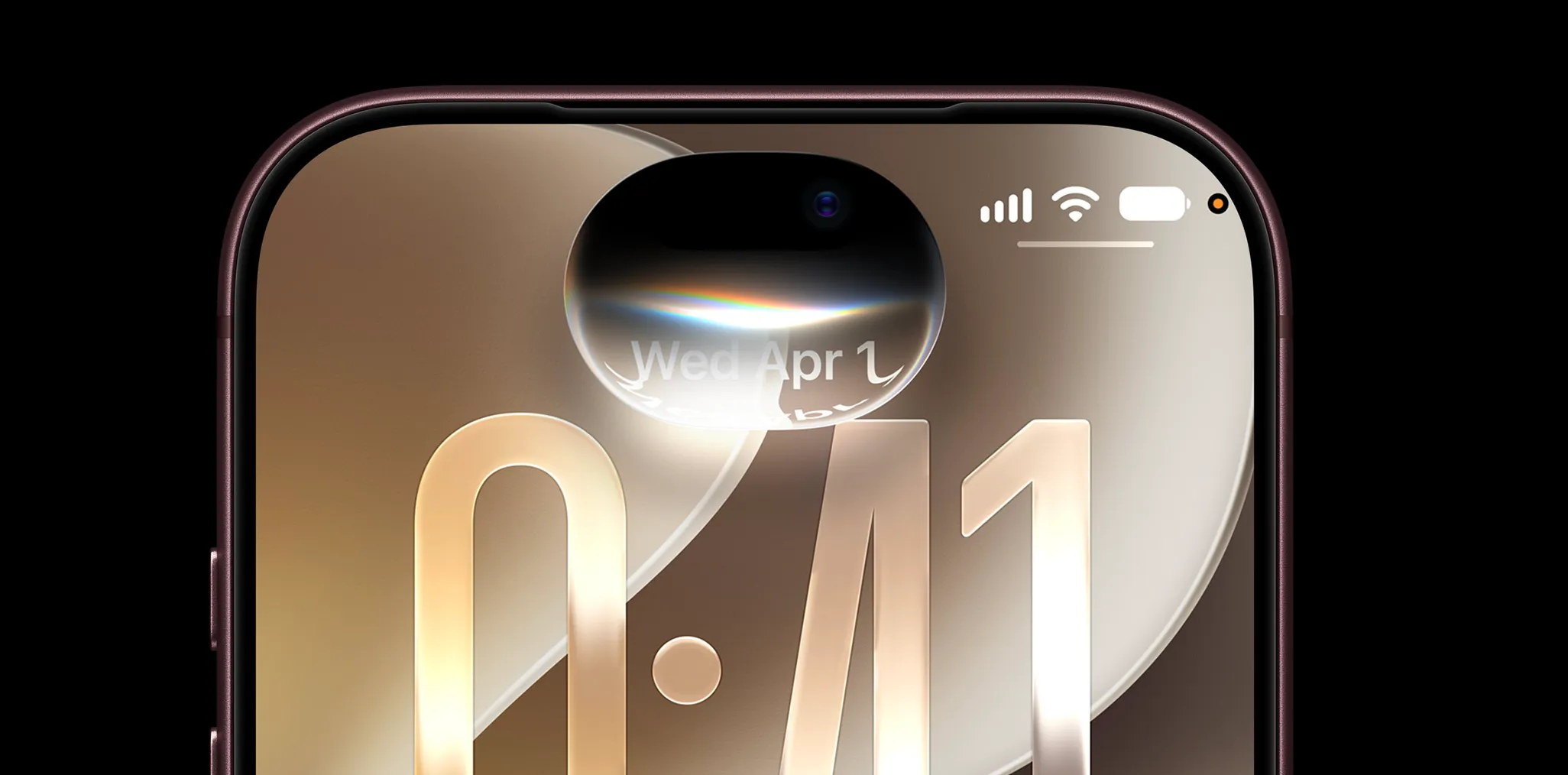
The leading sizing estimate comes from Ice Universe, who put the Dynamic Island at roughly 13.5mm wide in January, down from approximately 20.7mm on current models, a reduction of about 35%. Leaker Majin Bu cited that same 35% figure yesterday, drawing on the accumulating evidence, MacRumors reported. Several other sources have since echoed Ice Universe's original claim, The Independent noted two weeks ago.
The most important context for all of this: the same smaller Dynamic Island rumor circulated ahead of the iPhone 17 Pro last year. The Dynamic Island arrived completely unchanged, as MacRumors noted three weeks ago. That precedent does not invalidate the current evidence. It does set the right frame for reading it.
From hole-punch to smaller pill: how the smaller Dynamic Island rumor narrowed
The current "smaller centered pill" claim did not emerge fully formed. It won out over competing theories, and understanding what it replaced is the clearest way to see what this week's leaks actually clarified.
Earlier versions of the iPhone 18 Pro front-panel story were wilder. The Information reported that the front camera would move to a top-left corner hole-punch, explicitly claiming this would eliminate the pill-shaped Dynamic Island entirely. That framing circulated for months before Weibo leaker Instant Digital pushed back directly in January, arguing the hole-punch reading was a mistranslation and that no such redesign was coming, MacRumors documented two months ago. Display analyst Ross Young backed Instant Digital's corrected version. ShrimpApplePro corroborated it in the same reporting cycle. The hole-punch theory lost the argument.
What replaced it is the claim now accumulating evidence: a smaller, centered pill with Face ID's flood illuminator relocated beneath the active display, leaving the dot projector, infrared camera, and selfie camera visible within a reduced cutout.
A contradictory voice remains in the mix. Digital Chat Station claimed in mid-March that iPhone 18 Pro molds would largely carry over from the current generation, with the Dynamic Island remaining "largely unchanged" and any under-display progress pushed to the next cycle, MacRumors reported three weeks ago. That claim has not been refuted. It has simply been outnumbered.
The credibility weight sits clearly on one side. Gurman flagged in his Bloomberg newsletter last summer that Apple planned to shrink the Dynamic Island on at least some 2026 iPhones. Young and Instant Digital specified the mechanism. Ice Universe named the 35% figure in January. That is a better-sourced foundation than any single entry point for the hole-punch or no-change theories. The rumor field has narrowed, but one credible dissenting voice is still standing.
What a 35% reduction actually means for the iPhone 18 Pro display
The mechanism is straightforward. Face ID requires physical space in the display cutout because its components need a clear sightline; they cannot function through an active pixel layer the way a proximity sensor can. The current Dynamic Island houses four elements: a dot projector, an infrared camera, a flood illuminator, and the front selfie camera. Shrinking the pill means moving at least one of them somewhere else.
The flood illuminator is the logical candidate for under-display Face ID on iPhone 18. It is optically simpler than the dot projector and less precision-dependent than the infrared camera, making it the most viable element to conceal beneath the screen. Under the arrangement Instant Digital described, only the flood illuminator moves under-display, while the remaining three components stay in a reduced, centered cutout, MacRumors reported two months ago.
Apple has done a version of this before. The proximity sensor moved beneath the active display on the iPhone 14 Pro, reclaiming space with no visible front-panel change, a shift confirmed by independent lab work, MacObserver documented in October 2025. The precedent for quietly relocating a sensor beneath the screen, without announcing it as a feature, exists.
The 35% figure deserves more than a passing mention. A reduction from 20.7mm to roughly 13.5mm would be immediately visible, a clear strip of reclaimed status-bar space at the top of the display. Compare that to the iPhone 13's notch reduction in 2021, which Apple advertised as 20% narrower and was noticeable but modest. A 35% cut to the Dynamic Island would be a more meaningful visual change than any front-panel update Apple has made since the Dynamic Island launched in 2022.
What it does not change: how Dynamic Island notifications, Live Activities, or controls function in software. The pill stays centered, the UI stays the same, and developers do not need to rethink layouts. The practical daily impact is primarily visual, more usable display area at the top, a less intrusive presence, not a functional redesign. Worth stating plainly, because the rumor has at times been framed as something more dramatic than the evidence supports.
On lineup scope: Ice Universe claimed last Friday that the iPhone 18 smaller Dynamic Island will eventually roll out across the full iPhone 18 series, not just Pro models, with bezels on the entire lineup remaining identical to the iPhone 17 generation, MacRumors reported four days ago. The standard iPhone 18, under Apple's new split-cycle launch strategy, would arrive early next year rather than alongside the Pro models this fall.
Where the confidence level actually sits
The case for a smaller Dynamic Island on the iPhone 18 Pro is more credible now than at any previous point in this rumor cycle. Multiple sources with real track records converge on the same specific mechanism. Accessory manufacturers are acting on the assumption that the design change is real. The competing hole-punch theory has effectively been retired.
The iPhone 17 rumor cycle followed nearly the same pattern, multiple sources, a coherent technical explanation, converging leaks, and the Dynamic Island arrived unchanged. That is not a reason to dismiss the current evidence; it is a reason to hold it at the right confidence level, as MacRumors noted three weeks ago. Leaker consensus is not supply-chain certainty.
The prototype image driving this week's attention also comes from @earlyappleleaks, a new account with no established track record, MacRumors acknowledged yesterday. The screen protector evidence is more structurally meaningful; manufacturers absorbing real tooling costs carry more signal than an anonymous image post.
What would actually move the needle: production CAD files from a named manufacturing partner, regulatory documentation, or direct fresh reporting from Gurman or Young citing new supply-chain access, not additional posts recirculating the 35% figure.
If the change does land this fall, Young expects Apple to hold that smaller pill through at least 2027, with a fully cutout-free iPhone not arriving until 2028, The Independent reported two weeks ago. The most likely outcome, based on current evidence, is an evolutionary improvement that is genuinely visible and genuinely incremental, not the screen redesign some earlier rumors implied, and not the non-event the iPhone 17 cycle turned out to be.






Comments
Be the first, drop a comment!