



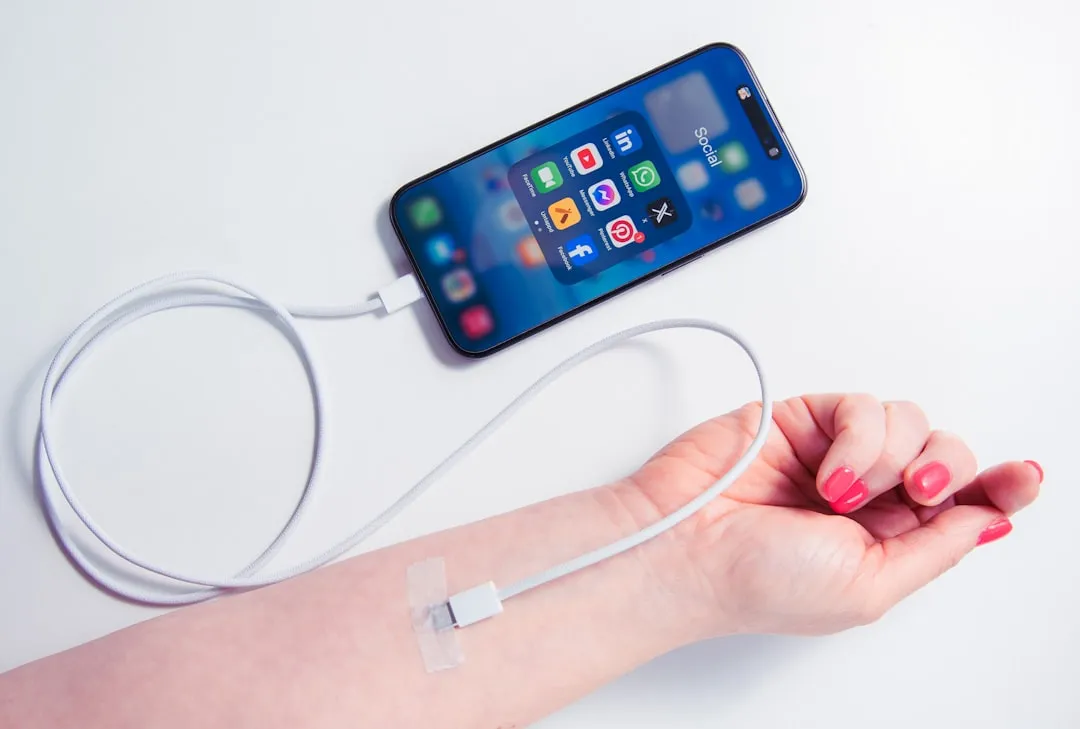
iPhone breathalyzer high cholesterol: what one small study really shows
Reports circulating across tech publications suggest future iPhones could detect high cholesterol through a built-in breathalyzer. The evidence behind that claim is a single peer-reviewed study with 151 participants, not an Apple product announcement, a confirmed development initiative, or anything resembling a regulatory submission. The distinction has real consequences for how seriously to take the coverage.
The underlying science is real. Researchers published the first proof-of-concept demonstrating that an electronic nose system paired with machine learning can estimate total cholesterol from exhaled breath, hitting an 8% mean error rate within the normal cholesterol range, according to a November 2024 paper in ACS Sensors titled "Noninvasive Total Cholesterol Level Measurement Using an E-Nose System and Machine Learning on Exhaled Breath Samples." A promising early result. Not a validated diagnostic tool, and not an Apple feature.
The Apple connection exists but runs through inference, not evidence. According to Cult of Mac in January 2026, Apple has reportedly spent years and millions of dollars pursuing noninvasive blood glucose monitoring for Apple Watch, enough to suggest the company takes metabolic sensing seriously as a product category. No confirmed patents, supply-chain reports, or regulatory filings tie Apple specifically to cholesterol breath detection.
The breath-cholesterol science deserves serious attention. An iPhone feature does not yet deserve a product story.
What the cholesterol-from-breath study actually found and what it doesn't prove
Start with the biology, because it explains why breath analysis is scientifically plausible. Disease-indicative metabolites circulate through the vascular system and transfer into exhaled air through gas exchange in the lungs, meaning breath chemistry reflects blood chemistry in measurable ways, according to a thorough review article in MDPI Sensors published in November 2024. That principle is well-established. The question is whether useful clinical signals can be extracted reliably enough to matter.
The ACS Sensors study tested exactly that. Researchers built the first e-nose system using machine learning to predict total cholesterol from breath samples taken from 151 participants, whose cholesterol was measured simultaneously by standard methods. The model used a gradient-boosting algorithm and achieved a mean absolute percentage error of 13.7% across the full measurement range, narrowing to 8% within the clinically normal threshold of 200 mg/dL or below, per the paper.
Translating that 8% figure into practical terms is instructive. An 8% error around a 200 mg/dL borderline means estimates could routinely land 10 to 16 mg/dL away from the actual value, shifting a result from borderline to normal or vice versa. For a population-level screening tool, that margin may eventually prove acceptable under the right conditions. For a diagnostic driving statin prescriptions or cardiovascular risk calculations, it falls short of what clinicians currently require.
The accuracy issue is real. But there is a more fundamental problem that the headlines about an iPhone breathalyzer high cholesterol feature consistently skip past.
Why total cholesterol is the wrong number anyway
Even a perfectly accurate breath-based cholesterol reading would not tell a doctor much. Total cholesterol is not what most treatment decisions hinge on.
Standard cardiovascular risk assessment depends on a full lipid panel: LDL (low-density lipoprotein, the primary driver of arterial plaque), HDL (high-density lipoprotein, which carries cholesterol away from the arteries), and triglycerides. Increasingly, clinicians also rely on ApoB, a protein marker that better captures the number of atherogenic particles in circulation than LDL alone. A patient can have a perfectly normal total cholesterol reading while carrying dangerously elevated LDL or low HDL. The total figure papers over that distinction.
The ACS Sensors study measured total cholesterol only. Breath analysis at this stage cannot provide the breakdown that cardiovascular medicine actually uses. So the argument against an iPhone breathalyzer for high cholesterol runs on two separate tracks: the technology is not yet validated, and even if it were, it would be measuring the least clinically actionable number on the panel.
The study's limits extend further still. It does not address how fasting state, diet, medications, smoking, or illness would affect readings in real-world use. The 151-person sample is too small to establish reliable performance across diverse populations, age groups, or health conditions. The researchers' own conclusion is appropriately measured: the work shows that a noninvasive breath-based cholesterol device is possible. A significant milestone for the field, and the beginning of a validation process, not the end of one.
Where breath-sensing devices actually stand today
The closest real-world parallel to a commercial breath-based metabolic device is PreEvnt's Isaac monitor, which appeared at CES 2026 in January. Isaac detects volatile organic compounds in exhaled breath, including acetone, which correlates with rising blood glucose, when a user breathes onto its quarter-sized disc, then logs results to a companion smartphone app, Cult of Mac reported in January 2026.
Isaac has entered human clinical trials at Indiana University, and FDA regulatory review is expected to take place within the coming year, according to Cult of Mac. That makes it the furthest-along breath-based metabolic monitoring device currently in development. Noninvasive blood sugar tracking is moving from concept to clinical hardware. What Isaac shows is that breath sensing can leave the lab. What it does not show is that cholesterol detection is next, or that Apple is involved.
One distinction needs to be stated plainly: Isaac is a glucose device. Apple's documented health sensor interest centers on glucose. The cholesterol-from-breath research is a separate study by separate researchers targeting a different biomarker. Treating these as a single converging Apple product pipeline conflates two parallel threads with no connecting evidence between them.
Isaac also illustrates a user experience gap that any company building consumer health hardware would need to solve. The device requires users to actively breathe onto the sensor for each reading. That is a deliberate, conscious action. Apple Watch tracks heart rate without the user doing anything; blood oxygen readings are similarly passive. Any breath-based feature requiring active participation runs against Apple's established product philosophy, as Cult of Mac noted. Useful? Possibly. Seamless? Not yet.
The broader breath-sensing field has demonstrated impressive technical capabilities in other applications. Researchers have built electrochemical breath sensors achieving over 99% accuracy for SARS-CoV-2 pathogen detection, with results in under 30 seconds, per the MDPI Sensors review article. But that sensor detects the presence or absence of a specific pathogen under controlled conditions, not the continuous estimation of a metabolic biomarker across variable real-world circumstances. The field can produce effective breath sensors. That capability does not transfer automatically to consumer cholesterol monitoring.
Could a future iPhone breathalyzer detect high cholesterol? Here's what would need to happen
The gap between a 151-person proof of concept and a trusted consumer health feature is large and specific. The milestones are worth naming.
Scientific validation. The cholesterol study needs replication with larger, more demographically diverse populations, tested across real-world conditions: varying fasting states, dietary patterns, medications, and health statuses. One study establishing feasibility starts that process. It does not complete it.
Clinical comparison. A breath-based cholesterol estimate would need to demonstrate clinically useful agreement with full lipid panels across the complete range of cardiovascular risk, not just total cholesterol in a controlled lab setting. That comparison has not been performed.
Hardware and integration evidence. There is currently no Apple patent tied to breath VOC sensing for cholesterol, no supply-chain reporting suggesting sensor component sourcing, no regulatory filings, no accessory prototypes on record. Given Apple's established pattern with health features, a plausible near-term scenario would involve an external accessory feeding data into the Health app rather than a sensor embedded in an iPhone chassis. Even that scenario has no supporting evidence at present.
Regulatory pathway. Isaac's anticipated FDA review covers glucose monitoring. Cholesterol detection from breath would require a separate regulatory process with its own evidence requirements. That process has not started for any breath-based cholesterol device anywhere.
The signals worth taking seriously in future coverage are specific: confirmed Apple patents or acquisitions in breath-sensing chemistry, a cholesterol breath device entering peer-reviewed clinical validation at scale, or a regulatory submission. Absent those anchors, headlines about an iPhone breathalyzer that spots high cholesterol are extrapolating well past what the data supports.
What's real, what's speculation, and what to do with this information
Two things can be true at once.
Exhaled breath carries measurable chemical signals that reflect blood chemistry. A peer-reviewed study demonstrated for the first time that machine learning applied to breath samples can estimate total cholesterol with meaningful but imperfect accuracy across 151 participants, per ACS Sensors. That is a genuine scientific advance worth following.
An iPhone that detects high cholesterol is not a confirmed Apple initiative, not a device in trials, and not a technology with an established regulatory pathway. Even in its current best form, breath-based total cholesterol estimation cannot replace the full lipid panel that actually drives treatment decisions.
For anyone concerned about their cholesterol levels today: this research changes nothing about what to do. Standard lipid panels remain the clinically validated tool for cardiovascular risk assessment. Breath-based cholesterol estimation, under the most optimistic realistic timeline, is years from clinical use.
Breath is becoming a serious health interface, with real hardware in clinical trials and peer-reviewed science advancing the underlying methods. Apple has the resources, the established health sensor roadmap, and every incentive to track that progress closely, as Cult of Mac reported in January 2026. Whether that eventually produces a product depends on whether the science clears the validation hurdles it currently faces. Compelling ideas and reliable ones are not the same thing.




Comments
Be the first, drop a comment!