



iPhone Fold Leaks and Rumors: What Apple Sacrificed for Thinness
Apple's foldable iPhone is now widely expected to land this September alongside the iPhone 18 Pro lineup, and the supply chain is moving in ways that point to a real product rather than another rolling forecast. Samsung began DRAM shipments in Q2, timed to Apple's production schedule, MacRumors reported eleven days ago. A Chinese assembly-line source claimed Apple submitted production line orders, the kind of hardware commitment that typically precedes a launch rather than anticipates one, MacRumors reported last month.
The question is no longer really whether this device exists. It's what Apple gave up to build it. The picture emerging from leaks and supply-chain reporting is of a company that organized the iPhone Fold around two priorities, extreme thinness and a meaningfully reduced fold crease, and made concrete tradeoffs to get there: no Face ID, no telephoto lens, limited software ambitions, and a starting price that would exceed every foldable currently on the market.
None of this is official. Apple has confirmed nothing.
What's most credible so far
Converging from multiple reliable sources: Fall 2026 launch window, book-style form factor, 5.5-inch outer and 7.8-inch inner displays, Touch ID replacing Face ID, hole-punch cameras on both displays, four cameras total with no telephoto, A20 chip, 12GB RAM, C2 modem with mmWave 5G, eSIM only, titanium chassis, and a significant reduction in crease depth and angle.
Still unresolved: exact pricing, real-world battery life on two active displays in an ultra-thin chassis, long-term crease durability, water and dust resistance ratings, and app ecosystem readiness at launch.
Is the iPhone Fold actually launching this year?
The strongest case for a 2026 release is hardware moving, not analyst opinion. Samsung Display has been expanding its A4 production line since last year, targeting 30,000 foldable OLED panels per month by Q2 2026 to fulfill an initial Apple order estimated at 6 to 8 million units, DigiTimes reported last October. Bloomberg's Mark Gurman expects a fall debut. Analysts Ming-Chi Kuo and Jeff Pu both point to second-half mass production, per MacRumors. The assembly-line source is less authoritative than those two, but it aligns with the same direction.
The form factor question has also largely settled. Apple spent years testing clamshell prototypes before 2025 rumors converged on a book-style design that opens horizontally, like a small notebook, rather than flipping vertically. Both Gurman and Kuo support this direction, as MacRumors' product guide documents.
One credible dissent: Mizuho Securities flagged a possible slip to 2027, citing unresolved hinge design decisions, per MacRumors. The hinge is one of the most mechanically complex components in any foldable, and Apple's reported requirement for near-invisible creasing has imposed unusual engineering constraints on its design. A delay remains possible, even if less likely than not. The consensus points to this fall; that is not the same as confirmed.
Apple foldable iPhone rumors: what got traded away for thinness
Thinness is the organizing principle of the iPhone Fold's reported design. At roughly 4.5mm unfolded, it would be thinner than Apple's own 12.9-inch iPad Pro, currently the company's slimmest device at 5.1mm, while folding to between 9mm and 9.5mm closed, per MacRumors' guide. That geometry required systematic internal compression. The component cuts are specific.
Face ID is not present in current leaked configurations. Both Kuo and Gurman report that Apple replaced it with Touch ID integrated into the side button, the same approach used on the iPad mini, reportedly to save internal space that the TrueDepth camera array would otherwise consume, per MacRumors. For users who rely on Face ID for glance-based unlocking or nightstand unlock, this is a genuine step back from the current Pro iPhone experience.
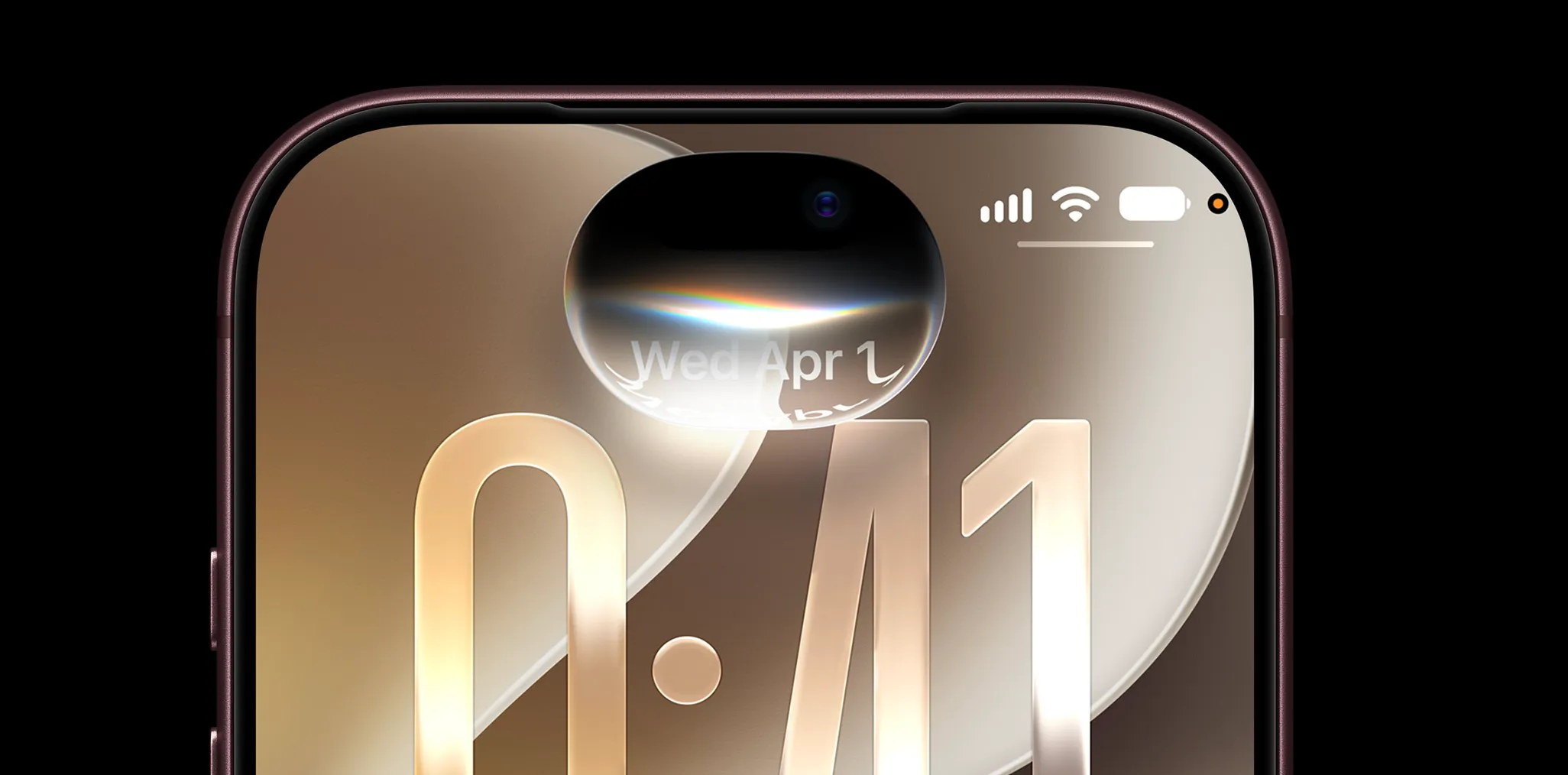
The inner display camera changed too. Earlier rumors described an under-display selfie camera on the 7.8-inch interior screen, which would have made it Apple's first fully edge-to-edge iPhone panel. Apple abandoned that plan after determining the approach produced worse image quality, Gurman reported via MacRumors eleven days ago. Both displays now use hole-punch cutouts. The outer display retains a Dynamic Island interface surrounding the smaller cutout in place of the current pill-shaped notch, per MacRumors.
No telephoto lens, either. The rear camera system consists of two 48-megapixel lenses, main and ultrawide, with four cameras total across the device, MacRumors' guide notes. Users upgrading from a Pro Max will notice the gap.
A few additional design details from recent leaks:
- Volume buttons are expected on the top edge, aligned right, similar to the iPad mini
- A camera plateau similar to the iPhone Air sits on the rear left
- The display uses a transparent polyimide film layered over ultra-thin glass as a protective layer
- The chassis is reportedly titanium; the hinge combines titanium and stainless steel, per MacRumors
materials details are where leaks diverge most. Analyst Jeff Pu believes Apple is using aluminum and titanium, while Kuo points to a stainless steel and titanium mix, per MacRumors. Consider the exact material combination unsettled.
iPhone Fold display crease: probably reduced, not eliminated
Every book-style foldable shipping today carries the same visible compromise: a crease running down the center of the inner display. Samsung has iterated through six generations of the Galaxy Z Fold line, refining hinge mechanisms and experimenting with display stack configurations, as Yanko Design noted last December. The crease persists across Samsung's lineup, Google's Pixel 10 Pro Fold, and Motorola's razr. It's also tactile under the finger, and it tends to worsen with age as wear accumulates, per Yanko Design. Reducing it is the central engineering claim around the iPhone Fold, and it deserves careful handling.
Apple's reported approach involves two components working together. A laser-drilled metal plate from South Korean supplier Fine M-Tec sits beneath the display and disperses bending stress across a wider surface area rather than concentrating it at the fold axis. A liquid metal hinge, a zirconium-based amorphous alloy tougher than titanium, manages the fold mechanics themselves. The Samsung-made OLED panel uses a custom process Apple holds the trademark for, integrating touch sensors directly into the display stack and trimming total thickness by roughly 19 percent, Kuo detailed via MacRumors last July.
Early reports called the result "virtually crease-free" or said it had "no crease at all." A more recent leak from a Chinese assembly-line source put crease depth at under 0.15mm and crease angle under 2.5 degrees, both figures describing a significantly shallower and flatter fold than current competitors produce, MacRumors reported last month. Gurman, who tends toward understatement on unverified claims, said this month that the crease is meaningfully reduced but "not perfect," per MacRumors. Gurman's is the more conservative and, given his track record, probably the more reliable characterization. The honest read: Apple has reportedly made the crease much less noticeable, but "crease-free" remains a marketing phrase rather than a verified engineering outcome.
One indirect signal of genuine progress: Kuo reported that Samsung's Galaxy Z Fold 8 is expected to adopt the same Fine M-Tec laser-drilled plate technology, covered by MacRumors last July. When a competitor adopts an approach before the originating product even ships, that's at least circumstantial evidence the approach works. Whether it holds up over thousands of fold cycles, in varied temperatures, and after years of pocket use is a question no pre-launch leak can answer.
Software and use case: a bigger iPhone, not a pocket iPad
The iPhone Fold runs iOS, not iPadOS. Unfolded, it adopts an iPad-like layout supporting two apps side by side and left-rail sidebars in many apps, with developer tools for adapting existing iPhone apps to the wider canvas. But it will not support the full multitasking capabilities available on iPad, and existing iPadOS apps will not run on it, Gurman confirmed via MacRumors this month.
That's a deliberate positioning choice. Apple appears to want this to feel like an expansive phone rather than a portable computer, which also makes the software limitations more coherent: two apps side by side on iOS is a useful expansion of the phone experience, not a replacement for iPad-class stage manager or full window management. Users expecting tablet-class multitasking will find hard limits. Users who want a phone that occasionally becomes a better reading, browsing, or video surface should find the larger canvas genuinely useful.
Internals are unambiguously premium:
- A20 chip on TSMC's 2nm process, rumored to be up to 15 percent faster and 30 percent more efficient than the A19
- 12GB RAM, matching the iPhone Air and iPhone 17 Pro lineup, per MacRumors
- Apple's second-generation C2 modem, adding mmWave 5G support the C1 lacked
- No physical SIM slot; eSIM only, per MacRumors' guide
The battery is rumored at 5,400 to 5,800 mAh, above the iPhone 17 Pro Max's current 5,088 mAh record, enabled partly by shrinking the display driver IC from 28nm to 16nm, per MacRumors' guide. Raw capacity is not a battery life guarantee, particularly with two active displays running on a chassis thinner than most credit cards.
iPhone Fold release date, price, and who this is actually for
Consensus pricing from Kuo and Gurman lands at $2,000 to $2,500. UBS estimates $1,800 to $2,000; Fubon Research puts it at $2,399. A tier-by-tier leak pegs 256GB at roughly $2,320, 512GB at $2,610, and 1TB approaching $2,900, MacRumors' guide notes. The spread is wide enough that nailing an exact entry price isn't possible yet. What every estimate agrees on: this device will cost more than Samsung's Galaxy Z Fold 7 at $1,999 and Google's Pixel 10 Pro Fold at $1,799, per PCMag earlier this month.
Component costs explain part of that premium. Samsung negotiated higher-than-usual DRAM pricing, attributed to tightening global memory supply driven by AI server demand, The Bell reported via MacRumors. The hinge comes in cheaper than expected, roughly $70 to $80 versus an anticipated $100 to $120, but still adds meaningful bill-of-materials cost, per MacRumors.
Apple's initial production target of 6 to 8 million units is modest by iPhone standards. Early color testing is reportedly limited to black and white, with Gurman noting Apple's plans could still evolve before launch, per MacRumors. Both signals point to category establishment rather than a volume launch.
This device is aimed at Apple enthusiasts and early adopters willing to pay a substantial premium for a larger working surface in their pocket. The tradeoffs established by current leaks define who it's probably not for: buyers who depend on Face ID, anyone who values telephoto photography, and anyone not prepared to spend north of $2,000 on a first-generation device. A Pro Max or an iPad mini remains the more direct answer to those needs.
A second-generation model is expected in 2027, coinciding with the iPhone's 20th anniversary. Apple's demand for foldable OLED panels is projected to triple by that year, DigiTimes reported. The first iPhone Fold looks like Apple planting a flag, not opening a floodgate.
What the leaks establish and what they don't
Widely reported by reliable leakers and supply-chain sources: Fall 2026 launch window, book-style form factor, roughly 5.5-inch outer and 7.8-inch inner displays, Touch ID replacing Face ID, hole-punch cameras on both displays, four cameras total with no telephoto, A20 chip, 12GB RAM, C2 modem with mmWave, eSIM only, and a reported reduction in crease depth and angle, per the MacRumors roundup.
Still unresolved: Real-world battery life on two active displays in an ultra-thin chassis, long-term crease durability across years of fold cycles, camera performance under thinness constraints, water and dust resistance ratings, app ecosystem readiness at launch, and exact pricing.
Based on current leaks, Apple appears to have made real progress on the parts of a foldable that have historically been hardest to get right: the crease is reportedly much reduced, the chassis pushes thinness beyond any comparable device, and the internals are flagship-grade. The first iPhone Fold looks like an engineering statement first, mass-market product second. What remains unanswered is the category's more stubborn commercial problem: whether a foldable phone feels necessary to someone who already carries a great iPhone and an iPad. Before September, watch for pricing confirmation and any hands-on crease assessments from supply-chain sources. Those will tell more about this device than any render.





Comments
Be the first, drop a comment!