






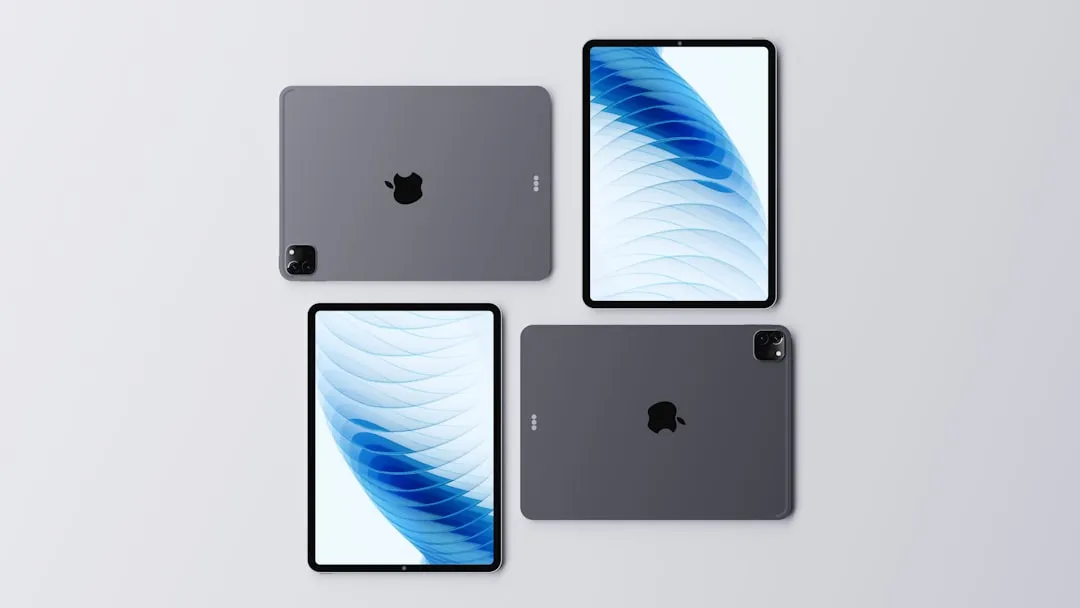
The tech world has been buzzing with speculation about Apple's entry into the foldable smartphone market, and recent reports from industry analysts are finally giving us concrete details about what an iPhone Fold might actually look like. While competitors like Samsung have been refining their foldable designs for years, Apple's characteristically patient approach means their first foldable could take a dramatically different direction. The latest insights suggest we're looking at something closer to an iPad that folds rather than a traditional phone that unfolds—a design philosophy that could reshape how we think about portable computing.
Why Apple's wider approach makes perfect sense
Here's what's fascinating about Apple's rumored strategy: they're not trying to reinvent the phone. Instead, they seem to be asking a completely different question—what if we made the iPad truly portable? This wider, iPad-style interface represents a fundamental shift from what we've seen in the foldable space so far.
Think about how current foldables operate in practice. You get a phone-first experience that opens up into what often feels like a cramped tablet. It's functional, but it always carries inherent compromises. Apple's approach flips this priority structure entirely. By starting with iPad proportions, they're optimizing for the expanded experience rather than treating it as a secondary feature.
This design choice aligns perfectly with Apple's broader ecosystem strategy. Your iPhone, iPad, and Mac aren't designed to compete with each other—they're engineered to work together seamlessly. An iPad-style foldable wouldn't cannibalize iPhone sales; it would create a distinct category positioned between your phone and your laptop.
The wider aspect ratio addresses several practical limitations of current foldable designs. The narrow keyboards on existing foldables often feel cramped and awkward for extended typing sessions. With iPad-like dimensions, users would experience a much more natural typing interface, closer to traditional tablet input methods. Video consumption would see dramatic improvements too—eliminating the awkward aspect ratios and black bars that can make expensive foldable screens feel underutilized.
From an engineering perspective, this approach provides Apple with something crucial: internal component space. Foldable devices require complex internal architectures with dual batteries, flexible displays, and sophisticated hinge mechanisms. The wider form factor offers room to implement these components without the thermal management challenges that have affected some competing devices, while maintaining Apple's performance standards.
The Touch ID comeback nobody saw coming
Perhaps the most surprising development in these reports is Touch ID's potential return with the iPhone Fold. After years of Face ID becoming Apple's premium authentication standard, this initially seems like a step backward—until you consider how foldables actually function in real-world usage.
Face ID excels on traditional devices where camera positioning remains predictable and consistent. But foldables fundamentally change the interaction paradigm. Users might position the device in tent mode for video calls, completely folded for phone tasks, or at unconventional angles for drawing or note-taking. Engineering Face ID cameras to work reliably across all these configurations would present significant technical challenges.
Touch ID, conversely, offers natural compatibility with a device that's constantly being handled and repositioned. Whether integrated into the power button or implemented as an under-display sensor, fingerprint authentication could provide consistent access across different usage scenarios without requiring specific positioning or lighting considerations.
This authentication approach also suggests Apple's vision for the device's primary use cases. For productivity-focused users—those engaged in writing, content creation, or professional applications—Touch ID could offer faster authentication during intensive work sessions with frequent app switching and device unlocking.
Modern Touch ID implementations have evolved significantly since Apple's transition to Face ID. Contemporary under-display fingerprint sensors demonstrate substantially improved accuracy and speed compared to earlier home button versions, potentially offering authentication that's both more convenient and more secure for foldable form factors.
Hardware constraints that could make or break the experience
The engineering challenges for an iPhone Fold extend far beyond creating a reliable folding mechanism. These technical hurdles could ultimately determine the device's market success.
The external display presents a particularly complex engineering puzzle. Most current foldables compromise on outer screen quality to achieve necessary device thinness, but Apple's display standards suggest they'll demand premium specifications for both screens. Maintaining their renowned display excellence while achieving the flexibility and thinness required for practical daily use will demand significant technological innovation.
Battery performance represents another critical constraint, especially given Apple's wider design approach. Increased screen real estate inherently demands higher power consumption, while dual-display configurations consistently draw more energy than single-screen devices. Apple's integrated approach to hardware and software optimization provides advantages here, but the fundamental physics of powering two high-resolution displays remains challenging.
The hinge mechanism must balance mechanical durability with Apple's characteristic slim profile expectations. Unlike manufacturers who've accepted thicker devices to accommodate robust hinges, Apple will likely pursue more elegant solutions. This engineering challenge could involve developing new materials, innovative mechanical approaches, or strategic trade-offs in other design areas.
Long-term durability considerations are equally important. Current foldable displays, despite significant improvements over early generations, still require more careful handling than traditional smartphones. Apple's customer base typically expects devices that function reliably for years without special accommodation—a standard that remains challenging to meet with current foldable technology.
App optimization: Apple's secret weapon in the foldable race
Apple's greatest advantage in the foldable market lies in their software ecosystem control and developer relationship management. This capability could address the most significant pain point plaguing current foldable devices: inconsistent application experiences.
Current Android foldable experiences suffer from frustrating application inconsistencies. Users encounter apps that excel on expanded displays followed immediately by applications clearly unoptimized for larger screens. Some apps transition smoothly between folded and unfolded states, while others crash or display incorrectly. This inconsistency undermines the premium device experience.
Apple's iPad-style interface approach could leverage existing tablet optimization frameworks that developers have refined over years. Rather than requiring entirely new foldable-specific interfaces, Apple could extend proven iPad app architectures to accommodate folding interactions—potentially accelerating optimized app availability at launch.
The App Store review process provides Apple with enforcement capabilities unavailable to Android manufacturers. While Android users depend on voluntary developer optimization, Apple could establish proper foldable support as an approval requirement, ensuring consistent, polished experiences from launch day.
Apple's developer framework investments could further streamline optimization processes. Well-designed APIs and clear development guidelines might enable developers to implement foldable support with minimal additional effort, building upon their existing iPad codebases rather than starting from scratch.
Where Apple's foldable strategy leads the industry
These iPhone Fold reports indicate Apple isn't simply entering the foldable market—they're positioned to fundamentally redefine foldable device categories. By emphasizing productivity and tablet-like functionality over phone portability, Apple could establish foldables as legitimate laptop alternatives rather than premium smartphone variants.
This strategic positioning aligns with evolving mobile computing patterns. As more users perform serious work on mobile devices, the traditional boundaries between tablets and laptops continue blurring. Apple's foldable could deliver genuine mobile productivity without the compromises that current foldable designs still require.
Successful execution of Apple's approach could influence the entire foldable ecosystem trajectory. Competing manufacturers might shift focus from phone-centric designs toward more diverse form factors and expanded use cases. This evolution could transform foldables from niche enthusiast devices into mainstream productivity tools.
The ultimate test will be Apple's execution capabilities. Their customer base maintains exceptionally high expectations, while foldable technology continues presenting significant engineering challenges. Success will require delivering the seamless, reliable experience Apple users expect while solving complex technical constraints and pioneering new interaction paradigms.
What's increasingly clear is that Apple's eventual foldable entry won't follow existing industry patterns. The iPhone Fold, if these reports prove accurate, could differentiate itself from current foldables as dramatically as the original iPhone distinguished itself from existing smartphones. Whether this differentiation translates to market success will depend on Apple's ability to solve engineering problems that have challenged the entire industry—a feat they've accomplished repeatedly throughout their history.







Comments
Be the first, drop a comment!