





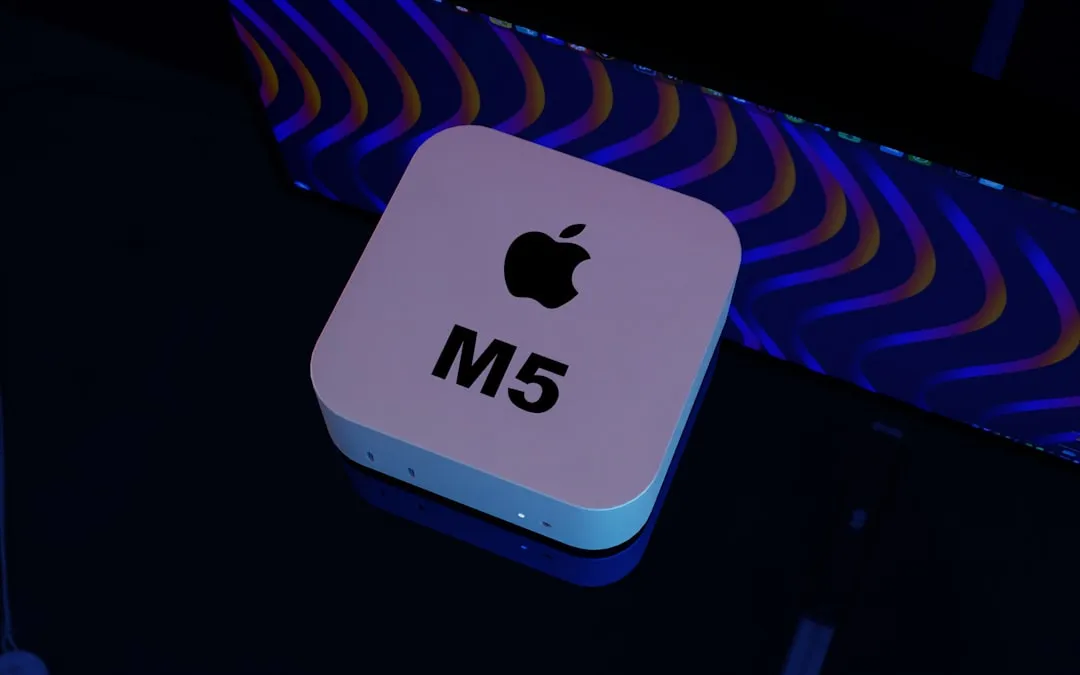
Why an M5 MacBook Pro Launch in March Keeps the M6 OLED Dream Alive This Year
Apple's chip roadmap has always been a chess game, and if the latest rumors about an M5 MacBook Pro launching in March are accurate, we're watching a particularly clever move. At first glance, introducing another chip generation might seem like it pushes that coveted OLED MacBook Pro even further into the future. But here's the thing: an earlier M5 launch doesn't kill the M6 OLED dream—it actually keeps it perfectly positioned for a late 2026 arrival. Let's break it down.
Understanding Apple's Silicon Cadence
To make sense of where we're headed, we need to look at where we've been. Apple's transition to custom silicon has followed a surprisingly consistent rhythm, even when the timing seems irregular at first glance.
The M1 arrived in November 2020, fundamentally changing what we expected from laptop performance and battery life. Then came the M2 in June 2022, followed by the M3 in October 2023. Each generation brought meaningful improvements—not just incremental bumps, but genuine advances in both architecture and manufacturing process.
What's interesting here is the pattern. Apple isn't locked into a rigid annual cycle. Instead, they're working backward from manufacturing readiness and strategic positioning. Sometimes that means 18 months between generations. Sometimes it's closer to 16 or stretching toward 20. The key is that each chip represents a distinct node advancement and architectural evolution.
Now we're hearing March 2025 whispers about the M5. If that timeline holds, it would maintain this established cadence while setting up something bigger for later in the year.
Why March Timing Makes Strategic Sense
Here's where it gets interesting. An M5 launch in March doesn't just fit Apple's historical patterns—it solves several strategic problems simultaneously.
First, there's the product line separation issue. Apple has carefully tiered its MacBook offerings: the Air for everyday users, the 14-inch Pro for serious work, and the 16-inch Pro for maximum performance. By launching the M5 in March, Apple can refresh the Pro line mid-cycle, keeping it competitive against Windows rivals who've been pushing hard with their latest chips.
This timing also creates breathing room. Imagine launching a new chip architecture and a revolutionary display technology and a complete redesign all at once. That's a recipe for supply chain chaos and potential quality control issues. By separating the M5 launch from the OLED transition, Apple gives itself room to perfect each innovation independently.
There's also the matter of market positioning. A March M5 launch targets the spring buying season—tax refund time in the US, Q1 budget allocations for businesses, and students planning ahead for the next academic year. It's a sweet spot that doesn't compete with the fall iPhone frenzy.
The OLED Transition Isn't Just About Better Displays
Let's talk about why OLED is such a big deal for the MacBook Pro, because this isn't just about deeper blacks and better contrast ratios—though those are certainly welcome.
OLED technology represents a fundamental shift in how laptop displays are manufactured and integrated. Unlike the current mini-LED backlighting system, OLED panels are self-emissive. Each pixel produces its own light, which means thinner displays, better power efficiency for certain content types, and that true infinite contrast we've all been dreaming about.
But here's the challenge: implementing OLED at MacBook Pro scale is complex. We're not talking about phone-sized panels that have been in production for years. These are 14-inch and 16-inch screens that need to maintain color accuracy for professional work, avoid burn-in issues, and deliver the brightness levels users expect for outdoor use and HDR content.
The supply chain reality is significant, too. Scaling OLED production for millions of MacBook Pros requires massive manufacturing capacity. Display suppliers need time to ramp up production, work through yield issues, and bring costs down to levels that make sense for Apple's margins.
How M5 in March Enables M6 OLED Later
This is where the timeline really starts to make sense. If the M5 launches in March with the current mini-LED displays, it accomplishes several things:
It refreshes the MacBook Pro line with the latest performance, keeping Apple competitive through the first half of the year. Customers who need a new machine now aren't stuck with year-old chip technology. Developers get earlier access to the new architecture, which means better software optimization by the time the M6 arrives.
But more importantly, it sets up a clear product differentiation opportunity for later in the year. When the M6 launches with OLED displays—likely in October or November—it becomes a true next-generation product. Not just a spec bump, but a fundamental evolution of the MacBook Pro.
This staged approach also manages customer expectations and purchasing decisions. If you're buying in March, you know you're getting the latest chip but the current display technology. If you're waiting for OLED, you know you're waiting for the next major refresh cycle. There's no awkward in-between period where some models have OLED and others don't, creating confusion and buyer's remorse.
The Technical Synergy of M6 and OLED
There's another angle here that doesn't get discussed enough: the M6 and OLED might actually need each other from a technical standpoint.
OLED displays have different power characteristics than mini-LED. They're more efficient with certain content patterns but can draw more power with others, particularly sustained bright scenes. The M6 architecture could be specifically optimized for OLED power management, with dedicated display controllers and power delivery systems designed around the new panels.
We've seen Apple do this before. The M3 introduced Dynamic Caching and hardware-accelerated ray tracing that worked beautifully with the mini-LED displays' HDR capabilities. It's reasonable to expect the M6 will have similar purpose-built features for OLED.
There's also the matter of manufacturing maturity. By the time M6 production ramps up in late 2025, both the chip and the display technology will have had months to work through early production challenges separately. Combining two mature technologies is always less risky than trying to launch two brand-new components simultaneously.
What This Means for Buyers
Bottom line: if you're in the market for a MacBook Pro, this rumored timeline actually gives you clearer decision points.
Need a machine now or in the next few months? An M5 MacBook Pro in March would be an excellent choice. You'd get the latest performance, proven display technology, and the reliability that comes with a mature product design. Plus, you wouldn't be paying the early-adopter premium that often comes with revolutionary new features.
Willing to wait for OLED? Hold out for the M6 in late 2025. You'll get both the display upgrade and the next chip generation, making for a more substantial leap forward. Just be prepared for potentially higher prices and the typical first-generation quirks that come with major technology transitions.
Have an M1 or M2 model? Either upgrade point makes sense, depending on your display priorities. The performance jump will be significant either way, so it really comes down to whether OLED is worth the wait for your specific use case.
Running an M3 or M4? You're probably fine waiting for the M6 OLED. The performance difference to M5 won't be dramatic enough to justify an upgrade, but the combination of M6 and OLED would represent a more meaningful generational leap.
The Bigger Picture: Apple's Product Strategy
Stepping back, this staggered launch strategy reflects Apple's evolved approach to product development. They're no longer trying to cram every innovation into a single annual update cycle. Instead, they're spacing improvements across the year, maintaining constant forward momentum while managing risk.
It's a more mature strategy that acknowledges the complexity of modern product development. Rather than forcing technologies to be ready for arbitrary launch dates, Apple is letting each innovation mature at its own pace while still delivering regular updates to customers.
This approach also helps maintain ASP (average selling price) and margins. By launching the M5 as a mid-cycle refresh, Apple can maintain premium pricing on current mini-LED models. Then when OLED arrives with the M6, there's justification for another price premium on the new display technology.
PRO TIP: Planning Your Purchase Timing
If you're trying to decide when to buy, consider this framework:
Buy in March if:
You need maximum performance now for professional work
You value proven, mature display technology
You want to avoid first-generation OLED potential issues
Your current machine is significantly hampering productivity
Wait for M6 OLED if:
Display quality is your top priority
You do color-critical work that benefits from OLED's characteristics
Your current machine is still adequate for another 6-8 months
You want the complete next-generation package
Wait even longer if:
You're running an M3 or newer and it's meeting your needs
Budget is tight and you can benefit from post-launch price adjustments
You prefer to let others work through early production issues
The Reality Check
Let's be clear about one thing: everything here is based on rumor and speculation. Apple hasn't confirmed an M5 launch in March, and the M6 OLED timeline is even less certain. Supply chain complexities, technical challenges, or strategic shifts could change everything.
But the logic is sound. The pattern fits Apple's historical behavior, the technical reasoning makes sense, and the strategic benefits are clear. An M5 launch in March doesn't delay the OLED dream—it actually makes that dream more achievable by separating two major technological transitions.
What to Watch For
As we move through early 2025, here are the signals that will tell us if this timeline is on track:
Supply chain reports about OLED panel production for laptop-sized screens. If manufacturers are ramping up capacity, that's a strong signal OLED MacBooks are coming.
Developer documentation or SDK updates that hint at new display capabilities. Apple often seeds these changes months before hardware launches.
Apple's product event schedule. A March event announcement would strongly suggest new MacBook Pros are coming. Similarly, a fall event save-the-date would indicate when we might see the OLED models.
Professional software updates from Adobe, Apple, and others. Major display technology changes require software optimization, and those updates often preview hardware launches.
The Key Takeaway
An M5 MacBook Pro launch in March isn't a setback for OLED ambitions—it's actually the setup that makes M6 OLED possible later in 2025. By separating the chip update from the display revolution, Apple can deliver both innovations with greater polish and reliability.
For those of us watching Apple's roadmap closely, this potential timeline represents something even more valuable than a single product launch: it shows a company that's learned to pace innovation strategically. Rather than rushing to cram everything into one release, they're building a steady drumbeat of improvements that keeps the MacBook Pro line at the cutting edge throughout the year.
Whether you're planning your next purchase or just fascinated by Apple's product strategy, understanding this timing gives you a clearer picture of where the MacBook Pro is headed. The OLED dream isn't dying—it's just being positioned for a more successful launch later this year, with the M5 holding down the fort in the meantime.
And honestly? That's probably better for everyone involved.












Comments
Be the first, drop a comment!