



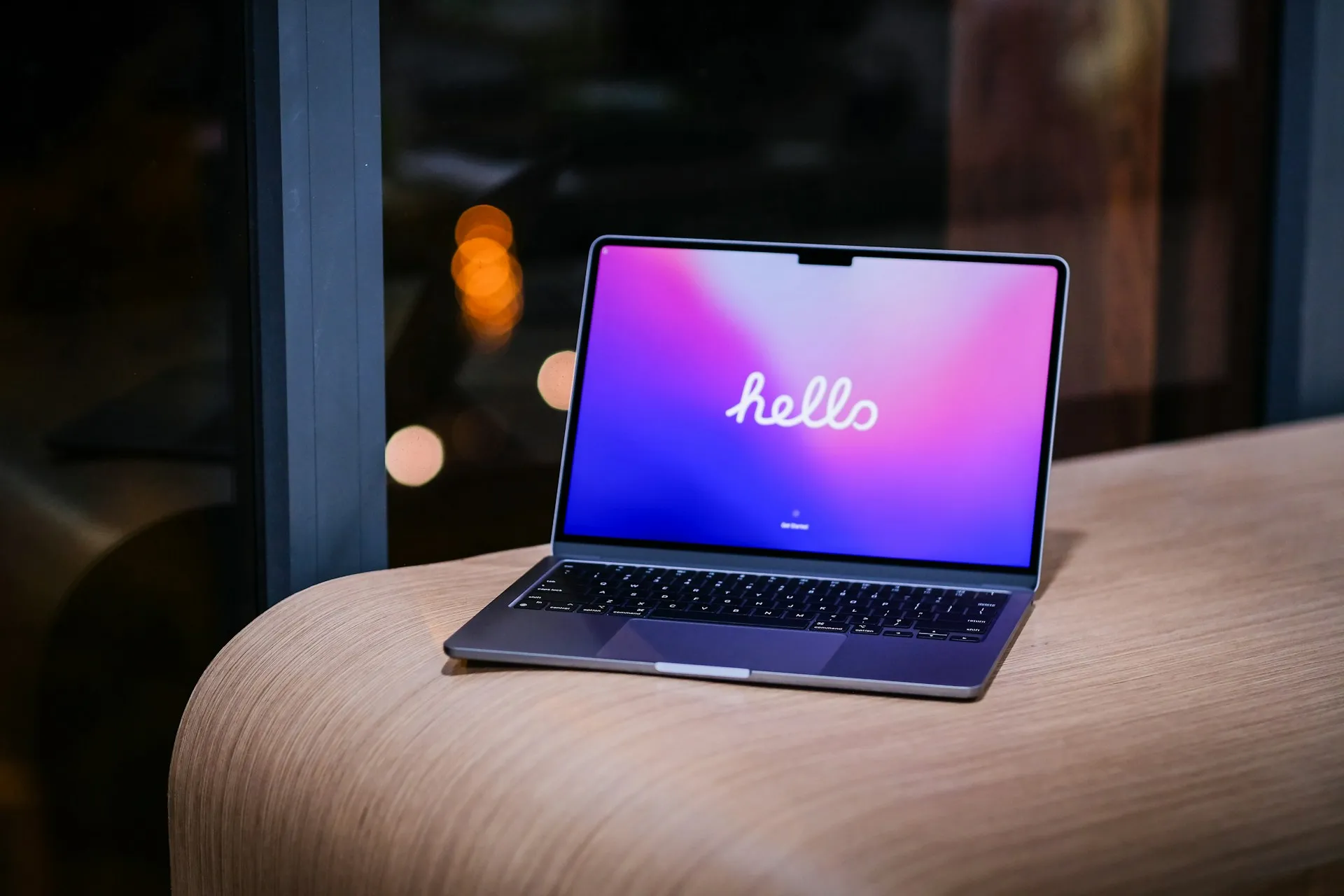
When most of us think about stress-testing our laptops, we imagine running demanding games or heavy video editing software. But imagine your MacBook Air surviving actual combat conditions in Ukraine—that's exactly what happened, and it reveals something remarkable about Apple's engineering philosophy that goes far beyond marketing claims.
The story begins with Ukraine's tech sector, which has demonstrated extraordinary resilience since the conflict began. Ukrainian IT companies are currently operating at approximately 80-90% of their pre-war capacity, according to Information Week. This level of operational continuity under such extreme conditions reveals something crucial: the hardware enabling these operations must be exceptionally robust. The rapid shift to remote work has enabled workforce distribution across safer regions, while over 10,000 Starlink dishes provide crucial internet connectivity when ground-based networks face damage.
What makes this achievement particularly striking is the speed of adaptation. Companies like MacPaw have implemented comprehensive business continuity plans that allowed employee relocation to safer areas within just two days, Information Week notes. This rapid deployment success depends entirely on having reliable hardware that can function immediately in new, unpredictable environments—from makeshift home offices to temporary shelters.
What makes Apple devices battlefield-ready?
The durability that's allowing MacBook Airs to function in war zones isn't accidental—it's built into Apple's fundamental design approach. Apple constructs Mac computers using recycled aluminum enclosures specifically engineered to withstand extreme conditions, according to Apple's official specifications. This aluminum construction serves a dual purpose: environmental responsibility and exceptional structural integrity that can handle "pretty much anything," as Apple states.
The engineering philosophy becomes particularly evident in the latest M4 MacBook Air's thermal management approach. The device operates entirely on passive cooling, with the aluminum body serving as an integrated heat dissipation system, Mac Observer reports. This design choice eliminates moving parts—critical when operating in environments with power fluctuations, dust, debris, and physical shocks, where traditional fan-based systems would quickly fail.
The thermal performance data reveals why this matters for extreme reliability. During intensive stress testing with games like Resident Evil 4 running at full 2880×1864 resolution, the laptop maintained comfortable operating temperatures for over an hour without feeling hot to the touch, testing results show. Even under extreme processor loads running across all ten cores for 75 minutes, battery temperatures only reached 31 degrees Celsius, according to the same testing. This thermal stability means consistent performance even when operating conditions become unpredictable.
How Ukrainian tech companies adapted their hardware strategies
The conflict has fundamentally changed how Ukrainian companies manage their technology infrastructure, providing real-world validation of Apple's durability engineering under the most demanding conditions imaginable. MacPaw, one of Ukraine's prominent tech firms, began disaster planning as early as late 2021 when Russian forces were building up along the border, TechReviewers reports. Their preparation included moving all office infrastructure to cloud-based systems and establishing satellite internet backup through Starlink connections.
Hardware distribution became a critical survival strategy that tested device durability in unprecedented ways. System administrators now personally deliver laptops to remote team locations, sometimes driving considerable distances to ensure staff have working equipment. Companies had to shift from local hardware procurement to sourcing new laptops from abroad, creating entirely new logistics challenges. These devices needed to function immediately upon arrival, without technical support infrastructure, in environments ranging from basement shelters to hastily-arranged remote workspaces.
When MacPaw's headquarters was struck by a Russian missile in December, shattering windows and damaging engineering equipment, their distributed hardware strategy proved essential. Most team members were already working remotely with reliable equipment that had proven its durability through months of operation under unstable power conditions, temperature extremes, and constant mobility. The company's three-floor office space was hit hard, with one floor still non-operational, but the distributed MacBook Air fleet enabled immediate business continuity.
Beyond laptops: Apple's broader role in modern conflict
The durability story extends beyond MacBooks to Apple's entire ecosystem, demonstrating how consumer-grade engineering can exceed military specifications. Ukrainian forces have integrated iPads into Soviet-era aircraft as control systems for Western weapons, with U.S. officials confirming that tablets are being used to modernize older jets' weapon systems. Video evidence shows iPads mounted directly in front of pilots in Su-27 Flanker aircraft, handling everything from digital maps to weapons deployment systems, according to Apple Insider.
The integration capabilities reveal sophisticated engineering adaptability: these iPads can interface with U.S.-supplied AGM-88 missiles, Joint Direct Attack Munitions, and potentially French Hammer bombs and UK PaveWay IV precision-guided weapons, Apple Insider details. Ukrainian Army Lieutenant Colonel Yelyzaveta Boiko describes the iPad-based Delta battlefield management system as "Google for the military," combining digital mapping with secure communications.
This military adoption demonstrates a crucial engineering principle: Apple's focus on building robust consumer devices creates products that can adapt to specialized applications without modification. The same shock resistance, thermal management, and power efficiency that make iPads reliable for everyday use enable them to function in high-vibration aircraft environments where traditional military computers might require extensive hardening modifications.
The real-world implications for everyday users
What does battlefield-tested durability mean for regular MacBook Air users? The same engineering that allows these devices to function in war zones translates to exceptional reliability for everyday challenges that suddenly seem manageable by comparison. Apple's commitment to long-term software support means macOS updates continue delivering new features while maintaining security, with automatic download options ensuring systems stay current, Apple confirms.
The M4 MacBook Air's capabilities extend well beyond basic tasks—tests prove it excels at office work, streaming, multitasking, media editing, and moderate gaming, all while maintaining the passive cooling that proved so reliable under extreme conditions. For users requiring even better thermal performance, Apple provides modification options using thermal pads to enhance cooling, the same source notes.
Consider the practical implications: if your MacBook Air can handle Ukrainian power grid instability, missile-induced vibrations, dust from damaged infrastructure, and constant relocation stress, then everyday scenarios—coffee spills, cross-country flights, dropped backpacks, or working from a poorly air-conditioned home office—represent minor challenges for the same engineering systems. The aluminum construction that survives combat conditions provides exceptional protection against typical consumer hazards.
What this means for the future of durable computing
The Ukrainian experience demonstrates that modern computing demands have evolved beyond traditional performance metrics toward reliability and adaptability under extreme conditions. Ukrainian tech companies have maintained remarkable productivity levels—with firms like MacPaw distributing over $12 million in humanitarian aid since 2022 while continuing their core business operations. This dual capability—maintaining technical operations while supporting humanitarian efforts—demonstrates how reliable hardware enables organizations to exceed their primary function when circumstances demand it.
The integration of consumer devices like iPads into military systems points toward a future where the line between civilian and specialized hardware continues blurring, with reliability and adaptability becoming more valuable than raw specifications. Companies that emerge from these challenging conditions often develop exceptional resilience, suggesting that survival through extreme circumstances indicates strong long-term viability, industry observers note.
This real-world testing under the most demanding conditions possible provides insights that no laboratory stress test could replicate. When Ukrainian tech workers can maintain their productivity using MacBook Airs while dealing with missile strikes, power outages, and infrastructure damage, it validates an engineering approach that prioritizes fundamental reliability over specialized features. This battlefield validation ultimately benefits all users who depend on these devices for their most important work, whether that's running a startup, creating content, or simply staying connected with family—proving that the best durability comes not from military-spec modifications, but from building everyday equipment so well that it excels even in extraordinary conditions.





Comments
Be the first, drop a comment!