



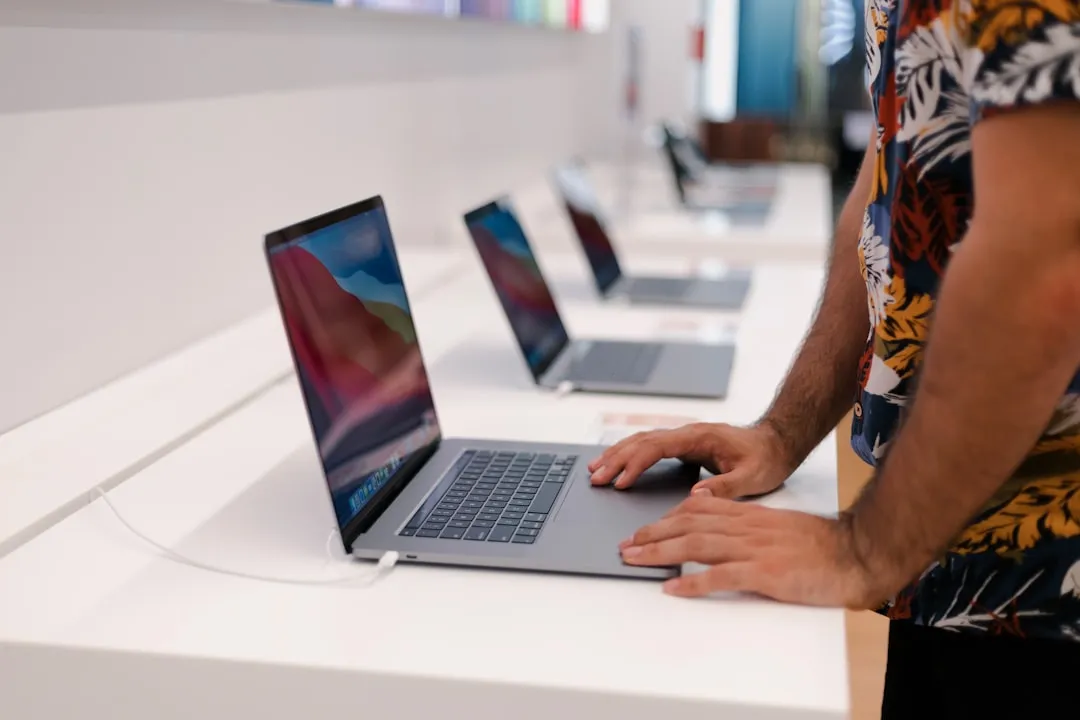
Apple's MacBook Neo triggered supply strain almost immediately after becoming available March 11, 2026, following its March 4 announcement. Within weeks, demand had significantly exceeded expectations, prompting Apple to raise production orders and shift more manufacturing volume to Foxconn, Digitimes reported in April 2026. Tim Culpan reported in his Culpium newsletter, according to 9to5Mac, that Apple now plans roughly 10 million MacBook Neo units, about twice its initial order, requiring TSMC to produce a fresh run of A18 Pro chips. When a company scrambles to add capacity weeks after launch, that's a signal its initial forecasts didn't account for the volume that materialized.
The Neo launched at $599, or $499 for students, powered by the A18 Pro chip from the iPhone 16 Pro. It's the first Mac to run a chip derived from Apple's iPhone-class processor, Ars Technica noted at launch, and by far Apple's most affordable laptop ever. That price appears to have unlocked a buyer segment Apple had never seriously competed in before and the demand that followed suggests the company underestimated just how large that segment was.
How we know Apple got the MacBook Neo demand wrong
The Foxconn story is the clearest signal. Supply chain sources told Digitimes that MacBook Neo demand significantly exceeded expectations, with Apple moving to raise manufacturing orders and expand Foxconn's share of that production within a month of launch. Reactive capacity increases point to one thing: the forecasts were off.
Hitting $599 was itself an achievement outside observers hadn't fully counted on. PCMag's reviewer noted that given soaring memory prices, general inflation, and an unpredictable tariff environment, reaching that price point felt like something Apple wasn't supposed to be able to pull off. The price surprised the market before the demand numbers confirmed it surprised Apple too.
The education discount sharpens that picture. A $100 reduction on a $600 laptop carries proportionally far more weight than the same discount on an $1,100 MacBook Air, Ars Technica observed. Many students and education buyers had been priced out of new Mac laptops at prior entry prices. Pre-orders opened March 4, 2026; devices arrived March 11. The supply chain was feeling pressure almost immediately.
One data point worth separating from the demand story: non-Apple notebook brands had been front-loading shipments earlier in 2026 to hedge against rising component costs, Digitimes reported before the Neo launched. That trend explains broader notebook shipment patterns across the industry. It doesn't explain Apple's production scramble. The initial demand surge was primarily a price story; the follow-on supply and pricing risk is now also a component-cost story.
What $599 actually buys
The display is the standout specification. Apple lists the Neo's Liquid Retina display at 500 nits of brightness, with support for 1 billion colors and sRGB color. Budget laptops at this price rarely come with displays like this. That alone repositions the competitive conversation.
Performance is more nuanced, and the nuance matters for understanding who this laptop is actually for. In single-core benchmarks, the Neo runs around 42% faster than the original M1, Ars Technica measured. That makes everyday tasks — browsing, writing, and light productivity — feel fast. The picture changes under sustained load: across multi-core benchmarks, video encoding, and GPU workloads, the Neo runs at roughly 70% of M1 MacBook Air speed in tested workloads, per Ars Technica. For a $599 laptop aimed at students and casual users, that ceiling rarely gets tested in daily use, but it is still worth knowing where it is.
Apple rates the MacBook Neo for up to 16 hours of video streaming and up to 11 hours of wireless web use. The Neo carries a smaller 36.5Wh battery than the MacBook Air, but either figure is competitive at this price.
Against direct competition, the value case holds. The Framework Laptop 12 starts at $799 for a comparable configuration with a weaker display; Microsoft's Surface Laptop 13-inch originally started at $899, though Microsoft later raised that starting price to $1,149, per Ars Technica. Apple came in $200 to $300 below those alternatives while delivering a better screen.
Why buyers accepted the compromises, and which ones will matter
The Neo's target buyer is someone for whom the $1,100 MacBook Air was never an option. For a student, a first-time Mac buyer, or someone adding a secondary machine, the performance ceiling isn't a dealbreaker. Everyday single-core tasks run fast. The compromises that will cause real friction over time are different ones, and some are permanent.
The 8GB RAM ceiling is the most consequential. It's fixed, non-upgradeable, and already visible in normal use. Under typical multitasking loads, the Neo is regularly under memory pressure: browser tabs reload on return, apps take longer to open, and video calls drop frames, Ars Technica documented in its review. Ars Technica separately noted in 2024 that Apple had moved its baseline Macs from 8GB to 16GB of memory without raising entry prices, effectively acknowledging that 8GB was no longer enough for much of the lineup.
Charging adds friction too. The included 20W adapter charges from 0 to 43% in an hour; a 45W charger reaches 66% in the same window, Ars Technica tested. The two USB-C ports are asymmetric: the rear port runs USB 3.2 Gen 2 at 10Gbps and handles external display output; the front port runs USB 2.0 at 480Mbps. No Thunderbolt, no MagSafe. Touch ID requires stepping up to the $699 model, and the base configuration ships without a backlit keyboard.
These are real trade-offs. The production data suggests buyers in this segment understood them and took the deal anyway, accepting a lower usability ceiling in exchange for a price floor no Mac laptop had ever reached before.
What the demand surge for the Apple MacBook Neo says about what comes next
The supply response delivers the clearest lesson from the Neo's first weeks on sale: meaningful volume demand exists for a sub-$600 Mac, and Apple's previous laptop lineup had largely left it unaddressed. Foxconn's expanded production share reflects catching up to demand that Apple's initial orders didn't account for, Digitimes reported. As of early May 2026, Apple's online store was showing two- to three-week waits, according to The Verge; availability may change as production scales.
But the follow-on question is whether Apple can keep that $599 floor intact. That production increase also changes the economics of the Neo: later batches may require newly manufactured A18 Pro chips rather than leftover iPhone 16 Pro inventory, adding pressure to the $599 starting price. Per MacRumors, because later batches may carry higher chip and memory costs, Apple is reportedly weighing whether to drop the $599 / 256GB configuration and make the $699 / 512GB model the practical entry point. Apple has not announced such a change.
For competitors, the pressure is immediate. A Liquid Retina display with 10-bit color and Apple-rated battery life at $599 sets a new reference point for the budget laptop segment. Brands currently charging $799 to $899 for similar or lesser hardware will have a harder time justifying those prices to buyers who know this option exists.
The harder question is what Apple does with the category it has now created. MacRumors, citing Tim Culpan's Culpium newsletter, reported that Apple is planning a next-generation MacBook Neo with an A19 Pro chip and 12GB of RAM. Culpan's newsletter said that would likely be enough memory for most users to avoid the current model's memory-pressure issues. A second-generation Neo built around that chip would directly address the one limitation most likely to erode buyer satisfaction as the laptop ages. Eight gigabytes was marginal at launch. Two or three years from now, it becomes a genuine constraint for the exact buyers this machine is meant to serve.
The demand case has been made more clearly than Apple apparently expected. Whether the Neo becomes a permanent budget tier or a one-cycle experiment will likely depend heavily on whether the next version fixes what the first one deliberately left out.








Comments
Be the first, drop a comment!