



New iPod in 2026: Why the Owned-Music Player Still Makes Sense
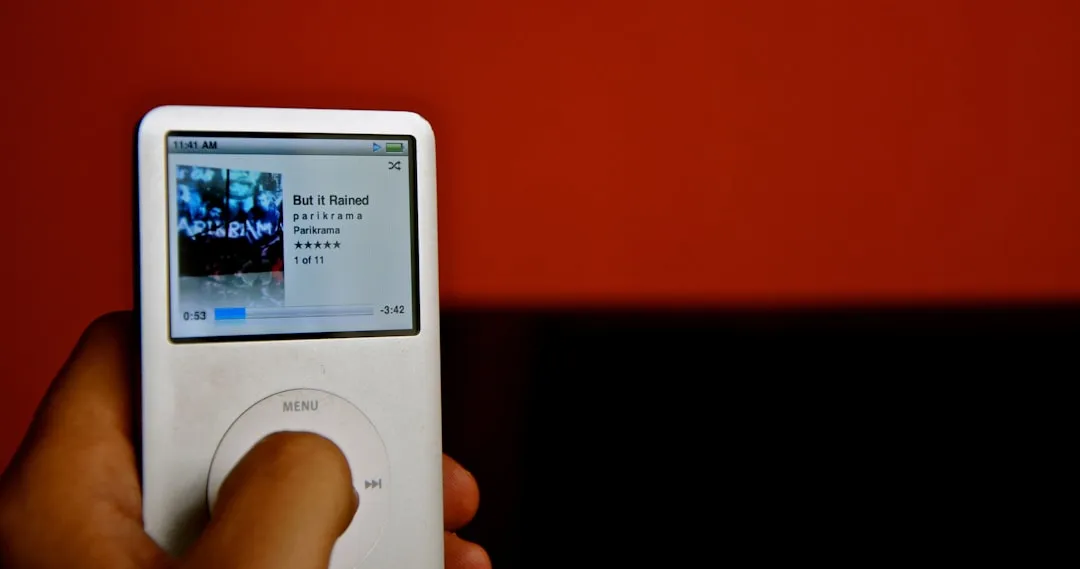
Twenty-five years ago this week, Steve Jobs walked on stage and made a promise that fit in six words: a thousand songs in your pocket. The device had a monochrome screen, a mechanical scroll wheel, and a 5GB hard drive. It looked, as The Verge noted this week, like the relic it now is. The argument for a new iPod in 2026 has nothing to do with nostalgia for that hardware. It has everything to do with what streaming built on top of the problem the original device solved and why a dedicated player for owned music, designed for an algorithm-heavy era, is a category waiting to exist.
Streaming solved the problem. It created a different one.
The original iPod solved music scarcity. Streaming solved it so thoroughly it built a new problem on top. Apple Music now offers over 90 million tracks, the BBC reported when the iPod was discontinued. Access is no longer the constraint. The constraint is the listening experience itself: passive, algorithm-directed, and rented rather than owned a mode that streaming's nearly 300 million Spotify subscribers have largely come to treat as the default, The Verge reported this week.
That default shapes behavior in specific ways. You open an app, something starts playing, a recommendation system decides what comes next, and a notification arrives on the same screen where your music lives. The case for a new dedicated music device in 2026 is not about click-wheel nostalgia or audiophile hardware. It's about a specific failure mode in the current model, and a growing number of listeners who have started looking for a way around it.
Is Apple making a new iPod? The market says it could. The business says it won't.
Google searches for "MP3 player" tripled since last fall after sitting essentially flat for five years, The Verge reported this week. That's a leading indicator, not proof of a mass market. It suggests an unmet need surfacing in a measurable way.
Dedicated music player retailers have tracked a clear shift in who is buying since the pandemic. Before Covid, the customer base was almost exclusively audiophiles pursuing high-resolution audio as a hobby. Since then, a new and more casual buyer has emerged alongside them. As The Guardian reported last September, this newer buyer already has streaming, is not replacing it, and is choosing to route around its defaults: they want off the algorithm, they want music they sought out themselves, and they want to own files rather than lease access from a platform.
The ownership infrastructure backing this up is larger than the search trends suggest. Bandcamp sells 15 million digital albums per year and has paid artists more than $1.7 billion to date, The Verge reported this week. That's a parallel ecosystem for music ownership operating at real scale, largely invisible in the streaming conversation. These buyers have already decided what streaming doesn't do for them. They are buying files. They just don't have a great modern MP3 player to play them on.
Spotify raising its prices for the third time in as many years, most recently in January, adds pressure to that equation, The Verge noted. The rental model keeps getting more expensive. That math shifts incrementally, but it shifts.
What the device needs to be and what Sleevenote gets right
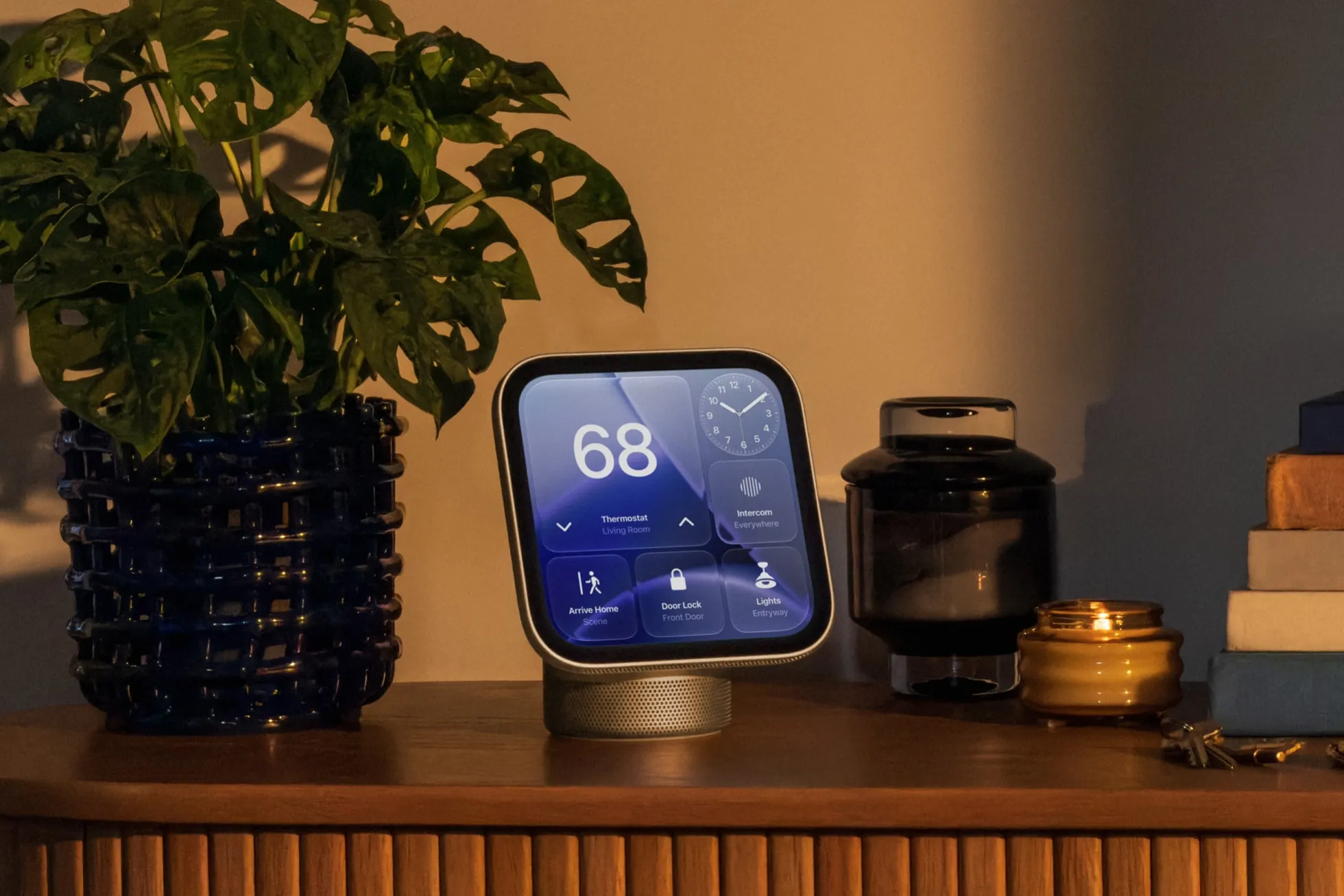
The clearest proof of concept for this category is Sleevenote, a startup whose device reads like a design brief built entirely from user frustration. The hardware centers on a 4-inch square screen organized around album art, not artist names or song lists. No playlists. No algorithms. No endless shuffle. The creator's description, as The Verge reported this week: "a Kindle for music" ten thousand albums, but one at a time.
The Kindle comparison earns its keep. Amazon built a category by making a single-purpose device feel more deliberate and less distracted than reading on a phone. Sleevenote is attempting the same move for music. The device plays DRM-free files from Bandcamp, Beatport, and Amazon Music downloads, tapping directly into the ownership ecosystem that already exists. After a small preorder campaign, the startup is currently manufacturing its first 100 units, with a limited sale expected in June, The Verge reported this week.
One hundred units is not a market. It is an unusually precise statement of the problem it's trying to solve.
What this category requires in practice: local file storage, an album-first interface, dead-simple sideloading, and a design that makes choosing and playing a record feel like a distinct act rather than a default behavior. Battery life measured in days, not hours. Offline-first by default, no notification waiting on the same screen as your music. The day-to-day improvement is concrete and behavioral, not technical.
The audiophile case is real but secondary. As The Guardian explained last September, dedicated players route their entire internal architecture around audio reproduction better digital-to-analogue conversion, wired audio output as standard, none of the compromises a smartphone makes. Sound fidelity matters in this category. But the actual product bet is on behavior, not specs.
Current options don't fill this role. Audiophile players serve a niche willing to spend hundreds, and the technology can cost into the thousands, prioritizing technical fidelity above all else. Old MP3 players are hobbled by limited storage, format incompatibility, and no warranty The Guardian explicitly advises against buying one. The gap is a mainstream intentional-listening device, priced within reach of someone who already has Spotify and Bandcamp and wants a better way to use the second one. Price is the gating factor. This category probably doesn't work at audiophile margins. It works at something closer to impulse-premium.
Apple's position: all the capability, none of the incentive
Apple's decision to discontinue the iPod in 2022 was coherent on its own logic. Greg Joswiak, Apple's senior vice president of worldwide marketing, said the iPod's spirit now lives across iPhone, Apple Watch, iPad, and Apple Music, CNN reported when the product was killed all of which play music, none of which are music players. The internal concession had come earlier. The last iPod touch, refreshed in 2019, launched at $199 with a pitch built around augmented reality, Group FaceTime, gaming performance, and Apple Arcade, according to the Apple Newsroom announcement. Music appeared in the press release as a storage capacity feature. Apple killed the product three years later because it had already stopped being a music device.
The structural obstacle to an Apple iPod revival is Apple Music itself. A dedicated ownership-first device would sit awkwardly beside a subscription model built on the opposite premise pay monthly, access everything, own nothing. Apple has limited incentive to build a well-designed exit ramp from its own service.
That counterpoint deserves a fair hearing. Apple has cannibalized its own products before, and more aggressively than most companies would tolerate. The iPod's discontinuation was cited specifically as the clearest example of Apple refusing to protect a product line when something better came along, the BBC reported at the time. A focused device positioned alongside Apple Music local files first, optional streaming, no recommendation engine is not a contradiction of the Apple ecosystem. It fits the same product instinct that produced Screen Time and Focus modes: tools that help users be more deliberate about how they engage with their devices. Apple has the design capability and the distribution to own this category. It has simply decided, so far, that it doesn't need to.
Someone will build the category. The question is who.
The user this device is built for is not the user the original iPod served. That user had a scarcity problem: music was expensive, physically distributed, and hard to carry in quantity. The 2026 version has the inverse too much music, too frictionlessly delivered, by systems with structural incentives to maximize listening time rather than listening quality.
The pieces are in place. Bandcamp's 15 million annual album sales, per The Verge, represent a real ownership infrastructure. The behavioral shift toward intentional listening is documented. A startup is testing the design hypothesis at small scale. What the category lacks is a product with the quality and distribution to make the problem feel solved.
Three frictions still stand between this category and mainstream adoption. Most listeners no longer buy files and have no habit of doing so. Syncing local media remains genuinely clunky on most platforms. And niche hardware tends to die on software polish and retail reach the things money and attention fix, but that a 100-unit startup cannot yet provide. The category is open, but only for a company that can make ownership feel simpler than streaming's defaults. That means frictionless file acquisition, sync that works without thinking about it, and a retail presence that puts the device in front of people who didn't know they wanted it.
The lesson the original iPod taught is not about hardware. It's about category definition: whoever names the problem precisely and designs a product legible enough to solve it tends to own that category for a long time. Sleevenote is making 100 units. The window is open. The 25th anniversary of the iPod is a fitting week to notice that no one has walked through it yet.


Comments
Be the first, drop a comment!