



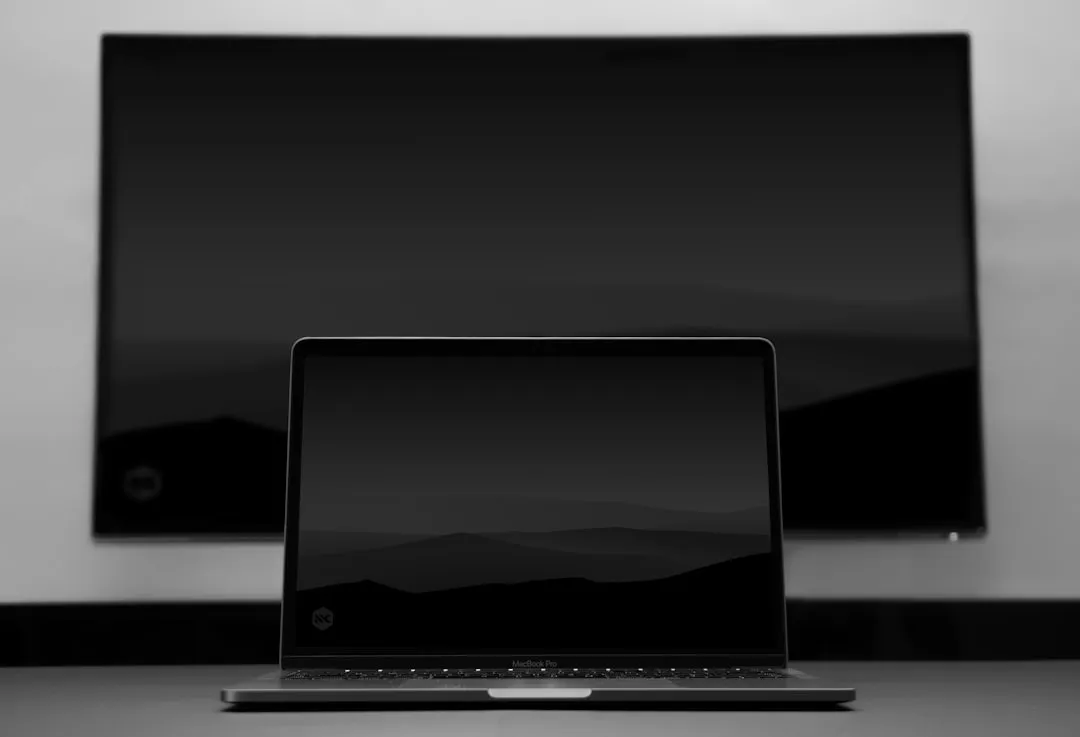
The OLED MacBook Pro release date is still unsettled, but Samsung Display's latest manufacturing progress gives Apple's long-anticipated upgrade more solid footing than it had even a month ago. Samsung has pushed yields on its Gen 8.6 OLED line above 90%, with some individual process stages reportedly hitting 95%, The Elec reported, as what the display industry calls "golden yield" territory for stable mass production. Panel shipments to Apple's assembly partners could begin as early as June 2026.
That progress matters because large-format laptop panels are substantially harder to manufacture than smartphone OLEDs. Maintaining brightness uniformity and color consistency across 14-inch and 16-inch surfaces has been one of the central production challenges.
Samsung held a sample-shipment ceremony on March 16 and has been running test production since, per The Elec. This is not a rumor cycle that just started. The project has been in motion for months.
What the supply chain confirms and where the uncertainty lives
The production timeline tells a fairly clear story. Based on a roughly 10-week pipeline from glass substrate input to finished module, glass input likely started in May, putting full-scale panel production on track for July at the latest, The Elec estimated. Samsung is currently running half of its facility's 15,000-substrate monthly capacity and is targeting approximately 2 million panels for the full year, earmarked for 14-inch and 16-inch MacBook Pro models.
One apparent contradiction in the reporting is worth resolving directly. Sources citing yields above 90% at individual process stages are measuring something different from Samsung's overall final-line defect rate, which still sits at 5-10% against a target of around 5%, per Digital Today. Process-stage yields can be strong while end-of-line rates remain in stabilization. Samsung is credibly close to production-ready. Close is not the same as fully stabilized.
That distinction matters for understanding where the real risks sit. Display production is one variable; it has improved significantly, but has not fully cleared. Chip supply and final assembly timing are separate variables, and current reporting does not resolve them. Bloomberg's Mark Gurman has placed the Apple OLED MacBook Pro launch window at late 2026 to early 2027, with early 2027 increasingly cited as more likely given industry-wide chip shortages. Panel stabilization, chip supply, and assembly timing all remain live variables. Supply-chain progress reduces the display risk; it does not eliminate the timing uncertainty.
OLED MacBook Pro release date context: what the display upgrade actually changes
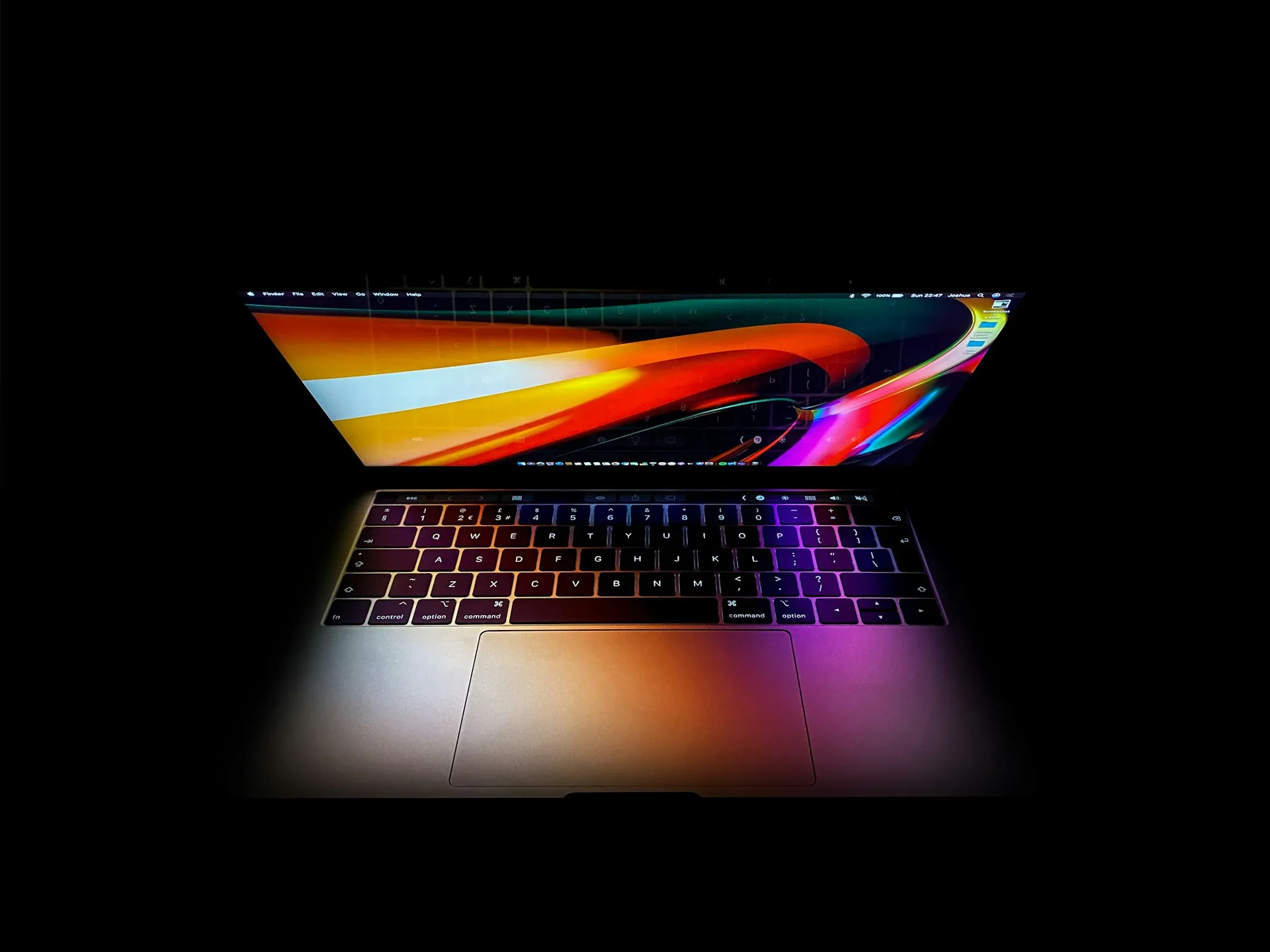
The current MacBook Pro uses an IPS LCD with mini-LED backlighting. That is genuinely good hardware: local dimming improves contrast significantly over older LCD designs, and peak brightness is high. But it is still a backlight-based approximation. OLED eliminates the backlight entirely; each pixel produces and extinguishes its own light, which is how the technology achieves native true blacks rather than the very dark grays that even a well-tuned LCD produces. Backlight bleed around bright elements on dark backgrounds is a structural limitation of LCD designs, not a tuning problem, per Digital Today this week.
The panels Samsung is building use a tandem two-stack OLED structure, the same technology found in the latest iPad Pro, combined with an oxide TFT backplane and hybrid encapsulation pairing a glass substrate with thin-film sealing. Stacking two emissive layers rather than one raises sustainable brightness while distributing wear across both layers. That addresses the longevity concern that has historically made OLED a harder sell in always-on laptop environments, where a static menu bar and dock icons sit in the same position for thousands of hours.
The difference will be most visible in HDR video, dark-scene content, and creative workflows where shadow detail and color accuracy are central: photography editing, video color grading, and motion graphics. General productivity use will show improved contrast. Whether that improvement alone justifies waiting depends on what the work requires. No benchmark comparisons between these new panels and the existing mini-LED MacBook Pros exist yet. That data requires hardware in hand.
Burn-in risk with static interface elements remains an open question. The tandem architecture and the design emphasis on longevity suggest Apple and Samsung are aware of the concern, but no sourced data currently quantifies how it has been addressed for MacBook Pro use cases.
Apple's Mac display strategy: the bigger picture
The rollout structure is consistent with how Apple has moved before. OLED goes to MacBook Pro first; MacBook Air is expected to stay on LCD until around 2028, per The Elec. Applying OLED to the Mac extends the same display technology path already established in iPhone and iPad to the laptop line. Premium models lead; the wider lineup follows years later. This is the opening move in that transition, not a one-off upgrade.
Separately circulating speculation about a thinner chassis, Dynamic Island replacing the notch, touchscreen support, and possible cellular connectivity has not been confirmed. The display transition has real supply-chain evidence behind it. The broader hardware redesign does not, at least not yet.
What the reporting currently supports: Samsung's yield progress, the panel architecture, the target model sizes, an approximate 2-million-unit supply volume for the year, and a launch window somewhere between late 2026 and early 2027. What it does not resolve: which end of that window Apple hits, when chip supply stabilizes, and what the rest of the hardware package actually looks like.
The watchpoints ahead are specific. Samsung's commercial shipment confirmations in June 2026 would be the first concrete signal that the panel supply side has cleared. Component supply updates from Apple's assembler network would help narrow the launch window. Any Apple fall 2026 event that includes Mac hardware would settle the late-2026 scenario either way.






Comments
Be the first, drop a comment!