



Paul McCartney Apple 50th Anniversary Show: History and Clues
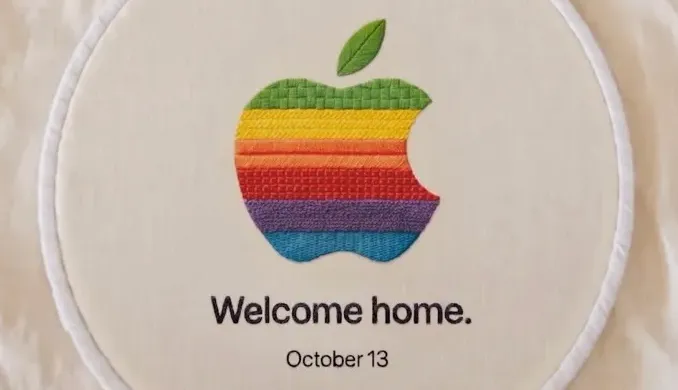
Bloomberg's Mark Gurman reported yesterday that Apple's 50th anniversary finale, an internal employee event at Apple Park tonight, will feature a headliner who is "still going strong," "was part of the British Invasion," and is someone Steve Jobs "would've been ecstatic" about, according to 9to5Mac. Apple has confirmed nothing. But the Paul McCartney Apple 50th anniversary inference sits on a foundation of converging clues, a specific promotional window, and decades of unfinished business between Apple and The Beatles that Jobs himself described as a decade-long dream.
Apple hasn't spoken. McCartney's representatives haven't spoken. There is no public event listing. What follows is the case for the identification, the history that gives it weight, and what Apple might do with the moment if the inference holds.
Why the clues point to McCartney, and why the alternatives don't hold up
Gurman reported that Apple staffers were "pumped" after being told who the headliner is, then offered three descriptors: actively performing, connected to the British Invasion, and someone Jobs personally would have celebrated. That combination feels narrow, but it's worth testing before accepting it.
The British Invasion produced other surviving, active performers. Mick Jagger and the Rolling Stones fit "still going strong" and "British Invasion." But the Stones are a band booking, not a solo one, and Gurman used "he" when referring to the headliner, as 9to5Mac noted. That narrows it to a solo male act. Rod Stewart qualifies on the first two counts, but the Jobs connection is thin. The third clue is the one that closes it off: Jobs' documented, publicly stated fixation on The Beatles, and specifically the years Apple spent trying to bring their catalog to iTunes. That history belongs to McCartney and his former band, not to anyone else from that era.
The geographic and timing case reinforces it. McCartney wrapped a tour in November, played two shows in Los Angeles this past weekend, and has a new album, The Boys of Dungeon Lane, due May 29, per 9to5Mac. A high-profile surprise appearance at a moment of personal visibility and corporate milestone isn't a stretch. It's a promotional sweet spot for both sides.
9to5Mac assessed the identification as "almost certain." That's a reasonable conclusion from the available evidence. But reasonable conclusions from leaked descriptors are still conclusions, not confirmations, and that distinction matters until tonight.
Apple, The Beatles, and the long road to this moment
The relationship between Apple Inc. and Apple Corps, The Beatles' company, ran through decades of litigation over the use of the Apple name in music. Three separate legal disputes. The last one settled in 2007, clearing the way for what eventually became the iTunes catalog deal three years later.
When The Beatles finally arrived on iTunes in November 2010, Jobs' public statement was unusually personal. "We love the Beatles and are honored and thrilled to welcome them to iTunes," he said in the accompanying press release, cited by 9to5Mac. "It has been a long and winding road to get here. Thanks to the Beatles and EMI, we are now realizing a dream we've had since we launched iTunes ten years ago."
Jobs knew exactly what he was referencing when he chose "a long and winding road." The Beatles weren't a catalog win for the music library. They were the specific thing Apple had wanted and couldn't have, and their arrival was Jobs framing it as a resolution, not just a deal.
That history is what separates a McCartney booking from a prestige hire. If tonight's headliner is who Gurman's clues suggest, Apple would be turning that old legal and cultural feud into a staged company moment, at its own campus, on its 50th birthday. Jobs' 2010 statement suggests McCartney wouldn't just be the most famous available British Invasion figure. He'd be the figure who represents what Apple most publicly wanted and couldn't have for a decade.
The Gurman clue about Jobs' hypothetical reaction isn't decorative. It's pointing directly at that history.
How the Paul McCartney Apple Park appearance fits the anniversary campaign
The anniversary run started March 13 with Alicia Keys performing at Apple Grand Central in New York City, with Tim Cook in attendance. Mumford & Sons followed at Apple Battersea in London in the weeks after, according to Apple's Newsroom.
The bookings have been deliberate. Keys was among the first artists to release her full catalog in Spatial Audio on Apple Music, headlined an Apple Music Live session, and her Rehearsal Room special was among the first immersive experiences built for Apple Vision Pro in 2024, the Apple Newsroom reported. Each performance doubled as a platform statement, a demonstration of what Apple's music infrastructure actually does.
Mumford & Sons at Battersea continued the pattern: artists with existing Apple relationships, performing in Apple spaces, with the venue itself carrying cultural weight.
A McCartney appearance tonight holds to that logic but shifts the register. Keys and Mumford & Sons represent Apple's current music partnerships. McCartney would represent something older: the disputed chapter, the decade-long fight, and the moment Apple decided music was central to its identity. If Apple built this campaign as an escalating series, that's where the escalation was always heading.
What confirmation tonight would actually mean
The Apple Park event is an internal employee celebration. Whether anything gets documented and released publicly is unknown, 9to5Mac noted. Apple has no obligation to share it.
Apple also knows how to work with its own history. The Keys and Mumford & Sons events were publicly announced through the Apple Newsroom. A McCartney performance, given the Apple-Beatles backstory and his album dropping two months out, would be a credible candidate for an Apple Music exclusive release, a Vision Pro immersive experience, or at minimum a public acknowledgment of the kind Apple has already issued twice this month.
None of that is confirmed. All of it is consistent with how Apple has handled this campaign so far.
If McCartney appears tonight, Apple can frame it as closing the loop Jobs opened in 2010: a public feud turned into a deal, a deal turned into a landmark anniversary performance. That story writes itself, and Apple's marketing team knows it. Confirmation would add a live, documented event to what had previously ended only on paper.
That's the real weight here. Not whether the identification is right, though the evidence is strong. But what it means if it is: that the Jobs-era dream didn't end with a press release, and Apple spent its 50th birthday making sure its own employees were the first to see it finished.



Comments
Be the first, drop a comment!