





What the Apple TV MLS Game Shot on iPhone 17 Pro Actually Proves
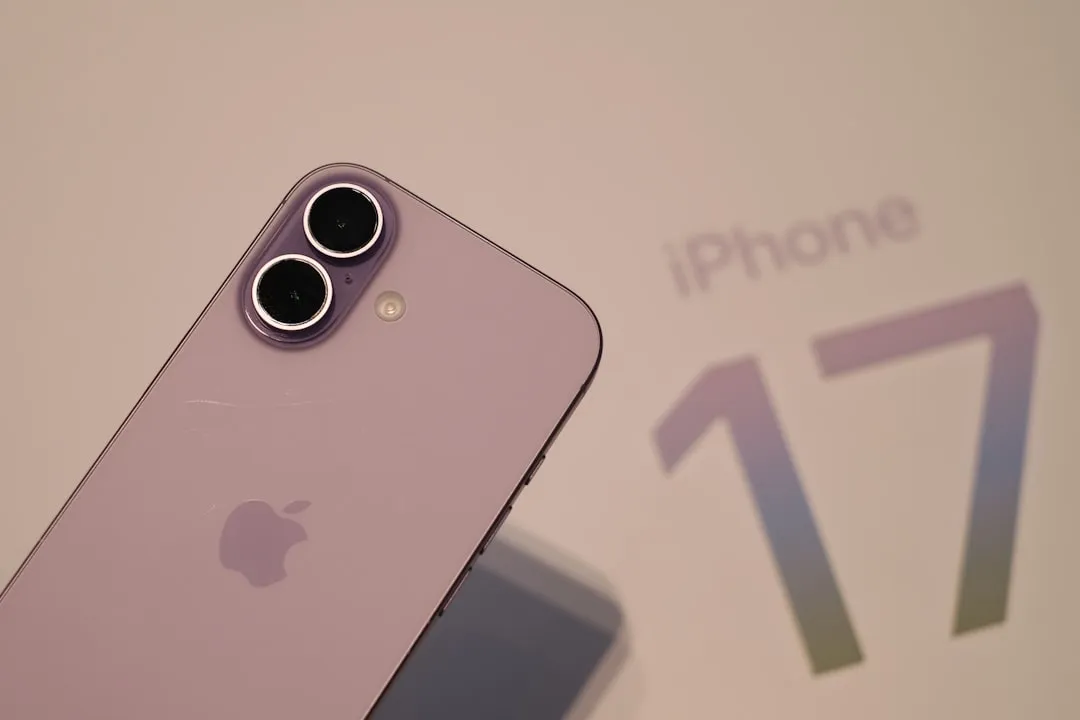
On Saturday, every camera pointed at the pitch for LA Galaxy vs. Houston Dynamo FC will be an iPhone 17 Pro. Apple calls the Apple TV MLS game shot on iPhone 17 Pro a first: "the first time iPhone will be used to capture the entirety of a major professional live sporting event broadcast," according to Apple Newsroom today. That phrasing is specific, and it's the only accurate way to describe what's actually being tested.
iPhone 17 Pro is replacing the capture layer, the physical devices recording the match. The production infrastructure around it stays intact: remote workflows, NEP Group's hybrid onsite-studio ecosystem, transmission systems, and commentary teams in both English and Spanish, with Sports Video Group identifying Jake Zivin, Taylor Twellman, and Jillian Sakovits on the English side and Sammy Sadovnik, Diego Valeri, and González on Spanish. Apple didn't hand a league broadcast to a collection of smartphones. It handed them one specific and demanding job.
What the Apple TV MLS game shot on iPhone 17 Pro actually tests
The phrase "captured entirely on iPhone" refers to image acquisition. The broadcast still runs through the established MLS and Apple production model, which Sports Video Group described earlier this year as a hybrid combining onsite studio programming with remote workflows through NEP Group. Phones at the camera positions; everything else as it was.
That framing is not a deflation of the milestone. Capture is genuinely difficult work. Live soccer involves fast lateral movement across a full pitch, extended zoom distances from fixed positions, and variable stadium lighting at a late-evening kickoff exactly the conditions where broadcast-grade cameras with larger sensors, optical zoom, and purpose-built thermal management have historically outperformed smartphones.
Apple's own language acknowledges the difficulty without softening it. The company describes iPhone as capturing "the speed, skill, pressure, and emotion of the match," per the February Apple Newsroom announcement. That reads as a direct inventory of hard conditions, not a promise about controlled ones.
Taken together, the announcements point to a narrower test: whether iPhones can handle capture, not the full production workflow. Apple isn't claiming to reinvent live sports production. It's claiming iPhone can own the most visually demanding job in one. Saturday is where that claim meets 90 minutes of unpredictable professional sport.
How a six-month progression led to Saturday
The escalation has a traceable record, which matters for interpreting whatever result comes out of it.
At MLS Cup 2025 last December, four iPhone 17 Pro Max units were positioned around Chase Stadium to contribute live footage alongside conventional broadcast cameras. Apple described it as "a first for a live MLS broadcast," but the phones were supplemental. They added angles; they did not own the production.
When the 2026 season opened, iPhones became part of the standard camera complement across MLS broadcasts. "Shot on iPhone" moments became a recurring feature of Saturday Showdown, the weekly slot MLS and Apple designated for elevated production and technological innovation, according to both Apple Newsroom and Sports Video Group earlier this year. Saturday's all-iPhone match is itself a Saturday Showdown broadcast, the slot explicitly committed to going "all-out with technological innovation."
The trajectory from four supplemental phones in December to full-match sole capture this weekend makes Saturday legible as a structured experiment with observable stages behind it. Each earlier step was harder to dismiss as a stunt.
How to judge what the broadcast actually proves
The honest success threshold is not visual indistinguishability from a standard broadcast across every shot type. A more useful standard: a full 90 minutes that doesn't ask the audience to tolerate visible technical compromise in ordinary game situations.
Four specific things are worth watching:
- Wide game cameras: do establishing shots of full-field play resolve cleanly at distance, or show softness when the action is far from the lens?
- Tracking and zoom: does following a run behind the defense produce motion blur or compression artifacts at extended focal lengths?
- Slow-motion replays: do they hold up in clarity and frame integrity against standard broadcast slow-mo?
- Low-light consistency: does image quality degrade as stadium lighting conditions shift through a late-evening kickoff?
A fifth, harder question is whether the shot selection itself reveals workarounds, whether the production leans on angles where smartphones perform well and avoids the ones where they don't. That pattern would be informative regardless of whether individual shots look acceptable.
A successful broadcast would suggest that iPhone 17 Pro can function as the primary capture device in a specific live-sport environment, within a professional production context. It would not suggest iPhones can replace top-tier broadcast cameras across all conditions or production tiers. The test is real, but bounded, and that boundary is where its implications become most interesting.
How the LA Galaxy vs. Houston Dynamo iPhone broadcast fits Apple's MLS strategy
The match falls on the final MLS weekend before the regular season pauses for FIFA World Cup 2026. MLS identified the "tons of noise in the soccer community" ahead of the tournament as the explicit driver for enhanced production investment throughout the year, Sports Video Group reported in February. Running the broadcast on the last weekend before that pause puts it in front of an unusually attentive North American soccer audience, which changes the stakes of the test.
MLS EVP Seth Bacon framed the Apple partnership in explicitly strategic terms from the outset. "Since Day 1, we talked about how this is going to drive global reach and engagement," with marquee packages designed to "build, invest, and enhance our storytelling around the biggest matches on the calendar," he told Sports Video Group earlier this year. A test that has to perform during peak visibility is a different kind of test than one run quietly in March.
Apple's incentive runs parallel and is openly stated: the broadcast is framed as a showcase of "iPhone 17 Pro in action," per today's Apple Newsroom release. Live sport is a credible proof-of-concept venue precisely because nothing about it is controlled. The game runs 90 minutes, the motion is unpredictable, and the light changes. For a product claim about professional imaging capability, that environment is more persuasive than any studio demo.
What a successful result would actually mean for production
The most immediate implication is not at the top of the production hierarchy. Major network sports broadcasts involve camera systems with interchangeable lenses, long-throw optics, dedicated transmission hardware, and redundancy infrastructure that no current smartphone replicates across every use case. The near-term question is not whether iPhones replace those systems at the flagship level.
The more relevant question is whether smartphones become viable as the primary capture layer in contexts where deploying that full package is cost-prohibitive or logistically difficult. MLS and Apple's own production model already points toward where that matters. The partnership relies on remote workflows throughout the schedule, as Sports Video Group noted in February, a model built around operational flexibility and reduced physical infrastructure. Smartphone-first capture, if validated, could extend that model to the camera layer itself, reducing deployment weight and infrastructure demands for matches outside the marquee tier.
The broader implication extends beyond MLS. Mid-tier league coverage, international matches in markets where shipping broadcast equipment is expensive, remote productions where physical footprint is constrained these are all contexts where Saturday's result will matter to people paying attention. Saturday Showdown is specifically the slot MLS and Apple designated for the league's production ambitions; a credible all-iPhone broadcast in that slot is the strongest case that context has had yet.
What to watch for on Saturday
Watch the wide shots first. If iPhone 17 Pro can hold full-pitch establishing angles cleanly, without the soft edges or compression noise that tend to surface when smartphone lenses push their range, that's the most direct confirmation that the capture layer has cleared the hardest bar.
If the production holds up through 90 minutes, it validates smartphone capture within a professional context at a specific tier of sports media. Not everywhere, but somewhere that happens to be growing, on a platform built around remote production and global reach. That's a meaningful data point, not a revolution, but more than a stunt.
If something goes visibly wrong, the more interesting story is the one underneath: which shot types failed, and whether the workarounds become visible in the edit. Either outcome carries information about where smartphone imaging actually sits relative to professional broadcast capture, not where the marketing puts it.
The industry won't settle anything from one match. But this one arrives at the right moment, in the right slot, with enough documented history behind it to make the answer worth paying attention to.

Comments
Be the first, drop a comment!