



20th Anniversary iPhone Two Sizes Reportedly Planned as Equal Flagship Lineup
Apple is reportedly planning two 20th anniversary iPhone models for 2027, not a single commemorative flagship. Bloomberg reporting covered by MacRumors this week says both sizes would share identical specs, including the same next-generation 2nm A21 chip and the same four-edge curved display. Buyers wouldn't have to choose between owning the anniversary device and owning their preferred screen size. That's a meaningful structural shift from how Apple handled the iPhone's tenth birthday.
In 2017, one device carried the whole symbolic weight. The iPhone X was the anniversary iPhone, full stop. The two-size plan reportedly being developed for 2027 works on different logic: both models get the same internals, the same display treatment, and presumably the same design statement. Neither is the real thing with a smaller sibling tagging along.
These remain internal targets. With 16 months still on the clock, the specifics will move. But the direction Bloomberg is describing is clear enough to parse carefully.
20th anniversary iPhone two sizes: what Bloomberg actually reported
The two anniversary models are expected to roughly match the iPhone 18 Pro and Pro Max in scale. Those phones are widely anticipated to measure around 6.3 and 6.9 inches, though Apple hasn't confirmed those dimensions, and the anniversary devices inherit the expectation rather than a direct specification, per MacRumors this week.
What makes this more than a size story is the parity claim. Both models are reportedly slated for the same 2nm A21 chip and the same curved display treatment, MacRumors reported this week. That distinguishes the lineup from the current Pro tier, where the larger model has historically received exclusive features first. If the reporting holds, there would be no hardware reason to buy the bigger one unless you actually want a bigger phone.
The sourcing doesn't yet address pricing, naming, or how these devices would relate to the existing Pro line. Whether they replace it, sit above it, or carry an entirely new designation remains open. A fall 2027 launch is the current target, with the standard iPhone 18 reportedly set to arrive in spring 2027, clearing the fall event window for the premium anniversary lineup, per MacRumors this week. Bloomberg places a second-generation foldable iPhone in that same fall window, though AppleInsider noted this week that the foldable's 2027 arrival depends heavily on how the first-generation model performs when it launches later this year.
The two-size, equal-spec structure is the clearest and most newsworthy claim in this week's reporting. Everything that follows, the display ambition, the calendar shift, the sensor challenge, builds on that foundation.
The display Apple is trying to build
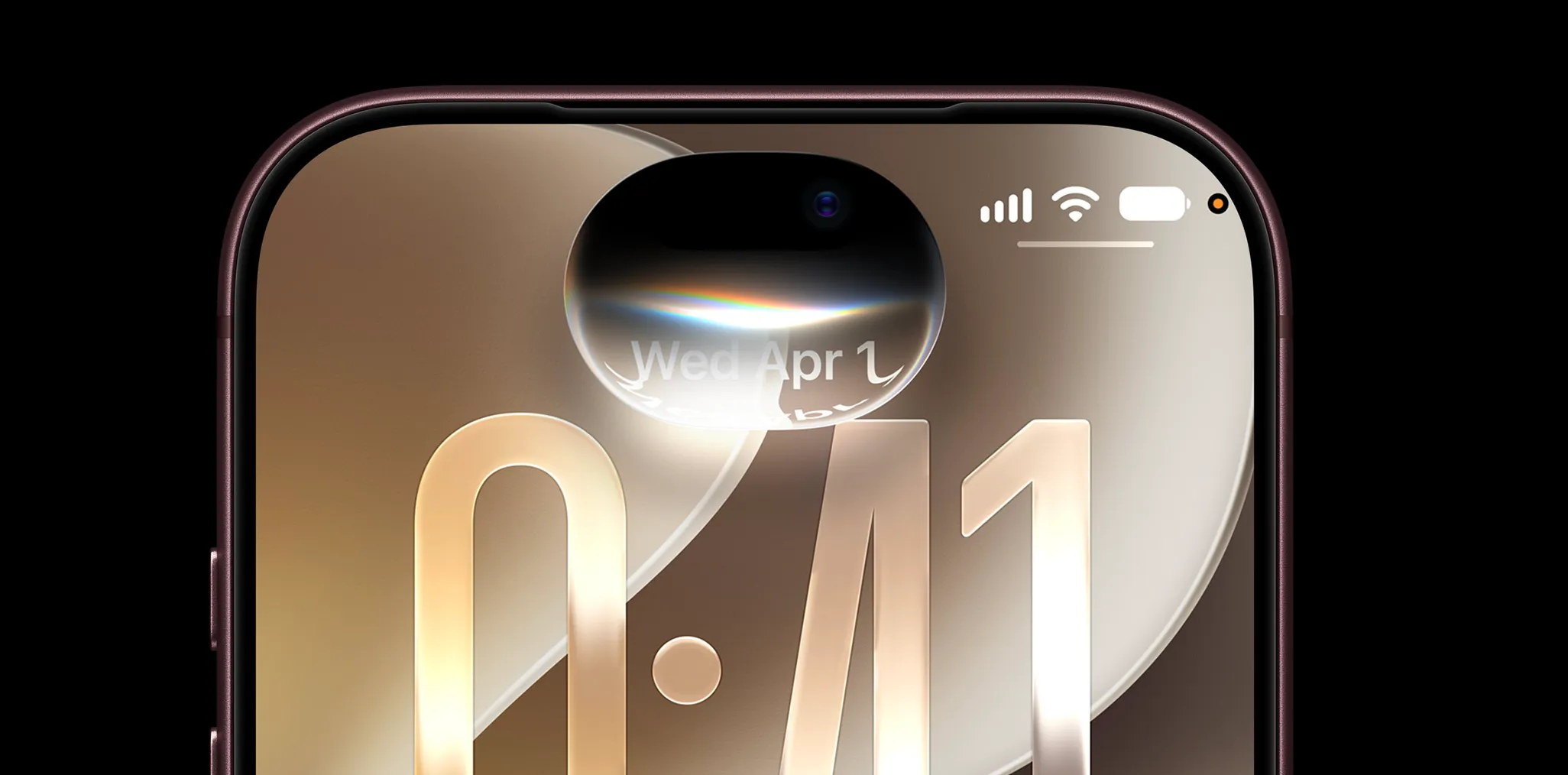
The design centerpiece of the anniversary iPhone, as reported across multiple supply chain leaks, is a screen that curves gently down all four sides of the device. Apple is said to be working with Samsung on a custom panel using extremely shallow curvature at equal depth on every edge, specifically to avoid the distorted viewing angles that plagued the aggressive "waterfall" displays on various Android phones over the past decade. Supply chain reporting calls this a "micro-curved" approach, per MacRumors in late April.
That same Samsung panel is also reported to use COE technology (Color Filter on Encapsulation), which would make the display brighter and thinner than current iPhone screens. Apple's goal for the anniversary device is a completely uninterrupted surface with no Dynamic Island and no display cutout of any kind, the most visually consequential part of the redesign, according to MacRumors in late April.
Layered on top of the supply chain reporting is a claim from leaker Ice Universe, also via MacRumors in late April, that the bezel-elimination effect may rely partly on optical engineering rather than curvature alone. Ice Universe described the result as "a sophisticated combination of optical refraction, light guiding structures, and carefully engineered visual illusion" that makes bezels "nearly disappear from sight, while edge viewing remains natural and undisturbed." The same source suggested Apple could market the result as a "Liquid Glass Display," tying the hardware branding to its recent software interface redesign.
That branding claim comes from one voice. Worth tracking, not anchoring anything to. The micro-curved panel has broader supply chain grounding behind it. Both claims point in the same direction: Apple wants this device to look unlike anything it has shipped before. Whether the manufacturing reality cooperates is a separate question entirely.
The problem no one has solved yet
The cutout-free goal runs directly into one of the genuinely hard unsolved problems in consumer display engineering. Face ID's sensor array and the front camera need to live somewhere, and embedding them beneath an active OLED panel without degrading biometric performance or image quality hasn't been achieved at production scale, as MacRumors noted in late April.
Display analyst Ross Young has said flatly that under-display Face ID won't be production-ready in time for a 2027 iPhone. Other leakers think it's achievable. The disagreement is genuine, not rhetorical, and the question remains unresolved, per the same MacRumors report.
Korean outlet ETNews adds a detail that reframes the whole timeline. Covered by MacRumors in mid-May, ETNews reported that Apple is already planning a more advanced second-generation version of the curved display technology to arrive a year after the anniversary models. That's not how you plan a finished product. It reads more like Apple designing 2027 as a deliberate first step, with the full cutout-free vision staged for 2028 once the manufacturing pipeline catches up.
The two-stage rollout detail shifts the story from "will Apple pull this off" to "how much of it will Apple ship in the first version." Those are different questions with different answers, and the ETNews reporting suggests Apple may already know the answer to both.
What the reporting actually supports
Three tiers of confidence emerge from this week's news, and separating them matters.
The strongest claim is the two-size, equal-spec structure. This comes from Bloomberg, reported by MacRumors this week. Both anniversary models are expected to get the same 2nm A21 chip and the same display design. The equal-spec parity across sizes is what separates this from a typical Pro and Pro Max split, where the larger device has historically gotten something the smaller one doesn't.
The display details, including the four-edge micro-curved Samsung panel, COE technology, and a fall 2027 launch, are consistent across multiple reports but trace to a narrower source pool than they might appear to. Plausible, worth tracking, not yet confirmed, per MacRumors in late April.
The fully cutout-free display with under-display Face ID and front camera is where the reporting gets most speculative. Ross Young's skepticism combined with the ETNews two-stage rollout suggests this is the piece most likely to ship in partial form, or arrive in a later iteration rather than the 2027 anniversary device itself, according to MacRumors from mid-May.
The single question worth watching as 2027 approaches is how Apple resolves the under-display sensor problem. A workaround, a phased deployment, or a genuine manufacturing breakthrough will each tell a different story about what the anniversary iPhone actually delivers versus what Apple wanted it to be. That gap, between the design goal and the shipping product, is where the real story lives.



Comments
Be the first, drop a comment!