



Car Key on iPhone: Check Compatibility Before You Set Up
Apple Car Key stores a credential in your Wallet app and uses it to lock, unlock, and start a compatible vehicle no separate app, no cellular connection required. Setting up a car key on iPhone takes about five minutes once you know you're eligible. The part that trips people up is figuring out whether they actually are.
"Supported" covers a range of outcomes. At the low end: tap your phone against the door handle, then hold it near the center console reader to start. At the high end: walk toward the car with the phone in your pocket, touch the handle, and drive away without ever looking at your phone. The gap between those two experiences depends on your specific car, your specific iPhone model, and a handful of gotchas that published guides tend to gloss over.
Before you open Wallet, run through these three filters in order. All three need to pass for setup to go smoothly.
What you need before you start:
- A compatible vehicle on Apple's shipping list (not just the announced list)
- iPhone XS or later for NFC; iPhone 11 or later (not SE, not 16e) for passive entry
- Bluetooth and NFC turned on
- An internet connection for initial setup; the key works offline afterward
Filter one: does your specific car support this, and which experience does it enable?
Brand eligibility is table stakes. The experience level it enables is the real question.
Two wireless technologies, two different experiences. Cars with NFC only require you to tap your iPhone against the door handle to unlock, then place it on the center console reader or wireless charging pad before pressing start, per The Weekly Driver. You still have to take the phone out of your pocket. Cars with UWB hardware go further: the vehicle tracks your phone's position in three dimensions as you approach, unlocking when you touch the handle and starting with the phone still in your pocket. Walk far enough away after exiting and the doors lock on their own, The Weekly Driver notes. Exact behavior varies by vehicle. UWB also brings a meaningful security advantage: the ranging protocol uses cryptographically secured time-of-flight measurements to verify actual physical proximity, not just signal strength, blocking the relay-amplification attacks that make traditional fobs vulnerable, per the Car Connectivity Consortium.
How to verify your car, in priority order:
-
Check Apple's vehicle support page for baseline eligibility. If your brand is listed as announced but not yet shipping, the feature doesn't exist in your car. Three brands moved from announced to shipping in the past eight months: Rivian in December 2025, Toyota in February 2026, and Porsche in May 2026. None arrived with a press release; owners found each launch on Reddit before the manufacturers acknowledged it, The Weekly Driver reported. Published lists trail reality in both directions.
-
Check your infotainment system for a digital key or phone-as-key menu. In most cases, setup starts from the digital key settings in your car's display, SlashGear confirmed. If that menu isn't there on a brand that's listed as shipping, your specific configuration likely doesn't qualify. Look in the same menu for whether the car lists NFC, UWB, or both that tells you which experience is possible, regardless of which iPhone you have.
-
Check your owner's manual or build sheet for the relevant option packages. Trim gating is common and frequently underdocumented. Genesis limits Car Key on the GV60 to the Performance variant with the $7,000 Advanced package; Standard and Advanced GV60 trims are excluded despite carrying the same smartphone integration hardware, The Weekly Driver confirmed. Mercedes requires Premium or Pinnacle packages on the E-Class. Volvo supports the EX30 and EX90 on its newer electric architecture, but legacy models including the XC40 Recharge, C40 Recharge, and XC60 lack support, per The Weekly Driver. Higher-end variants tend to receive the feature first before it reaches volume models.
-
Contact the dealership only if the first three steps conflict. The infotainment menu and build documentation are faster starting points. If your car's brand is on the shipping list but the menu is absent, ask the service department about a pending software update. Some manufacturers have done quiet rollouts that require dealer enablement before the menu appears.
Filter two: iPhone car key compatibility NFC vs. UWB
The phone check has two thresholds, and the gap between them matters.
iPhone XS or later supports a digital car key on iPhone via NFC. That means tapping the phone against the door handle to unlock, then holding it near the center console reader to start the car, per SlashGear.
iPhone 11 or later, excluding all iPhone SE models and the iPhone 16e, adds UWB passive entry provided the car also supports UWB, SlashGear confirmed. SE models across all generations and the 16e lack the U1 chip entirely, and are capped at NFC regardless of what the vehicle supports.
The combination that determines your outcome:
| Car hardware | iPhone hardware | Result |
|---|---|---|
| NFC only | iPhone XS or later | Tap-to-unlock, tap-to-start |
| UWB + NFC | iPhone XS, SE, or 16e | Tap-to-unlock, tap-to-start only |
| UWB + NFC | iPhone 11+ (not SE, not 16e) | Full passive entry, hands-free |
| UWB only | iPhone 11+ (not SE, not 16e) | Passive entry; no NFC fallback |
| UWB only | iPhone XS, SE, or 16e | May not function at all |
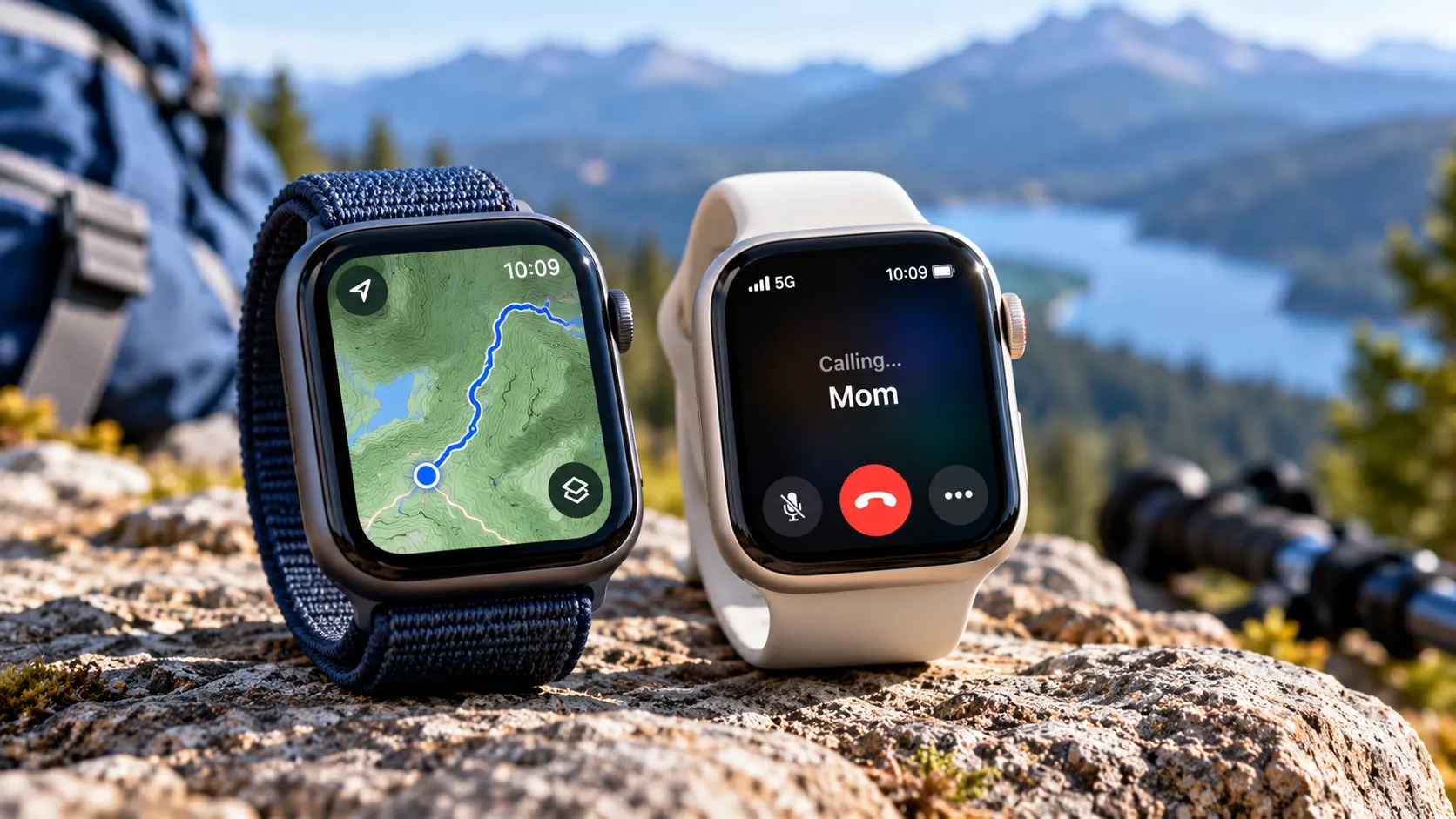
Apple Watch can carry NFC-based unlock to Series 5 or later once the iPhone key is set up; passive UWB entry requires Series 6 or later, per SlashGear. Add it by opening the Watch app on your paired iPhone, going to Wallet & Apple Pay, and tapping Add next to the car key.
Express Mode and power reserve are worth understanding before you proceed. Express Mode, which lets the key function without Face ID or Touch ID on each use, is on by default when you add the key to Wallet, per SlashGear. Leave it on. When an iPhone battery dies on its own, the NFC subsystem retains enough residual charge to operate the key at the door handle this is power reserve mode, and it works alongside Express Mode, per the Car Connectivity Consortium. Two important limits: power reserve is only available when the phone died on its own, not if you manually switched it off, SlashGear notes. It also doesn't apply to UWB passive entry. A dead phone ends hands-free access entirely. NFC is the fallback and if your car has no NFC fallback, a dead phone means no access at all.
Filter three: the catches that can undermine the experience
Both filters clearing doesn't mean the experience is uniform. Two issues can meaningfully change what you get.
Subscription fees: currently Toyota only. Toyota's 2026 RAV4 is the first mass-market Toyota to support Apple Car Key and the only documented implementation among currently supported brands requiring an ongoing paid subscription. New buyers receive a one-year complimentary trial; after that, the digital key stops working unless an active Toyota Remote Connect subscription continues at $15 per month, The Weekly Driver confirmed. Apple Car Key is free on every other supported brand. Over five years, the Toyota path adds $720 in subscription fees that owners of any other supported vehicle don't pay, per The Weekly Driver.
No NFC fallback: Toyota's implementation. The RAV4 runs UWB only, with no NFC tap-to-unlock alternative. Two consequences follow from that: compatible devices are restricted to iPhone 11 or later (excluding all SE models and the 16e), and the power reserve behavior described above doesn't exist as a safety net, per The Weekly Driver. If your phone dies, you need the physical key. The subscription dependency and the absence of an NFC fallback apply simultaneously worth considering before the trial year ends.
Sharing: capable in principle, variable in practice. The CCC standard supports granular access controls: time-limited access, cabin entry without engine start, speed restrictions, geofencing, full driving rights, per the Car Connectivity Consortium. On Apple's side, sharing flows through iMessage. The recipient activates the key with a one-time code; that first activation requires an internet connection, per the Car Connectivity Consortium. After that, their key works offline. Which restrictions are actually configurable depends on what the automaker has implemented, not just what the standard allows. Confirm with the dealership before assuming the full range of controls applies to your vehicle.
One practical note on theft and device changes: if your iPhone is stolen, marking it as lost in Find My disables the car key on that device remotely something a physical fob can't do, per SlashGear. And if you replace your phone, the key can be reissued to the new device while any shared keys sent to family members remain active and functional, per the Car Connectivity Consortium.
How to add car key to Apple Wallet: five steps once you've cleared the filters
Prerequisites: Car in park with ignition on. Bluetooth and NFC turned on on your iPhone. An internet connection is needed for sharing a key and for any entitlement changes; initial owner pairing can work without one, per the Car Connectivity Consortium.
-
Go to the digital key settings in your car's infotainment display. Select "Add device" or the equivalent. The pairing process starts from the vehicle, not from an app on your phone, per SlashGear.
-
Hold your iPhone near the car's NFC reader. Location varies by vehicle typically the center console, near the key cylinder, or the wireless charging pad. A notification appears prompting you to add the key to Wallet. Tap it.
-
Authenticate with Face ID or Touch ID. The key appears in Wallet. Pairing is complete.
-
Confirm Express Mode is on. Open Wallet, long-press the car key card, and verify. Turning it off means biometric authentication on every use and disables power reserve. Leave it on unless you have a specific reason not to.
-
Add to Apple Watch if applicable. Open the Watch app, go to Wallet & Apple Pay, and tap Add next to the car key. Apply the generation requirements from Filter Two: Series 5 for NFC, Series 6 for passive entry.
To share access: Open Wallet, select the car key, and tap the share icon. Apple delivers the key via iMessage. The recipient activates it with a one-time code. Once active, their key works offline. Suspend access temporarily or revoke it permanently from your device at any time. Revocation is permanent restoring access requires sending a new key, per the Car Connectivity Consortium.
What to expect based on what you find
If your car supports UWB and your iPhone is an 11 or later (not SE, not 16e): This is the version that replaces a physical fob in daily use. Approach the car, touch the handle, press start with the phone in your pocket, walk away and the doors lock. The UWB implementation uses cryptographically secured time-of-flight measurements to confirm actual physical proximity, which blocks the relay-amplification attacks that routinely compromise traditional fobs, per the Car Connectivity Consortium.
If your setup lands on NFC only, either because of the car or the phone: NFC means tapping the phone at the handle and holding it near the reader to start. Practical with Apple Watch, functional even when the battery is nearly dead, and free on every supported brand except the RAV4. For many drivers, that's enough to leave the physical fob at home.
If your car is a 2026 Toyota RAV4: Factor in the subscription cost and the absence of a dead-battery fallback before committing. Apple Car Key is free on every other supported brand in the current set; the RAV4 is the exception, per The Weekly Driver.
If your car isn't on the shipping list yet: The infotainment menu remains the fastest ground truth. CCC President Alysia Johnson told The Verge earlier this year that the consortium's certification program logged 115 certifications in 2025, up from two the year before. More vehicles are crossing the threshold regularly. Check the menu first if it's there, the hardware is present. If it isn't, call the dealer.




Comments
Be the first, drop a comment!