





Apple's rumored smart home display, unofficially called the Apple Home Hub, is reportedly being tested inside employees' homes right now, and Bloomberg's Mark Gurman says an unveiling could come as soon as next month, according to MacRumors.
That's a meaningful shift: as recently as August, Gurman had the device on track for sometime before the end of 2026, not a specific month.
None of this is official yet. Apple has not announced this device, confirmed its name, or set a launch date. Cult of Mac also describes the details as coming from Gurman's reporting rather than an Apple announcement. Every detail below, including the timeline, hardware design, and software features, comes from Gurman's reporting as repeated across outlets tracking Apple's internal builds. Treat it as a consistent, well-sourced leak rather than a confirmed product.
Apple Home Hub release date: how soon could it actually launch
Gurman's latest Power On newsletter narrows the window to "as soon as October," down from the vaguer "before the end of 2026" call he made a month earlier.
One data point supporting an imminent launch: Apple is reportedly testing the device widely inside employees' homes, a stage of development that typically comes late in a product's life, according to Engadget. Employee testing can point to late-stage work, but it doesn't guarantee a specific release month, and Apple has changed course on this exact product before.
Not every outlet is convinced October holds up. Some reports still put a launch in early 2027, and the overlap in sourcing means most of these predictions trace back to the same reporting rather than independent confirmation. That uncertainty tracks with Apple's history here: the project was reportedly planned as early as 2024 and got pushed back several times because Siri's AI features weren't ready, as iClarified and Engadget reported.
For anyone tracking the Apple smart display release date, the safest read is this: October is a plausible, reported unveiling window, not a confirmed release date. Apple has slipped this product's timeline multiple times already, and nothing here carries an official stamp.
Apple Home Hub features: what the smart display is expected to do
Gurman describes a roughly seven-inch square display with thin bezels and rounded corners, arriving in two hardware forms. Software references tie a tabletop version, reportedly sitting on a stand shaped like a sliced HomePod mini, to the internal codename J490, while a second, wall-mounted model attached with magnets carries the codename J491. Both names turned up in macOS Tahoe 26.7 alongside other unreleased Apple products.
The expected function list reads like a HomeKit control panel crossed with a communication device: accessory controls for lights and thermostats, intercom and video calling, media playback, and access to apps such as Calendar, Notes, and Reminders. The interface is said to run a dedicated operating system built around Siri AI, borrowing visual elements from iOS, tvOS, and watchOS, complete with a Home Screen, widgets, and selectable clock faces for glanceable information.
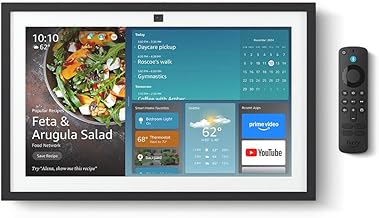
A couple of details matter for anyone weighing this against an Amazon Echo Show or Google Nest Hub. The screen is expected to be smaller than most Echo Show models, and setup reportedly requires an iPhone. That points to a companion device built for people already inside Apple's ecosystem, not a standalone hub meant to win over new customers.
Apple Home Hub Siri AI: the software Apple reportedly needed years to finish
The screen and hardware forms are only half the story. Reports consistently describe Siri AI as the actual product here, capable of searching across a user's devices and accounts, surfacing a specific photo, replaying a song or podcast someone shared earlier, and completing tasks inside apps on request.
That software dependency is reportedly why this product took so long to reach employee testing at all. Multiple reports describe Apple delaying the hardware specifically because Siri's AI capabilities weren't ready. That obstacle has now largely been removed after Apple began rolling out Siri AI in beta with iOS 27 earlier this month.
The reported design also lines up with framing Apple has already used publicly. New CEO John Ternus described the iPhone as an "intelligent personal hub" during a recent keynote, and Gurman notes the framing was convincing enough that some people inside Apple assumed he was previewing the smart display itself. Apple's apparent vision has the iPhone anchoring a person's mobile life while the display, Apple TV, and HomePod anchor the home.
The functional difference from Siri Classic is reportedly significant. Instead of rigid, single-command requests, Siri AI is said to handle natural-language, contextual questions and control multiple HomeKit accessories in a single request.
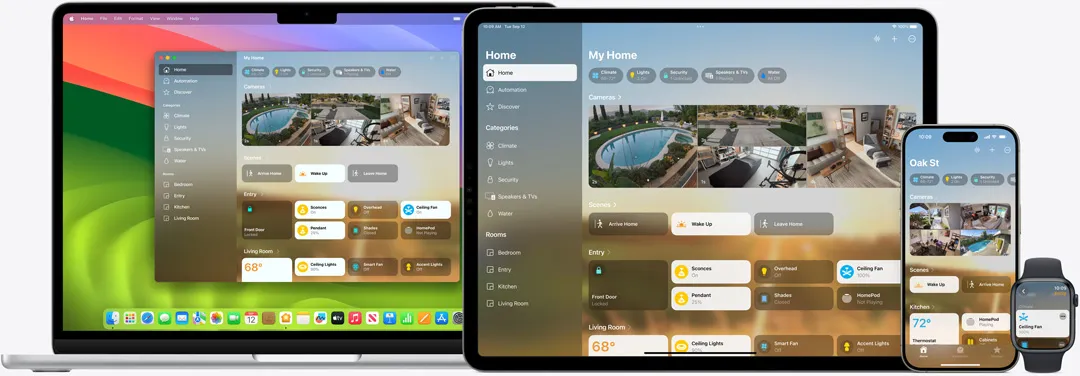
None of that replaces the smart-home hub functions Apple already ships. Apple says Apple TV 4K currently serves as a home hub for compatible HomeKit accessories, supports the Matter standard, runs automations, and lets users view compatible cameras through HomeKit Secure Video, with Thread mesh networking available on the third-generation Wi-Fi + Ethernet model.
Based on the reporting so far, the Home Hub looks like a visible, screen-based front end for that existing system rather than a replacement for it, though Apple hasn't described how the two would work together.
Facial recognition and personalization: the questions Apple hasn't answered
A front-facing camera is reportedly designed to recognize whoever is standing in front of the screen and adjust what's shown, including notes, calendar items, news, music, and podcasts tailored to that person. Gurman reportedly says this works without the depth-sensing hardware Face ID relies on, which would be a notable shortcut if it holds up in a shipping product. The same camera is expected to double as the video-calling lens.
Related reporting suggests similar technology could eventually help Apple bring facial recognition to a future iPhone Duo using smaller, less sophisticated depth-sensing and camera hardware. Gurman has said advances in AI and component miniaturization could help Apple make up some of the difference computationally in a future model.
That's a longer-term implication, not confirmation of anything shipping soon, but it hints at why Apple might want to prove this technology out on a stationary display first.
What none of the current reporting explains is how that facial data gets stored, secured, or deleted, whether guests and children get recognized by default, or whether the feature can be switched off entirely. A shared household display that identifies faces without Face ID-grade hardware raises real questions Apple hasn't addressed in public. Until the company does, there's no basis to assume its usual on-device privacy safeguards carry over automatically.
What to do before Apple actually announces this
Apple has not announced this rumored device or confirmed a launch date, name, price, or final feature list. Everything above, including the October window, the Siri AI capabilities, and the camera-based personalization, comes from reporting tied to Mark Gurman and repeated across outlets rather than independently confirmed elsewhere.
Current iPhone and HomeKit owners have the most reason to pay attention, since setup reportedly depends on an iPhone. Anyone comparing this to an Echo Show or Nest Hub in the meantime doesn't need to put a purchase on hold indefinitely, but shouldn't plan around an October date either.
Apple's own delay history on this project suggests the timeline could still move. Wait for an official announcement, and check specifically how facial recognition data is handled before turning that feature on.




Comments
Be the first, drop a comment!