



Apple homeOS: what's confirmed and what's still rumor
Apple is reportedly building an entirely new operating system, possibly called homeOS, to run a long-rumored smart home hub. Bloomberg's Mark Gurman describes it as blending tvOS, watchOS, and iOS elements, and it would join iOS, iPadOS, macOS, watchOS, tvOS, and visionOS as a distinct Apple smart home operating system if it ships (MacRumors, today).
The cited reports don't describe a public beta, developer documentation, or an upgrade path for anyone who already owns a HomePod, Apple TV, or HomeKit accessory (MacRumors guide, 2 months ago).
Gurman's reporting places a possible unveiling as soon as October 2026, centered on a revamped Siri AI (Bloomberg via MacRumors, 2 months ago). That timeline, like nearly everything else in this story, traces back to his reporting rather than a second, independent source.
What's confirmed and what's still rumor
Nearly all of the coverage runs through one reporter. Gurman is the source behind the operating system's design, its interface, the facial recognition claims, the Siri AI focus, and the possible launch window. The widely cited MacRumors guide compiles and expands on that earlier reporting rather than confirming it independently, adding its own details on hardware, apps, pricing, and trademark activity (MacRumors, today; MacRumors guide, 2 months ago).
Separate from Gurman's sourcing, trademark filings for "homeOS" began in October 2024, reportedly through a shell company linked to Apple. The mark is registered in Liechtenstein and pending in the U.S., Argentina, and Peru (MacRumors guide, 2 months ago). Apple's internal name for the project is reportedly "Charismatic" (MacRumors guide, 2 months ago).
Apple itself has made no public statement, press release, or developer disclosure naming the OS, confirming the hardware, or setting a launch date. What exists is sourced reporting and trademark filings, not an Apple announcement.
What Apple homeOS could mean for Apple's smart home hub
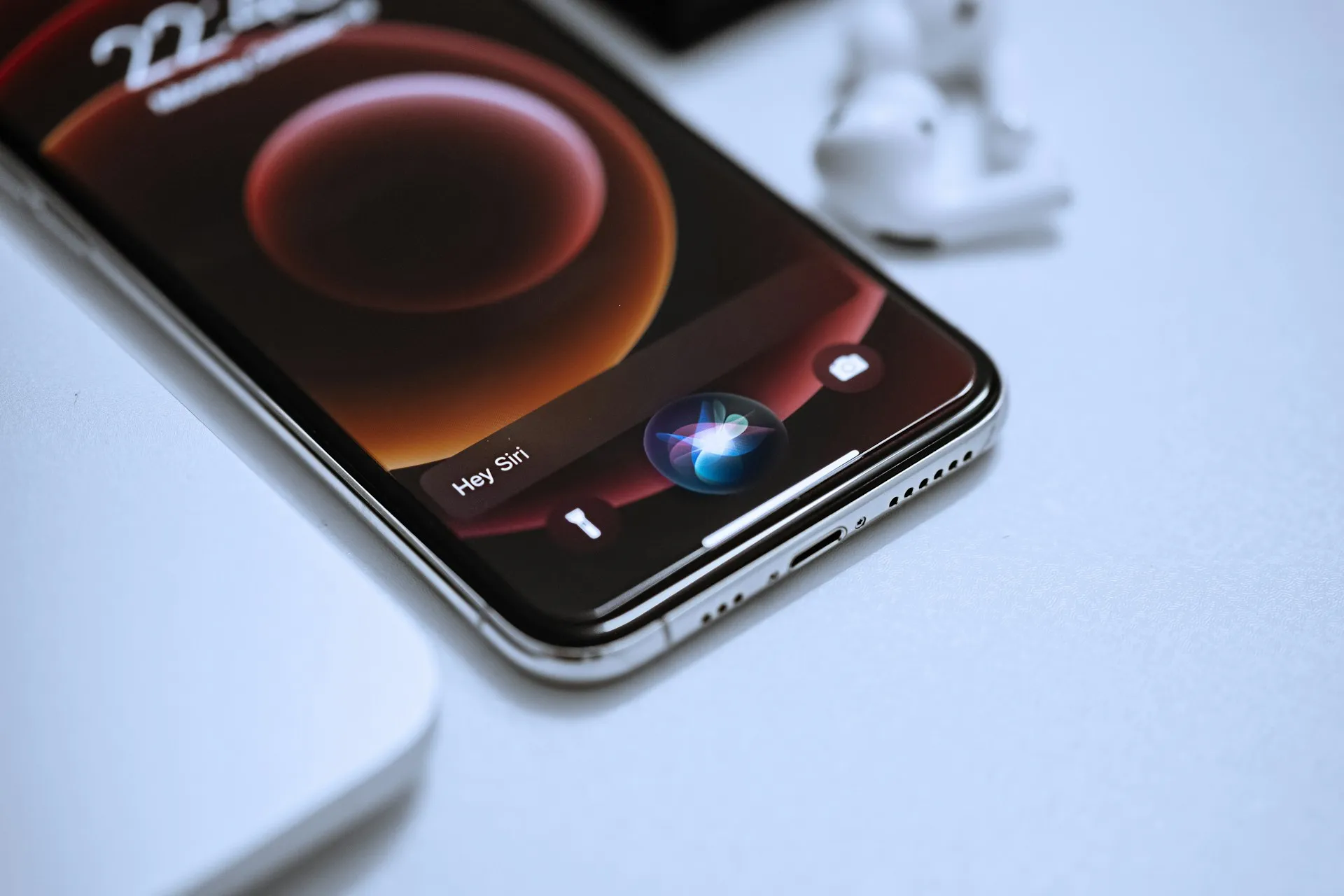
Siri AI sits at the center of the reported experience, the same overhauled assistant expected to roll out this fall in iOS 27, iPadOS 27, and macOS Golden Gate before it reportedly extends to the hub (MacRumors guide, 2 months ago).
Built-in facial recognition is reported to identify who's standing in front of the display and switch automatically to that person's profile. Interface elements are said to resize as someone approaches or steps back, showing ambient information like temperature from across the room and an interface for adjusting the thermostat up close (MacRumors, today; MacRumors guide, 2 months ago).
These reported homeOS features could make the hub meaningfully more useful than a static HomePod display, but only if profile switching, guest handling, and false detections actually work in practice. None of the cited reports address that, so it's a design goal right now, not a demonstrated feature.
Person detection could also trigger smart-home automations, like turning on lights when someone enters a room, and the sensor may support hand-gesture control for longer-range use (MacRumors guide, 2 months ago). Multiple units around a house are reported to double as room-to-room intercoms, and each hub is expected to carry a 1080p front camera for FaceTime, a rechargeable battery, built-in speakers, and AirPlay receiver support (MacRumors guide, 2 months ago; Bloomberg via MacRumors, 2 months ago).
The cited reports provide no independent testing of any of this. They describe reported plans, not outside verification of how presence detection or Siri AI hold up in a busy, multi-person household.
Expected hardware, apps, and pricing
Apple is reportedly building two versions of the hub: a wall-mounted 7-inch display and a tabletop model with a HomePod mini-style speaker base, offered in silver or black. The reported hardware is expected to use an A18 chip or better, with at least 8GB of RAM reportedly needed for Apple Intelligence support (MacRumors guide, 2 months ago).
The Apple home hub software reportedly centers on a grid of app icons, widgets, and customizable clock faces, with multi-user support built in from the start (MacRumors, today).
Preinstalled apps are said to include Calendar, Camera, Apple Music, Podcasts, News, Reminders, Notes, Photos, Home, Safari, and a new Siri app (MacRumors guide, 2 months ago). Apple reportedly isn't planning a dedicated App Store for the hub at launch, and the cited reports don't say whether third-party apps might arrive through some other mechanism. Anyone weighing a purchase should assume a closed, Apple-only software environment unless Apple states otherwise.
Pricing is rumored to land near $350, above Amazon's Echo Show (MacRumors guide, 2 months ago). That number matters more than a single-unit comparison suggests: Apple reportedly expects many customers to buy more than one hub for room-to-room coverage, so outfitting a whole house could run well past $350 (Bloomberg via MacRumors, 2 months ago). The reports don't provide enough detail for a feature-by-feature comparison against the Echo Show beyond that price gap.
What current HomePod and Apple TV owners should wait for
A handful of open questions matter more than the spec sheet for anyone tempted to plan around this device.
Siri AI's real-world performance in a shared home is unproven. Its overhauled form is expected to roll out this fall in iOS 27, iPadOS 27, and macOS Golden Gate, and no independent review yet shows how it handles multiple household members, overlapping requests, or a noisy kitchen (MacRumors guide, 2 months ago).
Privacy details are missing from the cited reports. None explain whether facial recognition and person detection process data on-device, how guests or children are handled, or whether the feature can be disabled, despite the hub reportedly using Face ID-style recognition to identify household members automatically (MacRumors, today; MacRumors guide, 2 months ago).
Compatibility with current hardware is undefined. The cited reports don't describe a software-update path that would bring any of these capabilities to existing HomePod, Apple TV, or HomeKit devices, nor do they say whether a new hub would work alongside that older gear or replace it.
Launch timing is a range, not a date. Gurman's reporting places it "as soon as October" 2026, while the MacRumors guide describes a window running from October 2026 into early 2027. Both describe the same unconfirmed plan rather than two competing leaks (Bloomberg via MacRumors, 2 months ago; MacRumors guide, 2 months ago).
The first meaningful confirmation would be an Apple keynote or press release naming the OS and hub, a developer beta of the Siri app, or official pricing and compatibility details. The cited reports don't describe any of those materials existing yet.
Owners of current HomePod, Apple TV, or HomeKit hardware should keep using what they have rather than buying new gear on the assumption that a homeOS upgrade is headed their way. Anyone considering the rumored hub itself should wait for Apple to confirm the OS, publish pricing and a compatibility list, detail its privacy controls, and let independent reviewers test how Siri AI actually performs before spending $350 or more per unit.



Comments
Be the first, drop a comment!