



Apple Innovation Over the Years: Breakthroughs, Costs, and Control
On April 1, 1976, Apple incorporated as a scrappy hardware company selling kits to hobbyists. This week it turns 50, holding the highest global smartphone market share of any single manufacturer at 25%, per Counterpoint Research via Economic Times. Tracing Apple innovation over the years reveals something more interesting than a success story: it reveals a single strategy, applied obsessively, across every product category the company has ever entered.
That strategy is integration collapsing complexity and choice into a coherent, controlled experience. It is the source of Apple's most significant breakthroughs. It is also, structurally, the source of its worst hardware failures, its most contested business practices, and its current antitrust exposure across three jurisdictions. The same philosophy. The same tradeoffs. Every time.
To understand what Apple's anniversary actually means, it helps to ask the same three questions at each stage: What friction did Apple remove? Who benefited? And what new dependency or cost did the integration create? The answers are rarely simple. They are rarely entirely flattering.
50 years of Apple innovation: how integration became the pattern
The Apple II's 1977 launch helped kickstart consumer computing. Spreadsheet software VisiCalc transformed it from a hobbyist curiosity into a serious business tool, per Economic Times. The 1984 Macintosh went further, integrating mouse, GUI, and a new model of software interaction into a single coherent object that shaped personal computers through the 1990s and 2000s the rest of the industry spent years copying it.
The 1998 iMac dropped the floppy drive and replaced legacy connectors with USB, pushing the industry toward internet-era computing before most users were asking for it, per Economic Times. The pattern repeats with ports: Apple dropped ADB for USB, then the 30-pin connector for Lightning in 2012, then the headphone jack in 2016. Samsung publicly mocked the headphone jack removal and quietly made the same change on the Galaxy Note 10 in 2019, per The National. Each time, Apple forced a transition the market ultimately accepted. Each time, a generation of existing accessories was rendered obsolete.
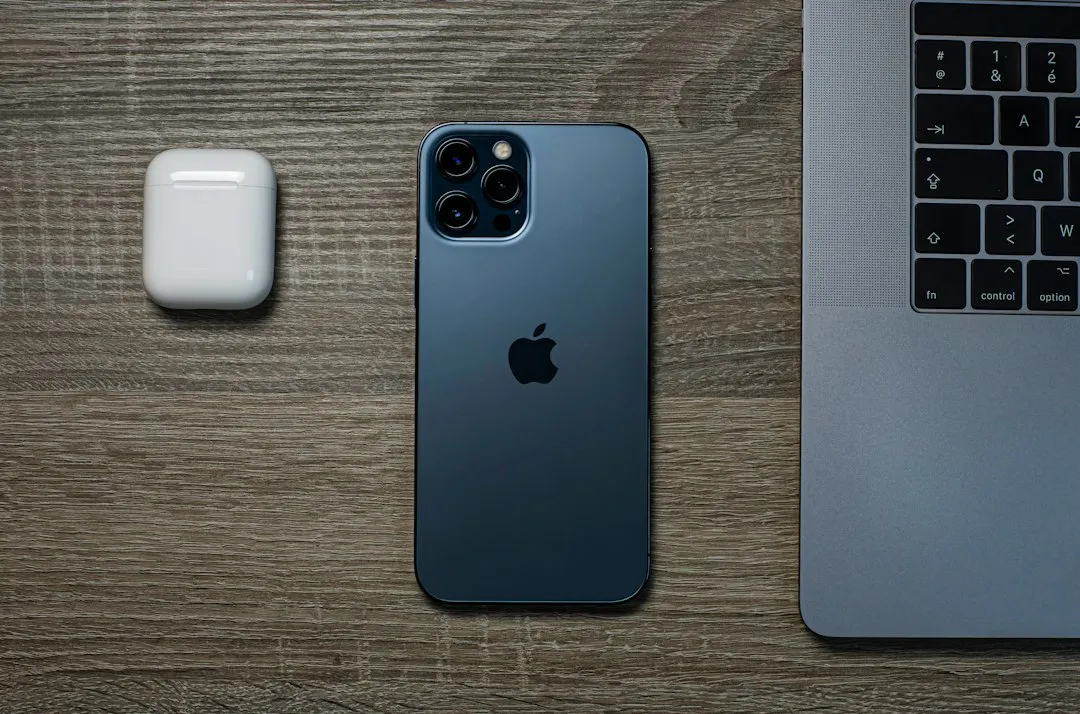
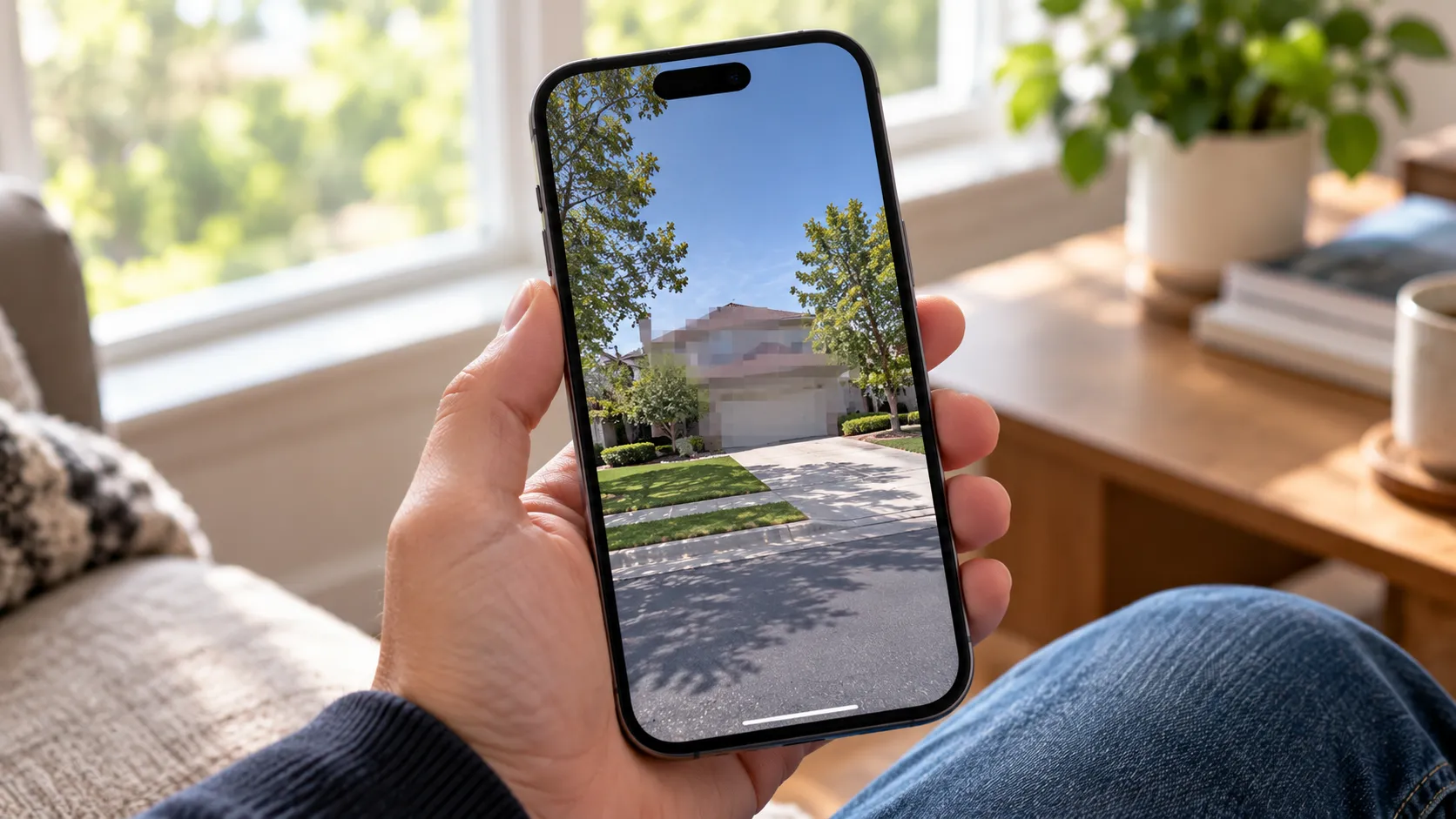
The 2007 iPhone integrated phone, iPod, and internet communicator into a single device with a touchscreen that eliminated physical keyboards a bet that defined the smartphone category, per Economic Times. The original model shipped with a 3.5-inch display and 4–8GB of storage. The iPhone 17 Pro Max carries a 48-megapixel triple camera, up to 1TB of storage, and satellite connectivity.
Apply the framework: the iMac removed the floppy; users gained simplicity and lost backward compatibility with a decade of disks. The iPhone eliminated the physical keyboard; users gained a fluid touch interface and, within a year, entered an app distribution system Apple would control entirely. The friction Apple removed was real. The dependency Apple created was also real, and it compounds with each product generation.
This is not a history lesson. The butterfly keyboard, the App Store, iMessage's green bubbles, and Vision Pro are all the same bet at different scales genuine improvement, at the cost of something users previously owned or chose for themselves.
When integration fails: the butterfly keyboard and the repairability cost
Before 2012, Apple laptops were genuinely serviceable. Early iBooks let owners swap batteries by turning a coin slot and remove keyboards by sliding two spring-loaded tabs deliberate design choices, not technical necessities, per iFixit. The keyboards on those machines doubled as service hatches for the RAM sitting directly beneath. The 2012 Retina MacBook Pro ended that era: thinner chassis, glued battery, soldered components. iFixit dropped Apple's repairability score from 7 out of 10 to 2, with the 2013 update earning 1 out of 10 the lowest ever recorded for a notebook at the time, per iFixit.
The butterfly keyboard followed that trajectory to its logical end. Introduced in 2015 and revised in 2016, the mechanism was so thin that a single dust particle could jam a key entirely, per iFixit. Because the keyboard was glued into a monolithic upper assembly alongside the battery, trackpad, and speakers, a single failed key meant replacing the entire top half of the laptop. iFixit's research found that the spacebar broke every single time anyone attempted to remove it, including professionals. Apple launched a repair program in June 2018, extended coverage to four years, and quietly abandoned the butterfly mechanism in favor of conventional scissor switches by mid-2020, per Oreate AI. The resulting class action settled for $50 million, per WIRED.
Apply the framework: Apple removed the depth and travel of a conventional key mechanism to make the laptop thinner. Users gained a few millimeters and lost a keyboard that survived ordinary use. The integration meant the repair cost swept in components that hadn't failed, because they were all the same part.
The Mac Pro tells the same story at desktop scale. Apple's 2013 "trash can" redesign integrated everything around a unified thermal core with no internal expansion slots Phil Schiller called it "our vision for the future of the pro desktop." Craig Federighi later admitted the company had "designed ourselves into a bit of a thermal corner," per MacRumors. Apple reversed course with a fully modular 2019 Mac Pro featuring 360-degree access and eight PCIe expansion slots, then discontinued the entire product line this week. Three redesigns, one thermal apology, no successor.
The current MacBook Neo, released earlier this year, ships with only 8GB of soldered RAM and no upgrade path, while Apple simultaneously pushes Apple Intelligence features that are memory-intensive by design, per iFixit. A modular alternative exists: Micron's LPCAMM2 memory format matches soldered memory on speed and power efficiency while remaining upgradeable, and Lenovo's newer ThinkPad uses it at lower weight than its predecessor. In the 2025 US PIRG repairability analysis, Apple recorded the lowest disassembly average score among major laptop brands 4.9 against an industry average of 7.4 though its overall score improved from 4.3 to 5.1, partly from supporting California right-to-repair legislation, per Ars Technica.
Apple's M-series chips are genuinely excellent. The performance case for unified memory is real. But integration doesn't stop at the chip it extends to the whole device, and the whole device becomes a single disposable unit when one component fails. That is the consistent outcome of Apple's philosophy applied to hardware: a better first experience, at the cost of every subsequent one.
The same logic, applied to software: App Store, iMessage, and the antitrust reckoning
The App Store launched in 2008 with 500 apps and a pitch about safety and trust, per Economic Times. The integration logic was identical to the hardware playbook: remove the friction of finding, installing, and trusting software by collapsing distribution into a single Apple-controlled channel. It worked. The App Store grew into a marketplace with millions of titles and a central revenue pillar for Apple. The 30% commission structure that came with it is now the subject of antitrust rulings on two continents.
The App Store is the clearest hardware-to-software translation of Apple's integration logic. Users got a curated, trustworthy discovery experience. Developers got distribution to hundreds of millions of devices. The cost, which regulators across three jurisdictions now describe in similar terms, was a mandatory toll on every transaction and a set of rules Apple writes, enforces, and adjudicates for its own benefit. The DOJ, in its lawsuit joined by attorneys general from 16 states and territories, describes Apple's ecosystem as a "series of interlocking technical and contractual restraints" designed to maintain monopoly power blocking super apps, limiting cloud gaming services, restricting Apple Watch from pairing with Android, and preventing third-party access to the iPhone's NFC chip for contactless payments, per Durham Law Review. Apple's motion to dismiss was denied in June 2025. The case, formally United States of America et al. v. Apple Inc., proceeds to trial.
iMessage illustrates the same dynamic at the consumer level and more concretely. Apple adopted RCS in iOS 18 under sustained pressure from Google, carriers, and EU regulators, but cross-platform messages from Android users still appear as green bubbles, and end-to-end encryption for cross-platform conversations remains on an undefined timeline, per Durham Law Review. Apple made a minimum viable concession while preserving the social differentiation that regulators argue is the actual competitive mechanism. A 2013 internal email, cited in the DOJ complaint, noted that supporting iMessage on Android would "hurt us more than help us." The RCS rollout suggests little has changed in the underlying calculation.
The European and UK regulatory picture adds weight to the pattern. The EU designated Apple a gatekeeper under the Digital Markets Act in 2023 and found Apple in breach of its anti-steering obligations, leading to fines in April 2025, per ARTICLE 19. In October 2025, advocacy groups ARTICLE 19 and GFF filed a further DMA complaint noting that Apple's terms for third-party app stores include a €1 million security deposit requirement that effectively excludes smaller and non-profit developers. The EU Commission has proposed legally binding interoperability measures and warned of fines up to 10% of global annual sales for non-compliance, per The Verge. In the UK, the Competition Appeal Tribunal ruled that Apple abused its dominant position in iOS app distribution, entitling approximately 36 million UK consumers to around £1.5 billion in compensation a ruling currently under appeal, per Durham Law Review.
Apple's counterargument has genuine content. When Meta requested 15 forms of access to Apple's technology stack, Apple argued that granting them would expose users to privacy risks that would be "virtually impossible to mitigate," per The Verge. The difficulty is structural: Apple is simultaneously the entity making the security argument and the entity that benefits from the status quo. Three regulators, working independently, have declined to treat those two roles as separable.
For ordinary users, none of this is abstract. It determines which apps are available and at what price, whether messages from Android contacts arrive with encryption, and how expensive switching phones becomes after years of accumulated data, apps, and accessories. The integration that makes Apple products feel seamless is precisely what makes leaving them costly.
Vision Pro: Apple's integration bet, running live
Vision Pro is Apple's claim that spatial computing eye tracking, hand gestures, and voice replacing keyboard and mouse is the next interface shift, positioned at $3,500 with 23 million pixels across dual displays and a purpose-built operating system, per Economic Times. Two years after launch, the display quality remains exceptional, the eye-and-hand tracking works without additional input devices, and visionOS has improved steadily. The Mac Virtual Display feature offers genuine productivity utility as a large private screen linked wirelessly to a Mac, per Allen Pike and Apple WWDC24.
The unresolved problems are structural and familiar. Apple's choice of metal and glass construction means the weight tilts the head forward, and the battery is a separate component connected by a wire that gets in the way, per Allen Pike. At $3,500, Vision Pro remains the most expensive consumer VR headset, with no meaningful price reduction in two years. The high-resolution Sony displays and dedicated R1 chip are not shared with any other Apple product, which means manufacturing volume stays too low for costs to fall keeping the potential buyer pool too small to justify sustained developer investment. IMAX added no new films after launch; app ports from Mac and iPad slowed to nearly nothing; the list of top Vision Pro apps is essentially unchanged from two years ago, per Allen Pike.
Apply the framework: Apple removed the friction of interacting with a screen no physical surface required, just attention. The cost is $3,500, a wire tethered to your pocket, and a content library that stalled twelve months in. The integration logic is intact: Apple built the hardware, the OS, the input model, and the content pipeline, controlling each layer. What's missing is the same thing that was missing from the 2013 Mac Pro a workload that actually fits the constraints Apple chose.
Vision Pro could be the early iPhone: a category-defining product that looked like a luxury novelty until the App Store and 3G arrived and made it indispensable. It could also be the trash-can Mac Pro: a product whose design constraints made it unworkable at the scale it needed to reach, discontinued without a successor. Apple's 50-year record argues for patience. The butterfly keyboard and the Mac Pro's thermal corner argue for skepticism. Both arguments are grounded in the same company, making the same kind of bet, with the same structure of costs.
What the pattern means at year 50
Apple's record over 50 years is real: the Apple II, the Macintosh, the iMac, the iPhone, and Apple silicon represent genuine inflection points in how people use computing. That is not a minor achievement, and the anniversary framing is warranted. The pattern that produced those wins, however, has always imposed costs that compound over time in devices users can't repair, in ecosystems users can't leave, in markets competitors can't enter on equal terms.
The costs are now measurable. Apple ranked last among major laptop brands in the 2025 US PIRG repairability analysis with a disassembly average of 4.9 against an industry average of 7.4, per Ars Technica. The butterfly keyboard class action settled for $50 million, per WIRED. Antitrust cases are active simultaneously in the US, EU, and UK three regulators, working independently, arriving at overlapping conclusions about the same ecosystem.
The practical question for the next decade is not whether Apple innovates. It is whether the external constraints now accumulating right-to-repair legislation, DMA enforcement, the DOJ trial change what integration costs users and competitors. Apple argues that forced openness weakens the product. Regulators argue it restores competition. Both positions have evidence behind them, and the resolution will shape not just Apple but the broader question of what platform control is permitted to look like in consumer technology.
The evaluative framework applied throughout this analysis is the right one to carry forward: for any Apple product or policy, ask what friction was removed, who benefited from its removal, and what new dependency or cost the integration created. At year 50, the answer to the first question is usually impressive. The answers to the second and third are more complicated and getting harder to ignore.



Comments
Be the first, drop a comment!