



Reviewed by: Y. Garcia
Apple's smart glasses project represents more than just another wearable device — it's positioned to become the company's next major growth driver. While competitors like Meta have gained early traction in the smart eyewear space, Apple's strategic approach to AI integration and ecosystem connectivity could fundamentally reshape how we interact with technology in our daily lives.
The Cupertino giant has been methodically building toward this moment for years. Apple is working on at least two distinct smart glasses models, according to industry reports. The first model, internally codenamed N50, will function primarily as an iPhone accessory without displays, while a more advanced version with integrated displays is being fast-tracked to compete directly with Meta's offerings. This dual approach demonstrates Apple's commitment to capturing both entry-level and premium market segments.
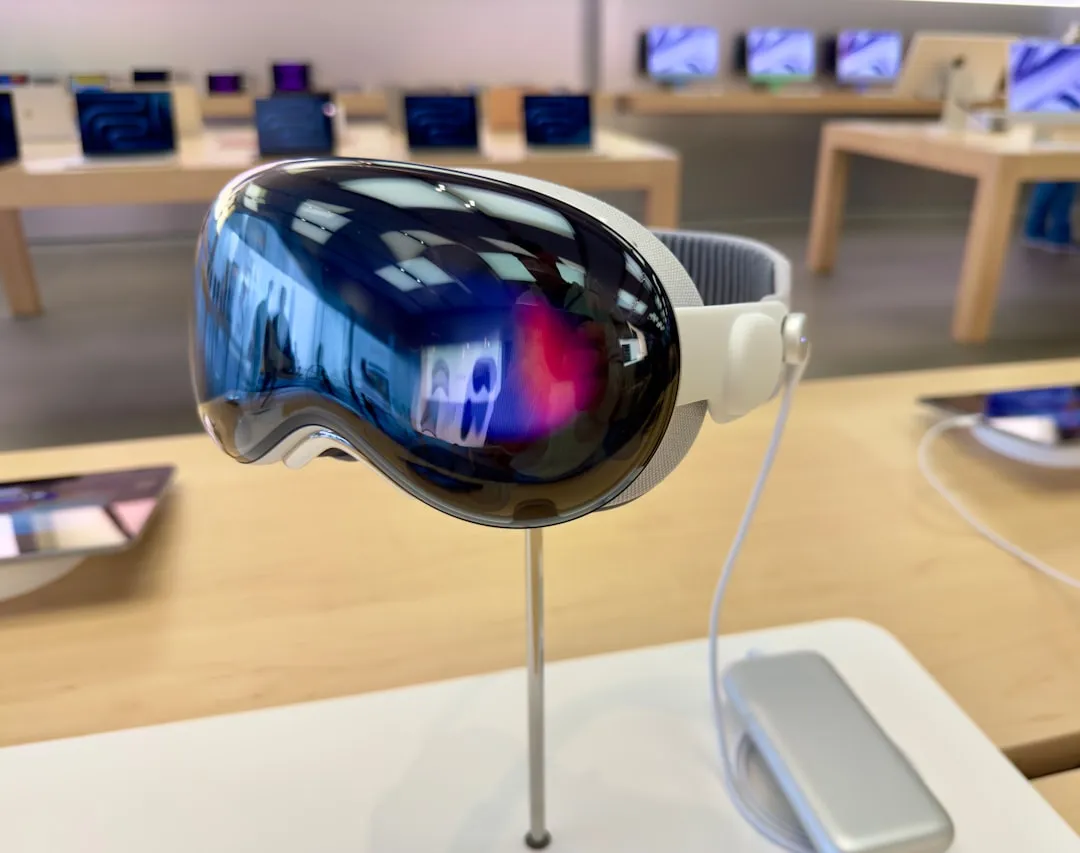
What makes Apple's timing particularly strategic is the company's pivot from struggling mixed-reality initiatives. The company has accelerated its smart glasses development by reallocating resources from mixed-reality headset projects, as reported by financial analysts. This resource shift acknowledges a crucial market insight: lightweight, AI-powered eyewear holds far more mainstream potential than bulky VR headsets like the Vision Pro, which has struggled with commercial adoption due to its hefty price tag and weight. Rather than forcing consumers toward expensive, niche hardware, Apple is betting on the accessibility and daily utility that smart glasses can provide.
AI integration becomes the defining advantage
The real game-changer lies in Apple's approach to artificial intelligence integration. A completely overhauled Siri, built on new architecture and expected to launch in spring 2026, will serve as the cornerstone of the glasses' functionality, according to market intelligence. This next-generation voice assistant will power sophisticated computer vision capabilities for real-time object recognition and environmental understanding — imagine having a knowledgeable companion who can instantly identify landmarks, translate signs, or provide contextual information about anything you're looking at.
The enhanced AI will enable natural language processing that facilitates hands-free interaction, allowing users to receive contextual information like directions, real-time translations, and answers about their surroundings, industry sources indicate. This represents a significant leap beyond current smart glasses offerings, which typically provide basic camera and audio functionality without the intelligence layer that makes interactions truly useful.
Here's what sets Apple apart: the architectural choice to implement on-device AI processing addresses critical concerns about responsiveness, privacy, and latency — factors that are paramount for an intuitive smart glasses experience, according to AI research communities. Unlike cloud-dependent solutions that suffer from connectivity issues and privacy concerns, Apple's approach ensures your personal data stays secure while delivering instant responses. This architectural decision could set new benchmarks for both privacy and performance in wearable technology.
Market timing aligns with explosive growth projections
Apple's entry comes at an opportune moment for the smart glasses market. Industry forecasts project the total smart glasses market will experience explosive growth from 3.3 million units in 2024 to nearly 13 million units by 2026 — a fourfold increase, according to ABI Research. But here's the more compelling insight: the market opportunity is expected to reach $7.8 billion by 2026, representing a 3.5X expansion from 2024.
The growth story gets even more interesting when we examine the consumer adoption patterns. Consumer smart glasses will represent 33% of total shipments in 2026, up from just 25% in 2024, market analysts report. This shift toward consumer adoption, rather than purely enterprise applications, creates a massive opportunity for Apple to leverage its brand loyalty and ecosystem integration. The company has consistently demonstrated its ability to take emerging technologies and make them accessible to mainstream consumers — from smartphones to smartwatches.
The timing couldn't be better because the acceleration stems from AI integration turning glasses into visual-aware assistants, chip maturity enabling local AI inference, and design evolution through collaborations with fashion brands, according to industry analysis. These technological convergences align perfectly with Apple's core competencies: advanced silicon design, sophisticated AI development, and fashion-forward hardware engineering that makes technology feel both powerful and approachable.
Three key competitive advantages emerge
Apple's approach to smart glasses reveals three distinct strengths that could drive major product growth. First, the company's reputation for meticulous hardware engineering and seamless software integration suggests a more polished and deeply integrated user experience compared to competitors, market observers note. While early smart glasses attempts have suffered from clunky interfaces, poor battery life, and limited functionality, Apple's track record suggests they'll address these fundamental usability issues.
Second, Apple's massive user base and established ecosystem provide a strategic advantage that could facilitate rapid adoption once smart glasses hit the market, according to competitive analysis. The company's walled-garden approach, emphasizing privacy, premium design, and deep integration with existing services, contrasts sharply with Meta's more open-ended platform focused on social interaction. For iPhone users, Apple's glasses will likely feel like a natural extension of their existing digital life rather than an entirely new platform to learn.
Third, and perhaps most strategically important, Apple's systematic approach to new technology markets — often observing and analyzing before entering — allows the company to learn from early market entrants' mistakes, industry experts suggest. While Meta has sold more than 2 million units of its smart glasses with 300% growth in sales, according to recent reports, these early efforts have revealed crucial insights about battery limitations, social acceptance issues, and the importance of AI-driven functionality over basic camera features. Apple's entry could significantly expand the market and accelerate innovation across the entire tech industry by applying these learnings to create more compelling, user-friendly products.
The path forward promises transformative impact
Looking ahead, Apple's smart glasses represent more than just a new product category — they signal a fundamental shift toward ambient computing where technology becomes seamlessly integrated into daily life. The competition between Apple and Meta will likely accelerate innovation across AI, miniaturization, battery technology, and user interface design, market forecasts indicate. This competitive dynamic benefits consumers by driving rapid improvements in core technologies while pushing both companies to solve the fundamental challenges that have prevented smart glasses from achieving mainstream adoption.
The immediate future will see Apple's strategic rollout begin with the display-less N50 model, potentially arriving as early as 2027, following an anticipated 2026 unveiling, according to development timelines. This phased approach makes strategic sense: the initial offering will serve as an accessible entry point, familiarizing users with AI-powered eyewear as an iPhone extension before more advanced display-equipped models follow. It's a classic Apple playbook — start with core functionality, build user comfort and adoption, then iterate toward more advanced capabilities.
The long-term implications extend far beyond product sales. The success of Apple's smart glasses will ultimately depend on their ability to offer truly indispensable value that seamlessly integrates into daily life, rather than merely adding another gadget to our digital existence, industry analysts conclude. With the dawn of AI-powered ambient computing upon us, Apple's accelerated commitment to smart glasses development marks a pivotal moment that could redefine how we interact with information and the world around us.
The stakes are remarkably high. Success could establish Apple as the leader of the next major computing platform, while failure might cede this emerging market to competitors. But given Apple's track record of transforming nascent technologies into must-have consumer products, smart glasses appear poised to become the next chapter in the company's growth story — one that could be as transformative as the iPhone itself.







Comments
Be the first, drop a comment!