



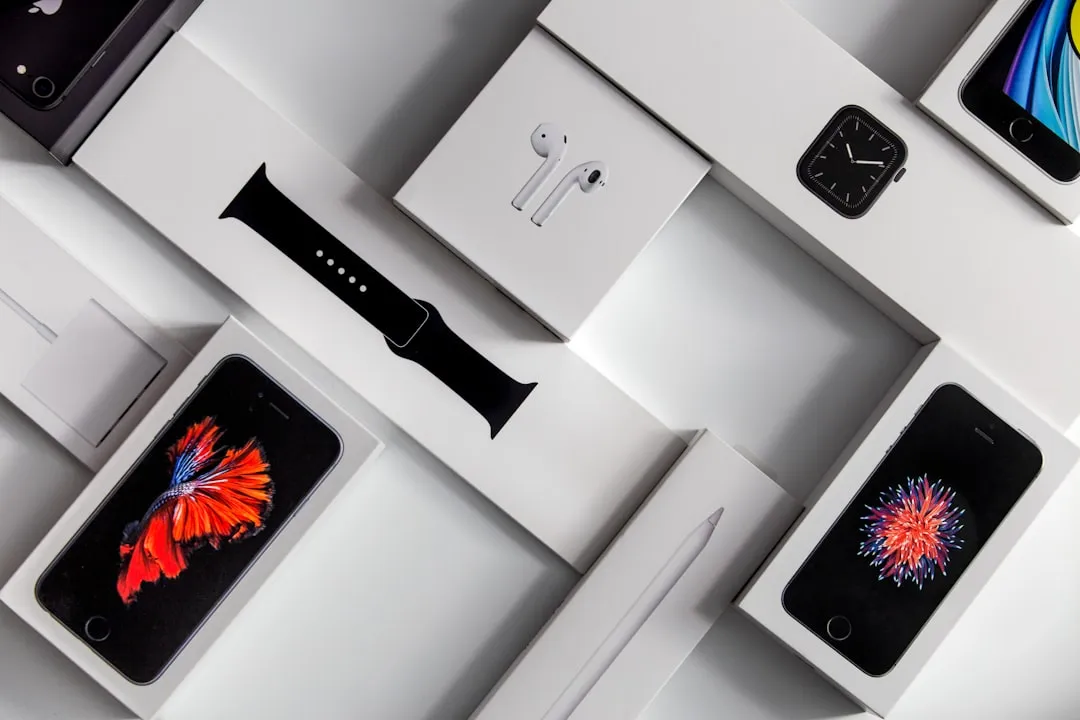
The year 2026 is shaping up to be Apple's most transformative period since the original iPhone launch, with five groundbreaking new products set to redefine how we interact with technology. What's particularly compelling is that this isn't just about individual gadgets—it's a coordinated ecosystem expansion that signals Apple's deliberate shift toward an AI-first future where hardware innovation seamlessly integrates with sophisticated artificial intelligence capabilities.
The foldable iPhone finally arrives
After what feels like endless rumors and speculation, Apple's first foldable iPhone is finally set to debut in 2026. Here's what makes this particularly exciting: Apple didn't rush to market like many competitors did. Instead, they've been quietly solving the problems that have plagued other foldable phones, and the results show their patient approach.
The device will feature a book-style folding design with a compact 5.3-inch outer display that unfolds to reveal a 7.7-inch inner screen—essentially giving you iPad mini-sized screen real estate in your pocket. But here's the breakthrough Apple's been working toward: the company has achieved crease-free display technology. If you've ever been bothered by the visible fold line on Samsung's Galaxy Z series, you'll appreciate why this represents a significant leap forward.
The engineering accomplishment extends beyond the display. The device will be just 4.8mm when unfolded, making it Apple's thinnest product to date, while incorporating a titanium frame for durability. Apple's making some interesting authentication choices too—Touch ID rather than Face ID, likely because implementing Face ID on a foldable presents unique technical challenges.
PRO TIP: iOS 27's software adaptations will include seamless app continuity when unfolding the device, automatically transitioning apps from the outer display to the larger inner screen without losing context or progress.
About that price tag: pricing rumors are all over the place, but somewhere around $2,000 is expected. That's premium territory, but considering Apple's track record of entering new categories at high price points before expanding accessibility, it's not surprising.
Smart home gets serious attention
Apple's long-overdue entry into dedicated smart home hardware represents a strategic shift that's been years in the making. Apple has mostly ceded the smart home market to third parties, but 2026 marks their serious play for this category with a coordinated approach that leverages their privacy-first philosophy.
The hardware strategy centers on two key products: Apple is working on both a Home Security Camera and Video Doorbell, finally giving Ring and Nest some real competition. What makes these Apple products compelling isn't just the hardware—it's the intelligence layer. The security camera includes facial recognition and infrared sensors to determine who is in a room, enabling sophisticated automation scenarios that understand context rather than just motion.
Apple's vision extends far beyond basic security monitoring. The company believes users will place cameras throughout their home to help with automation, creating a network of intelligent sensors that can trigger contextual responses. Imagine walking into your kitchen and having your smart home recognize you specifically, adjusting lighting, temperature, and even starting your morning routine without requiring voice commands.
The centerpiece of this ecosystem is the HomePod Touch (the naming remains fluid). This device features a 7-inch square display, new homeOS software with native apps, and AI-enhanced Siri capabilities. Think of it as mission control for your entire home, with widgets similar to iPhone StandBy mode, FaceTime calling capabilities, and modular attachments for different mounting scenarios. Current expectations put the pricing around $350, positioning it competitively against Amazon's Echo Show lineup while offering deeper ecosystem integration.
Apple Glasses bring AI to your face
This might be the most strategically important product of the entire 2026 lineup. Apple Glasses is an all-new face wearable being unveiled in 2026, though it's rumored to debut late in the year before shipping in 2027.
Here's what's fascinating about Apple's approach: they're not trying to recreate the Vision Pro experience in a lighter form factor. Instead, Apple Glasses will be a lot like the competing Ray-Ban Meta AI glasses, but with deep iPhone integration. We're talking about practical, everyday augmented intelligence—glasses that enhance your existing interactions rather than replacing them with digital overlays.
The focus centers on contextual AI and seamless ecosystem connectivity. These aren't glasses that project virtual objects into your field of view; they're designed to be invisible technology that amplifies your capabilities. Apple expects to price the glasses under $1,000, making them significantly more accessible than the Vision Pro while serving as Apple's entry point into mainstream wearable computing.
The strategic implications are enormous. Apple Glasses represents the company's bet on ambient computing—technology that's present when you need it and invisible when you don't. It's the next logical step in Apple's progression from desktop to pocket to body-worn devices.
Budget MacBook enters the fray
This might be the biggest surprise in Apple's 2026 strategy. Apple expects to launch a new 'MacBook' in the next few months that fundamentally challenges assumptions about Mac pricing and positioning.
The MacBook may have a 12.9-inch display that's slightly smaller than the current smallest MacBook Air, but here's the strategic shift: it will be powered by an iPhone-class chip, reportedly the A18 Pro. This isn't a step down in capability—modern iPhone chips deliver remarkable performance—but it does represent a different philosophy about Mac computing.
The design language clearly targets younger consumers and educational markets. The MacBook may launch in a variety of colors, including blue, pink, yellow, and silver, similar to the approach Apple took with iMac colors. But the most compelling aspect is accessibility: the rumored price point is around $599 or $699.
PRO TIP: This represents Apple's acknowledgment that not everyone needs M-series chip power for their daily computing. For web browsing, document editing, media consumption, and even light creative work, an iPhone-class processor running macOS could be more than sufficient while dramatically expanding access to Apple's desktop ecosystem.
Where innovation meets ecosystem strategy
What's really compelling about Apple's 2026 lineup isn't just the individual products—it's how they work together to create a more complete ecosystem experience. Apple Intelligence continues expanding across devices in 2026, providing the connective intelligence that makes all these new form factors feel like parts of a unified whole rather than separate gadgets.
The foldable iPhone will support sophisticated dual-screen workflows, automatically adapting apps as you unfold the device. The smart home products will leverage facial recognition and contextual awareness to create truly personalized automation. The budget MacBook will democratize access to Apple Intelligence features, bringing AI-powered productivity tools to a much broader audience. Apple Glasses will extend that intelligence into ambient computing scenarios where your devices anticipate needs before you articulate them.
The timing reveals Apple's strategic patience. iOS 27, set for 2026 release, prioritizes stability and bug fixes over flashy features, suggesting Apple wants a rock-solid software foundation before introducing all this new hardware complexity. The strategy aims to rebuild user trust amid growing competition, which makes perfect sense when you're asking people to trust you with everything from their primary computing device to their home security.
Market analysts believe that emphasizing stability and hardware compatibility could boost upgrade cycles and Apple's sales, and the logic is sound. When every device works seamlessly together, the value proposition becomes exponentially stronger than any individual product could provide.
What this means for the tech landscape
Apple's 2026 strategy represents something more fundamental than new product launches—it's a coordinated redefinition of how personal technology ecosystems should work in an AI-first world. Apple's approach reveals why they waited while competitors rushed to market. Instead of launching products in isolation, they've orchestrated an ecosystem-wide expansion that spans form factors, price points, and use cases simultaneously.
The competitive implications are significant. Samsung might have superior foldable hardware, Amazon might have more smart home devices, Meta might have more advanced AI glasses, and countless manufacturers make cheaper laptops. But none of them can offer the integrated experience that Apple is building across all these categories at once.
The foldable iPhone addresses the flexibility and screen real estate that power users have been demanding. The smart home products finally bring Apple's privacy-first philosophy to a category that desperately needs it. Apple Glasses represent the next evolution of contextual computing without the social and technical barriers of VR headsets. The budget MacBook democratizes access to Apple's ecosystem for users who've been priced out of the Mac experience.
This coordinated approach creates competitive advantages that individual product launches simply can't match. The ecosystem becomes the moat, not any single device. As industry experts note, this positions Apple not just as a hardware company, but as the architect of the next generation of personal computing experiences.
The success of this strategy will likely determine not just Apple's trajectory, but the entire industry's approach to ecosystem integration, AI deployment, and user privacy for years to come. It's an ambitious bet, but then again, Apple's biggest successes have always come from reimagining entire product categories rather than incrementally improving existing ones.

Comments
Be the first, drop a comment!