





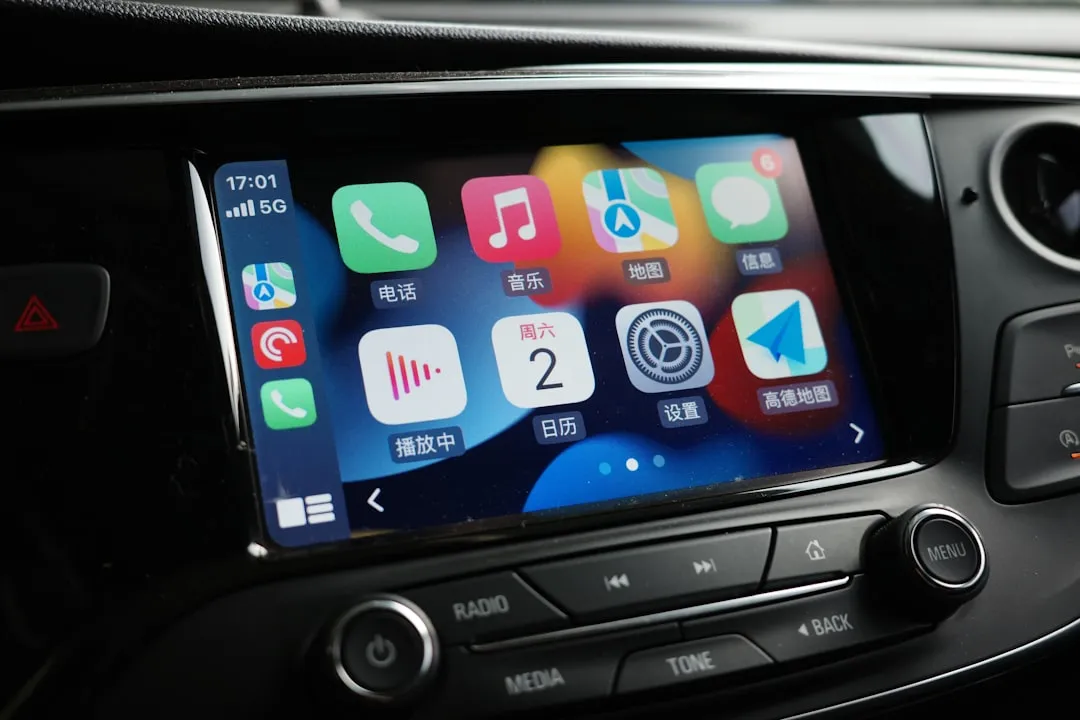
CarPlay's split-assistant design reveals Apple's Siri strategy
Apple didn't announce a new Siri strategy. It shipped one in a CarPlay update that most people haven't looked at closely.
Recent CarPlay documentation shows entitlement categories for CarPlay apps and an assistant-cell mechanism in certain app types, but the public docs do not clearly establish a general third-party AI-assistant framework inside CarPlay, a function the prior architecture did not formally accommodate. Apple's CarPlay developer documentation and entitlement guidelines describe the boundary model, though those pages stop short of API-level confirmation of the specific entitlement tier the framework implies. That distinction matters: the documentation shows the structure; the strategic reading of what that structure means is inference, not documented Apple intent.
With that caveat on the table, the structure itself is worth the attention. Apple drew a line between what it trusts Siri to own and what it is willing to open to outside models. It drew that line in a published spec that other developers can build to, not in a quiet bilateral deal. That is the move from integration to policy, and it is what makes this worth reading carefully.
What the split looks like in the car
The division is clean enough to state plainly. Siri owns the ambient layer: wake-word detection, incoming calls, outbound messages, and navigation handoffs. A qualifying third-party assistant can receive voice queries the user consciously routes to it, surface answers within its own domain, and execute tasks within that scope. What it cannot do is capture ambient speech, intercept queries the user did not direct at it, or hold authority across a CarPlay session. Every invocation is an active, affirmative choice. The third-party assistant goes dormant the moment the user exits that explicit invocation.
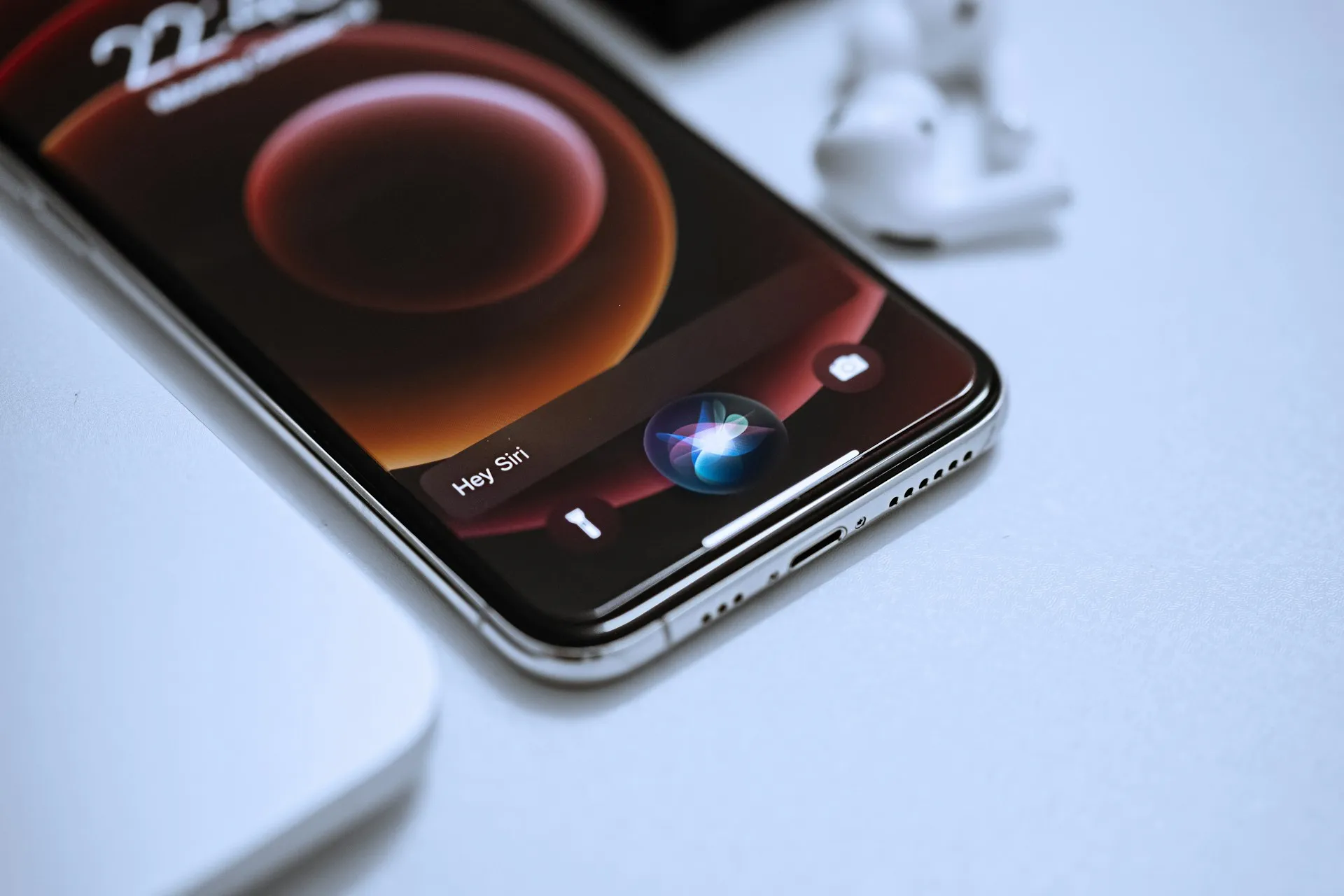
Two scenarios show where this works cleanly. A driver taps to invoke a third-party AI assistant and asks something complex: a restaurant recommendation with specific dietary constraints, or a follow-up on something heard earlier in the drive. The assistant handles it. That is exactly the kind of query where Siri has historically underperformed, and the framework accommodates the gap without pulling Siri out of the session. Then an incoming call arrives, or the driver says, "Hey Siri, navigate home." Siri handles both without interruption, regardless of what was active a moment before.
The friction surfaces when a driver who has spent ten minutes using a third-party assistant asks it to send a message. It cannot. The driver either switches to Siri manually or the request fails. That is where a two-speed design starts feeling like a two-system design, and how clearly the interface communicates which assistant owns which actions will determine whether users experience the division as sensible specialization or as a seam they keep snagging on. Apple has not shown that interface publicly.
The context continuity problem
The harder limit is what the current framework omits entirely. There is no evidence in Apple's documentation that Siri carries context from a third-party assistant exchange into a subsequent query, or that a third-party assistant can access prior Siri session history. Each invocation is discrete.
For a single-turn question, that works fine. For anything multi-step, the absence of shared context means the user is effectively starting fresh every time the active assistant changes. A driver who wants a third-party assistant to help plan a trip, then hands navigation to Siri, then wants to pick up the conversational thread after the turn, cannot do that today. Whether a subsequent release addresses continuity will say more about this design's durability than any architectural framing. Right now, it is the real ceiling on what the split model can do.
Why Apple drew the line exactly here
Three distinct pressures push toward this specific configuration, and they are doing different work.
Safety and liability in the car. Automotive is among the highest-stakes environments Apple ships software into. Wake-word capture and navigation handoffs involve actions with real-world physical consequences. Delegating those functions to a third-party model, whose behavior Apple cannot fully predict or control under every road condition, creates liability exposure Apple has no obvious incentive to accept. Keeping the ambient layer inside Siri keeps Apple in control of the functions most likely to matter when something goes wrong at 70 mph.
Privacy and ambient listening. Apple's commitment to on-device processing is one of its more durable brand positions. Allowing a third-party model to listen at the wake-word level, or to intercept queries the user did not consciously route to it, would contradict that position in a way that is hard to walk back publicly. The consent requirement on every third-party invocation, which applies in CarPlay just as it does in the iPhone's ChatGPT integration per Apple's iOS 18 feature overview, is not a technical limitation. It is a design principle applied consistently across both products.
Brand protection around core system actions. Calls, messages, and navigation are the interactions most associated with Siri by the people who actually use it. Delegating those to a third-party model, even one that outperforms Siri on complex reasoning, risks users attributing failures to Apple rather than to the external assistant. Siri holding the system layer keeps Apple in the critical path for the actions users care most about, while the queries where third-party models have a visible edge go elsewhere.
None of this required a press release. All three rationales are legible from the boundary itself. Apple is not outsourcing Siri; it is protecting the layer Siri cannot afford to lose while acknowledging the layer where it cannot currently compete.
How this compares to the iPhone's ChatGPT integration
Apple shipped iOS 18 in September 2024. The release included a ChatGPT integration that lets Siri route queries to OpenAI's model when it judges the query exceeds its own capability, as Apple's iOS 18 feature overview describes. That integration, now about eighteen months old, requires per-query user confirmation before passing any request to ChatGPT.
The consent logic matches what CarPlay applies. No external model captures a query without explicit user action in either system.
The structural difference is what matters. The iPhone's ChatGPT integration is a bilateral arrangement between two specific products: no published entitlement framework, no documented pathway a third assistant could build to, no set of rules that extend beyond this one deal. CarPlay's version is structurally different: explicit invocation rules, a defined access tier, and a spec that qualifying assistants can build to regardless of who they are. That shift, from bilateral agreement to published access rules, is the difference between a partnership and a platform. Platforms invite outside iteration. Deals get renegotiated in private.
One gap both systems share: context continuity. The iOS 18 integration does not carry Siri session context into ChatGPT, or vice versa. The split-assistant problem is not unique to the car.
Why Apple tests things in the car first
Apple has used CarPlay's constrained environment to preview interface logic before committing it to the iPhone. One case is concrete enough to support the comparison without overstating it.
At WWDC 2022, Apple previewed a next-generation CarPlay architecture featuring ambient, glanceable display logic: contextually relevant information surfaced without active user input on a limited screen, as 9to5Mac's WWDC 2022 coverage documented. Structurally similar behavior appeared on iPhone with iOS 16's expanded Lock Screen widgets and, more directly, iOS 17's StandBy mode, a limited-input surface where glanceable context replaces active navigation. Logic Apple tried in the car showed up on the phone.
CarPlay offers a real production environment with a narrow task domain, a constrained screen, and a user base already comfortable with voice interaction. A confused experience in the car gets patched in a point release. The same structural decision applied to iPhone, across hundreds of millions of devices and dozens of daily use cases, becomes a news cycle. The car is where Apple can observe whether a divided assistant model feels coherent before the same decision lands somewhere it cannot be quietly revised.
The inference stays conditional. Not every CarPlay pattern has migrated to iPhone. The next-generation CarPlay interface that debuted at WWDC 2022 remains only partially deployed across vehicle manufacturers, nearly four years on. CarPlay moves slowly. What sets the assistant entitlement framework apart from a UI experiment is the formality: a published spec with explicit invocation rules is harder to quietly abandon than a display layout, and that distinction is worth tracking separately from what the feature does today.
Three signals that would confirm or weaken this reading
The CarPlay framework documents a design choice, not a stated intention. What Apple does next will say more.
Three developments would support reading this as deliberate platform direction:
Expansion of the entitlement framework in a subsequent release. New task categories, additional assistant types, or revised invocation rules appearing in Apple's developer release notes would indicate Apple is iterating on the architecture rather than leaving it static. An entitlement framework that grows is a platform; one that stays frozen looks like a one-time accommodation.
Siri framing at WWDC 2026 that emphasizes routing over raw capability. Apple's developer conference typically runs in early June, two months out. If the framing around Siri shifts toward what it coordinates rather than what it handles directly, that is a deliberate repositioning, distinct from simply shipping new Siri features.
Reduced friction for the iPhone ChatGPT handoff. If Apple moves from per-query confirmation to a standing user preference for routing complex queries externally, delegation stops looking like a privacy guardrail Apple is managing around and starts looking like a designed feature.
Two signals would cut against it. If Apple tightens CarPlay entitlements in a subsequent release rather than expanding them, the initial opening looks more like a competitive or compliance response than a product direction. And if WWDC sessions on Siri emphasize capability unification, making Siri more capable across the board rather than smarter about when to hand off, the split model reads as a temporary gap-filler waiting to be retired.
The case for this being a product direction rests on one specific observation: Apple published rules that other developers can build to. That is not something Apple does when it is managing around a limitation. It is something Apple does when it is building a product category.
Siri keeps the ambient layer: the calls, the wake word, the navigation. Third-party models get the complex reasoning queries you deliberately send their way. Whether that division feels like sensible specialization or a constant seam will depend on the execution Apple has not finished, starting with context continuity. CarPlay is where the architecture is currently visible. The entitlement rules Apple writes for the next release, whether they expand, refine, or quietly retract what was opened here, will answer the real question.



Comments
Be the first, drop a comment!