




Do AirPods Pro 3 support Apple Music lossless audio?
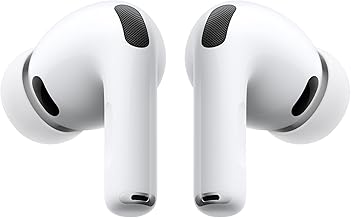
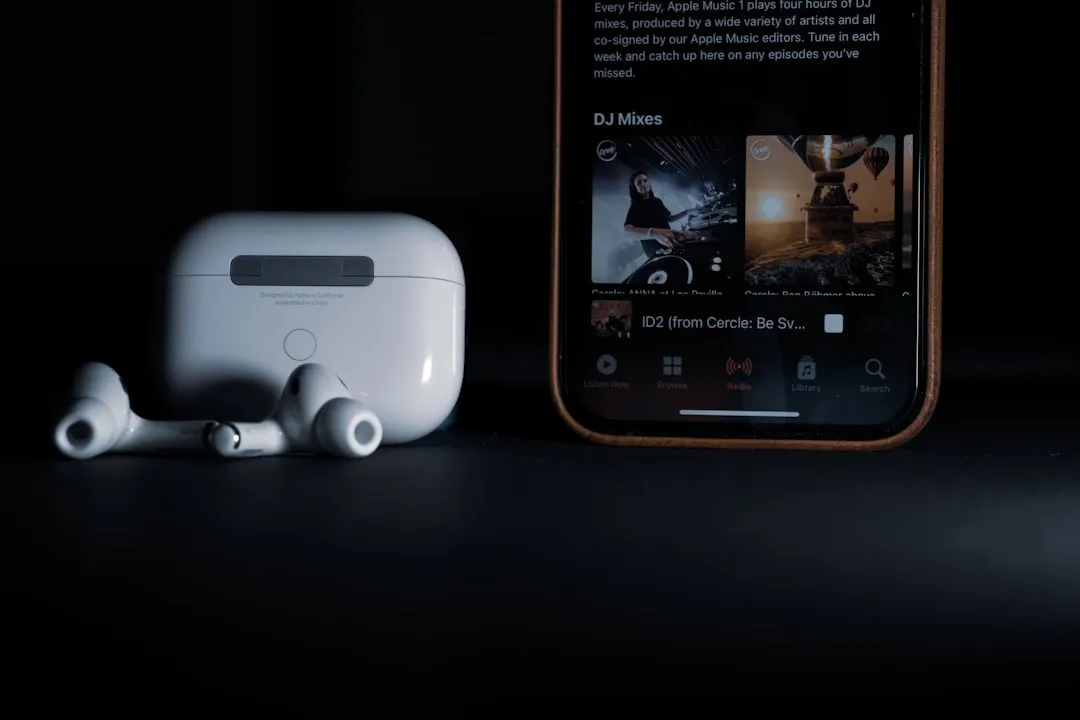
Apple's own product listing for the AirPods Pro 3 includes "No Lossless Audio" as a named specification, per MacObserver. Not a footnote. A product attribute. So the answer to whether AirPods Pro 3 support Apple Music lossless is no, and Apple hasn't hidden it. The more productive question is why so many subscribers are running lossless enabled in their settings right now, receiving AAC through their earbuds, and assuming the two things are connected, per Apple Support.
They aren't. The settings toggle changes what files the Music app fetches from Apple's servers. It does not change how audio gets transmitted to your AirPods. A lossless file arrives at the iPhone; the iPhone still outputs AAC to the earbuds. Apple's position on this isn't a technical failure or a marketing deception it's a stance the company has documented clearly and applied consistently. The problem is that the settings interface implies a relationship between enabling lossless downloads and receiving lossless playback that simply doesn't exist for any Bluetooth listener.
The short answer for AirPods Pro 3 owners
AirPods Pro 3 connected to iPhone = Bluetooth AAC, every time, regardless of your Music settings
The lossless toggle in Settings → Music → Audio Quality controls what the Music app requests from Apple's servers, not what gets transmitted to your ears
Actual lossless playback requires a wired output path, or AirPods Max connected via USB-C digital cable
The sections below explain how Apple arrived at this position and what to do if lossless playback genuinely matters to your setup.
Apple Music lossless on AirPods Pro 3: what the toggle actually does
Apple's support documentation contains an unusual sentence for a feature page. The company writes that the difference between AAC and lossless audio is "virtually indistinguishable," while still making the lossless catalog available to all subscribers, per Apple Support. Companies don't typically publish their most deflationary claims on their own feature pages. That sentence signals Apple's actual position: lossless is an option for subscribers who want it, not an experience Apple expects most listeners to perceive.
The catalog investment behind it is substantial. Apple Music encodes its library in ALAC at resolutions from 16-bit/44.1 kHz up to 24-bit/192 kHz, giving subscribers access to more than 100 million songs in lossless, per Apple Newsroom. That's a genuine technical commitment. But a lossless catalog and the ability to receive lossless audio through wireless earbuds are two separate things. Apple's product pages bundle them into a single narrative about audio quality, which is where the confusion enters.
Here's where the toggle specifically misleads. Enable lossless in your Music settings and the app will fetch ALAC files from Apple's servers. The Music app even shows a lossless badge in the playback controls when a track is actively playing in lossless, per Apple's Mac Music guide. The badge is accurate the iPhone fetched the ALAC file. But Apple's own documentation is plain about what happens next: Bluetooth connections don't support lossless audio, per Apple Support. The badge stays on screen. The lossless content doesn't make it to your ears.
That's the practical cost of having the toggle enabled with AirPods Pro 3. Lossless streaming consumes significantly more cellular and Wi-Fi data, and downloaded lossless tracks occupy significantly more device storage, per Apple Support. Neither cost comes with any audible return for Bluetooth listeners.
Once you accept Apple's documented premise that AAC is audibly sufficient for most listeners, every product decision that follows is coherent. AirPods Pro 3 not supporting lossless isn't an oversight. It's the natural extension of that philosophy applied to a wireless device built around convenience, ANC, and Spatial Audio.
Where to actually get lossless from Apple Music
The wired path is the most direct. A USB-C DAC paired with wired headphones is the clearest route to confirmed lossless playback on a current iPhone. For Lightning iPhones, Apple's Lightning-to-3.5mm adapter contains a built-in DAC rated for up to 24-bit/48 kHz, making it a genuine lossless output path, per Apple Support. Neither option is glamorous. Both deliver actual lossless audio.
AirPods Max with USB-C is the notable exception, but the specifics matter. Following a firmware update shipped with iOS 18.4 last year, AirPods Max (USB-C) gained 24-bit/48 kHz lossless delivery through a digital USB-C cable connection, per Apple Newsroom. The analog cable options for AirPods Max involve a conversion stage that Apple's documentation describes as not "completely lossless," per Apple Support. Wired AirPods Max is not automatically lossless the cable type determines it.
There's also a proprietary path worth understanding, because it clarifies what Apple is and isn't choosing to do. The H2-to-H2 wireless link between Vision Pro and AirPods Pro 2 (USB-C) can deliver 24-bit/48 kHz lossless in select apps and workflows, per MacObserver. This isn't Apple Music over iPhone it's a tightly controlled chip-level connection Apple owns on both ends. It demonstrates that wireless lossless to AirPods is a product choice, not an engineering impossibility. Apple can do this when it controls the full stack. It has chosen not to extend that to the standard iPhone-to-AirPods path, and there is no public roadmap suggesting firmware will change the situation for Pro 3, per MacObserver.
It's also worth separating Spatial Audio from this conversation, since the two features get conflated constantly. AirPods Pro 3 support Spatial Audio with head tracking, per MacObserver. That's a different feature stack entirely, and it works fine over Bluetooth AAC. The earbuds do bring genuine gains in fit, seal, and active noise cancellation. Buy them for those reasons. Just don't buy them expecting lossless playback from your iPhone.
What Apple could fix without shipping a single update
The gap here isn't technical. It's a labeling problem, and it's solvable without changing any hardware or codec.
Apple publishes accurate information about lossless limitations it just publishes it in support documentation that most buyers never open before making a purchase. A plain-language note inside the lossless toggle itself, something like "Bluetooth connections don't support lossless audio," would close most of this confusion at the moment it matters. Apple's own documentation already says exactly that. It needs to appear on the decision screen, not buried three support pages away.
Apple has already shown it can push lossless through a proprietary wireless link when it controls both endpoints. Whether that ever extends to the standard iPhone-to-AirPods connection is a product choice, not an engineering barrier. Apple's documented position suggests it considers the current state sufficient for most listeners, and given that its own support page calls the AAC-versus-lossless gap "virtually indistinguishable," that position is at least internally consistent.
Right now, a lot of subscribers are paying for a lossless catalog, burning through data and storage to download lossless files, and hearing AAC. Apple knows this. The fix is a sentence, and the subscribers waiting for clarity shouldn't have to find it in a support article.




Comments
Be the first, drop a comment!