





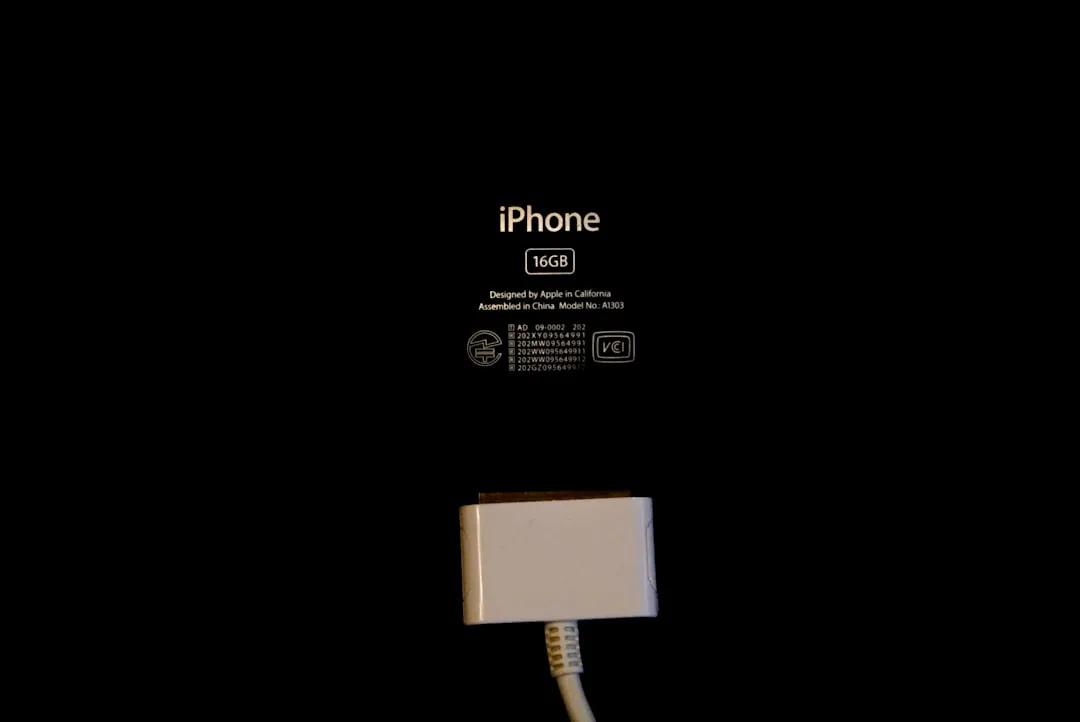
Engineer adds Lightning port to iPhone 17 Pro: how it works
Ken Pillonel has built a custom case/adapter for the iPhone 17 Pro that accepts a Lightning cable through the phone's USB-C connection. The phone ships with USB-C. Based on published demo footage, the port functions. The engineering required to get there is more involved than the result suggests.
Pillonel built his reputation on exactly this kind of reversal. His 2021 project put a USB-C port on an iPhone X three years before Apple made the switch official, producing independently verified schematics that other engineers later built from, as documented by The Verge and others at the time. The April 1 publication date on this project is worth noting and not dismissing; Pillonel's prior work is the relevant credential. Published schematics that held up to independent scrutiny are a different category of thing than a one-day stunt.
The connector swap is the hook. The engineering underneath it is the story.
What the demo footage shows, and what remains unverified
From Pillonel's published demo materials, the modified port accepts a Lightning cable and the phone responds. Power delivery and some degree of data handling are visible in the footage. Those are the confirmed capabilities as of publication.
What the demo does not settle is whether the port clears Apple's MFi authentication handshake. That handshake, administered through the MFi licensing program, is the credential check that determines whether a connected Lightning accessory is recognized as legitimate by the device, rather than simply tolerated. Passing power is one thing. Passing authentication is another. A cable that delivers charge without completing the handshake is a different result, technically, than a port that fully participates in the Lightning protocol as Apple designed it. Whether Pillonel's hardware does the latter is not confirmed in the materials currently available.
The build involved a custom case, custom PCBs, and connector alignment hardware to interface a Lightning connector with the phone's USB-C connection. What happened to the USB-C port in the process, whether it still functions, was disabled, or operates in some reduced state, is also unresolved until a full schematic is published. Those specifics matter. Every hardware modification at this integration level involves real trade-offs, and the ones Pillonel made are more informative than a headline claim of success.
Why the protocol is harder than the housing
Fitting a non-stock connector into an iPhone 17 Pro chassis is genuinely difficult work. iFixit's teardown analyses show how densely the internal components are packed; there is essentially no spare room, and precision machining at that scale leaves no room for error. But the modification community has been navigating that density for years. Physical access is a known category of problem. Hard, but mappable.
The protocol is a different kind of obstacle entirely. USB-C is governed by openly published specifications from the USB Implementers Forum. Any engineer can download the full documentation and build to it. Lightning has no equivalent. Apple has never published its electrical specifications or described its authentication behavior publicly. To build a hardware phone that a phone recognizes as a legitimate Lightning interface, an engineer has to work backward from observation, watching how existing Lightning devices behave and inferring the rules from outputs rather than reading them off a spec sheet.
That inference process is not a minor variation on implementing a documented standard. With a documented standard, the rules are given. With a closed protocol, each inference has to be tested; the failure mode is silent until something is plugged in, and there is no external reference to check against. Pillonel's 2021 project built a custom PCB small enough to fit inside an iPhone X housing to translate signals between the new connector and the phone's internal bus. This project runs the same logic in reverse, against a more tightly integrated platform, targeting a protocol with no public documentation at any level.
Apple documents USB-C support for charging, data, displays, and some accessories, while MFi provides technical resources for certain Apple device accessories; the extent of any additional proprietary handling relevant to this mod is not public from the demo materials. How much of that the mod had to work around, and how, is not clear from the available footage. The technical picture stays narrow until the full build documentation is out.
Why this result matters, precisely
Right-to-repair advocates have argued for years that proprietary authentication operates as a control layer independent of physical design. Once the housing is open and the hardware is modified, the authentication logic can still block a third-party component from functioning as intended. Pillonel's build is a concrete demonstration of that argument, whatever the authentication story ultimately confirms. An independent engineer, working from observation rather than documentation, made a deprecated connector functional on a current-generation device. That is the specific, verifiable result.
The broader significance of that result depends on what the authentication documentation shows. If the MFi handshake is fully resolved, the implication is that Apple's authentication logic is portable to custom hardware built entirely outside its supply chain. That is a meaningfully different finding than power delivery alone. If authentication is partial or unresolved, the build is still technically impressive, but the scope of what it proves is narrower.
One sentence on policy is the right proportion: this project is a working illustration of the repair access argument, and its relevance to ongoing legislative conversations would depend on whether Pillonel's documentation enters those discussions directly.
Whether this becomes a resource or stays a demonstration
The 2021 project did two things. It proved the modification was possible, and then it handed the tools to whoever came next. Published schematics became a working reference for other engineers tackling connector work, not just a record that Pillonel had done it. The question this time is whether he does the same.
Lightning is a deprecated standard. Apple documents USB-C support for charging, data, displays, and some accessories, while MFi provides technical resources for certain Apple device accessories; the extent of any additional proprietary handling relevant to this mod is not public from the demo materials. But the installed base runs into the hundreds of millions of devices, and the authentication logic governing accessory recognition on those devices has never been publicly documented. A schematic showing how that logic behaves when reconstructed on custom hardware outside Apple's supply chain would be the first public record of that interaction anywhere. That is new technical territory in a narrow but real sense.
Without published documentation, this project is an impressive single instance. With it, the project becomes a reference point, something an engineer can pull up, read, and build from years from now. Whether Pillonel publishes the full schematic will determine how far the work's reach extends past the demo footage.
Apple's connector transition closed off Lightning as a supported path on current hardware. What this build demonstrates, contingent on full documentation, is how far independent engineering can still reach into a platform designed at the physical, protocol, and authentication levels not to be modified.




Comments
Be the first, drop a comment!