



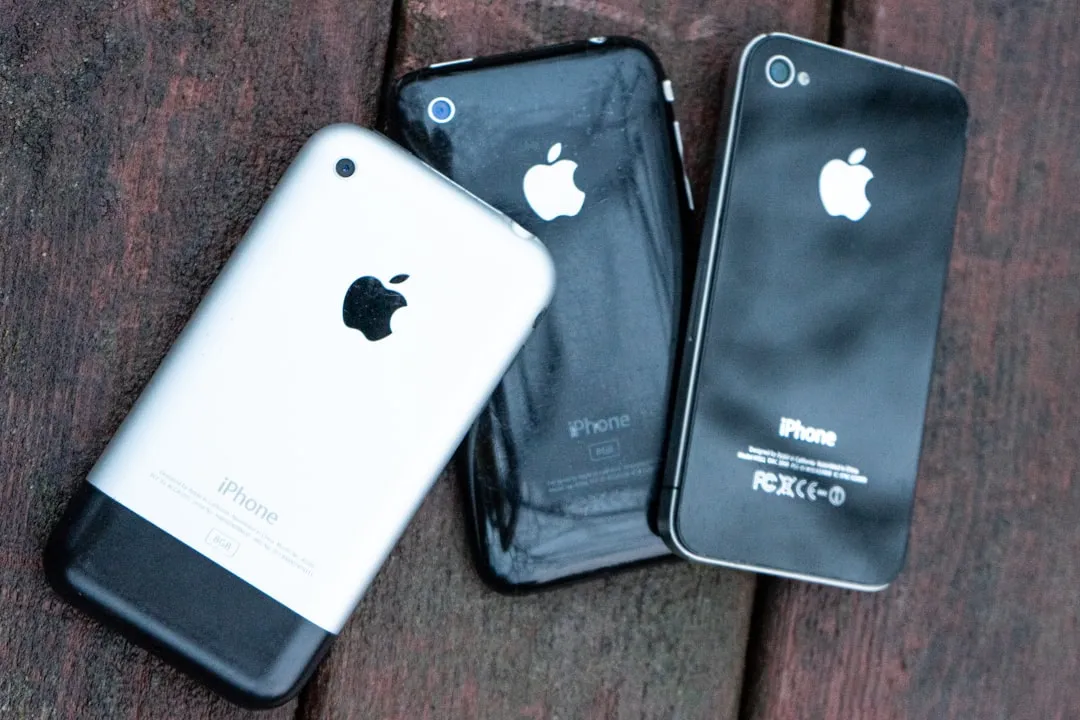
In June 2007, Apple sold roughly 300,000 iPhones in a single weekend. That device had a 3.5-inch screen, a 2-megapixel camera, 2G EDGE data, and no App Store. By 2024, that single starting point had multiplied into 47 distinct iPhone models (ts2.tech, July 2025). The iPhone 17, launched September 2025, extends the lineup further, with a standard model starting at $799 and 256GB of storage, and a Pro Max topping out at 2TB for the first time.
An interactive timeline documenting every iPhone model ever released makes that full history visible in one place: screen dimensions, storage tiers, color options, specs across every generation. This article uses it as a foundation to answer the more useful question: which decisions actually created all those models, and what do the patterns reveal about how Apple builds a product lineup?
The short answer is that the iPhone's growth from one device to dozens happened through a small number of decisive pivots, not gradual drift. Each pivot is compounded into the tiered structure buyers face today. Understanding those pivots turns the timeline from a nostalgic catalog into a readable map of Apple's strategy, and a practical tool for anyone trying to figure out which generation or model actually matters for their next purchase.
Note on historical data: launch-weekend sales figures cited throughout this article come from compiled reporting rather than Apple's current product archive, which does not publish historical sales by model.
All iPhone models in order: the chronological scaffold
Before the analysis, the facts. Every iPhone model ever released, grouped by era:
2007-2010 The foundation
iPhone (2007): 3.5-inch display, 2MP camera, 2G EDGE, no App Store
iPhone 3G (2008): 3G data, GPS, App Store launched
iPhone 3GS (2009): faster processor, 3MP camera, video recording, up to 32GB
iPhone 4 (2010): Retina Display at 326ppi, front-facing camera, glass-and-metal design
2011-2013 Platform and first segmentation
iPhone 4S (2011): 8MP camera, 1080p video, Siri, A5 chip
iPhone 5 (2012): LTE, Lightning connector, 4-inch display, A6 chip
iPhone 5c (2013): polycarbonate shell, five colors, lower price point
iPhone 5s (2013): Touch ID, 64-bit A7 chip, first fingerprint authentication on iPhone
2014-2016 Size splits and hardware gates
iPhone 6 (2014): 4.7-inch display, A8, NFC/Apple Pay
iPhone 6 Plus (2014): 5.5-inch display, optical image stabilization
iPhone 6s (2015): 3D Touch, 12MP camera, A9 chip
iPhone 6s Plus (2015): 3D Touch, OIS, larger display
iPhone SE, 1st generation (2016): 4-inch display, A9 chip, entry price
iPhone 7 (2016): headphone jack removed, A10 Fusion, water resistance
iPhone 7 Plus (2016): dual cameras, 2x optical zoom, A10 Fusion
2017-2020 The premium tier and Pro identity
iPhone 8 (2017): glass back, wireless charging, A11 Bionic
iPhone 8 Plus (2017): dual cameras, Portrait mode, glass back
iPhone X (2017): edge-to-edge OLED, Face ID, no Home button, $999
iPhone XS (2018): improved cameras, A12 Bionic
iPhone XS Max (2018): 6.5-inch display
iPhone XR (2018): LCD, single camera, broad color palette
iPhone 11 (2019): dual cameras, Night mode, A13 Bionic
iPhone 11 Pro (2019): triple cameras
iPhone 11 Pro Max (2019): 6.5-inch Pro display
iPhone SE, 2nd generation (2020): 4.7-inch design, A13 Bionic, Touch ID
iPhone 12 mini (2020): 5.4-inch, 5G, A14 Bionic
iPhone 12 (2020): 6.1-inch, 5G, OLED, MagSafe
iPhone 12 Pro (2020): LiDAR, ProRAW, triple cameras
iPhone 12 Pro Max (2020): 6.7-inch, sensor-shift OIS
2021-2024 Consolidation and tier sharpening
iPhone 13 mini (2021): smaller notch, larger battery
iPhone 13 (2021): Cinematic mode, A15 Bionic
iPhone 13 Pro (2021): ProMotion at 120Hz, macro photography
iPhone 13 Pro Max (2021): 6.7-inch ProMotion display
iPhone SE, 3rd generation (2022): 5G, A15 Bionic, 4.7-inch
iPhone 14 (2022): Crash Detection, Emergency SOS via satellite
iPhone 14 Plus (2022): 6.7-inch, replaces mini form factor
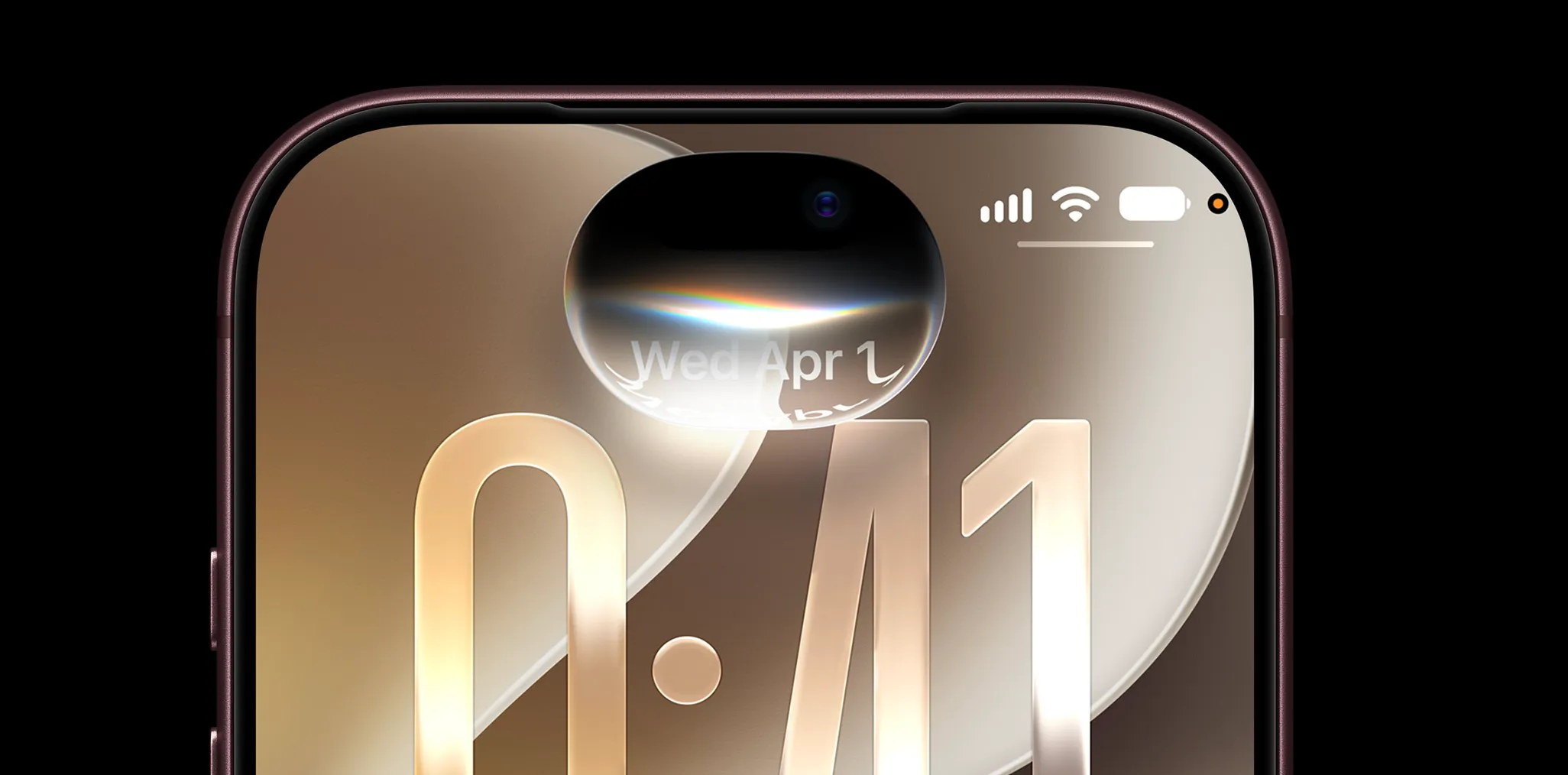
iPhone 14 Pro (2022): Dynamic Island replaces notch, 48MP main camera
iPhone 14 Pro Max (2022): 6.7-inch Dynamic Island
iPhone 15 (2023): USB-C, Dynamic Island standard, 48MP main
iPhone 15 Plus (2023): 6.7-inch, USB-C
iPhone 15 Pro (2023): titanium frame, A17 Pro chip, Action Button
iPhone 15 Pro Max (2023): 5x optical zoom exclusive to Pro Max
iPhone 16 (2024): Camera Control button, A18 chip
iPhone 16 Plus (2024): 6.7-inch, Camera Control
iPhone 16 Pro (2024): larger display, 4K120 recording
iPhone 16 Pro Max (2024): 6.9-inch display, 5x zoom
iPhone 16e (2025): 6.1-inch OLED, A18 chip, effectively replaces SE line
iPhone 17 (2025): 6.3-inch, ProMotion standard, dual 48MP cameras, Apple-designed N1 wireless networking chip
iPhone 17 Pro (2025): 6.3-inch, three 48MP cameras, 8x zoom
iPhone 17 Pro Max (2025): 6.9-inch, 2TB storage option
Historical sales figures in this section draw from compiled reporting (ts2.tech, July 2025). Apple does not publish model-by-model historical sales data in its current product archive.
The pivots that remade the phone: four moments when Apple reset the rules
The iPhone releases a new model every year. Most are refinements. A handful are different in kind: moments after which the product was structurally changed. Four pivots stand out.
Pivot 1 Platform (2008-2010). The original iPhone was a closed device. The iPhone 3G in July 2008 changed that by adding 3G data, GPS, and, more consequentially, the App Store, which turned the hardware into a distribution channel for third-party software (ts2.tech, July 2025). Two years later, the iPhone 4 introduced the Retina Display at 326 pixels per inch and the first front-facing camera, selling 1.7 million units in three days, a record at the time (ts2.tech, July 2025). These two moves established the logic that has held ever since: the hardware is a platform, and the display is a primary reason people buy it.
Pivot 2 Infrastructure and first segmentation (2012-2013). The iPhone 5 in September 2012 brought LTE and the Lightning connector, selling 5 million units in its first weekend (ts2.tech, July 2025). The following year's iPhone 5s added Touch ID and the first 64-bit mobile chip, the security and processing architecture that Face ID and Apple Pay still build on. Alongside it, the iPhone 5c offered the same screen in a polycarbonate shell in five colors at a lower price. The two models together sold roughly 9 million units in their first weekend (ts2.tech, July 2025). The 5c was Apple's first explicit test of color as a market segmentation tool: not a feature, but a tier signal.
Pivot 3 Size as a hardware gate (2014-2016). Through 2013, every iPhone came in a single screen size. The iPhone 6 and 6 Plus in September 2014 changed that permanently, offering 4.7-inch and 5.5-inch options and selling over 10 million units combined in their opening week, the strongest launch Apple had seen to that point (ts2.tech, July 2025). The 6 Plus included optical image stabilization that the standard 6 did not. That was the first time Apple used physical size as a gate to camera capability, and that pattern has never gone away. In 2016, the iPhone 7 Plus introduced dual cameras with 2x optical zoom, again as a size-exclusive feature. Hardware subtraction made the same point from a different angle: the iPhone 7's removal of the headphone jack showed that a deliberate deletion could be as consequential as any addition.
Pivot 4 The premium tier and the Pro identity (2017-present). The iPhone X in November 2017, eliminated the Home button, introduced Face ID, moved to an OLED edge-to-edge display, and opened at $999, the first iPhone to cross that price point (ts2.tech, July 2025). That price established a new ceiling and gave Apple room to formalize the Pro/non-Pro split in subsequent years. Every iPhone since has used the interface template the X introduced: edge-to-edge display, face authentication, tiered capability by model name. The Pro line claims the camera, display, and material advantages that justify the premium.
The current grid: how size, color, storage, and price create the lineup
Those four pivots built the structure. The iPhone 17 generation is where that structure becomes most readable.
Size still gates features. The standard iPhone 17 comes in one size, 6.3 inches. The Pro comes in 6.3 and 6.9 inches. That top end has nearly doubled from the original's 3.5 inches. The larger Pro remains the exclusive home of Apple's most capable camera system: three 48-megapixel lenses with 8x optical-quality zoom, the longest reach on any iPhone yet. A decade after the iPhone 6 Plus, size is still a hardware gate.
Color signals which tier you're in. The iPhone 17 standard ships in five colors: black, lavender, mist blue, sage, and white. The iPhone 17 Pro offers three: deep blue, cosmic orange, and silver. The pattern is consistent across generations: standard models get broader, softer palettes aimed at mass appeal; Pro models get fewer options with stronger names and material finishes. This is the 5c logic, refined and normalized. Color is not purely aesthetic. The iPhone 7's Jet Black, a glossy finish that sold out immediately and scratched easily, showed that a surface treatment can become its own cultural moment. The current Pro palette operates on the same principle: fewer choices, stronger identities.
The pricing ladder and where the 16e fits. Apple's price structure now runs across four rungs: the iPhone 16e at roughly $599 as the ecosystem entry point, the standard iPhone 17 at $799, the iPhone 17 Pro at $1,099, and the Pro Max at $1,199 before storage upgrades. The 16e deserves a closer look. Apple discontinued the SE line and replaced it with a 6.1-inch OLED model running the A18 chip (ts2.tech, July 2025). The goal was to bring more buyers into the ecosystem without creating a "small, cheap" category that undercuts the standard iPhone's position. It's not a stripped-down phone; it's a strategically constrained one. Storage tiers add further rungs at each price level: the standard iPhone 17 starts at 256GB, double its predecessor, while the Pro Max reaches 2TB for the first time.
Think of the lineup as a grid with two axes: budget-to-premium on one, compact-to-large on the other. Apple deliberately populates specific cells and leaves others empty. The gaps are as intentional as the options.
What the specs track across every generation
Reading the iPhone timeline as a spec sheet misses the point. The numbers that matter reveal which pivots were technically decisive, and which current features are about ecosystem positioning rather than the phone itself.
Cameras: from addition to specification. The original 2007 iPhone had a single 2-megapixel rear camera with no video capability. The iPhone 4S reached 8 megapixels and 1080p video in 2011 (ts2.tech, July 2025). Dual cameras arrived as a size-exclusive feature on the iPhone 7 Plus in 2016. By 2025, the standard iPhone 17 carries two 48-megapixel rear cameras, a first for a non-Pro model, while the iPhone 17 Pro adds a third 48-megapixel telephoto. The camera story has moved from megapixel counts to zoom levels, aperture configurations, and computational photography. When comparing models within the current generation, the meaningful question is which zoom lenses you get and which processing features are available, not resolution alone.
Displays: three perceptual thresholds. The Retina Display in 2010 was the first moment where pixel density exceeded what the eye could resolve at normal viewing distance. The iPhone X's OLED in 2017 was the second: deeper blacks and richer contrast changed what photos looked like on screen. ProMotion at 120Hz, introduced on Pro models in 2021, was the third, making animation and scrolling noticeably smoother in a way users felt immediately. The iPhone 17 brings ProMotion to the standard model for the first time and reaches up to 3,000 nits peak outdoor brightness across the lineup. Those brightness and durability figures are Apple's own claims, not independent benchmark results.
Connectivity as an ecosystem move. The shift from 2G to LTE tracked network infrastructure: faster networks made faster phones useful. The iPhone 17's custom N1 wireless chip, which packages Wi-Fi 7, Bluetooth 5.x/6-class, and Thread into a single Apple-designed component, is a different kind of upgrade. Thread is a home networking protocol built for smart devices. Its inclusion in an iPhone is less about the phone and more about making it a hub for Apple's broader hardware ecosystem. When a connectivity spec also describes how a device interacts with a dozen other products, the spec is really an ecosystem move in hardware form.
A framework for reading any iPhone comparison
The interactive timeline that anchors this piece does something genuinely useful: it puts 18 years of model history in one place, rather than requiring readers to piece it together from scattered spec databases. But the history is most useful when filtered through the four pivots above.
Here's the practical takeaway the full timeline supports: the decisions that most affect what an iPhone can do happened at pivot years, 2008, 2012-2013, 2014, 2017, not at the incremental updates in between. Which pivot generation a phone belongs to matters more than adjacent model years. The jump from iPhone 4 to iPhone 5 was enormous. The jump from iPhone 6 to 6s, less so. The iPhone X was a structural shift; the 11 refined it.
Within any current generation, the meaningful variables are size (which determines camera configuration), model tier (which determines display and material specs), and storage tier (which determines price). Color signals tier more than it determines capability. Everything else, brightness figures, chip naming, specific megapixel counts, is calibration within a structure the four pivots built.
For the full catalog of every iPhone model ever released, every spec, every color option, every screen size in sequence, the timeline itself is the right resource. This article's job has been to give it a frame that makes it useful rather than just exhaustive.



Comments
Be the first, drop a comment!