





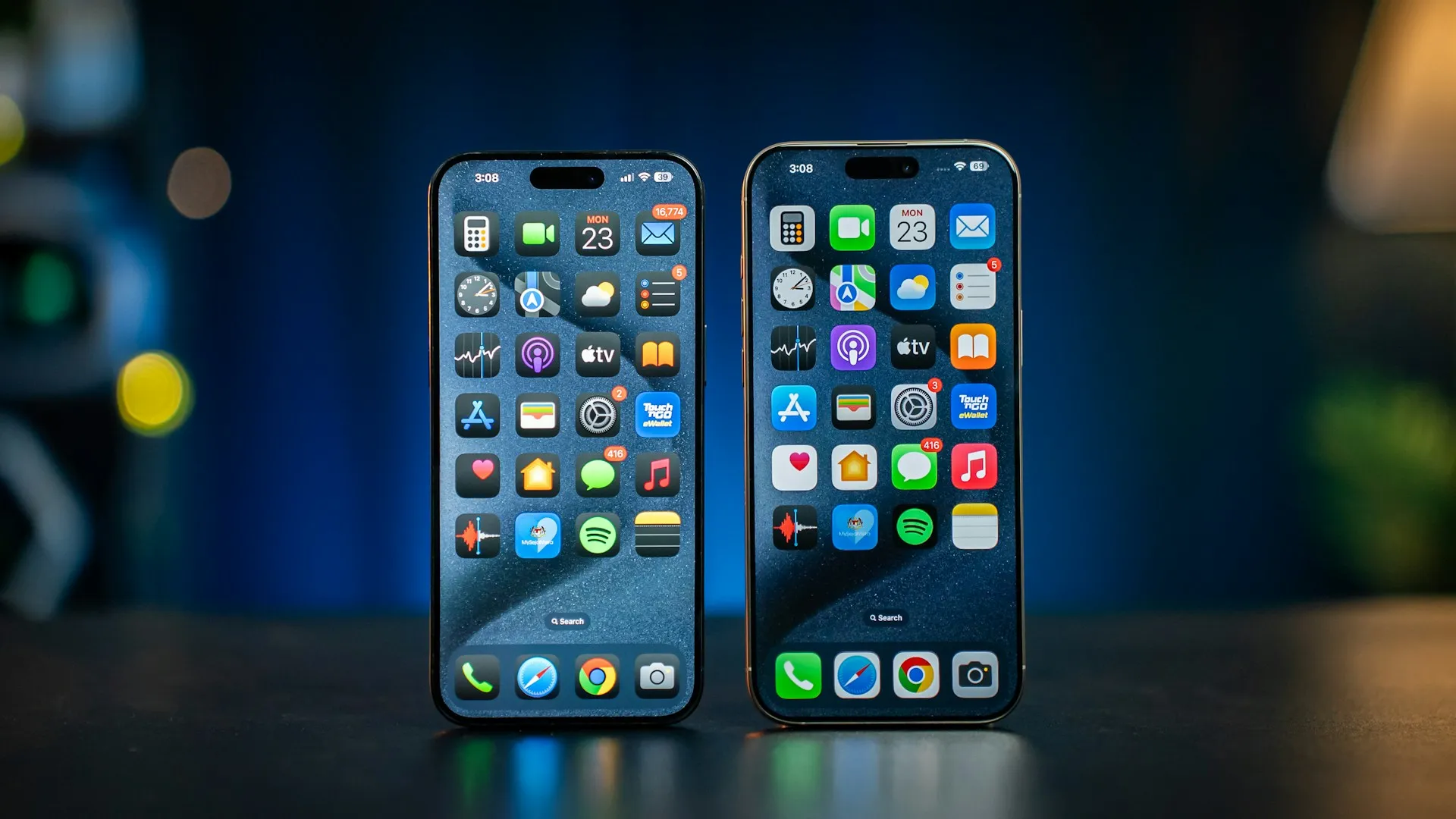
Apple quietly previewed a way to switch one phone number between two iPhones at WWDC 2026, but it left the mechanics largely unexplained. What sounded at first like a small continuity feature now looks more substantial: one iPhone can serve as the main device, a second can act as its companion, and the same phone number can move between them without repeatedly transferring the primary eSIM.
The feature, shown as "iPhone Handoff" in an iOS 27 setup flow, goes beyond Apple's longstanding Handoff feature for continuing app activity across devices. Instead of passing along a Safari tab, message draft, or other task, this system changes which iPhone is active for a cellular number.
That distinction matters because switching between two iPhones has traditionally meant transferring an eSIM, moving a physical SIM where supported, or maintaining separate cellular service on each device. iPhone Handoff appears designed to make that process far less disruptive for people who regularly alternate between two phones.
What Apple now confirms
Apple's developer documentation describes an iPhone quick switch framework that lets apps respond when a different iPhone becomes the active device for a particular phone number.
The framework recognizes active and passive device states. Apple advises developers to account for services such as login credentials and persistent app state when a number moves from one active iPhone to another, helping apps maintain continuity when users switch devices.
That clears up one of the biggest questions left after WWDC. The system is not simply treating two iPhones as identical, simultaneously active cellular endpoints. Instead, the framework is built around changing which enrolled iPhone is currently active for the number while another remains passive.
Apple's documentation also gives the feature more weight than the brief WWDC mention did. This is not just a concept buried in a presentation slide; Apple has created developer-facing APIs around the behavior, which means apps can be designed to react when the active iPhone changes.
There is still an important caveat. Apple labels the quick-switch APIs as beta technology, so the documentation is preliminary and could change before iOS 27 reaches its final release. Some behaviors, terminology, or availability rules may still shift.
How iPhone Handoff appears to work
The clearest look at the consumer-facing setup comes from two simulated iPhones running in Xcode 27's Device Hub. According to MacRumors' demonstration report, iPhone Handoff can be configured under Settings > Cellular, where the user designates a main iPhone and a companion iPhone.
In that demonstration, the primary eSIM stays on the main iPhone. The companion device receives a companion eSIM associated with the same phone number, creating a paired arrangement that allows the active cellular service to move between the two phones without requiring a fresh primary-eSIM transfer each time.
Cellular settings remain managed from the main iPhone, while the demonstrated interface indicates that location sharing follows whichever iPhone is actively using the number.
That setup helps explain why Apple's developer framework distinguishes between active and passive devices. The main and companion iPhones can both be enrolled in the arrangement, but only one appears to function as the active cellular endpoint for the number at a given time.
This is a more useful model than the early speculation that both iPhones might simply ring and behave identically at once. The newer evidence points instead toward a controlled switch between devices, with iOS and the carrier maintaining the relationship behind the scenes.
For users, the appeal is straightforward. Someone might keep a second iPhone for travel, workouts, field work, app testing, or situations where carrying an expensive primary phone is inconvenient. A user could also keep an older iPhone as a backup without having to go through a full eSIM-transfer process each time it is needed.
The arrangement could be especially useful if Apple expands the iPhone lineup into more distinct form factors. A person who owns two very different iPhones may be more willing to alternate between them if the same number can move easily from one to the other.
Still, the current demonstration has an important limitation: it used simulated iPhones in Xcode rather than two retail devices connected to a live cellular account. That means the underlying setup is much clearer now, but carrier-dependent real-world behavior has not yet been fully demonstrated.
Carrier support could decide availability
Carrier participation remains one of the biggest unknowns. The demonstrated setup relies on a companion eSIM, so the feature appears to require carrier-side support for provisioning and managing the same number across the main and companion iPhones.
T-Mobile in the United States and Deutsche Telekom in Germany were mentioned in the forum findings behind the Xcode demonstration as possible early carriers. Neither carrier, however, has been confirmed as a live launch partner.
That distinction is important because iPhone Handoff may not behave like an ordinary iOS feature that appears for everyone immediately after an update. Even with a compatible iPhone running iOS 27, access could depend on a user's carrier, country, account type, or cellular plan.
Carriers could also impose their own rules. Companion eSIM provisioning may require a supported postpaid account, an additional monthly charge, or a specific plan configuration. Apple has not publicly detailed those conditions, so any assumptions about universal or free access would be premature.
General iOS compatibility does not settle the question either. Apple says iOS 27 supports the iPhone 11 and later, along with the second-generation iPhone SE and later SE models. Apple has not published a separate list identifying which of those devices will support iPhone Handoff specifically.
That leaves open the possibility that the feature could have narrower hardware requirements than iOS 27 itself, particularly if companion-eSIM support depends on specific modem, eSIM, or carrier capabilities.
What Apple still hasn't explained
The active-and-passive architecture and the demonstrated companion-eSIM setup answer much more than Apple's original WWDC preview did, but several practical details remain unresolved.
Apple has not yet publicly detailed:
Which carriers and countries will support iPhone Handoff
Which iPhone models will be eligible
Whether carriers can charge an additional fee for the companion eSIM or related service
Whether the two iPhones must remain nearby when switching
How quickly cellular service moves from one device to the other
How calls, SMS, RCS, voicemail, iMessage, and Wi-Fi Calling behave while an iPhone is passive
Whether SMS verification codes automatically follow the active iPhone
Those questions are not minor. They will determine whether iPhone Handoff feels like a seamless everyday feature or one that comes with meaningful carrier and account restrictions.
Message behavior is particularly important. Apple's developer documentation clarifies the active-device concept, but it does not spell out how every communications service behaves on the passive phone. A user may reasonably expect iMessage or Wi-Fi Calling to keep working even while cellular service is inactive, but Apple has not yet documented the full consumer experience.
The same applies to switching speed. If the handoff happens almost instantly when a user picks up the companion iPhone, the feature could feel invisible in daily use. If it requires a confirmation step, a short wait, or a carrier-side activation process, the experience could be noticeably less seamless.
For now, the broad design is much less mysterious than it was after WWDC. Apple has documented the active-and-passive quick-switch framework, and the Xcode demonstration has filled in the main-and-companion setup and companion-eSIM model.
The bigger unanswered question is availability. Until Apple and participating carriers publish device, plan, regional, and pricing requirements, iPhone Handoff is best understood as a promising iOS 27 feature with a much clearer technical foundation—but not yet one every compatible iPhone owner can count on using.



Comments
Be the first, drop a comment!