





Apple told developers to "start getting ready ... today" for the iPhone Duo, eight days ago. Eight days later, the iPhone Duo app developer update timeline still has a gap right in the middle of it: no Xcode 27.1 beta, the actual tool developers need to act on that instruction.
That gap matters because the phone ships October 23, with preorders opening October 16. Apple says the beta and its 'Preparing your app for iPhone Duo' documentation guide are coming "later this month," with no specific date attached. In practice, that means not every app will look or behave the same way on Duo's inner display. Some will run in a phone-sized layout on the inner display, some will partially adapt, and only a subset will be built to use the full foldable layout.
Apple hasn't published a compatibility list, so preordering means trusting a $2,000 purchase without knowing whether the apps you actually rely on will use the bigger display at all. Here's what the three tiers of iPhone Duo app compatibility look like, what's still missing from the developer tools behind them, and what to check before you buy.
The three tiers of iPhone Duo app compatibility, and what buyers will actually see
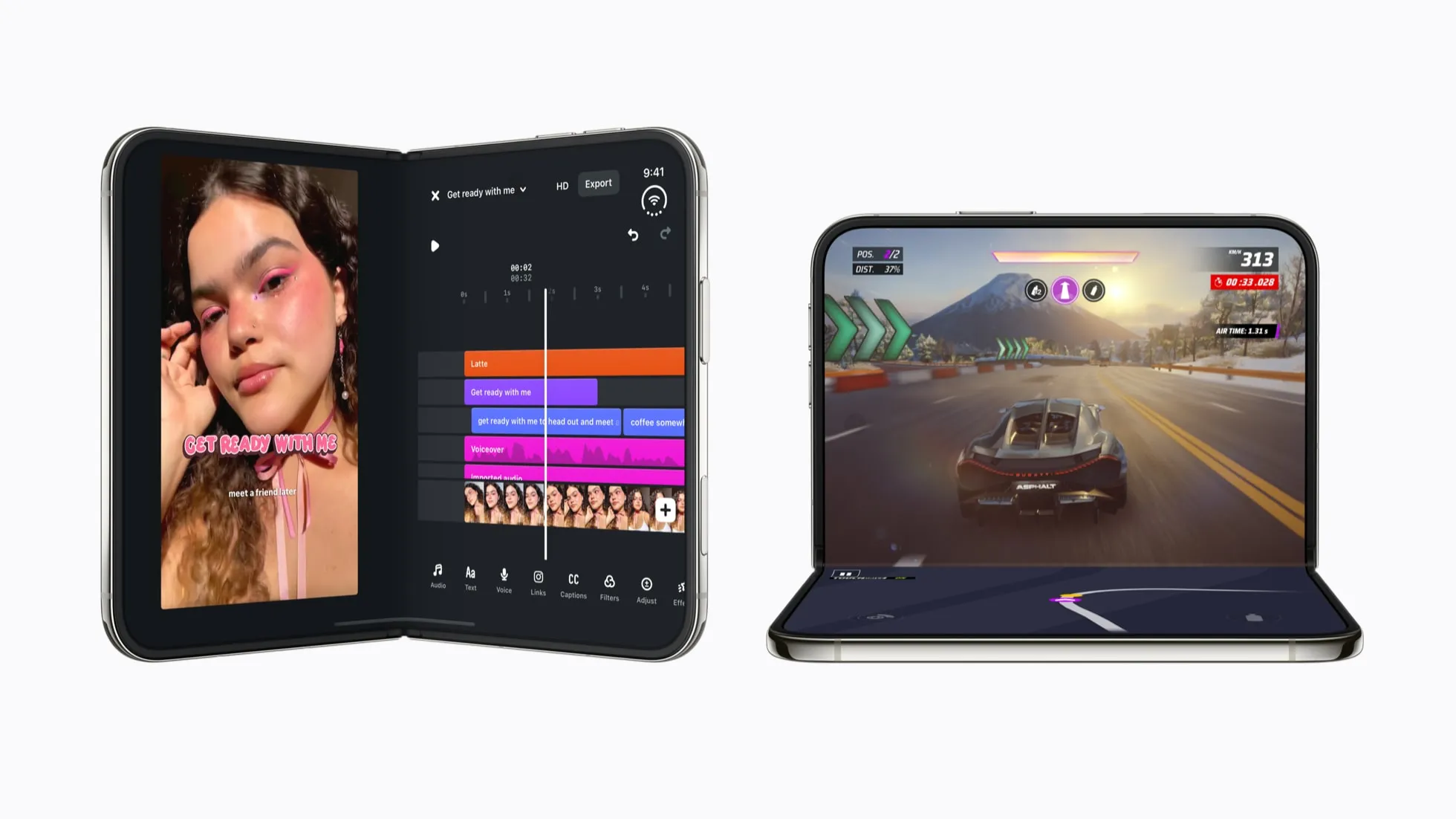
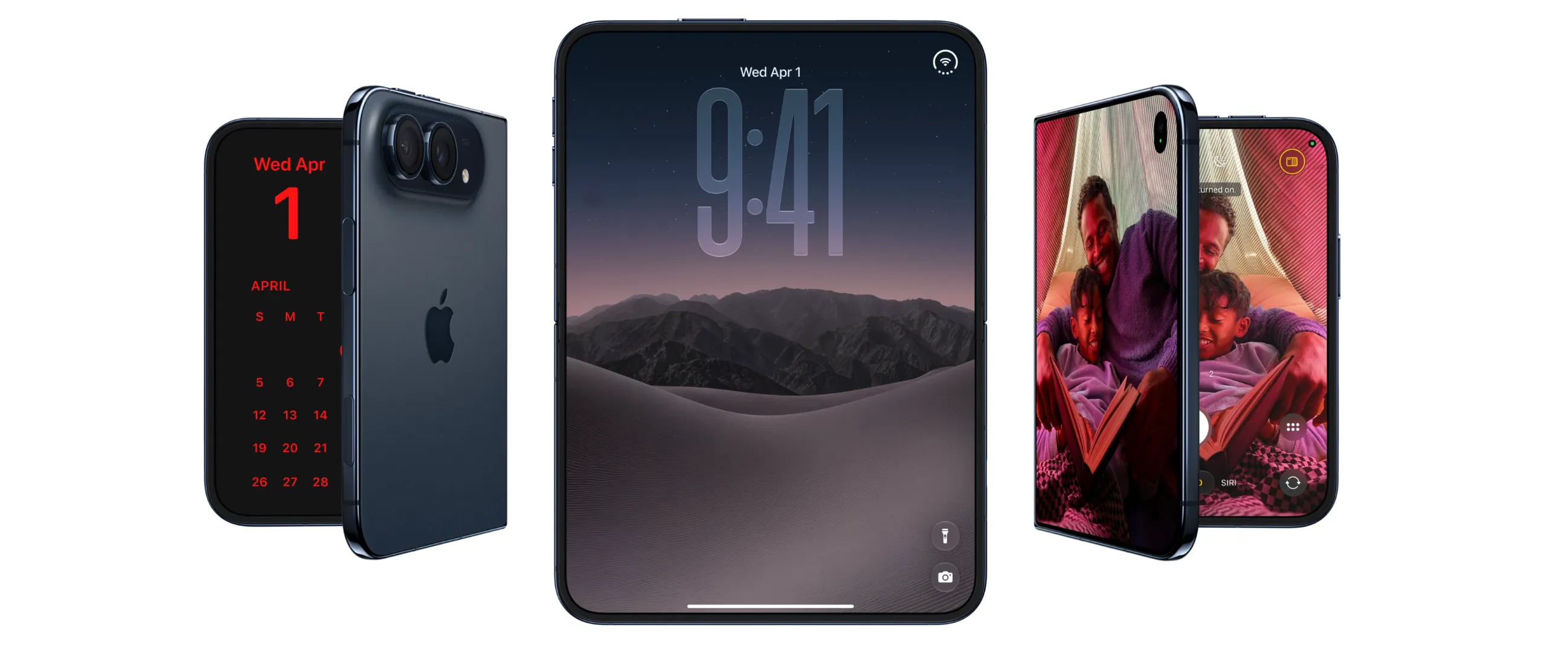
9to5Mac breaks third-party app support into three tiers, and the difference is visible the moment the phone unfolds. Apps built for iOS 26 and earlier run inside a phone-shaped canvas that uses a familiar iPhone-sized area rather than the full 7.6-inch inner display. That is the fallback for apps that have not adopted the newer SDK behavior.
Apps rebuilt for iOS 27, already open for submission, look more at home on the device but still waste screen space, since they weren't written with the fold in mind. Call that tier two: functional, not optimized.
Tier three is the real prize: using the entire inner display, moving controls out of top toolbars and over to the side, supporting Split View's side-by-side resizing. Apple's own guidance, released alongside the announcement, tells developers not to build separate interfaces for each fold position but one adaptive layout that responds as the device opens, closes, and rotates. Which tier an app lands in on launch day depends entirely on work developers haven't finished, and there's still no published way to check where your own apps will land before you order.
What's confirmed, what's missing, and why the iPhone Duo developer tools timeline is still unknown
The locked-in dates are easy to state. Apple's Duo announcement and call to developers came September 9. Preorders open October 16 and the phone ships October 23. Everything after that gets vague. The Xcode 27.1 beta and the remaining "Preparing your app for iPhone Duo" documentation are promised only for "later this month," without a confirmed date.
That vagueness has a real consequence for the calendar. If "later this month" means the beta could land any day through September 30, the actual testing window before October 23 runs anywhere from a little over three weeks to closer to five, depending on which day it actually ships. That's a tight margin for a team trying to redesign navigation, retest checkout flows, and ship an update before launch day.
Apple's Group Labs took place yesterday and today, September 16 and 17, with SwiftUI, UIKit, and Camera Q&As set for September 23. The sign-up page, though, carries no published capacity, no waitlist policy.
Two smaller gaps matter more than the calendar and get less attention. Apple has documented the Virtual Front Camera API, but developers cannot yet test the Duo-specific behavior in Apple's simulator because iPhone Duo SDK and simulator support is still due in Xcode 27.1. Apple has not announced any future App Store penalty specifically for apps that do not adopt Duo-optimized layouts; its current guidance says older apps will continue to run with more limited use of the inner display. Those unknowns decide whether "ready" means a working camera handoff or just an app that doesn't crash when the phone folds.
One development-agency blog claims the Xcode 27.1 beta already "includes" a working Duo simulator. That conflicts with a direct check of Apple's own developer releases page, which found no iOS 27.1 build listed as of September 11. Until Apple's release notes confirm it, treat the agency's claim as unverified rather than proof that the tools are further along than Apple has actually said.
Why buyers can't tell which apps will be ready at launch
Apple hasn't published a list of Split View-ready or Duo-optimized apps, and there's no way for a buyer to verify compatibility before ordering. That silence puts buyers in the position of trusting a $2,000 purchase without confirmation that their essential apps will use the larger display.
The "automatic" jump to tier two or three mostly helps apps built with standard system controls that already follow Apple's layout conventions. Apps with custom toolbars or bespoke navigation need dedicated redesign work well beyond simply rebuilding against the new SDK. One development consultancy frames this as swapping global screen and device-model checks for window-scene and size-class logic, then testing app flows mid-fold, mid-checkout, and mid-video. That's a useful illustration of the workload, though it reflects one firm's practice rather than an Apple mandate.
If an app you rely on — a banking app, a work tool, a messaging app, a media app — leans on a heavily customized interface instead of Apple's standard controls, it may need more redesign work before it takes advantage of Duo's full display. There's no published breakdown yet of which specific apps or categories will lag, so the safer move is checking each app individually rather than assuming any of them are ready just because they open.
Before October 23, the closest thing to a real signal is an app's own release notes or changelog explicitly mentioning iPhone Duo or Split View support. That's still a developer's claim, not proof of how the app behaves mid-fold or in Split View. Treat it as a starting point, then wait for independent testing or check with the developer directly. An app simply being "available" or recently "updated" on the App Store doesn't tell you which tier it falls into.
The counterargument, and why it doesn't close the gap for launch buyers
Apple does have a real incentive to get this right fast. Duo's $2,000 starting price points to a buyer base more willing to spend on apps, and a forward mandate arrives roughly six months after launch, in April 2027, requiring all App Store Connect uploads to use the iOS 27 SDK or later. Over time, that combination should push the whole catalog toward Duo-native layouts.
None of that shortens the runway between now and October 23, though. A mandate that lands six months after the phone ships doesn't help someone unboxing a Duo next month, and a customer base likely to spend more doesn't finish adaptive-layout code that developers haven't written yet. Apple's own apps are already optimized for the device, which only sharpens the contrast with a third-party catalog still waiting on the tools to catch up.
What to check before you preorder
An app that "opens" on iPhone Duo and one genuinely built for it are not the same purchase decision. Letterboxed, partially adapted, and fully Duo-native apps will visibly coexist on the same device at launch, and Apple could close most of that uncertainty on its own by publishing a firm beta date, disclosing Group Lab capacity, and committing to a compatibility list before October 16 preorders open.
Until Apple does that, run your own check on the apps you actually depend on:
Look for an explicit statement. Open the App Store listing or release notes for your must-have apps and search for a direct mention of iPhone Duo or Split View support, not just a generic "updated for iOS 27" note.
Separate "runs" from "optimized." An app can technically launch on Duo while still sitting letterboxed in tier one. Only a stated commitment to the larger display or Split View tells you it's aiming for tier three.
Wait on anything unclear. If a banking, work, messaging, or media app you need has no explicit statement either way, hold off on assuming it works well, and watch for independent hands-on testing after October 23 before you judge it.




Comments
Be the first, drop a comment!