





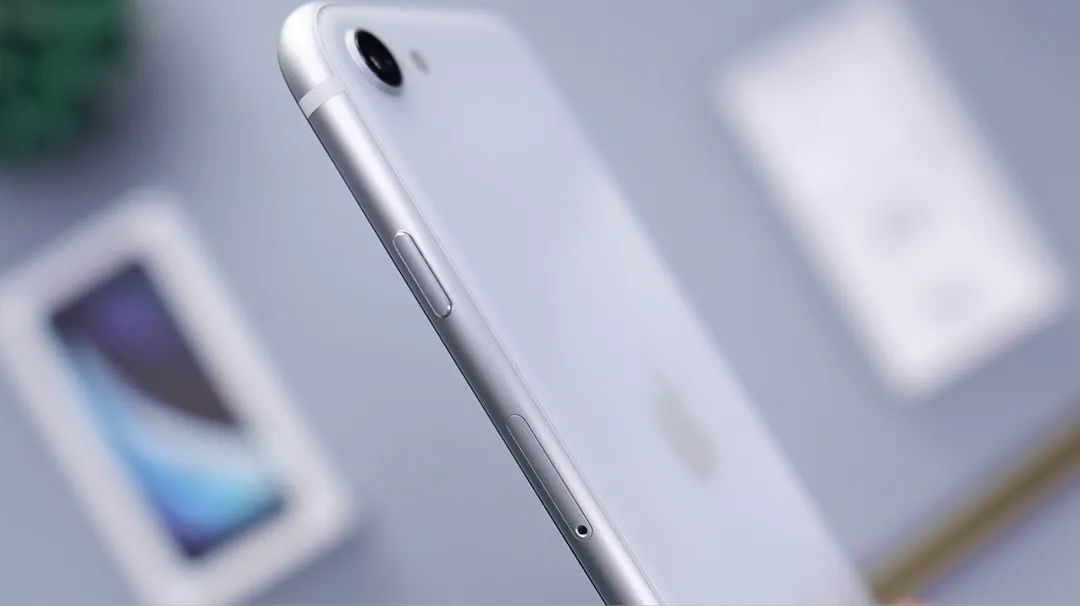
iPhone Fold Release Date: Why Announcement and Availability May Differ
Barclays analyst Tim Long set off a wave of headlines this week by predicting Apple's first foldable iPhone won't reach customers until December 2026, roughly three months after the company's usual September launch window. Long cited supply chain concerns as the likely cause, according to CNET. But the foldable iPhone release date question has a more nuanced answer than the headlines suggest.
Long is currently the only analyst making this specific call.
The broad consensus among Apple observers still expects the foldable to be announced and go on sale in September alongside the iPhone 18 Pro and Pro Max. The distinction between "announced" and "available to buy" matters here, and Apple has separated those two events before. On a careful reading, Long's December forecast may not contradict the September consensus at all; it may simply be describing the gap between Apple's stage reveal and the moment a customer can actually complete a purchase.
iPhone Fold release date: September announcement or December shipment?
The September announcement consensus is firm and wide. Apple is broadly expected to unveil the foldable at its fall event alongside the iPhone 18 Pro and Pro Max, consistent with how the company introduces its premium tier each year, per MacRumors and 9to5Mac. Apple has historically staggered genuinely new product categories by one to two months after the main September announcement. December would stretch that pattern further than precedent, but it's not a clean break from it.
Long's note breaks from that consensus specifically on shipping date, not necessarily announcement. His Barclays research projects December as when customers will be able to buy the device, attributing the gap to supply chain friction, CNET reported. Some coverage characterized his forecast as a December announcement, which would be a more dramatic deviation from expectations. The more defensible reading is that Long is talking about when orders ship, not when Apple takes the stage.
Long is also alone on another forecast: that the iPhone Plus will return in March 2027, CNET noted. He's not a voice without credibility, but he's occupying a consistent outlier position across multiple predictions right now.
Ming-Chi Kuo's earlier warnings add corroboration that hasn't gotten enough attention in the current news cycle. Three months ago, Kuo predicted Apple would announce the foldable on schedule but struggle to ship in meaningful volume, with smooth delivery potentially not arriving until 2027 for some buyers, Gadgets360 reported. Kuo framed this explicitly as an iPhone X pattern: simultaneous announcement, late and constrained sales. That forecast predates Long's note by three months and comes from a stronger track record on Apple supply chain specifics.
The credibility hierarchy: broad consensus on September first, Kuo's supply-chain analysis second, Long's December shipping forecast third. All three point roughly in the same direction announcement likely on schedule, broad availability less certain.
Why the supply chain makes a split timeline plausible
Apple is entirely dependent on Samsung Display for foldable OLED panels. Both BOE and LG Display were excluded after falling short on yield rates, durability standards, and delivery schedules, leaving Apple with no supplier backup if Samsung encounters problems, BusinessKorea reported earlier this month. Single-supplier dependency is an inherent schedule risk for any product; for foldable panels, one of the hardest components in consumer electronics to manufacture at scale, it's especially acute.
Samsung Display is scheduled to begin mass production of those panels in May 2026, MacRumors reported earlier this month. That start date leaves approximately four months before a September retail launch, tight by Apple's own standards for a first-generation product requiring extensive quality validation and logistics preparation.
Kuo warned in December that early-stage yield problems and production ramp-up difficulties were already present, and that constrained supply could persist through at least the end of 2026, with some buyers potentially waiting until 2027, Gadgets360 noted. Foldable OLED manufacturing remains categorically harder than standard display production. This isn't a generic caution about new products; it reflects a specific and documented technical challenge.
The scale of Apple's panel order sharpens the tension. Apple raised its initial order from roughly 13-15 million units to as many as 20 million, a roughly 20% increase, BusinessKorea and PhoneArena reported earlier this month. For context, UBI Research data via BusinessKorea shows global foldable OLED panel shipments reached 25 million units across all of 2024. Samsung's entire foldable lineup, spanning the Z Flip, Z Fold, and new form factors, is targeting roughly seven million units in 2026, according to industry sources cited by FindArticles and PhoneArena. An Apple order of 20 million panels would be unprecedented for the category, and the production infrastructure to fulfill it is being built largely from scratch, at speed, with no margin for yield problems.
What a split rollout would mean for buyers and what to watch
Before getting to the practical implications, it's worth mapping exactly what "delayed" means for a product like this. There are four distinct milestones: Apple's stage announcement, the opening of pre-orders, first shipments to early buyers, and broad retail availability where anyone can walk into a store and buy one. Long's forecast and Kuo's warnings address different points on that timeline. Conflating them is how "December shipping" becomes "December announcement" in a headline. The September consensus covers the first milestone. The supply chain uncertainty covers the last two.
The most likely practical outcome, given the weight of evidence: Apple announces the foldable iPhone at its September event alongside the iPhone 18 Pro, sets a base price somewhere in the $2,000-$2,500 range, per Gadgets360, and opens pre-orders but initial stock is limited and many buyers wait weeks to months for delivery. A formal December retail availability date would simply make that gap explicit rather than leaving customers to discover it at checkout.
Apple has strong incentive to own the September moment regardless of stock levels. Counterpoint Research projects the device could capture 28% of the foldable market after launch and materially reshape competition in the category, CNET reported. A quiet December drop, with no fall-event context, would hand competitors months of uncontested narrative. Apple is unlikely to accept that trade.
For anyone planning a purchase, the practical implications of a split timeline are specific:
- Later pre-order windows and longer estimated delivery times than a standard iPhone launch
- Limited launch-day stock, with probable scarcity through year-end
- A base pricing range of $2,000 to $2,500, with the 1TB tier potentially approaching $3,000, per MacRumors
- An experience similar to the iPhone X in late 2017, but potentially more pronounced given the manufacturing complexity
Two near-term signals will clarify which scenario holds. First: whether Samsung Display confirms or delays its May production start a slip there cascades directly into retail availability. Second: how Apple frames the product at its fall event. A specific sale date at announcement would resolve the ambiguity; a vague "coming soon" framing would confirm constrained supply. Between now and September, watch for supply-chain reports on early yield rates and whether Samsung's panel shipments track ahead of or behind initial estimates.
Announcement is not the same as availability
Apple will almost certainly unveil its foldable iPhone in September 2026. Whether buyers can purchase one that same week is a separate question, and the supply chain gives real support to the idea that many will wait considerably longer.
That framing reconciles the September consensus with Long's December shipping forecast and with Kuo's earlier warning that some customers might not receive the device until 2027, 9to5Mac reported in December. None of those predictions are mutually exclusive once you separate the announcement from the shipment. They're describing different points on the same timeline.
Long's note shouldn't be dismissed it has a plausible manufacturing basis but it also shouldn't be treated as consensus. It's a credible outlier view, reinforced by older and better-sourced supply warnings, about a product Apple has every reason to announce on time and real reasons to ship slowly. The iPhone X took roughly six weeks to go from stage to stores. If the foldable takes twelve, that's not a failure. It's how Apple launches something genuinely new.





Comments
Be the first, drop a comment!