



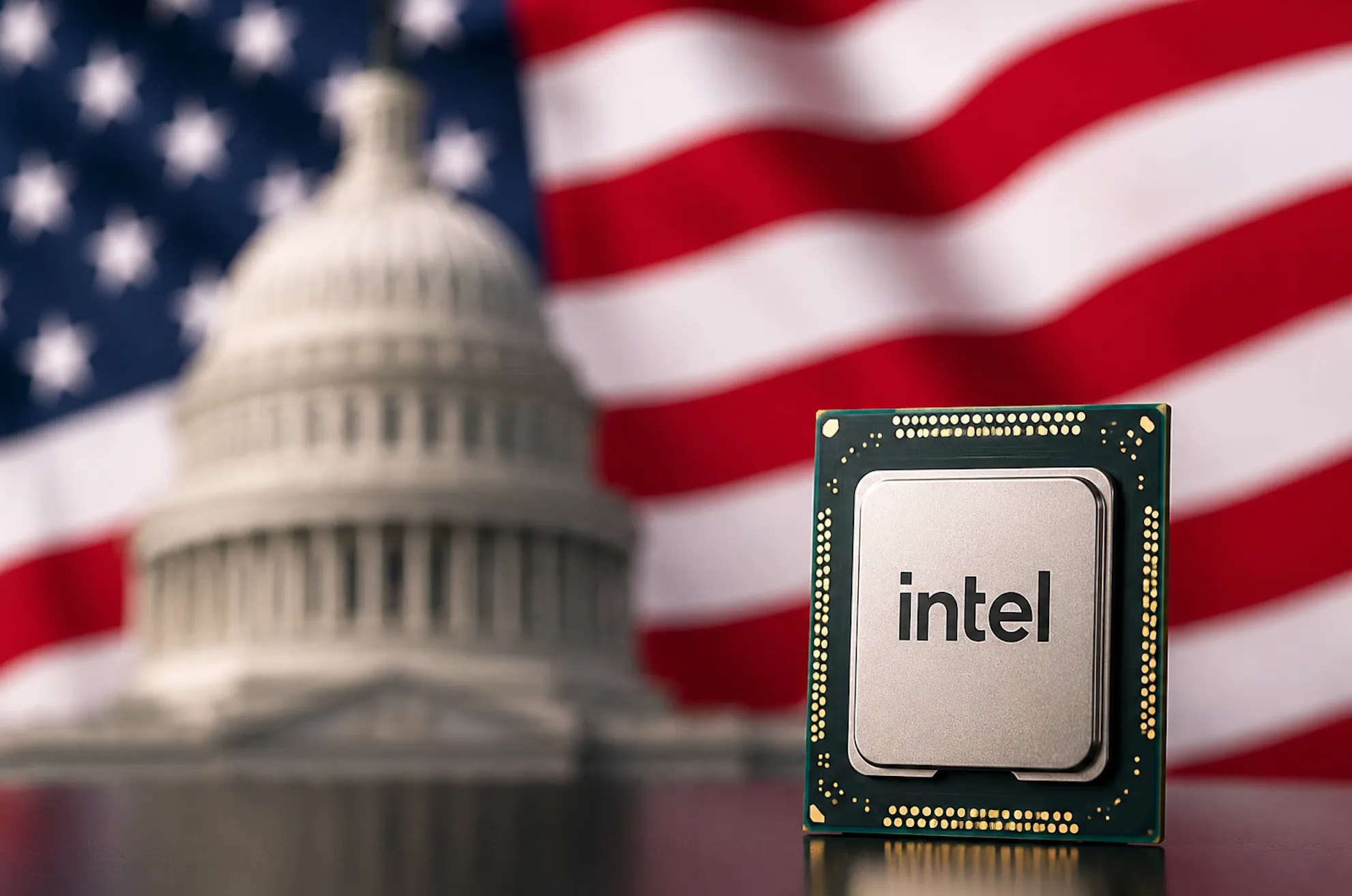
Donald Trump posted on Truth Social on June 18, 2026, that Apple had agreed to work with Intel to design and build chips in the United States. Apple and Intel have not publicly confirmed the deal or its scope. That gap is the story.
For Apple users, this does not mean Macs or iPhones are going back to Intel-designed processors. The reported arrangement is about Intel potentially manufacturing some Apple-designed chips, with no confirmed devices, chip families, production volumes, or consumer timeline.
The reported Apple-Intel chip manufacturing deal has been in the pipeline since May 2026, when The Wall Street Journal, in later coverage, said it had previously reported a preliminary agreement after more than a year of discussions. Preliminary is the operative word. Intel has not publicly confirmed a final Apple foundry commitment, and recent reporting still describes the arrangement as preliminary rather than fully detailed.
If Apple eventually has Intel manufacture Apple-designed chips in the U.S., it would validate Intel's foundry push and test whether a U.S. fab can handle leading-edge silicon at Apple's standards.
What Trump claimed — and what's confirmed
Trump's June 18 Truth Social post described Apple as agreeing to "design and build" chips with Intel in the United States, framing the move as a supply-chain reversal decades in the making. Current reporting is narrower: Apple and Intel have not publicly confirmed a final deal.
That framing makes a preliminary manufacturing arrangement sound much more sweeping than the reporting supports. The WSJ's May report described Intel as a potential contract manufacturer for Apple-designed chips, not a confirmed joint design venture. Trump's language adds a design dimension that no reported source has confirmed.
The specifics remain unknown, including which chips, which devices, what volumes, and which fab locations would be involved.
Trump also wrote that his administration decided to help Intel in exchange for 10% of the company's shares. The U.S. government agreed to take a 9.9% equity stake in Intel in August 2025. Trump linked the two things; the reporting does not establish that the equity stake and the Apple discussions are causally connected. Those are adjacent claims, not a documented causal chain.
Tan told CNBC in May 2026 that he expected formal commitments from multiple foundry customers in the second half of 2026. That does not sound like a company describing a fully closed Apple foundry deal.
Why an Apple deal would be a win for Intel
Intel's foundry business still depends heavily on Intel itself as its most important customer. Intel has not publicly named a major outside customer committed to its most advanced production nodes. Apple would not be just another foundry customer.
Landing Apple, one of the world's most demanding chip buyers, would make Intel a more credible second-source option for other foundry customers.
Markets reacted quickly when the preliminary agreement surfaced in May 2026: Intel shares jumped nearly 14%, while Apple shares rose about 2%. Chip analyst Ben Bajarin of Creative Strategies was direct, telling CNBC that he believed the deal would happen, though he did not know when. He called Intel a newly validated credible second source for elite chip customers — a meaningful shift from where the company stood even a year earlier.
The policy dimension also matters, even if Trump's June 18 claim overstates where things stand. The Trump administration has reportedly encouraged partnerships between Intel and major U.S. technology companies, including Apple, Nvidia, and SpaceX. A confirmed Apple arrangement would give U.S. semiconductor manufacturing a rare proof point at the cutting edge, not just on legacy nodes.
Why the chip timeline still looks early
Apple's chip sourcing decisions move on a different clock than a political announcement. Bajarin told CNBC in May 2026 that Apple would likely hold off on any significant commitment until Intel's next process node, 18A-P, rather than the current 18A. He called the existing node "rough" and said 18A-P would clean up many of the issues.
Intel said on June 16, 2026, that 18A-P had entered risk production, an early manufacturing stage before full-scale production. Intel describes 18A-P as a performance-enhanced version of Intel 18A, with projected gains in performance and power efficiency, but that process milestone does not confirm Apple as a customer.
Apple already has U.S. manufacturing exposure. TSMC operates fabs in Arizona, and Apple has committed to producing some of its silicon there. An Intel arrangement, if it materializes, would expand Apple's domestic footprint rather than replace TSMC. The story is one of measured supply-chain diversification, not the dramatic restructuring Trump's framing implies.
Put it together: 18A-P is only in risk production, formal customer commitments are not expected until the second half of 2026 by Intel's own CEO's account, and neither Apple nor Intel has confirmed the arrangement. These are not the conditions surrounding a finalized manufacturing partnership ready for announcement.
What would make the deal official
The reporting foundation is solid. A preliminary manufacturing agreement between Apple and Intel was reported in May 2026 after more than a year of discussions. Intel has made genuine technical progress, its Arizona manufacturing roadmap is moving forward, and markets moved substantially on the news. The possibility of an eventual deal is credible, but the final shape of it is still in question.
What remains unknown is almost everything operational: whether the current arrangement is preliminary or final, which Apple products would be involved, which node Intel would use, and what the production timeline looks like. Apple and Intel did not respond to Reuters' requests for comment on the latest reports, and both companies also declined to comment when the preliminary agreement first surfaced in May 2026.
What would move this from political claim to confirmed industrial reality is an official statement from Apple or Intel, or the formal foundry commitments Tan said he expected in the second half of 2026.
Until then, Trump's June 18 post is the loudest signal in the room. It is not the most reliable one.








Comments
Be the first, drop a comment!