



Smartphone Age Verification Explained: Apple, Laws, and Privacy
From UK age prompts to California's 2027 mandate, smartphone operating systems are becoming the new chokepoint for age verification. Apple is shaping what that looks like.
Some UK users running the iOS 26.4 beta encountered an unexpected prompt last month: a pop-up asking them to confirm they were 18 or older before accessing certain apps and purchases. Apple called it a display error that appeared too early. What it actually revealed was a system the company has been building for years, one that governments are now mandating by law.
The shift is significant: smartphone age verification is moving out of individual websites and apps and into the operating system itself. The phone becomes the checkpoint.
California alone has roughly 32.5 million smartphone users, according to The Daily Economy (an estimate, not a settled figure), and the state's AB 1043 requires every operating system provider, including Apple, Google, and Microsoft, to collect user age at setup and broadcast an age-bracket signal to apps by January 1, 2027. Penalties can reach $7,500 per intentional violation, scaling quickly into territory that makes non-compliance existential even for large tech companies.
A quick map of the terms
Before getting into how Apple's system works, it's worth separating the methods that keep getting conflated, because the distinctions matter for everything that follows.
Self-declaration is the oldest and weakest form: a user types in a birth date and the platform takes it at face value. Regulators have broadly ruled this out as insufficient.
Age range sharing is what Apple's new Declared Age Range API does. The OS signals to an app that the user falls into a bracket, like 13-15 or 16+, without revealing the actual birth date. It's designed for adjusting content experiences, not gatekeeping adult material.
Adult confirmation is a harder check: proving you're 18 or older before accessing age-restricted apps or purchases. This is what surfaced in the UK iOS 26.4 beta. Apple tries to infer adulthood from existing account signals; when that fails, it falls back to a document scan.
Facial age estimation uses a camera image to algorithmically guess a user's age. It's increasingly common in third-party verification tools, and it's probabilistic.
ID-based verification requires a government document scan. It's the most reliable method and the most exclusionary one.
Each of these involves different tradeoffs. The policy fights happening right now are mostly about which combination of these methods gets baked into the device layer, and who controls it.
What regulators want, and why now
The regulatory pressure driving OS-level age checks has two roots: dissatisfaction with how platforms self-police, and renewed urgency around AI-generated child abuse imagery and teen mental health.
In the UK, the Online Safety Act, passed in 2023 and enforced from 2025, requires platforms to deploy what regulators call "highly effective age assurance" for harmful content, which is why the iOS 26.4 adult-confirmation prompt surfaced for UK users first. The law ruled out simple self-declaration as insufficient; acceptable methods include credit card verification, digital identity services, and facial age estimation. Australia followed with what is widely described as the world's first nationwide social media ban for users under 16, and Reuters reported this month that regulators in Europe, Brazil, and several U.S. states are now modeling their own proposals on it.
The EU context offers a useful datapoint on why governments feel urgency: one in three internet users in Europe is a child, and one in six young people in the region reports experiencing cyberbullying, per EU Perspectives (last July). The EU is building an open-source Age Verification App as a bridge until its Digital Identity Wallet launches in 2026, designed to confirm 18+ status without storing personal data.
The shared logic across jurisdictions is that app-by-app and site-by-site age checks are too fragmented to enforce. Moving the requirement to the OS layer creates a single, auditable chokepoint. Horkan, writing this month, describes the result as an "identity-mediated internet architecture," where digital environments are configured around verified user attributes before any interaction occurs. Age is the first attribute being deployed at this layer. The infrastructure being built could support others.
Many of these laws are scheduled to come fully into force between 2025 and 2027, a compressed window for policies that potentially affect billions of internet users. Taken individually, each looks like a modest child-safety measure. Taken together, they are re-architecting how identity works online.
How smartphone age verification works on Apple devices
Apple is building two related but distinct systems, and conflating them obscures the practical stakes.
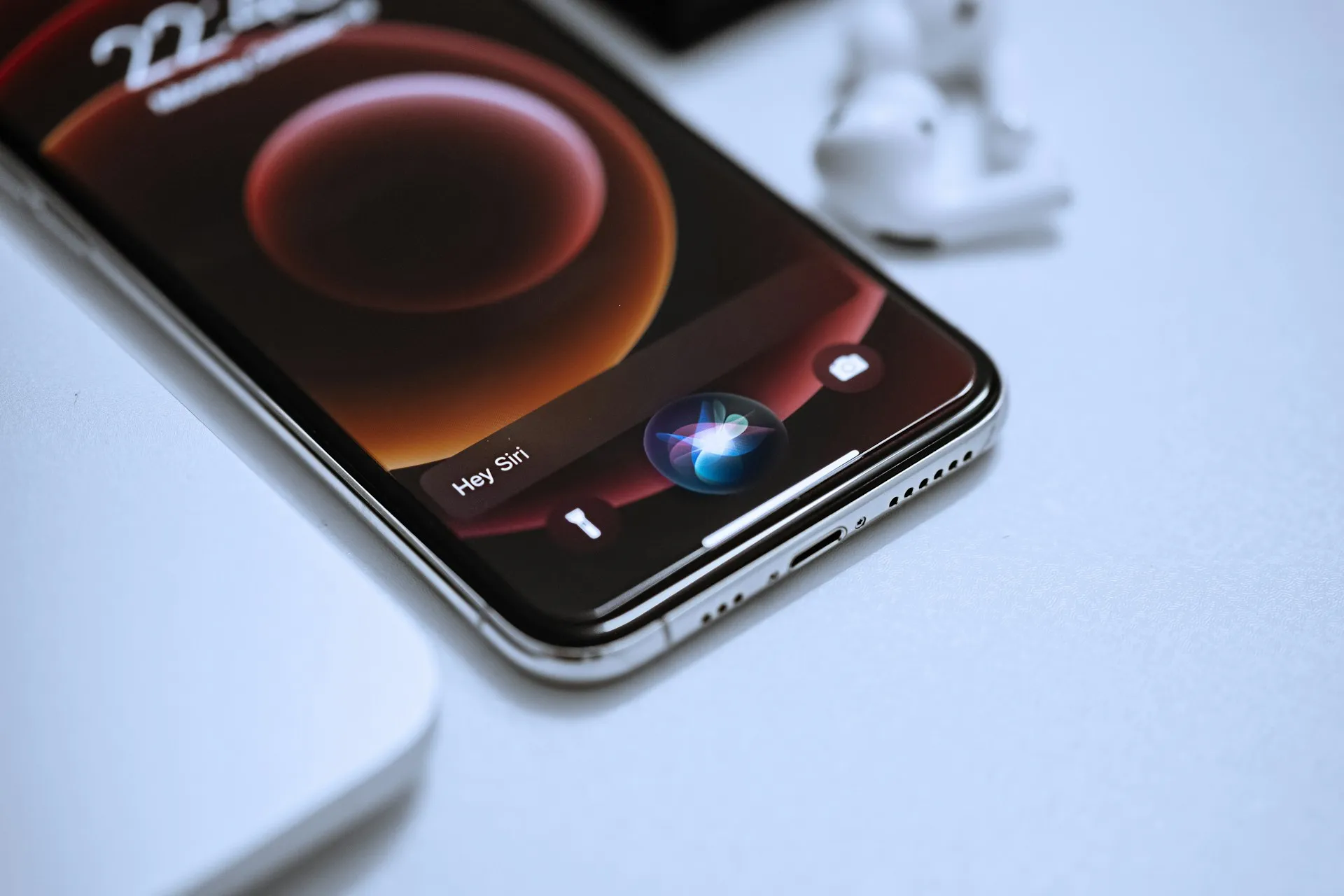
The first is the Declared Age Range API, introduced in iOS 26. It lets apps request a user's age bracket, under 13, 13-15, or 16 and older, without receiving a birth date. The actual date stays with Apple, per Apple's support documentation. For children in Family Sharing, the range is set by a guardian; adults set their own. Users can choose Always Share, Ask First, or Don't Share. Responses are cached across devices to reduce repeated prompts. The API is designed for child and teen content experiences; its purpose is helping apps adjust features, not gatekeeping adult content.
The second, separate system is adult confirmation, the one that appeared in the UK iOS 26.4 beta. This is a harder check: proving you are 18 or older before accessing age-restricted apps or making purchases. Apple attempts to infer adulthood automatically using existing account signals, a credit card on file, how long the Apple Account has been active. 9to5Mac reported in February that when inference succeeds, the process takes under 30 seconds. When it doesn't, the fallback is a card scan or government ID scan, processed on-device without third-party apps.
Apple's explicit argument is that centralizing these checks at the OS layer is more privacy-protective than the alternative. "Requiring age verification at the app marketplace level is not data minimization," the company stated in its February 2025 white paper. The App Store's rating system has been overhauled to support the architecture, now five tiers (4+, 9+, 13+, 16+, 18+, up from four), with three adolescent categories, per the WWDC25 developer session. Developers can set a minimum user age higher than Apple's assigned rating.
Apple is shaping an early model for device-level age verification that regulators and rivals will be hard-pressed to ignore, and it's doing so before the law requires it. The distinction between the two systems matters for users: the Declared Age Range API means fewer apps collecting personal data directly. Adult confirmation means you may be asked to prove your age to Apple itself, and if account signals aren't sufficient, that means a document scan.
What the privacy framing doesn't resolve
Apple's data-minimization argument has real merit. Fewer apps receiving raw identity data is genuinely better than every app running its own ID check. But the EFF's March 2026 analysis of AB 1043 argues the architecture itself creates problems that data format alone can't fix.
Under AB 1043, the age-bracket signal sent by the OS constitutes legal "knowledge" of a user's age, which can trigger liability under other California laws. That gives developers strong incentive to simply block access for anyone flagged as a minor, even when those users have First Amendment rights to the content. The EFF calls this "outsourced censorship": California sets the mandate, developers do the restricting. Mandates like AB 1043 also advantage large OS vendors and create compliance costs that smaller developers and open-source projects are poorly positioned to absorb, per the EFF, concentrating the ecosystem further.
Privacy-preserving design also doesn't fully address the shared-device problem. Many families, particularly lower-income households, use one phone for multiple people. An OS that assigns an age to the account holder has no way of knowing who is actually holding the phone at a given moment. The EFF notes that existing proposals simply don't account for this.
ID-based fallback verification, Apple's contingency when account signals are ambiguous, carries an access equity problem regardless of which company processes the scan. Government ID requirements disproportionately exclude Black and Hispanic Americans, immigrants, and people with disabilities, who are statistically less likely to hold a valid driver's license or state-issued ID, per EFF's December 2025 research. The scan happening inside Apple's ecosystem rather than a third-party app doesn't change who lacks the required document.
The technology itself remains probabilistic. Facial age estimation has improved: average error dropped from 4.1 years in 2014 to 2.5 years today, per NIST data reported by Reuters. But Reuters also notes systems perform worse with certain skin types, lower-quality imagery from older phones, and when using on-device processing, which is precisely the privacy-protective approach Apple favors. Users within three years of a legal age cutoff fall into a grey zone where supplementary checks are recommended regardless.
The broader verification vendor ecosystem has a troubled record. Reason reported this month that a Discord verification vendor in the UK was breached, exposing identification data for over 70,000 users. Centralizing the check with Apple reduces that risk but doesn't eliminate it.
What users should expect, and what remains unresolved
For iPhone users in practical terms: if you're in the UK, you may already encounter age-confirmation prompts in the current iOS 26.4 beta. California users on any OS will face device-level age classification starting in 2027. Adults with established Apple Accounts and a payment method on file should move through Apple's automatic check quickly. Those without, or whose account signals are ambiguous, will be prompted to scan a card or ID document.
The federal App Store Accountability Act cleared the U.S. House Energy and Commerce Committee earlier this month, though a Texas version was blocked by a federal judge in December as a likely First Amendment violation. The durability of AB 1043 itself under constitutional challenge remains unclear.
Several important questions still lack public answers:
- Apple has not fully documented which signals trigger the adult confirmation flow
- What data is retained after a document scan has not been disclosed
- No public information exists on the false-positive rate for users incorrectly flagged as minors
No independent evidence yet shows that OS-level age signals produce measurable improvements in child safety outcomes. Australia says it will publish first results from its social media ban later this year, but the 10 social media platforms subject to that ban all declined to share effectiveness data with Reuters.
Over the next 12 months, users in the UK and other regulated markets should expect more frequent age prompts, more apps relying on OS-level signals rather than running their own checks, and more court fights over whether these systems can be constitutionally required at all. California's 2027 deadline is close enough that Apple, Google, and every developer targeting that market will need to have answers before the year is out. The legal challenges will run in parallel, not after.
Age verification is, as the EFF notes, "the first identity attribute to be widely deployed within the operational architecture of the internet." The infrastructure embedded in iOS tends to stay there. The question isn't whether OS-level age checks are coming. It's who controls them, on what terms, and who gets left out.






Comments
Be the first, drop a comment!