



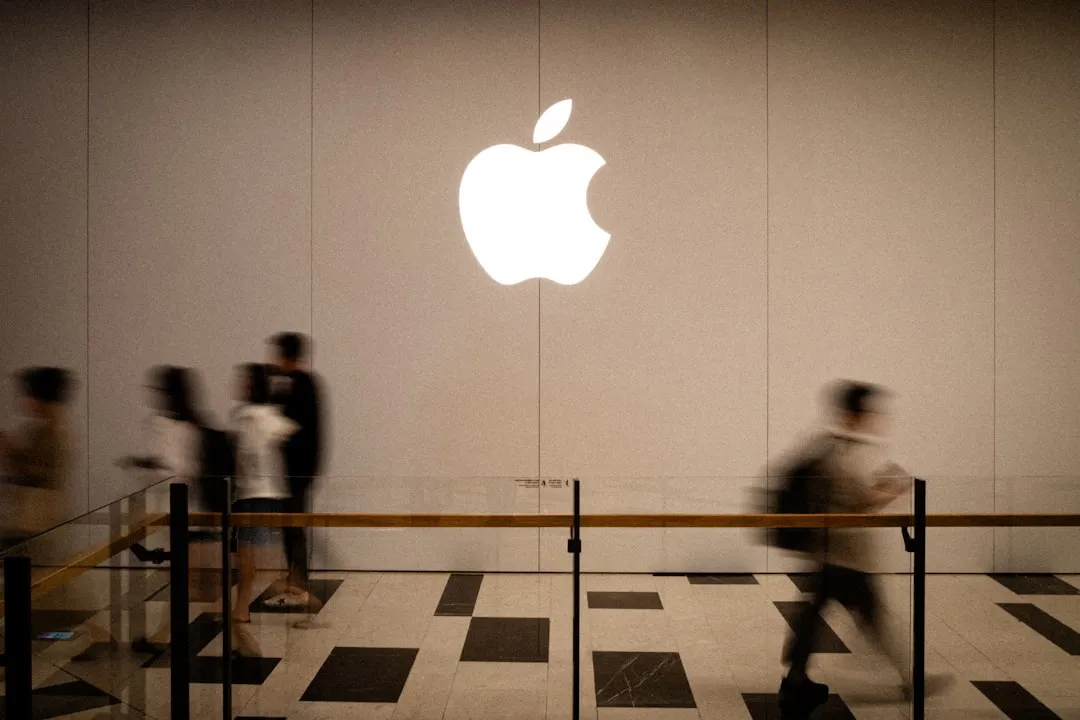
Trump Tim Cook tariffs: will Apple claim its refund?
President Trump told companies Tuesday they would be "brilliant" to walk away from tariff refunds on duties a Supreme Court ruling struck down as unlawful. Then he added: "If they don't do that, I'll remember them." He named Apple and Amazon directly. The stakes are not small: more than 330,000 importers paid the duties in question, and companies are collectively seeking roughly $166 billion back from the government, Reuters reported earlier this month.
Apple was named explicitly. That matters because the Trump Tim Cook tariffs dynamic has a documented history, one that produced real exemptions during Trump's first term through a process most accounts describe as neither transparent nor predictable. Whether that relationship still buys something is now a live question. Apple has not said publicly whether it plans to file a refund claim.
What Trump said and why the stakes are enormous
The legal backdrop starts in February, when the Supreme Court ruled against Trump's use of the International Emergency Economic Powers Act to impose broad "reciprocal" tariffs on imports from nearly every country, Moneycontrol reported today. The ruling didn't just invalidate future collections. Every dollar already paid under that authority became eligible for refund claims, setting the stage for what could be the largest government repayment in U.S. history.
U.S. Customs and Border Protection launched a web portal for those claims yesterday. Trump's remarks came the following day, on CNBC.
The administration is not conceding the revenue. After the ruling, Trump immediately imposed a temporary 10% tariff set to expire in July, and his team is working to restore equivalent collections through other legal authorities. "We're doing it a different way. We're going to end up with the same," Trump said in the interview. "We'll end up with bigger numbers, actually, but it's a little more unwieldy," Moneycontrol reported today.
For companies that depend on favorable regulatory treatment, government contracts, or future tariff exemptions, the implied threat is concrete. Filing a lawful refund claim could sour a relationship with a president who has demonstrated consistent willingness to use trade access as reward and punishment.
Apple tariffs Trump: why Tim Cook matters in the refund fight
Trump described how the Cook relationship started in a public post today, and his account is blunt. Cook called early in Trump's first term with what Trump characterized as "a fairly large problem that only I, as President, could fix." Trump wrote that he found the call flattering: "When I got the call I said, wow, it's Tim Apple (Cook!) calling, how big is that? I was very impressed with myself to have the head of Apple calling to 'kiss my ass.'" He called it the start of "a long and very nice relationship," Business Insider reported today.
That relationship had measurable policy consequences. Cook made what Trump described as "a good case" for excluding Apple products from a 10% tariff on Chinese electronics, and Apple received those exemptions, covering the iPhone and other China-made products, Public Citizen documented last year. The outcome stood in stark contrast to what Trump had said publicly just weeks before a dinner with Cook: "Apple will not be given Tariff waiver, or relief, for Mac Pro parts that are made in China." The public statement and the policy result did not match.
The exemption process that produced Apple's relief was, by most accounts, opaque. Government officials and businesses characterized it as "closed and mysterious," with off-the-record discussions between companies and department officials going undocumented, and evidence that at least one private objection prompted changes to internal review criteria, Public Citizen found last year. Trump's own account of Cook calling periodically and receiving help "where I could" fits that pattern exactly.
The channel isn't closing. Cook is stepping down as CEO in September, but Apple specified that his new role as executive chairman would explicitly include "engaging with policymakers around the world," Business Insider reported today. The Washington relationship is being formalized, not retired.
Apple has not commented publicly on the refund question. Given Trump's remarks today, that silence is itself a decision in progress.
What companies are actually deciding and why refunds aren't simple
The choice facing importers is not binary. Companies can file through the CBP portal, preserve legal rights through litigation without immediately filing, wait, borrow against the claim as collateral, or sell it outright at a discount. Each path carries a different risk profile depending on company size, political exposure, and cash position.
Thousands of companies, including Costco and FedEx, have already filed suit in the Court of International Trade to lock in their right to a refund should the administration challenge claims, Moneycontrol reported today. UPS said it would pass refunds through to customers, but only after receiving payment from the government. These are not companies walking away from the money. They are preserving options while hedging against the possibility that payment never arrives.
Delay is the central problem. Trade experts believe refunds could take at least two years to resolve, citing the administration's adversarial posture toward paying out, along with expected appeals, eligibility reviews, and administrative backlogs, Reuters reported earlier this month. Importers who borrow against their claims still owe the loan if refunds don't materialize.
A secondary market has emerged directly from that uncertainty. Some companies are selling claims outright; a $500,000 claim fetches roughly 55 to 75 cents on the dollar, with the discount pricing in delay and political risk, Reuters reported earlier this month. At a hypothetical 15% interest rate, the break-even between borrowing against a claim and selling it outright is just over two years, which tracks almost exactly with expert estimates of when refunds might arrive. One firm had already brokered $20 million in claim purchases without closing a single loan. The gap between purchase volume and lending activity shows how quickly political uncertainty lands on a balance sheet.
What happens next
The July expiration of the replacement 10% tariff, and any legal challenges to the alternative authorities the administration is assembling, will determine whether the political pressure holds or collapses, Moneycontrol reported today. If those authorities are successfully challenged, companies that stayed quiet will face the same decision again, with less legal use than they have now.
The $166 billion in claims rests on a Supreme Court ruling and involves more than 330,000 importers. Trump's effort to discourage those claims through public praise and implicit warnings is an attempt to substitute political signaling for what is otherwise a straightforward legal process, Reuters reported on the underlying mechanics earlier this month.
Apple and Cook are the sharpest illustration of what that pressure looks like in practice: a company that demonstrably benefited from direct personal access to this president, now sitting inside a campaign aimed at persuading large importers to waive a potentially significant legal entitlement. Whether Apple files, and what follows if it does, will tell other companies something concrete about how far that relationship actually extends. That answer is still forming.







Comments
Be the first, drop a comment!