



Apple is once again rumored to be testing a solid-state haptic button system for its 20th-anniversary iPhone, which is presumed to arrive in fall 2027, and this time the feature appears to have cleared a more specific round of reliability testing. Chinese leaker Instant Digital renewed the claim in a May 5, 2026 report, saying the button system has already cleared tests covering gloves, wet hands, extreme temperatures, and phone cases, according to MacRumors.
What makes this round of rumors worth taking seriously: Apple has reportedly tried to ship solid-state iPhone buttons before, only for the feature to be canceled or shelved. Solid-state buttons were planned for the iPhone 15 Pro under "Project Bongo," canceled at a late stage, then rumored again for the iPhone 16 Pro before being shelved indefinitely, MacRumors reported. If the feature ships with the 2027 anniversary device, it would follow two earlier attempts that never made it past the cutting room.
The new details from Instant Digital go beyond a recycled spec sheet. They describe a system that has reportedly cleared specific real-world conditions that would matter for daily use, including gloves, wet hands, extreme temperatures, and cases.
Why 20th-anniversary iPhone solid-state buttons matter for Apple's curved-glass design
To understand why haptic buttons keep resurfacing in these rumors, start with the design Apple is reportedly building toward.
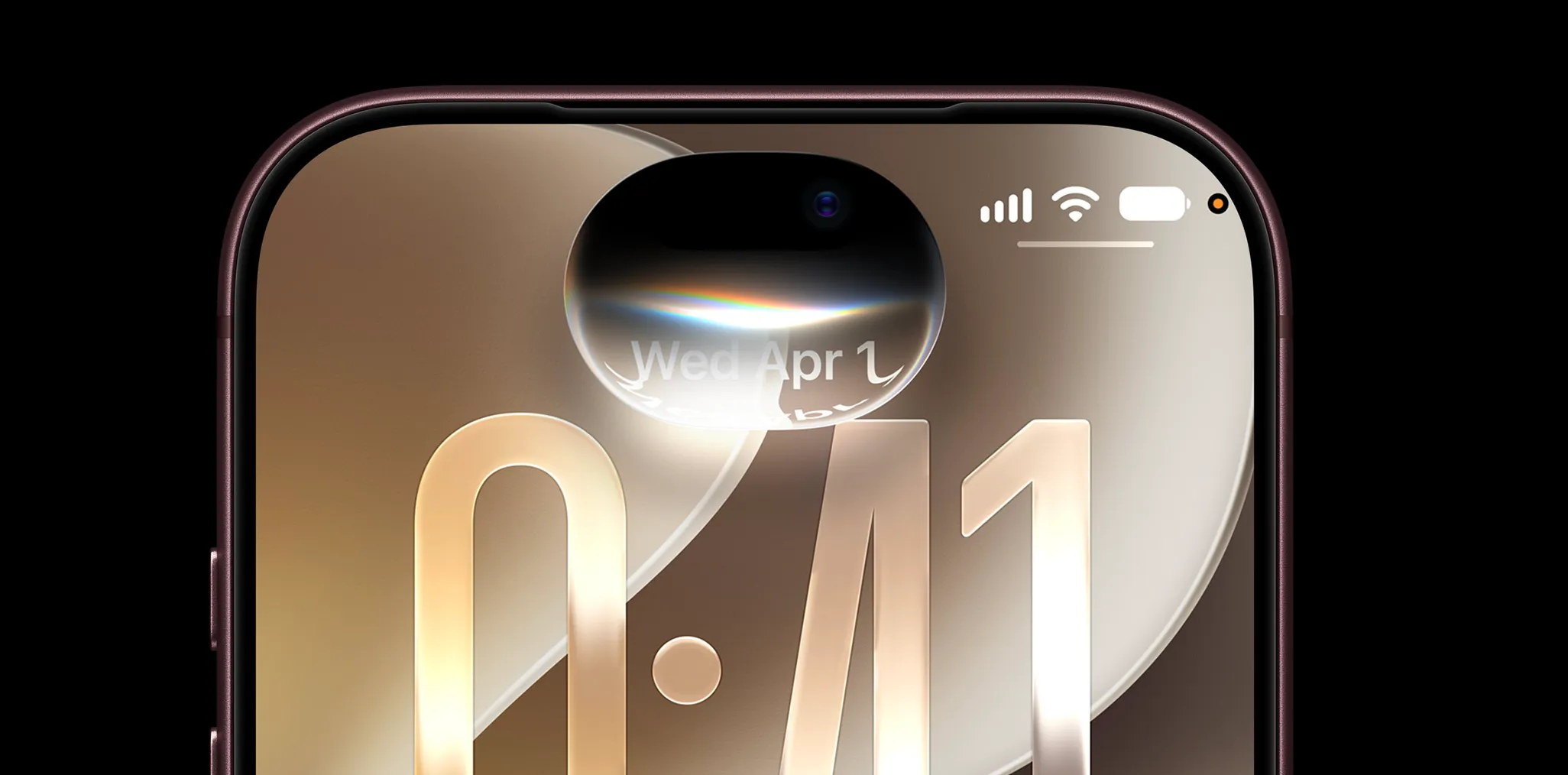
The 20th-anniversary iPhone is described as a device where the display curves down around all four edges, top and bottom included, with no visible frame, no bezels, and no cutouts anywhere on the device. Bloomberg and The Information have both described the concept as a "mostly glass, curved iPhone without any cutouts" targeting 2027, summarized by MacRumors last August. Korean publication ETNews reported separately that Apple is exploring "four-edge bending" display technology to achieve exactly that look, via the same MacRumors report.
Mechanical buttons create an immediate structural problem for that concept. A physical button requires a gap in the frame where a mechanism can move. That gap interrupts the glass surface. Solid-state haptic buttons could address this by integrating the input directly into the frame with no physical travel, using vibration to simulate the sensation of a click, according to MacRumors. Think of the Force Touch trackpad on a MacBook: nothing actually moves, but the feedback feels indistinguishable from a physical press.
Per Instant Digital's earlier claim, the system would cover all five controls: the Side button, both volume buttons, the Action button, and Camera Control, MacRumors reported. That would amount to a complete replacement of the main side controls described in the report. For a four-edge curved glass design, haptic buttons would be one way to reduce visible seams and preserve the uninterrupted look Apple is reportedly targeting.
Project Bongo and the failure pattern Apple is trying to break
Apple's history with this technology is messier than the current rumor cycle implies.
Plans to ship solid-state buttons on the iPhone 15 Pro, codenamed "Project Bongo," were abandoned in the late stages of development, MacRumors reported. The feature then appeared in roadmaps for the iPhone 16 Pro and was shelved again, with no public explanation from Apple.
Earlier reporting attributed Project Bongo's cancellation to unsatisfactory test results and high hardware failure rates. The current testing checklist suggests Apple is now trying to prove the system can survive the practical edge cases that would matter in daily use. Instant Digital reports the latest design has cleared tests for gloves, wet hands, temperature extremes, and case use, per MacRumors. That list reads like a direct inventory of the edge cases a haptic button system would need to handle reliably before Apple would ship it. Gloves attenuate touch sensitivity. Cold temperatures affect haptic actuators. Cases change how vibration is perceived. These are exactly the conditions that separate a convincing demo from a product.
The claim about functional verification is worth noting carefully. It describes an engineering milestone confirming the system performs as designed under controlled conditions. That's further along the development process than a vague report of "testing." It is not, however, a shipping decision. he device is still more than a year away from Apple's usual fall iPhone launch window.
Instant Digital has a solid but uneven track record. The leaker accurately called the yellow iPhone 14 and the frosted back glass on the iPhone 15 and 15 Plus, MacRumors noted. Accurate on cosmetics; the current claim is considerably more technically complex.
How the haptic button plan fits Apple's broader 2027 roadmap
Solid-state buttons aren't the only ambitious feature planned for the 2027 device, but they may be the hardest to de-risk before launch.
According to leaker Digital Chat Station, Apple is running a staged multi-year transition toward the anniversary iPhone: partial under-display Face ID arrives with the iPhone 18 Pro, a fully under-display selfie camera debuts in an upcoming foldable iPhone, and both technologies converge in the 2027 device, MacRumors reported last December. The logic is straightforward: introduce each component in an earlier product, gather real-world data, then bring both together in the flagship.
Digital Chat Station described a similar incremental path for display technology: a smaller Dynamic Island with some Face ID components moved under the panel in iPhone 18 Pro, then a hole-punch camera and fully under-display Face ID by 2027, MacRumors reported in late March.
Solid-state buttons don't appear to follow the same staged introduction. No intermediate product has been reported as a proving ground for the haptic system before it lands on the anniversary iPhone. That asymmetry may explain the longer failure history: the technology has had to be developed and validated entirely in the context of a high-stakes flagship launch, with no lower-risk product to absorb the early learning.
Not everything in the latest Instant Digital post deserves equal weight. The leaker also listed a 6,000mAh battery, under-display audio, reverse wireless charging, and next-generation Ceramic Shield. MacRumors flagged those last items as potentially more wish list than supply-chain intelligence, per the same report. The core design claims — curved display, under-display Face ID, and an under-display front camera — have been reported by multiple sources over roughly two years. The peripheral specs have not.
What to watch, and what to hold lightly
The consistent thread across two years of reporting is directional: multiple sources, including Bloomberg and The Information, describe a 2027 iPhone built around curved glass, no cutouts, and a seamless form factor, per MacRumors. That convergence gives the broad design concept more credibility than any single spec claim in Instant Digital's post.
MacRumors noted earlier this month that it remains to be seen whether Apple can deliver such an ambitious design on the 2027 timeline, per this report. Taken together, the current reports suggest the direction is credible, the timeline is tight, and the button feature has been abandoned twice before. The third attempt comes with more documented testing, and, for the first time, a rumored design where haptic buttons would make clear functional and visual sense.
A newer display-supply report adds another reason for caution: Apple is already said to be planning a refined version of the four-edge bending OLED for 2028, suggesting the first 2027 implementation could involve trade-offs around distortion, uneven brightness, or heat at the curved edges.
The first meaningful hardware signal could arrive in fall 2026. If the iPhone 18 Pro ships with under-display Face ID as rumored, at least one leg of the roadmap would be validated in the real world, and the 2027 anniversary device would start looking a little less speculative.


Comments
Be the first, drop a comment!