





20th Anniversary iPhone Rumor Explained: Design Vision vs. Reality
The most persuasive Apple rumors are rarely the ones promising the impossible. They're the ones that describe something just close enough to impossible that you can see how Apple gets there.
That's exactly where the 20th anniversary iPhone rumor sits right now. Leaker Ice Universe posted on X this week describing the anticipated 2027 model not as a phone with a literally bezel-free, component-free face, but as a device engineered to look that way through subtle curvature, optical refraction, and light-guiding structures, with a display where the bezel "nearly disappears from sight" while edge viewing stays natural (9to5Mac reported today). The 9to5Mac write-up explicitly treats the idea as speculative, which makes it easier to take seriously than the usual "Apple solved everything" leak.
The broader rumor has been building for about a year, since Bloomberg's Mark Gurman reported that Apple was planning a "bold" new Pro model in 2027 making more extensive use of glass, later described more specifically as a "mostly glass, curved iPhone" with an all-screen design, per MacRumors. What's new isn't the destination. It's a more credible account of how Apple might actually get there.
The 20th anniversary iPhone rumor earns serious attention not because a true all-glass phone is technically achievable by 2027, but because Apple has a long and well-documented track record of engineering the perception of seamlessness rather than the physical reality. This rumor fits that playbook almost perfectly.
Apple's anniversary playbook: why 2027 is a meaningful target
Anniversary years carry genuine strategic weight at Apple, not just marketing weight.
The iPhone X set the template. Apple released it in 2017 to mark the iPhone's 10th anniversary, introducing Face ID, eliminating the home button, and launching the all-display design language that has governed every iPhone since. As MacRumors noted last year, the iPhone X "dictated the next decade of iPhone design." Every design decision Apple made afterward, shrinking bezels, relocating sensors, debating whether to keep a notch at all, was downstream of what iPhone X established.
Jony Ive's fingerprints are all over this pattern. Throughout his tenure at Apple, Ive repeatedly articulated a vision of the iPhone in its final, essential form as "a single sheet of glass," a device whose function was inseparable from its material (9to5Mac reported about a year ago). The iPhone X was the most significant step toward that vision. The 20th anniversary is framed, across multiple credible sources, as the moment Apple tries to close the remaining distance.
The 2027 device also arrives after Apple's first foldable iPhone, expected this fall. That sequence matters. Apple isn't treating the anniversary model as an isolated moonshot; it appears to be one milestone in a broader, years-long push to reinvent what the iPhone's physical form can do.
What the 20th anniversary iPhone rumor actually describes and why that's more convincing than the headline
Most coverage collapses "single slab of glass" into a literal engineering claim, then either gets excited about impossible hardware or dismisses the whole thing as fantasy. Both miss the point.
The more considered interpretation, as 9to5Mac laid out today, is that "single slab of glass" describes an aspiration and an aesthetic outcome, not a bill of materials. There will always be bezels of some structural kind. Cameras, microphones, speakers, and sensors aren't going away. Some may eventually move under the display, but metal and glass will coexist on any real device.
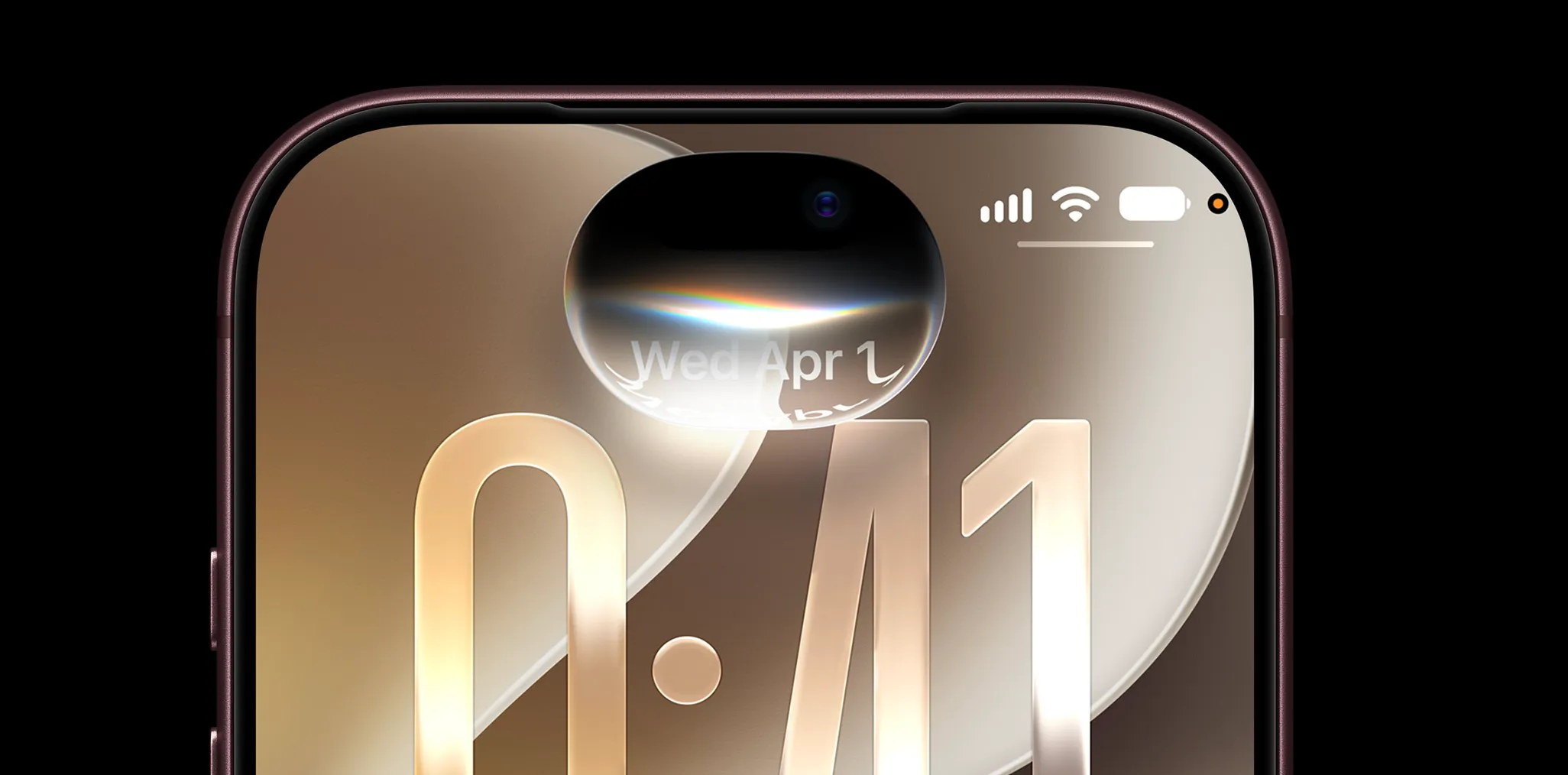
What the rumor actually proposes is a visual illusion engineered to be more impressive than the underlying physics. A subtly curved display, nothing like the dramatic waterfall curves that defined mid-2010s Android flagships, augmented by optical refraction and light-guiding structures so that the boundary between display and frame becomes nearly imperceptible under normal viewing conditions. A possible branding name, "Liquid Glass display," has been floated, though that appears to be leaker speculation rather than a confirmed Apple term.
This approach has genuine supply-chain backing. Apple is reportedly working with Samsung on a "four-micro-curve" OLED panel with subtle bending across all four edges. The display is also expected to use Color Filter on Encapsulation (COE) technology, removing the traditional polarizing layer to make the panel thinner, brighter, and more power efficient, per AppleInsider earlier this week. A crater-shaped light diffusion layer is also rumored, designed to maintain uniform brightness even at deeply curved edges, MacRumors noted last year.
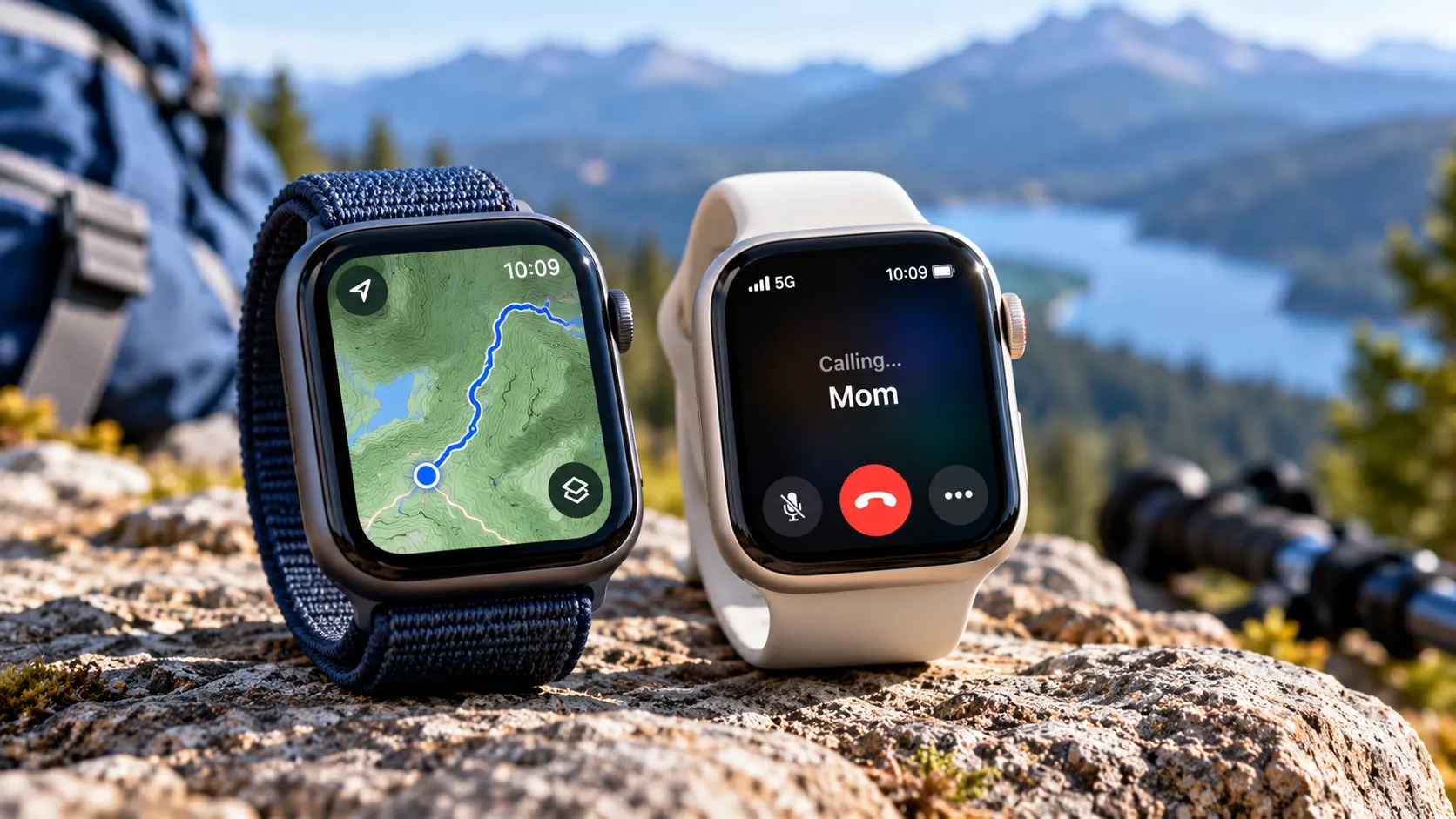
The Apple Watch comparison in the 9to5Mac piece is worth pausing on. On the original Apple Watch, the black display and glossy bezel were matched so precisely that the border between them effectively disappeared, creating the visual impression of a much thinner frame than the device actually had. Apple didn't invent new physics; it designed the perception. That's the same move being described here, scaled up and applied to an iPhone display.
This is the rumor's strongest argument: it doesn't require Apple to achieve the impossible. It requires Apple to be very, very good at what it's already demonstrated it can do.
The part that remains genuinely uncertain
The front of the phone is still the problem.
Achieving a visually borderless bezel-free iPhone reportedly requires eliminating the Dynamic Island and front camera cutout, which means moving Face ID sensors and the front-facing camera beneath the display. Wayne Ma at The Information reported that iPhone 18 Pro models, arriving this fall, will take a step toward that goal, with under-display Face ID and only a small pinhole remaining for the front camera, via MacRumors about a year ago. The 2027 model would theoretically complete that transition.
Display analyst Ross Young is skeptical. He has said Apple won't have under-display Face ID ready for a 2027 iPhone, and has suggested the anniversary model may retain a small notch, with a truly notch-free iPhone not arriving until 2030, per MacRumors last year. Young's skepticism can't be brushed aside; his timeline calls on display technology have been specific and well-reasoned, and nothing in the current rumor stream directly refutes his position.
There's also a source quality issue worth flagging. Much of the most detailed reporting flows through Apple-focused aggregators interpreting the same leaker stream. Ice Universe and Digital Chat Station are influential and often accurate, but they are not Mark Gurman. The supply-chain claims about COE displays and curved panels are technically coherent and corroborated across outlets, which adds weight. The optical illusion mechanics are plausible but, so far, backed by leaker assertions rather than patents or independent analyst notes.
The display architecture and material direction have enough supply-chain support to take seriously. The claim of a truly uninterrupted front face by 2027 is where confidence should stay measured.
What to make of this when 2027 actually arrives
The 20th anniversary iPhone rumor is speculative. That's not a caveat buried at the end; it's the accurate description of where things stand.
What makes it worth attention is that the most credible version doesn't ask Apple to transcend engineering reality. It asks Apple to be exceptionally skilled at closing the gap between what a device is and what it appears to be. That is, historically, one of the things Apple does best.
If the display-technology pieces come together, COE OLED panels, subtle four-edge curvature, light management engineered to blur the bezel boundary, Apple could produce a phone that genuinely looks like a slab of glass without the front face being one. The eye fills in the rest. Apple has bet on that phenomenon before and won.
The unresolved question is the front camera and sensor stack. An iPhone 18 Pro that moves Face ID under the display this fall would be a meaningful signal that 2027 is actually achievable. If that step doesn't land, or if Young's timeline holds, the anniversary model likely delivers a more incremental version of the vision, still impressive, but not the final word on what an iPhone can look like.
The rumor is persuasive. Whether Apple pulls it off depends on engineering progress that, right now, nobody outside Cupertino can fully see.





Comments
Be the first, drop a comment!