



All-Screen iPhone Release Date Explained: The 2027 Rumor's Missing Half
Based on current reporting, a fully all-screen iPhone has no credible release date. The most specific public rumor points to 2027 for an under-display selfie camera only, Apple's display engineering effort is concentrated on a foldable iPhone due this fall, and the second half of what an uninterrupted front actually requires under-display Face ID has no timeline from any source. For anyone searching "when is the all-screen iPhone coming," that's the honest answer right now.
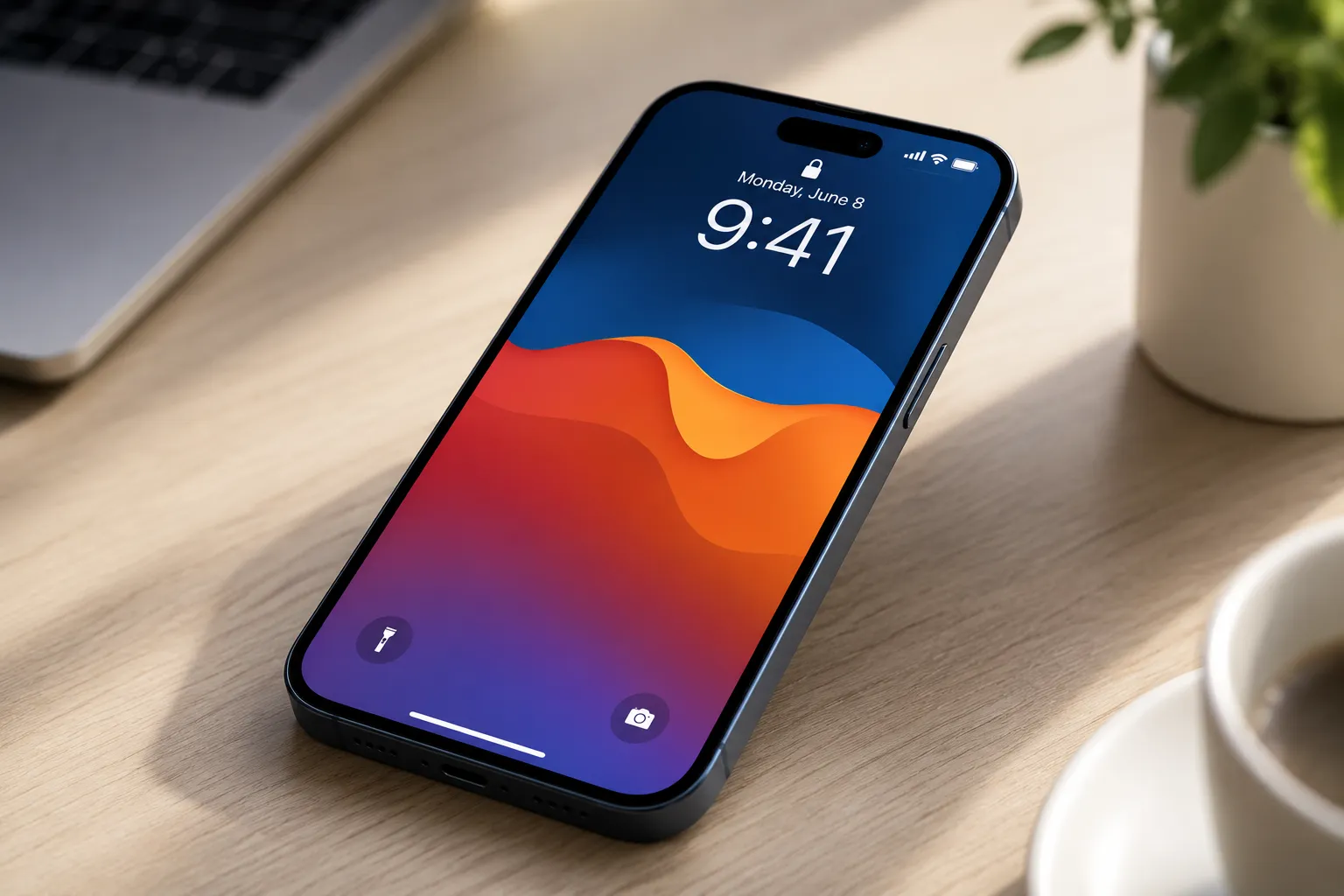
The Dynamic Island houses both the selfie camera and the Face ID sensor array. An under-display camera addresses one of those. The sensor array is a separate, harder problem, and no published reporting has put it on a near-term schedule. That gap is what most coverage of the 2027 rumor glosses over.
When is the all-screen iPhone actually coming? The 2027 rumor explained
The most specific public rumor comes from a Weibo post by Digital Chat Station, analyzed by CNET in November 2025, suggesting Apple could place a selfie camera beneath the display on a 20th-anniversary model likely the iPhone 20, expected in 2027. One Weibo post is not a roadmap.
Even if it proves accurate, what it describes is a device with an under-display selfie camera. Face ID stays visible until someone solves the harder problem of hiding an infrared dot projector and flood illuminator behind a display something no manufacturer has done. A completely uninterrupted iPhone front likely sits further out than 2027, based on the evidence available.
What "all-screen" really means, and why under-display camera rumors are only half the story
An under-display camera works by reducing pixel density in front of the lens so light can pass through to the sensor. The tradeoff is optical: fewer display elements means less obstruction, but also degraded image quality. CNET described it as shooting through open window blinds, which is an accurate physical description of what's happening.
Face ID is a different problem entirely. It uses an infrared dot projector and flood illuminator to build a three-dimensional map of a face a system that requires physical space and unobstructed line-of-sight. Solving for the selfie camera addresses one visible cutout. The sensor array is the other one, and the research literature contains no credible reporting on Apple or any other manufacturer developing a working under-display version of this kind of 3D facial-mapping system.
Until both are solved, the Dynamic Island stays. If the 2027 rumor tracks, readers should expect some form of sensor housing to remain on that device.
What would signal real progress:
- Credible reports of under-display Face ID development (none currently)
- Improvement in third-party under-display camera yields above 12 megapixels
- Supplier announcements involving advanced sensor-integrated panel development
Absent those, the all-screen iPhone remains a later chapter.
Under-display camera technology hasn't cleared the quality bar, including for Samsung
Samsung first put an under-display camera inside a foldable phone with the Galaxy Z Fold 3 in 2021. Four years later, the Galaxy Z Fold 6's under-display camera still only captured 4-megapixel images, a constraint imposed by the display wiring reducing light to the sensor, CNET reported in November 2025. Then Samsung dropped the under-display camera entirely on the Galaxy Z Fold 7, returning to a conventional punch-hole cutout.
Apple's current selfie camera sits at 18 megapixels with a square sensor designed for flexible aspect-ratio capture. That specification runs across every iPhone 17 model, including the thin iPhone Air CNET noted that Apple doesn't typically skimp on cameras, and the Air's inclusion of the same selfie shooter as the rest of the lineup underscores that. Matching 18-megapixel output with an under-display system isn't an incremental refinement on what Samsung built. It's a category leap.
Apple shipping an under-display system that produces materially worse selfies would contradict one of its most consistent product commitments. The technology has to match the standard before it ships, not merely approach it. If Apple does eventually ship an under-display camera, expect meaningful compromise risk unless the underlying technology improves substantially in the interim.
This is the clearest technical reason the all-screen iPhone timeline is long: the problem isn't that no one tried, it's that a major manufacturer tried for four years, couldn't solve it, and walked away.
Why the foldable is where Apple's display engineering is actually going
The foldable iPhone entered the New Product Introduction phase at Foxconn in March 2025, cleared engineering validation by late 2025, and Apple is now stockpiling components for pre-production. Foxconn is expected to begin mass production in early Q4 2026, per MacRumors. These are reported manufacturing milestones with named analysts and supply-chain sources behind them, though supply-chain reporting carries its own uncertainty.
The engineering involved is substantial. Apple is reportedly evaluating transparent polyimide film layered over ultra-thin glass for the folding display, liquid metal hinges manufactured through a die-casting process, and a metal stress-distribution plate aimed at reducing the crease that has plagued every foldable to date, MacRumors reported, citing supply-chain sources via Chinese site UDN. Novel materials problems, not refinements of existing solutions.
The book-style design offers a 5.3–5.5-inch outer screen and a 7.7–7.8-inch inner display, per MacRumors. It expands screen area through form factor rather than by eliminating any cutout.
The authentication decision reveals something more important than the dimensions. Apple is replacing Face ID with a Touch ID side button to reclaim internal space, per MacRumors, corroborated by Bloomberg's Mark Gurman. Apple is making that tradeoff first on a premium device expected to cost $2,000–$2,500 before it considers anything similar for the mainstream slab iPhone. The foldable is where Apple experiments on buyers willing to pay for it. A bezel-free standard iPhone would need to be right for everyone from launch.
Apple also redirected resources away from a foldable iPad to keep the foldable iPhone on schedule, per MacRumors' December 2025 roadmap coverage. Gurman expects a fall 2026 launch; Mizuho Securities raised the possibility of a slip to 2027 if hinge decisions extend, MacRumors reported. If a program this deep into production preparation can still miss a full year, projecting a more technically ambitious all-display iPhone becomes even harder.
The connection back to the all-screen timeline is direct: the engineering bandwidth going into solving novel folding-display problems is not simultaneously going into under-display sensor integration for the standard iPhone lineup.
Manufacturing readiness and commercial incentives both point the same direction
Apple's OLED supply chain is already under strain. BOE's B11 AMOLED facility in Mianyang began experiencing process-related defects around November–December 2025, forcing Apple to shift panel orders for iPhone 15, 16, 17, and 16e models to Samsung Display an emergency reallocation running from December 2025 through January 2026, Display Daily reported. Samsung already supplies roughly 120–125 million OLED panels to Apple annually, more than LG Display and BOE combined, and is the expected primary supplier for the foldable's panels, with around 10–11 million units planned for 2026.
The BOE disruption illustrates something worth holding onto: display manufacturing still fails in ways that cascade across Apple's entire production schedule. Developing a fully integrated under-display sensor stack engineering more demanding than anything currently in production alongside a foldable launch and a BOE recovery effort would compound that risk substantially. The supply-chain bandwidth for that kind of parallel development program looks thin, based on the disruption already underway, though that's an inference from the reported constraints rather than a stated conclusion from any single source.
On the commercial side, Apple has no pressing reason to rush. Panel procurement for the iPhone 16 series ran 8% ahead of the iPhone 15 through September 2024, with Pro models climbing to 66% of the product mix in that period, up from 60% for iPhone 15 Pro, per Display Daily data from October 2024. Apple was one of only two top-five smartphone brands to grow revenue globally in Q1 2025, per Counterpoint Research.
Strong sales don't prove Apple can't ship an all-screen phone they simply remove the market pressure that might otherwise push it to ship before the technology is ready. That's a meaningful difference.
Where this leaves the all-screen iPhone
The 2027 "iPhone 20" rumor, if it materializes, addresses only the selfie camera and rests on a single Weibo post, per CNET. Under-display Face ID, the other component required to actually eliminate the Dynamic Island, has no credible timeline from any source in the current reporting.
The foldable iPhone, if it launches this fall as current reports suggest, will give Apple real data on how much premium buyers value screen area and how willing they are to accept biometric tradeoffs to get it. How that device is received will shape what Apple does on authentication and display integration for future flagship designs. The all-screen standard iPhone sits further down that learning curve.
Watch for credible reports of under-display Face ID testing, any supplier announcement involving advanced sensor-integrated panel development, and how the foldable's Touch ID reception influences Apple's thinking on authentication. Those are the real indicators. The Dynamic Island has at minimum one product cycle ahead of it and the evidence for a near-term successor to it simply isn't there yet.



Comments
Be the first, drop a comment!