



Apple Accessibility Features 2025: What's New and What Still Needs Work
Apple announced a broad set of new accessibility features last week, timed to Global Accessibility Awareness Day, covering iPhone, iPad, Mac, Apple Watch, and Vision Pro. The headline additions include Accessibility Nutrition Labels on the App Store, Magnifier on Mac, a unified Braille Access experience, and a Switch Control protocol for Brain Computer Interfaces. All features are due later this year; exact OS versions and device compatibility are not yet confirmed, per Apple's announcement.
A correction to earlier coverage: some reports described this update as including eye-controlled wheelchair support. Apple did not announce wheelchair hardware or eye-controlled wheelchair functionality. The mobility category covers expanded Eye Tracking options, new Head Tracking, and BCI support for Switch Control.
Two features explicitly use on-device processing as a privacy mechanism: Eye Tracking, where all setup and calibration data stays on the device and is never shared with Apple, per the 2024 announcement, and Personal Voice, which processes voice data entirely on-device, per Apple. Apple's NZ newsroom also frames the broader update around Apple silicon and on-device machine learning as enabling infrastructure, per Apple NZ, though Apple ties the explicit privacy architecture specifically to those two features.
Why App Store accessibility labels may matter more than any new feature
The new Accessibility Nutrition Labels add a dedicated section to App Store product pages showing which accessibility features an app supports, including VoiceOver, Voice Control, Larger Text, Sufficient Contrast, Reduced Motion, and captions, so users can check compatibility before downloading, per Apple. Labels will be available worldwide. Apple has published criteria developers must meet before displaying them, creating a defined standard rather than open self-reporting.
The comparison to Apple's privacy nutrition labels, introduced in 2020, is instructive. That system made data practices visible on the product page in a way they hadn't been before, creating reputational stakes that didn't previously exist. Accessibility labels work the same lever: an app that ignores VoiceOver or ships without sufficient contrast currently carries no mark against it in the App Store. A missing label changes that, at least for users who know to look.
Eric Bridges, president and CEO of the American Foundation for the Blind, called the labels "a huge step forward for accessibility," saying consumers deserve to know upfront whether an app will work for them, quoted in Apple's announcement. Whether developer uptake turns the labels into a competitive signal or a compliance checkbox remains open. Both outcomes are possible, and the privacy label precedent suggests pressure builds slowly, then compounds.
What Apple hasn't said publicly: how enforcement works, whether labels can be disputed, and what "worldwide" means for apps with regional availability. The criteria exist; the accountability mechanism around them isn't yet described.
Apple Magnifier on Mac, Braille Access, and other platform gaps closed
Several additions fill gaps that have existed for years or extend existing tools to complete the device lineup.
Magnifier comes to Mac for the first time, nine years after it debuted on iPhone and iPad, per Apple. For low-vision users working at a desk, the absence of a desktop magnification tool tied to the Mac camera has been a straightforward gap. This closes it.
Braille Access is more substantial: a unified braille note-taking experience across iPhone, iPad, Mac, and Vision Pro that supports Nemeth Braille for math and science, opens BRF files previously usable only on standalone braille note-takers, and transcribes Live Captions directly to a braille display in real time, per Apple. Tasks that previously required multiple specialized devices can now run on hardware users already own.
Accessibility Reader is a new systemwide reading mode for dyslexia and low vision, with customizable font, color, and spacing, callable from any app on iPhone, iPad, Mac, and Vision Pro, with Spoken Content built in. It also integrates directly into Magnifier, so the same reading adjustments apply to physical text like a printed menu or a document, per Apple. The systemwide availability is the point: a reading mode that only works inside certain apps puts the burden back on the user to know which apps support it.
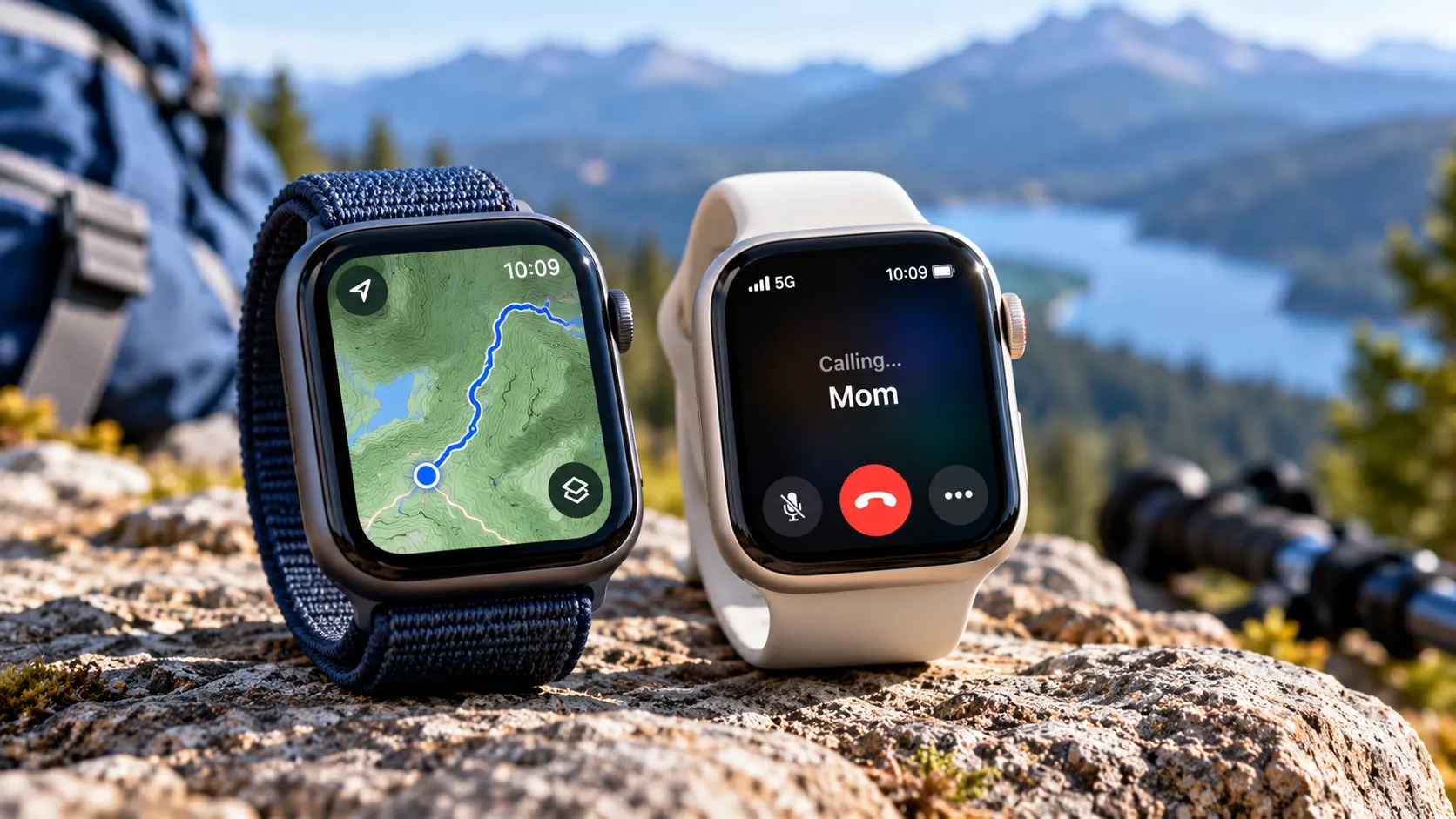
For deaf and hard-of-hearing users, Live Listen controls arrive on Apple Watch. Users can read real-time captions of what their iPhone hears on their wrist and control Live Listen sessions, including jumping back to catch something missed, without returning to their phone, Apple confirmed. Share Accessibility Settings lets users temporarily push their configured preferences to another iPhone or iPad, relevant for borrowed devices, public kiosks, or schools, per Apple NZ.
Apple AI accessibility features for mobility: Eye Tracking, Head Tracking, and BCI support
Eye Tracking, introduced last year using the front-facing camera and on-device machine learning with no additional hardware, gets expanded selection options in 2025: users can now combine eye gaze with a physical switch or use dwell-based activation, per Apple. Head Tracking is also new for 2025, letting users control iPhone and iPad through head movements via the front-facing camera, operating on the same architecture, per Apple NZ.
The BCI announcement reaches further than either. iOS, iPadOS, and visionOS will add a protocol enabling Switch Control to work with Brain Computer Interface devices, hardware that allows users with severe mobility disabilities to operate their device without physical movement, Apple confirmed. This is a platform protocol, not a finished consumer product. It creates the infrastructure for BCI hardware manufacturers to build integrations. How many compatible devices will be available at launch, and at what price, is not yet public.
Personal Voice, which generates a synthetic voice for users at risk of losing speech, now produces a natural-sounding result from just 10 recorded phrases in under a minute, using on-device machine learning, per Apple. Voice data stays on device. For a feature this personal, that's not a minor detail.
Vision Pro: capable hardware, unresolved costs
VisionOS now lets low-vision users magnify the entire field of view through the main camera, including their physical surroundings. VoiceOver users get Live Recognition, which uses on-device machine learning to describe surroundings, identify objects, and read documents in real time, per Apple. A new API opens the main camera to approved third-party apps; Be My Eyes is the named example, enabling live, hands-free visual assistance from another person.
Apple's own caveat is worth stating plainly: Live Recognition should not be relied on in emergencies, high-risk situations, or for navigation, per Apple. That's a genuine constraint for a feature that interprets physical space.
One account from a visually impaired writer, published in UCSF Synapse about two years ago, documented that Vision Pro accommodated nystagmus and strabismus without issue, handling dominant-eye-only navigation and scaling the UI to compensate for involuntary eye movement in ways that had stumped research-grade eye-tracking systems. One person's experience, not a study. It does show what the hardware's architecture can handle for conditions that have historically caused problems for specialized equipment.
The hardware's cost stays the unaddressed constraint. Apple doesn't speak to it here. Vision Pro's accessibility capabilities are real; whether the device is accessible to most people who might benefit from them is a separate question.
What ships next, and what still needs to happen
All features are tied to OS releases expected later this year. Three things will determine whether the announcements add up to something durable.
The Accessibility Nutrition Labels live or die on developer behavior. If users act on them and reviewers cite them, productivity, education, and enterprise developers gain a market reason to invest in accessibility that the App Store has never provided before. Labels as checkbox compliance wastes the structural opportunity.
BCI Switch Control support needs compatible hardware at a price point that people with severe mobility disabilities can actually reach. The protocol exists; the ecosystem around it doesn't. That's a reasonable place to start, and it shouldn't be read as a solved problem.
The features with the shortest path to real-world impact are the ones that reduce friction without requiring anyone else to build anything: Braille Access consolidates functionality from expensive specialist hardware into devices people already own; Accessibility Reader works across every app rather than a select few; Share Accessibility Settings makes borrowed devices genuinely usable. These ship with the OS. Everything else depends on what developers and hardware makers do next.



Comments
Be the first, drop a comment!