



Apple's long-rumored entry into the budget laptop space is hitting a major snag before it even launches. The company's ambitious plan to introduce an affordable MacBook—designed to challenge Chromebooks and Windows machines—is now colliding with a fundamental problem: the cost of building it keeps climbing. While analyst Ming-Chi Kuo indicated production would begin late 2025 or early 2026, and Bloomberg's Mark Gurman reported the device was already in early production, rising component prices are threatening to undermine the entire strategy. This isn't just about one product launch—it's about whether Apple can maintain its premium brand while competing in a market segment it has historically avoided, all while manufacturing costs surge across the industry.
The component cost crunch reshaping Apple's budget plans
Here's what makes this situation particularly challenging: the very components Apple needs to keep costs down are getting more expensive. TSMC told clients including Apple that sub-5nm chip fabrication would cost up to 10 percent more starting in 2026, a significant increase for a company trying to hit aggressive price targets. Even more striking, Some industry reports/estimates have suggested 2nm per-die cost could be far higher than current 3nm dies (figures reported in some Taiwan outlets — treat as estimates/rumors); cite the original report and label as an estimate. That's more than a sixfold increase—and while the budget MacBook likely won't use cutting-edge 2nm initially, this pricing trend signals where the entire chip market is headed. With chip costs rising from $45 to potentially $280, Apple faces an additional $235 per unit in a future scenario—nearly 40% of a $599 target price before accounting for displays, memory, or assembly.
Memory pricing adds another layer of complexity. Market analysis shows memory's share of phone BOMs has risen sharply; cite the original Goldman Sachs note or rephrase as 'market analysts' if a Goldman Sachs source cannot be provided. The culprit? Semiconductor makers are shifting focus toward high-bandwidth memory (HBM), creating scarcity of mobile-grade LPDDR5x RAM. HBM powers AI data centers, where profit margins dwarf smartphone components, making it far more lucrative for manufacturers than the mobile-grade memory Apple needs. This is exactly the type of memory Apple requires for a budget MacBook that still supports Apple Intelligence features, which requires a minimum of 8GB of RAM. Without 8GB of LPDDR5x RAM, the budget MacBook can't run Apple Intelligence—the very feature Apple is using to justify its entire product ecosystem upgrade cycle.
TrendForce forecasts global notebook shipments will decline 5.4 percent in 2026 as rising memory prices pressure manufacturers, creating a challenging market environment just as Apple attempts to enter the budget space. The broader contraction means Apple won't be riding a rising tide—it'll be fighting for share in a shrinking pie where every manufacturer faces the same cost pressures.
Why an iPhone chip in a MacBook might be the answer (and the problem)
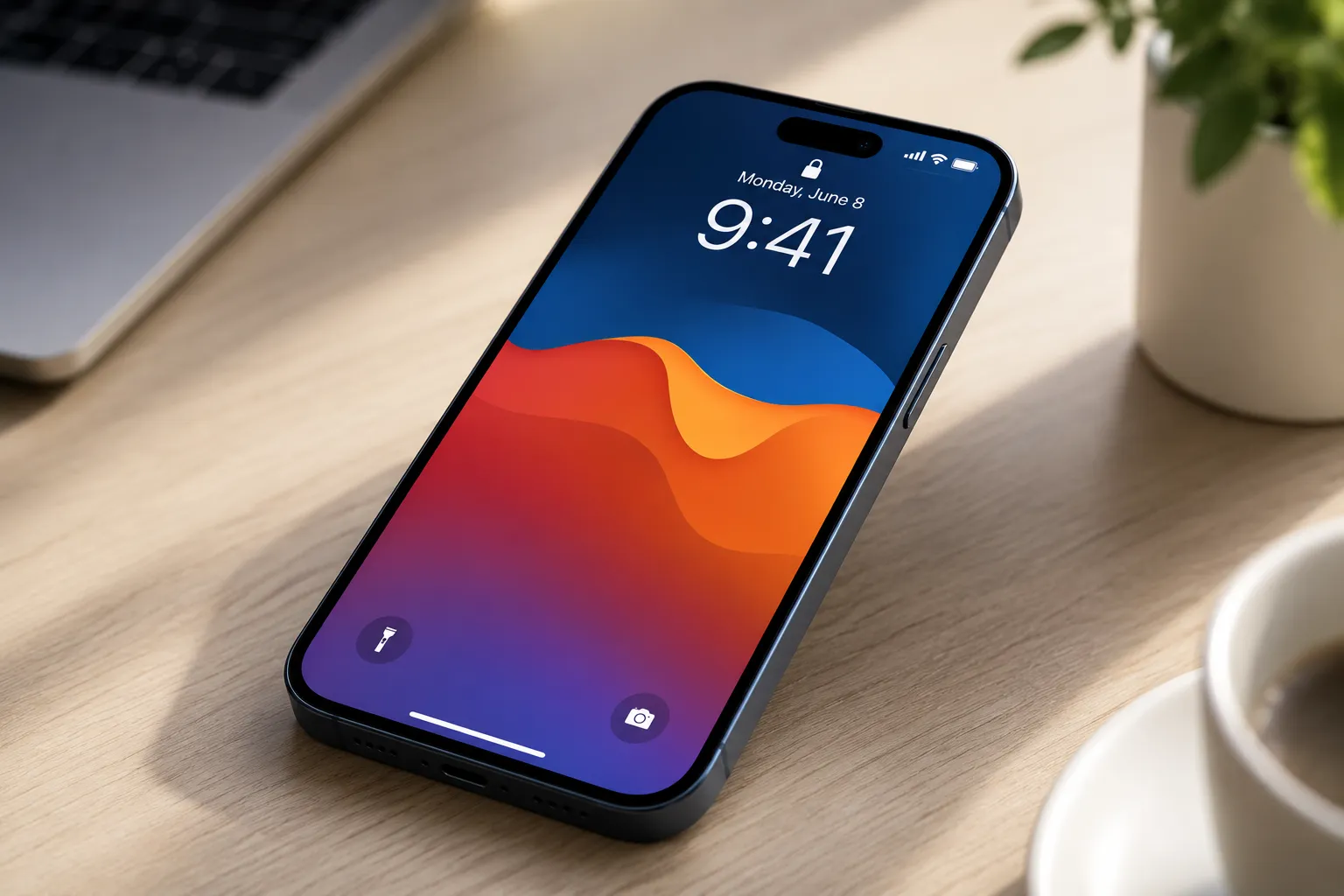
Apple's reported strategy involves using an A-series processor instead of the more powerful M-series chips found in current MacBooks. When Kuo first discussed the budget MacBook, he stated Apple would use an A18 Pro, though the A19 Pro is now more likely. This makes sense from a cost perspective—early benchmarks/leaks suggested the A18 Pro's single-core scores are close to M-chip single-core numbers; cite the benchmark/leak sources and label as early/unofficial, though its 6 CPU cores meant multi-core performance slightly trailed the M1's 8 cores.
But here's the thermal challenge that Apple engineers are grappling with: iPhone chips are designed for burst workloads in the constrained environment of a smartphone, not the sustained performance demands of a laptop. When you're scrolling through social media or taking photos, the A-series chip bursts into action then backs off, dispersing heat through the iPhone's metal chassis. A laptop operates in an entirely different thermal world. You might have a dozen browser tabs open, a video call running, and documents compiling in the background—all simultaneously, for hours. For a lot of people, an A18 Pro MacBook would perform like an M1 MacBook Air, which has more than enough processing power, yet maintaining that performance under continuous laptop-level loads requires thermal solutions Apple hasn't deployed in this configuration. The A-series to M-series gap isn't just about core count—M-series chips include additional media engines, ProRes accelerators, and memory controllers specifically optimized for sustained workloads that laptops demand.
The connectivity picture offers some upside. Apple is using its own N1 wireless networking chip in the iPhone 17, bringing Bluetooth 6, Wi-Fi 7, and Thread, and these same chips will likely make their way into the A19 Pro MacBook. Even more intriguing, there's a chance this new Mac will have cellular connectivity using Apple's C1, C1X, or yet-to-launch C2 modem. Imagine being able to pop in an eSIM and work from anywhere without hunting for Wi-Fi—a game-changer for students and mobile professionals. However, adding cellular capability would increase the bill of materials by approximately $30-50 based on typical modem costs, pushing the device closer to $700 and narrowing the competitive gap with the $999 MacBook Air that Apple needs to maintain.
The pricing puzzle that could define Apple's education strategy
Let's talk numbers, because this is where Apple's entire strategy either works or falls apart. Gurman reports the new laptop will cost "well under $1,000", with some claims suggesting the low-cost MacBook could start at $599. For context, Walmart still sells the M1 MacBook Air with a 256GB SSD for $649 and as low as $599—creating an internal pricing floor where Apple must beat its own five-year-old hardware on value, not just match it on price.
The component breakdown from the MacBook Air 15 teardown reveals the manufacturing puzzle Apple faces. The 64-bit octa-core applications processor cost $128.87, while the 60Hz display subsystem ran $111.76. Those two components alone represent nearly $241—but that's for the premium MacBook Air 15. A budget model with a smaller 12.9-inch display might cost $80-90, and the A19 Pro chip should fall somewhere between iPhone pricing ($45-60) and M-series pricing ($128), perhaps landing around $60-80. That brings these critical components to roughly $140-170—still consuming 23-28% of the $599 target price before adding memory, storage, battery, chassis, assembly, retail margins, and R&D amortization. The math gets tight quickly.
Now here's what makes this particularly important for Apple's long-term strategy: The affordable laptop would be designed for casual users, students and businesses, specifically individuals who need a device for tasks such as web browsing, light media editing and document creation. More importantly, Apple is targeting the education market, as well as iPad buyers who may also want a traditional laptop. But as CNET's Josh Goldman bluntly noted, "Making inroads into the education market at this point, where Chromebooks have taken over since the pandemic, will prove challenging".
Chromebooks dominate education not just on price but on ecosystem lock-in: Google Workspace integration, fleet management tools IT departments have already mastered, and rugged designs that survive years of student use. Apple would need to offer not just a cheaper device but a complete education package—volume discounts, simplified management tools, and support infrastructure—to compete. Schools need sub-$400 devices that can withstand drops, spills, and the daily abuse of classroom use. Apple's aluminum design optimizes for premium feel and recyclability, but those priorities don't necessarily align with education market realities.
Design compromises that might preserve the premium feel
Interestingly, Apple appears unwilling to sacrifice build quality to hit its price targets. According to Gurman, Apple's low-cost MacBook will have an aluminum chassis despite the goal of making it affordable. This aligns with Apple's work to make its products carbon-neutral, making it doubtful the company would use plastic. Aluminum supports carbon neutrality through recyclability—In 2024, about 71% of the aluminum used in Apple products came from recycled sources; by comparison, only ~9% of global plastic waste is recycled (OECD/UN/UNEP reporting). More importantly, aluminum commands higher resale values, extending device lifecycles in ways plastic simply cannot match.
The company's solution? A new manufacturing process designed to be both faster and more cost-effective than the one used with Apple's current laptops. Potential cost-saving innovations might include simplified internal layouts—fewer components mean fewer assembly steps—along with snap-together construction versus traditional screws, or single-piece aluminum extrusion rather than multi-part assemblies. Even reducing assembly complexity by 20% could save $15-25 per unit, meaningful savings when multiplied across millions of devices.
Combined with playful colors including yellow, light green, blue, silver, dark gray, and pink, the device could differentiate itself visually while maintaining premium materials. These colors actually match the logo Apple designed for the March 4 event invites—likely not a coincidence. The playful colors signal this isn't just a cheaper MacBook Air but a distinct product line targeting younger users and education markets, similar to how iPhone 11's colors differentiated it from Pro models while maintaining the iPhone identity.
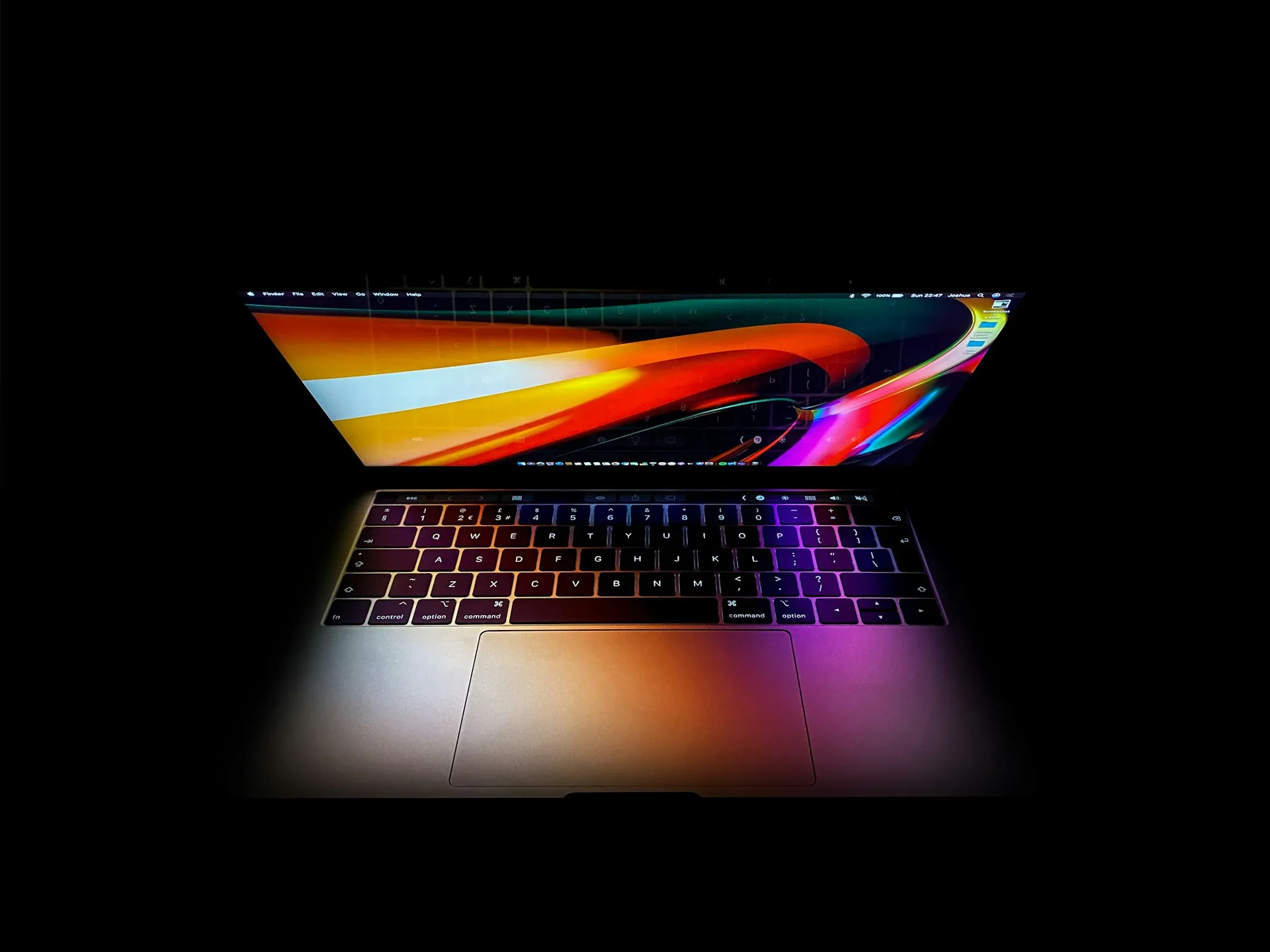
Other cost-saving measures appear more straightforward. This low-cost MacBook may not support Thunderbolt, and the budget MacBook will have fewer USB ports than the MacBook Air, which has two USB-C and a MagSafe charging port. For the target market—students doing web research, writing papers, and streaming content—standard USB-C ports handle these tasks perfectly well. There's even speculation that Apple might opt not to include a built-in camera, though that seems implausible for a device targeting education and business users who rely on video conferencing. A more realistic compromise: downgrading from 1080p to 720p, saving approximately $8-12 per unit while preserving the functionality users actually need.
Why Apple might be better positioned than competitors despite rising costs
Here's the counterintuitive part: even as component costs squeeze margins across the industry, Apple may actually gain market share. While many PC brands are expected to pull back on inventory to protect margins, Apple's large and consistent purchasing volume gives it more flexibility when component costs rise. This scale advantage manifests in specific ways competitors cannot replicate: exclusive access to TSMC's newest nodes before general availability, volume commitments that secure favorable pricing even during shortages, and the financial leverage to prepay for capacity during industry downturns. When memory prices spiked 40% in 2021, Apple maintained steady supply while smaller OEMs faced allocation cuts and delayed shipments.
TrendForce suggests that competitive pricing could help the device find buyers where others might struggle, despite broader market pressure. The timing could also work in Apple's favor in unexpected ways. Apple is scheduled to host three "Apple Special Experiences" on March 4 in the U.S., U.K., and China, and these sessions, which are expected to offer media hands-on time with new products, could provide the ideal setting for the budget MacBook's debut. The simultaneous events across three continents signal more than product launch logistics—they indicate Apple has secured sufficient component supply for global rollout, suggesting the company locked in pricing and allocation before recent cost increases fully materialized.
The broader product strategy creates interesting opportunities for Apple to capture customers at multiple price points. An iPad 11th Gen with a Magic Keyboard will run around $600, revealing Apple's strategic moat: customers already invested in iCloud, Apple Music, and cross-device features face higher switching costs than pure price shoppers. A $600-700 MacBook captures users who might otherwise buy a Windows laptop and an iPad, consolidating two purchases into one while keeping them in Apple's ecosystem. The report points to similar dynamics in the smartphone market, where Apple is also expected to fare better than competitors as bill-of-materials costs increase, suggesting this supply chain advantage and ecosystem lock-in extend across Apple's entire product portfolio.
While Dell and HP must maintain thin margins across dozens of SKUs targeting different market segments, Apple can afford compressed margins on a budget MacBook because it drives services revenue, accessory sales, and ecosystem lock-in worth far more than hardware profit alone.
What rising costs mean for Apple's budget MacBook gamble
Bottom line: Apple is attempting something it rarely does—competing on price—at precisely the moment when component costs are surging. Apple faces three realistic options: absorb costs and accept 15-20% lower margins (feasible given services revenue cushion), raise prices to $749-849 (risking the competitive positioning that makes this product viable), or delay until component costs stabilize (ceding education market momentum to entrenched Chromebook competitors). If Apple has no choice but to increase prices, the Cupertino-based company could opt to accept compressed margins by absorbing some of the increased sourcing costs. Based on Apple's historical approach to new market segments—accepting initial lower margins on Apple Watch and AirPods to establish categories—the company will likely launch at $699-749, positioning between budget competitors and its own MacBook Air while treating compressed margins as customer acquisition cost.
The stakes extend well beyond one product launch. With consumer wallets under pressure from inflation, high tariffs and layoffs, an affordable MacBook could be imperative and timely. Yet notebook panel shipments are forecast to drop nearly 8 percent next year, and the industry's shift toward OLED screens could slow as materials become more expensive, creating additional headwinds that make the entire laptop market more challenging for every manufacturer.
As Gurman reported in February 2026, the low-cost MacBook is expected to arrive "as early as March", we'll soon learn whether Apple can thread the needle between affordability and quality. When the budget MacBook arrives, its price point will reveal whether Apple believes it can expand the Mac market or merely redistribute existing customers. At $599-649, it's a genuine Chromebook competitor and market expansion play. At $749-849, it's a MacBook Air alternative that maintains premium positioning while testing lower price tolerance. The difference between these scenarios isn't just $150—it's Apple's confidence in redefining what "budget" means in its universe, and whether the company's supply chain prowess can overcome the fundamental economics of building a genuinely affordable laptop in 2026.






Comments
Be the first, drop a comment!