



Apple Fall 2026 Product Rumors: What iOS 27 Beta Code Reveals
The most revealing thing Apple did at WWDC this week wasn't on stage. Buried inside the first iOS 27 developer beta are three framework references, foldState, angleDegrees, and a new key that returns a device's total number of built-in displays, that correspond to no existing Apple product. Developer Sam Henri Gold first spotted the strings on June 8 and shared them publicly; 9to5Mac verified their existence shortly after, and Macworld independently confirmed the findings, noting that no current Apple device uses these states.
That's about as strong as software clues get: observable code, cross-verified across outlets, with few obvious alternative explanations. But not everything else in this week's betas is equally legible. 9to5Mac reported this week that iOS 27 and macOS 27 together contain signals pointing toward three distinct hardware categories: a foldable iPhone, a touchscreen Mac, and a first-party home security camera. Among Apple new products fall 2026, these are the categories attracting the most attention. The signals are real. Their strength varies considerably.
This piece weighs the evidence in order of how solid it is: direct code artifacts first, platform-level UI preparation second, and ecosystem inference third. iOS 27 and macOS 27 developer betas are available now, with public betas arriving in July and full releases expected in September, per Apple's own release timeline. The software runway to a fall hardware launch is already underway. The question is which products are actually at the end of it.
The foldable iPhone: direct code evidence that's hard to explain away
The three new iOS 27 framework entries make the most sense on a foldable device. foldState reports whether the device is currently open or closed. angleDegrees tracks the precise angle of the fold. The third new key returns the total count of built-in displays, a value that only becomes meaningful if that count can be greater than one. None of these existed in iOS 26, confirmed across both the developer frameworks and the beta OS itself, per AllThings.How.
The code doesn't stand alone. Macworld's independent beta review turned up an additional internal flag suggesting Apple has been testing a device that pairs a Dynamic Island with Touch ID, a combination that exists in no current iPhone. That configuration fits circulating iPhone Ultra descriptions, which place Touch ID on the foldable's cover display in place of Face ID.
Platform-level preparation reinforces both findings. During the Platforms State of the Union, Apple told developers to stop building apps for fixed screen sizes and to instead design for what it called a dynamic range of sizes and aspect ratios, per Macworld and AllThings.How. Apple shipped a resizable iOS simulator and updated Xcode Previews to test across a range of screen shapes. iPhone Mirroring in macOS 27 can now be resized freely to any dimension, and the foldable iPhone is rumored to open to a screen roughly the size of an iPad mini, per Macworld. That change is considerably less coincidental in that context.
Why do these specific APIs matter? A foldable phone isn't just a bigger screen; it's a screen that changes shape during use. Apps need to know when the device transitions states, what the hinge angle is (a half-open fold behaves differently from fully open), and how many displays are active. These are precisely the values the new iOS 27 APIs expose. Taken together, the code strings, internal flags, and ecosystem-wide developer tooling changes make the foldable case unusually strong.
Hardware rumor specifics, including a roughly 7.8-inch inner display, titanium frame with liquid metal hinge, A20 chip, and starting price above $2,000, come from aggregated prior rumors rather than code, and warrant more caution, per AllThings.How's roundup. Apple has confirmed nothing. But among Apple fall 2026 product rumors, the foldable iPhone has the most substance underneath it.
The touchscreen Mac: real preparation, uncertain timing
The same OS release cycle contains a parallel set of changes, this time in macOS 27, that follow a recognizable pattern: Apple softening the ground for hardware it hasn't announced. The difference is that the Mac evidence is UI preparation rather than purpose-built code strings, which makes it harder to treat as confirmation and easier to read as longer-term platform work.
MacRumors identified three concrete changes in macOS 27 this week that suggest Apple is preparing macOS for more touch-friendly input. Sidecar now supports direct finger input; users can tap macOS elements through an iPad screen. Pull-to-refresh, the swipe-down gesture familiar from iPhone, is now available in apps such as Safari, Mail, News, Podcasts, and Calendar on the Mac. Spacing on UI elements including the menu bar has been enlarged to accommodate larger touch targets, per 9to5Mac. These are deliberate functional changes, not visual tweaks.
A third MacRumors observation is worth noting but deserves less weight. The redesigned Spotlight search field in macOS 27, a dark, pill-shaped bar, is framed as visually consistent with a Dynamic Island on a laptop display. That's a design interpretation, not a code artifact, and the same Spotlight bar serves macOS on existing hardware. Corroborating color, not independent evidence.
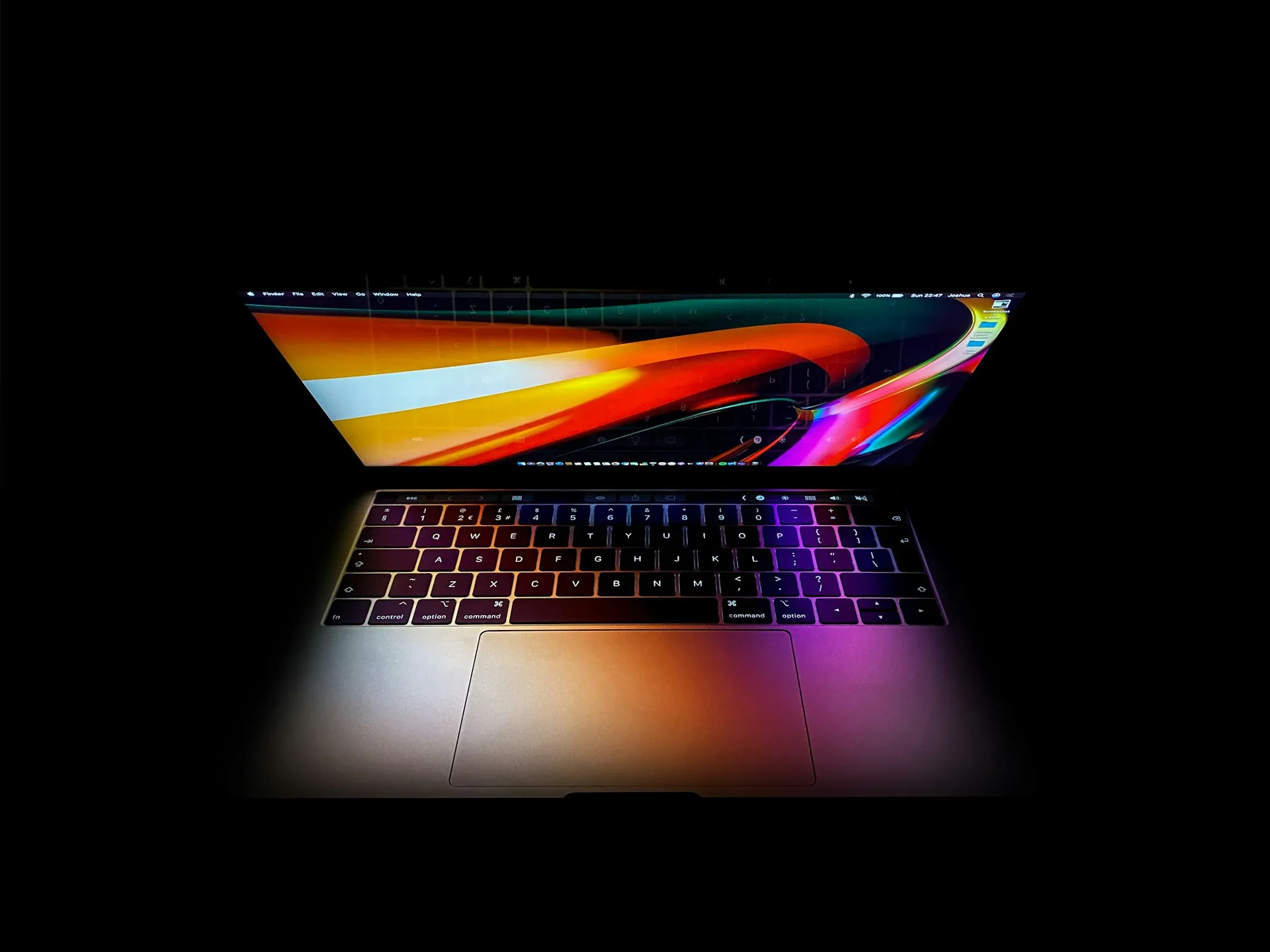
The hardware behind these changes is reportedly a "MacBook Ultra," a new model positioned above the MacBook Pro with an OLED touchscreen, Dynamic Island, thinner design, and M6 Pro or M6 Max chips, per MacRumors. Where it lands on the calendar is the open question.
9to5Mac places the MacBook Ultra in fall 2026. MacRumors reports Apple is targeting early 2027 for the same device. That split matters. Apple has resisted touchscreen Macs for years, and the macOS 27 changes are real but they are also consistent with gradual platform convergence rather than an imminent product. The Sidecar touch input, for instance, could plausibly exist to serve iPad users before any Mac ever ships with a touch display.
Treat this as Apple committing to a touchscreen Mac. Not as confirmation one arrives in September.
The home security camera: plausible inference, thin direct evidence
Of the five new Home-related features in iOS 27, four are specifically tied to HomeKit Secure Video, including long-requested support for 4K recording, per 9to5Mac. The argument is straightforward: Apple doesn't suddenly overhaul the infrastructure for a camera ecosystem it has no first-party stake in.
The sourcing behind the rumored device deserves a careful read. 9to5Mac, citing Bloomberg, reported this week that Apple is developing a privacy-focused in-home security camera that would compete with third-party HomeKit devices. The device would use facial recognition and infrared sensors to identify occupants room by room, enabling personalized automations, lights adjusting when someone leaves, music switching to match a family member's preferences.
The evidence hierarchy here is worth stating plainly. There are no camera-specific code strings comparable to foldState or angleDegrees reported in the current beta findings. The case rests on Bloomberg's sourcing, as relayed by 9to5Mac, plus the inference that four consecutive HomeKit Secure Video upgrades are too focused to be coincidental. Both are meaningful. Neither forces the conclusion.
Plausible, then, but unproven. The reported Bloomberg sourcing adds genuine credibility, and the iOS 27 Home app work is the kind of platform preparation Apple tends to deploy just before a product needs it. Without direct code evidence, this remains a well-supported rumor, and should be labeled as one.
How to read Apple fall 2026 product rumors in WWDC beta code
Apple beta discoveries aren't equally meaningful, and this week illustrated the full spectrum. Code strings with no existing use case, like foldState, are the strongest signal because the code is the infrastructure; it has to exist before the hardware can ship. UI and behavioral changes, like touch targets and pull-to-refresh, indicate platform direction but can serve multiple purposes. Ecosystem investment, like the HomeKit Secure Video upgrades, is credible circumstantial evidence that depends on an inference chain. When the next beta cycle begins, apply that filter before updating expectations.
So what actually changes between now and September? A few things are worth watching specifically. If foldState and angleDegrees disappear from beta 2 or beta 3 without explanation, that would itself be significant; persistent framework infrastructure is much harder to walk back than a UI tweak. On the Mac side, if Sidecar touch input expands into native Mac touch affordances in later betas, rather than staying scoped to iPad input, the touchscreen Mac timeline gets harder to push to 2027. And if Home app betas start surfacing device-class identifiers, camera onboarding strings, or HomeKit-specific hardware references, the camera rumor moves up the ladder considerably.
All three software categories land in the same release cycle tied to a September rollout, per Apple's developer timeline. The foldable iPhone's API infrastructure is concrete enough that its absence from a future beta would be news. The Mac and camera signals are worth monitoring, but not worth treating as settled. Apple has said nothing. The code, for once, said quite a lot.





Comments
Be the first, drop a comment!