






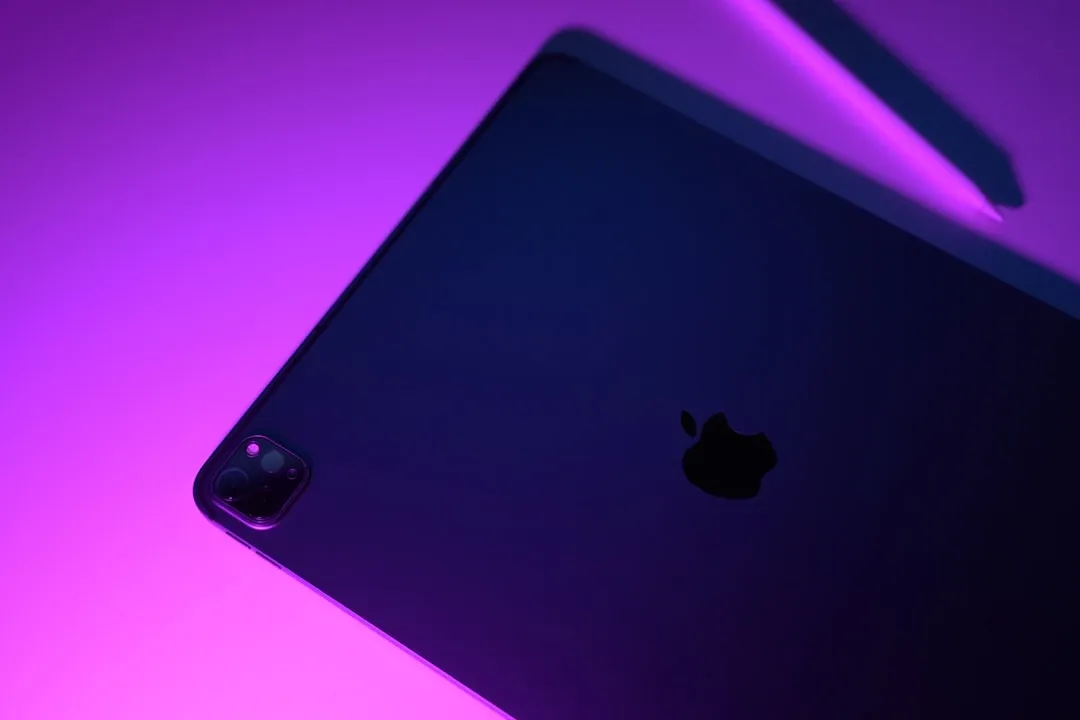
Apple Foldable iPad Cancelled: Why the 20-Inch Device May Never Launch
Bloomberg's Mark Gurman now says the long-rumored Apple foldable iPad may "end up being a wacky experiment that doesn't see the light of day," per The Verge this past Sunday. The rumored launch window has slipped from 2024 to 2026 to 2028 to 2029, and now carries no date at all. Whether the Apple foldable iPad is cancelled outright or stuck in indefinite limbo, the distinction is mostly semantic at this point.
The harder question is why. Apple reportedly paused the project last year over manufacturing difficulty, elevated production costs, and weak consumer demand, according to MacRumors. Those were real obstacles. But underneath them was a more fundamental problem: after years of internal development, well-sourced reporters couldn't agree on what category the device belonged to. That confusion wasn't a communications failure. It reflected genuine unresolved questions inside Apple about what the product was supposed to be.
A device that never found its category
Apple has reportedly been working on a folding tablet since at least 2023, according to The Verge. The coverage that followed never converged on a single answer for what it actually was.
Gurman and research firm Omdia consistently called it an iPad. Ming-Chi Kuo referred to the same device as a MacBook. Jeff Pu described it as a MacBook-iPad hybrid running macOS with a touch screen. Ross Young characterized it as a notebook with an 18.8-inch display. The Wall Street Journal reported Apple was building a 19-inch foldable MacBook. MacRumors catalogued these differing descriptions last August, and noted that the device's ultimate category would likely hinge on one question: which operating system Apple chose to run on it.
Those aren't interchangeable labels. A device running macOS belongs to the Mac family; iPadOS makes it an iPad, as MacRumors noted. That single decision cascades into everything else: the software ecosystem, the app library, the input model, the target buyer, and the sales channel. None of those downstream choices could be locked in until the OS question was settled.
The "iPad Ultra" label that circulated in coverage captures the problem neatly. It was less a product name than a placeholder, a sign that the category itself had never been defined well enough to name properly. You can't really name something until you know what it is.
Why the economics punished an unresolved concept
A clearly defined product can justify brutal manufacturing challenges. An undefined one has a much harder time making the case.
Apple reportedly targeted a crease-free OLED panel between 18.8 and 20.2 inches, per MacRumors last July. Crease-free foldable OLED at that scale isn't an engineering refinement achievable through iteration. It's an unsolved manufacturing problem, one that was actively driving up costs with no resolution date in sight.
DigiTimes reporting, summarized by MacRumors, identified three reasons Apple paused the project: manufacturing difficulty, elevated production costs for foldable display technology, and weak consumer demand for large foldable devices. None of those is a temporary bottleneck. All three reflect structural problems with the category at this scale, and all three were compounding a concept that hadn't resolved its own identity.
The pricing math lands in a difficult place. A 20-inch foldable would cost at least twice what the largest iPad Pro commands, Macworld estimated this week, and the iPad Pro is already a premium niche product with a limited audience. Apple can price into thin markets when the use case is unambiguous and the premium is clearly earned. A device that well-sourced reporters couldn't categorize was never going to make that case to buyers, let alone to Apple's own product finance teams.
Apple held a 16.2% share of the overall tablet market in Q4 2025, per IDC, and ranked fourth with a 12.0% share for the full year, supported by strong demand for its M-series iPad Pro and iPad Air. That position gave Apple no competitive pressure to force an expensive, unproven product to market before it was ready. The existing lineup was performing. There was no urgency.
Why the foldable iPhone is a different story
Apple isn't retreating from foldable hardware. The foldable iPhone has been on an active development track throughout the period when its larger sibling was stalling.
Analyst Jeff Pu reported "intact progress" in the supply chain pointing to a second-half 2026 release for the foldable iPhone, per MacRumors last August. The contrast with the large-screen device is instructive, and worth being specific about.
A foldable iPhone addresses a problem that hundreds of millions of existing iPhone users already feel: wanting more screen without carrying a physically larger device. The value proposition maps cleanly onto a massive, established market with a known software stack and a buyer Apple has spent nearly two decades understanding. The category is iPhone. The OS is iOS. Nobody is confused about what it is.
A 20-inch foldable, whether iPad or Mac or something between, would have to invent its own category from scratch, for an audience that hadn't demonstrated demand, at a price that further narrowed that audience. Apple's current prioritization reflects a straightforward logic: foldable technology earns a product slot when it solves a clear problem at scale. It doesn't get one for being technically ambitious.
The Ternus factor
There's a leadership dimension to this story that adds texture. Incoming CEO John Ternus, who takes over September 1 as Tim Cook moves to chairman, per Macworld, had reportedly made the large foldable a priority during his current tenure. Apple had even planned for Ternus to personally unveil it, positioning him as the face of a new product category, Macworld reported.
That the project appears shelved regardless says something clean about how product decisions actually get made at Apple. CEO sponsorship doesn't carry a concept through unresolved fundamentals. Identity problems and unworkable unit economics don't yield to executive enthusiasm. The same forces that paused the project under Gurman's earlier "delayed" framing have now pushed it to "may never ship" under the incoming chief who wanted it most.
Ternus's early hardware milestone as CEO is now more likely to be the foldable iPhone. A device that knows what it is.
Could the Apple foldable iPad still happen?
The door isn't locked, but it's not standing open either.
Gurman has noted that OS convergence work in iOS 26 and macOS Tahoe could lay software groundwork for a future foldable hybrid, per MacRumors. If Apple eventually resolves the platform question, that foundation would be available. The pause, as MacRumors observed, doesn't have to be permanent.
But cheaper display panels alone won't revive the concept. The manufacturing and cost obstacles are real, and the demand signals were soft before the project even stalled. More fundamentally, the coverage never converged on what this device was supposed to be, which suggests the harder question underneath the engineering challenges, what problem does it solve, for whom, at what price, was never fully answered.
Apple's standard for greenlit hardware is specific: a resolved product category, a software stack that defines the experience, and a market large enough to justify the investment. The large foldable failed all three tests at the same time. That doesn't make it impossible to resurrect, but it does mean that better display technology won't be enough on its own. The concept needs an identity before it needs a factory.
Until it has one, the 20-inch foldable iPad remains exactly what Gurman called it: a wacky experiment.










Comments
Be the first, drop a comment!