



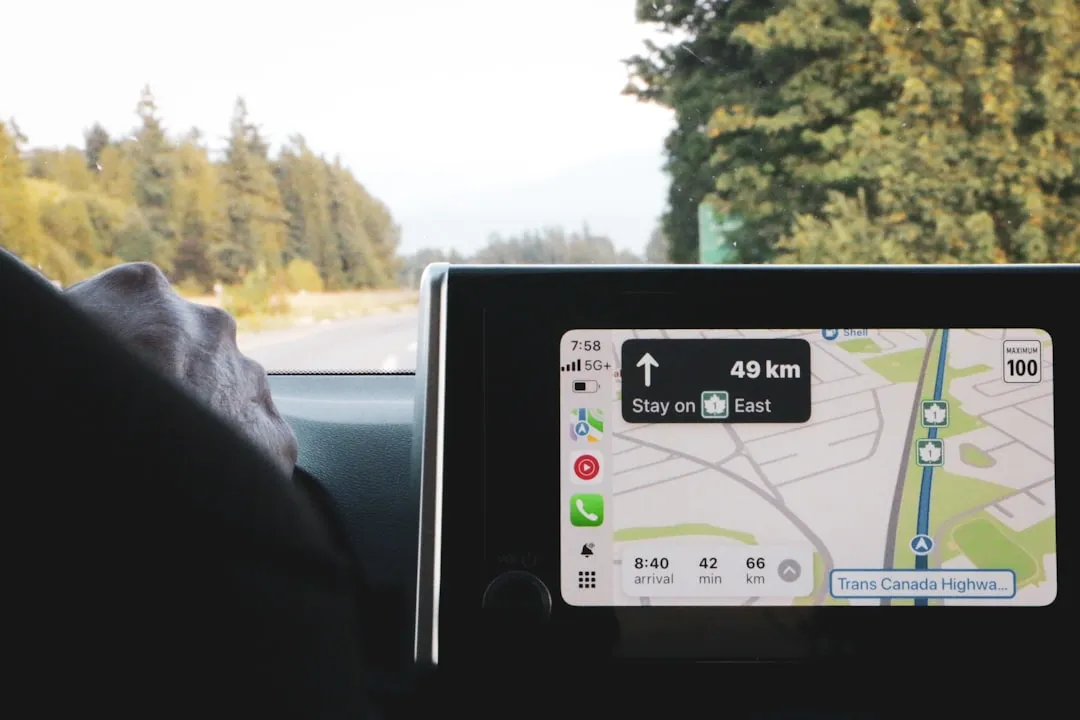
Apple Maps Visited Places in iOS 26: What It Does and How It Works
You search "Blue Bottle Coffee." Four results appear. You've been to one of them. You have no idea which. You tap the wrong one, get directions to a location across town, and spend two minutes figuring out why it looks unfamiliar on the map.
Small problem. Happens constantly. The Apple Maps Visited Places feature in iOS 26 fixes it by placing a "Visited" badge on matching listings inside live search results, before you tap anything. The feature uses on-device intelligence to log places you spend time at automatically, protected by end-to-end encryption with no Apple access, per Apple's June 2025 announcement.
The history log is useful. The search disambiguation is the reason to care.
How Apple Maps Visited Places works in iOS 26
Apple officially describes the feature as detecting places users "visit and spend time in" restaurants, shops, and similar venues saved automatically without any manual input. That framing implies physical presence.
The actual trigger may be broader. A February 2026 walkthrough by Stephen Robles observed that Maps also logged places users only interacted with inside the app, including direction requests, searches, and business card views. Apple has not publicly documented those specific triggers, so treat this as observed beta behavior rather than confirmed behavior of the final release.
What's confirmed by Apple is Maps saves places you "visit and spend time in." However, it does not confirm whether a "Visited" badge always reflects physical presence.
That distinction matters for how much weight to give the signal. A badge on your favorite ramen spot probably means you've eaten there. A badge on a hotel you once looked up directions to may mean nothing more than a tap.
What's clear is where the feature lives. iOS 26 added a dedicated Visited Places section inside the Places drawer, per Robles's walkthrough. The log is organized and browsable: sort by category (Dining, Shopping, Transport, Leisure) or by city, and filter by a specific date, a full month, or a custom date range. That makes it a functional reference tool for recalling past trips, not just a passive record running quietly in the background.
One caveat worth noting: the feature was still labeled beta during early 2026 testing, Robles reported. No independent reporting exists yet on how accurately it handles dense urban environments the situations where two nearly identical cafés sit within half a block of each other. The log is real and functional; whether it reliably distinguishes the right one from its neighbor remains an open question.
Opt-in by design, and useful only after some history builds
Visited Places is opt-in, as 9to5Mac confirmed on March 19, 2026. Nothing is logged until a user deliberately turns it on. Once enabled, the feature runs entirely in the background no manual tagging, no check-ins required.
The opt-in design is a deliberate choice for a feature that, once active, accumulates a detailed record of movements over time. Users who enabled it during the iOS 26 beta in mid-2025 have had several months of history building up, per 9to5Mac's reporting. For anyone enabling it now, the badge in search results will start appearing as the log grows. The feature becomes more useful the longer it runs a sparse log produces sparse disambiguation.
Individual entries can be removed with a single swipe, according to Apple. That granular control matters: the choice isn't between a complete log and nothing.
Where the iOS 26 Apple Maps location history feature pays off
When a place in the log appears in search results, it shows a "Visited" label directly on the listing no cross-referencing, no scrolling, no guesswork, as 9to5Mac noted on March 19, 2026. The disambiguation happens before you tap, which is exactly when it's useful.
The payoff is highest in three specific situations:
Searching for a venue with a common name or multiple nearby locations
Trying to recall a specific restaurant from a past trip while browsing by city
Confirming the right branch before sharing a location with someone else
Think chain coffee shops, hotel restaurants in cities you visit occasionally, or any neighborhood where the same brand runs three locations within walking distance. These are the moments where tapping the wrong result wastes real time. The badge eliminates that friction with a single visual cue.
This builds on a search foundation Apple has reinforced steadily. iOS 18 introduced richer in-search place comparisons photos, ratings, and price level visible without leaving results alongside an area-based "Search here" button for open-ended discovery, per Apple's September 2024 announcement. Visited Places adds a personal layer on top of that foundation. Maps now knows not just what's nearby but what's already familiar to the specific person searching.
Users can also search within their visit history and share places directly from the log with family and friends, Apple noted in June 2025. That extends the feature's utility to trip planning and restaurant recommendations. The core payoff, though, remains the badge in live search results. Everything else is secondary.
The privacy tradeoff and whether to enable it
Location history is sensitive by nature. Apple's stated protections are concrete: end-to-end encryption, no Apple access, and per-entry deletion with a single swipe, as described in Apple's original announcement. The opt-in default means nothing accumulates until a user makes an active choice to start logging.
That said, no independent security analysis of the encryption architecture has been published. Open questions remain around cross-device sync behavior and long-term retention defaults. Apple's protections are credible based on available information; they have not been externally verified. Users making this decision are working from Apple's disclosures alone.
The calculus is straightforward:
If you revisit the same restaurants, shops, or neighborhoods regularly, the badge pays off quickly. Turn it on.
If any form of location logging makes you uncomfortable regardless of the stated safeguards, skip it.
Some users will find the tradeoff obvious in one direction or the other, 9to5Mac acknowledged. Both positions are reasonable. The feature is entirely passive once enabled but also entirely optional, and that default matters.
What comes next for the feature
Visited Places solves a specific, low-stakes but genuinely repetitive problem: not knowing which listing in a set of near-identical results is the one you've actually been to. The badge resolves it in one glance.
For anyone wondering how Apple Maps visited places in iOS 26 helps in practice, the answer is simple: it makes repeat searches less error-prone. The history log and sharing tools are a bonus. Faster search disambiguation is the immediate return, and it starts working as soon as the log has enough entries to be meaningful.
The remaining question isn't whether the concept works. It's whether the detection holds up in genuinely complex environments: dense city blocks, chain restaurants with a dozen nearby locations, places looked up but never physically visited. That's what independent testing over the coming months will determine, as early analysis has flagged. The concept is sound. The edge cases are still being stress-tested.









Comments
Be the first, drop a comment!