



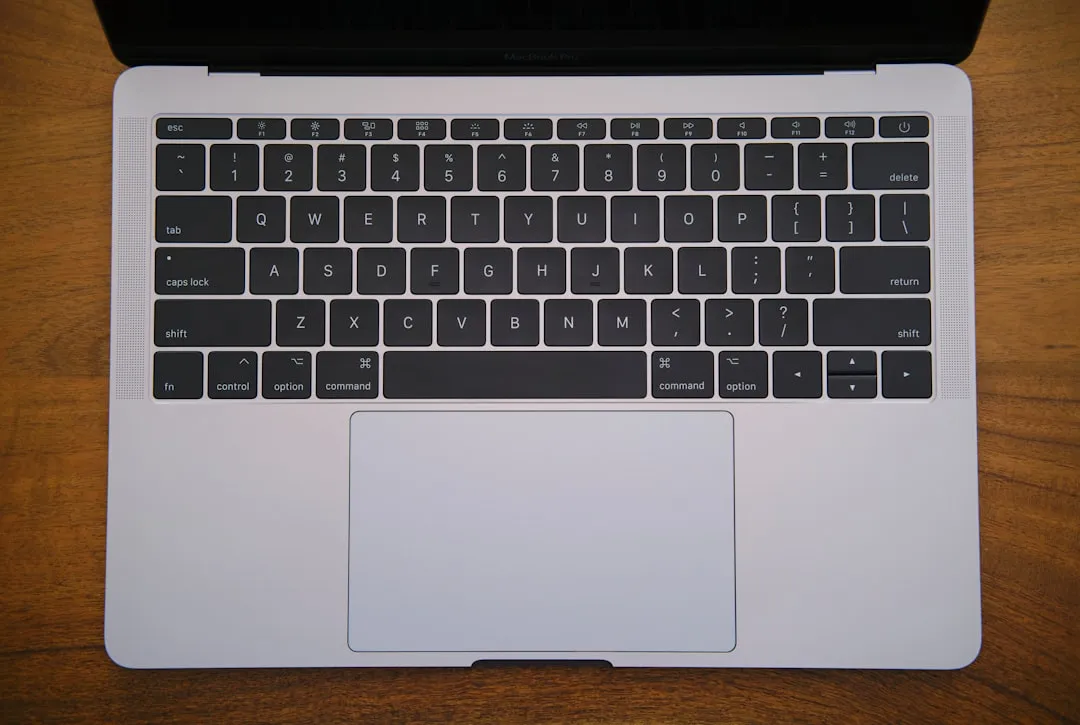
Apple Silicon vs Intel MacBook Reliability: The Real-World Evidence
A UK refurbisher has been quietly tracking something the laptop industry rarely quantifies with precision: how often machines come back broken, controlled for how long they've been in use. The results, published this week, are stark. Age-matched Intel MacBooks return for hardware faults at roughly twice the rate of Apple Silicon models, with Apple Silicon units sold throughout 2025 logging a 0.9% fault return rate against approximately double that figure for Intel machines sold under equivalent conditions, according to AppleInsider, which reported on the Hoxton Macs dataset this week.
The Apple Silicon vs Intel MacBook reliability gap has been discussed anecdotally since the M1 launched in late 2020. What Hoxton Macs contributes is a structured dataset from real service returns, drawing on machines sold across Intel and Apple Silicon eras, with a methodology designed to make the comparison honest rather than flattering.
This piece examines what that data shows, what explains the gap at an architecture level, where the evidence is solid and where it runs thin, and what the findings mean for owners thinking about long-term value.
Are Apple Silicon Macs more reliable than Intel Macs?
Based on Hoxton Macs' age-matched service returns, yes: Apple Silicon MacBooks appear more reliable than Intel MacBooks, with roughly half the hardware fault return rate in this dataset. The methodology is what makes that comparison meaningful rather than obvious.
Rather than comparing a 2016 MacBook Pro's accumulated fault history against a 2021 M1 MacBook Air's full record, AppleInsider says Hoxton compares equivalent early ownership windows. A 2016 machine's first two years are matched against an M1 machine's first two years. That framing transforms the 2-to-1 ratio into a genuine reliability comparison rather than a proxy for Intel hardware simply being older. The finding also aligns with historical service observations from several Apple retail locations during the Intel era, per AppleInsider.
The overall trend in the data reinforces the picture. Fault returns across all Macs in Hoxton's inventory ran at 2.9% in 2023; by 2025, that figure had dropped to 1.1%, per AppleInsider. That decline reflects a growing share of Apple Silicon units in the inventory alongside a maturing base of machines that have moved past their early-life failure window.
The failure categories driving the gap are the ones that matter most. Logic board faults and battery degradation both occur at roughly double the rate on Intel machines when age-matched against Apple Silicon equivalents, according to the same data. These aren't cosmetic or peripheral failures. They are the two fault types most likely to end a laptop's usable life entirely.
The limits of this evidence deserve equal time. Hoxton Macs is a single operator. Sample sizes, fault definitions, and the precise product mix within each architecture are not fully detailed in published reporting. "Return for service" also likely undercounts actual failure incidence: some owners live with degraded batteries, repair elsewhere, or discard machines without returning them to a refurbisher. What the data measures is fault returns under one company's resale conditions, which is meaningful but not identical to field failure rates across the full installed base. That distinction matters when judging how decisive the 2-to-1 ratio is as a general claim. Apple Silicon hardware has also been in the field for roughly five years; the 7-to-10-year comparison that would make this fully definitive hasn't arrived yet.
Why the Apple Silicon MacBook hardware failure rate is lower: power, heat, and parts count
The battery story has a clear mechanical basis. Intel chips drew more power, which meant faster charge cycling and earlier degradation. Apple Silicon's efficiency advantage reduces that wear at every comparable age bracket. At the three-to-four-year mark specifically, an Apple Silicon MacBook arrives at Hoxton Macs' restoration team with roughly half the accumulated charge cycles of an Intel model the same age, according to AppleInsider. Fewer cycles at every stage of ownership translates to longer useful battery life and a later point at which replacement becomes necessary.
Thermals provide a plausible mechanism for the logic board failure gap, though the connection deserves careful framing. Apple Silicon Macs deliver meaningfully better performance per watt and run cooler than their Intel predecessors under most operating conditions, as Eclectic Light detailed in early 2024. Intel hardware, by contrast, operated under greater sustained thermal pressure, which may increase long-run stress on board components. The Hoxton Macs data shows the outcome: higher logic board failure rates on Intel machines. Eclectic Light's thermal analysis suggests the mechanism. The connection is technically coherent and well-supported; it is not, however, directly proven by the fault dataset itself.
The MacBook Air eliminates one failure mode entirely. The Apple Silicon Air has no fan, removing a mechanical component that could fail outright or accumulate dust blockage, both documented issues on Intel Air models, per AppleInsider. Intel-era MacBooks also showed elevated USB-C port failure rates compared to their Apple Silicon successors. These are correlated improvements from a single architectural shift: lower power draw, cooler sustained operation, fewer moving parts. Not a series of isolated fixes.
The ownership paradox: failing less does not mean easier to fix
Before drawing a straight line from lower fault rates to smoother long-term ownership, the repairability picture needs to be on the table. When Apple Silicon MacBooks do need service, the experience can be expensive and procedurally hostile. Apple's official MacBook Pro battery replacement procedure runs to 162 pages, compared to iFixit's own 26-step guide covering the same repair, iFixit reported earlier this year.
The cost structure compounds the friction. Apple does not sell a standalone MacBook Pro replacement battery through its self-repair program. It sells a top-case assembly combining the battery, keyboard, and surrounding components. After an $88 core return credit, that assembly costs $439, roughly 30 to 50 percent of the price of a new MacBook, according to iFixit. On top of the parts cost: specialized tooling, software-based part pairing, and a 14-day window to complete the job. The program nominally supports self-repair; the practical experience discourages most owners from attempting it.
Apple Silicon's reliability advantage is partly realized through avoidance of repairs rather than ease of making them. That is a genuine benefit; it is a different kind than easy repairability, and the distinction is worth understanding before buying, especially for anyone planning to hold the machine for five or more years.
What this means for useful life: hardware reliability meets software support
Fault rates measure how often machines break. A separate question is how long they stay useful before that happens. On this front, the M1 generation has set an early standard. Nearly six years after launch, M1 MacBooks still feel fast in everyday use, handle daily workloads without friction, and deliver battery performance that competes with newer Windows laptops, Computerworld reported earlier this month. That sustained performance, combined with lower fault rates and lower battery wear, is what makes the longevity argument more than a repair-statistics claim.
Software support timelines extend the gap further. Intel Macs are aging out of macOS support this year with the release of macOS 27. Apple only stopped selling the M1 MacBook Air in 2024, which means software support could plausibly continue through 2030 or 2031, per Computerworld. A buyer in 2020 may end up with a full decade of supported use from a single machine, a timeline few Intel-era Mac owners experienced.
When does an Intel Mac still make sense?
The reliability gap is real, but it doesn't make every Intel Mac a bad buy. Context matters.
For most buyers, the calculus is straightforward: Apple Silicon is the better choice unless the Intel price is low enough to absorb probable battery and logic board service costs. A refurbished Intel MacBook priced at $300 less than a comparable Apple Silicon model may still be reasonable, depending on its battery cycle count and port condition. At equivalent prices, there's no reliability argument for Intel.
A few scenarios where Intel still makes rational sense:
- Very light use, very low price. For occasional browsing or word processing, an Intel machine priced under $300 with a healthy battery may serve for years without incident.
- Legacy software or hardware dependencies. Some workflows still require Intel-specific compatibility, particularly with older audio interfaces, specialized enterprise applications, or virtualization setups that predate Apple Silicon support.
- Short ownership horizon. If the plan is to use a machine for two years and sell it, the long-term reliability gap matters less than upfront cost.
For used buyers specifically: check battery cycle count before purchasing any Intel MacBook. A machine with over 600 cycles is likely within a year or two of needing a battery, and on Intel, that wear compounds alongside greater logic board risk. Check USB-C port function. And verify macOS 27 support status before paying a premium for what is now, effectively, end-of-life hardware.
A reliability story still being written, with one clear early finding
The core finding from Hoxton Macs holds. Age-matched return data from one experienced refurbisher shows Intel MacBooks failing at roughly twice the rate of Apple Silicon equivalents, with the gap concentrated in logic board and battery failures, as AppleInsider reported this week. That evidence is specific, technically coherent, and consistent with independent thermal analysis. The full picture will sharpen as Apple Silicon hardware moves further into the 7-to-10-year range, but the early trend is unambiguous.
The mechanisms behind the gap are architecture-level, not incidental. Lower power draw reduces battery cycling at every age bracket. Cooler sustained operation reduces thermal stress on components. Fewer mechanical parts mean fewer failure modes. These follow directly from how Apple Silicon was designed, as Eclectic Light's thermal analysis established in early 2024, which suggests the reliability advantage is likely to persist rather than converge as both platforms age.
The outstanding tension is repairability. Apple Silicon MacBooks appear to last longer and break less often. When they do need service, owners face a repair ecosystem built around whole-assembly replacement, steep costs, and procedural complexity that discourages independent repair, as iFixit documented earlier this year. For hardware that appears capable of lasting a decade, that combination will eventually force a question Apple hasn't yet answered: the machine has earned the longevity argument, but the service ecosystem hasn't caught up.






Comments
Be the first, drop a comment!