



Apple Ultra Rumors: Why Apple Is Building a Tier for Risky Hardware
The Apple Ultra rumors have been building for months, but the coverage keeps missing the more interesting story. Whether the foldable iPhone launches as "iPhone Ultra" or "iPhone Fold" is a secondary question. The more consequential argument, supported by the rumor trail across the past several weeks, is that Apple may be constructing a permanent structural tier above Pro one designed to house first-generation hardware that is too manufacturing-constrained, too expensive, and too demand-uncertain to sit inside the core lineup. Gurman himself noted that Apple "may not use the Ultra branding for all of them" (MacRumors reported in March). What matters is what the tier does, not what Apple prints on the box.
The reported evidence for it is already substantial. Gurman described at least three super-premium devices expected this year: a foldable iPhone around $2,000, a touchscreen OLED MacBook positioned above the existing Pro laptop line, and new AirPods with computer-vision cameras (MacRumors). A separate report this week frames the rollout as coordinated with iPhone and Mac release cycles running through 2027, suggesting planning beyond a one-off launch rather than an improvised response to competitor pressure (AppleInsider).
The useful lens for any Ultra announcement: does this product introduce a form factor too risky to sit inside the core lineup? Does positioning it separately protect the mainstream product if demand disappoints? If yes, the product belongs in this tier regardless of the label. That test runs through the rest of this piece.
Ultra already has a meaning, and Apple has been careful about it
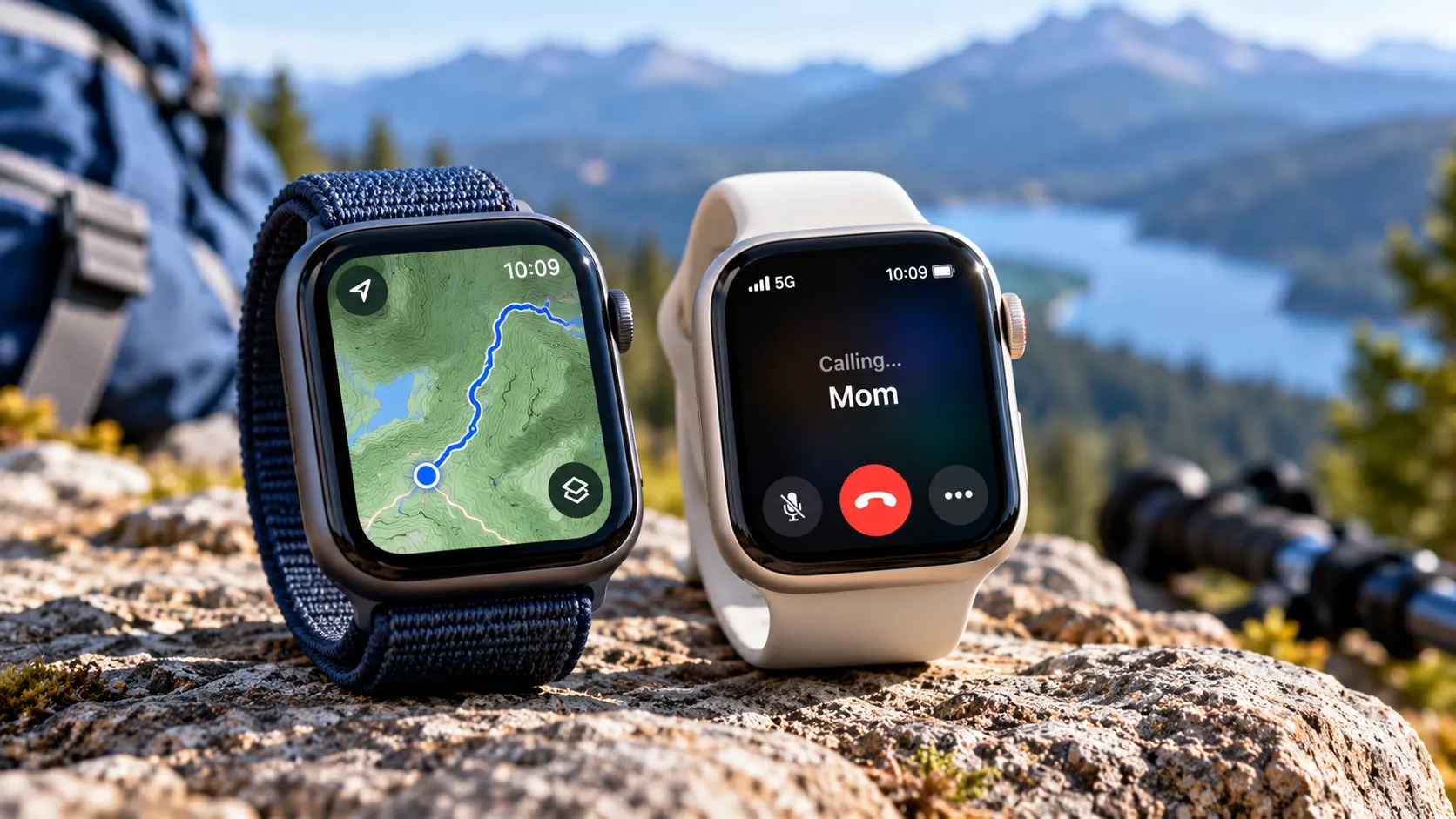
Apple didn't invent this label for the foldable iPhone. The Ultra name already spans Apple Watch Ultra, M-series Ultra chips, and CarPlay Ultra three product categories where it consistently signals a ceiling product with a distinct identity (MacRumors reported in early April). That consistency is a prerequisite for the strategy to work. A label that means "most expensive" only functions as positioning shorthand if customers have already learned to read it that way.
One detail sharpens how selective Apple has been: Gurman noted that when Apple released the Studio Display XDR, its costliest display at the time, it did not call it Ultra (MacRumors). The XDR is expensive, but it isn't a different form factor and doesn't introduce a new category. It's a premium version of an existing product type. That appears to be the line Apple draws. Ultra looks reserved not for the highest price point, but for products that represent a structural departure from what came before.
So what wouldn't qualify? A faster Mac Pro wouldn't. A more expensive MacBook Pro with better specs wouldn't. The Studio Display XDR non-use is the clearest evidence in the rumor record that Ultra functions as a positioning system, not a pricing badge. That distinction matters for reading every future announcement: if a product is simply more expensive, it doesn't belong here. If it introduces a form factor that breaks the existing lineup's internal logic, it does.
Extending that system to iPhone and MacBook is structurally coherent. Apple Silicon naming already climbs base, Pro, Max, and Ultra a progression customers have absorbed. Applying the same ceiling logic to the hardware those chips power is the same architecture, one level up. Weibo leaker Digital Chat Station, who MacRumors describes as having a track record of accurately leaking Apple information, reported in early April that the foldable iPhone is unlikely to carry the speculative "Fold" label and would instead launch as iPhone Ultra. That's consistent with the Apple Ultra branding logic already established.
What Apple Ultra rumors say about the foldable iPhone Ultra and MacBook Ultra
The foldable iPhone and the OLED touchscreen MacBook share two properties that make them difficult to absorb into the mainstream lineup: manufacturing complexity and demand uncertainty. Neither is ready to become the new default. Positioning them separately allows Apple to ship them in limited quantities at elevated prices, with a buyer self-selected by willingness to pay, without staking its core revenue lines on an unproven form factor (AppleInsider).
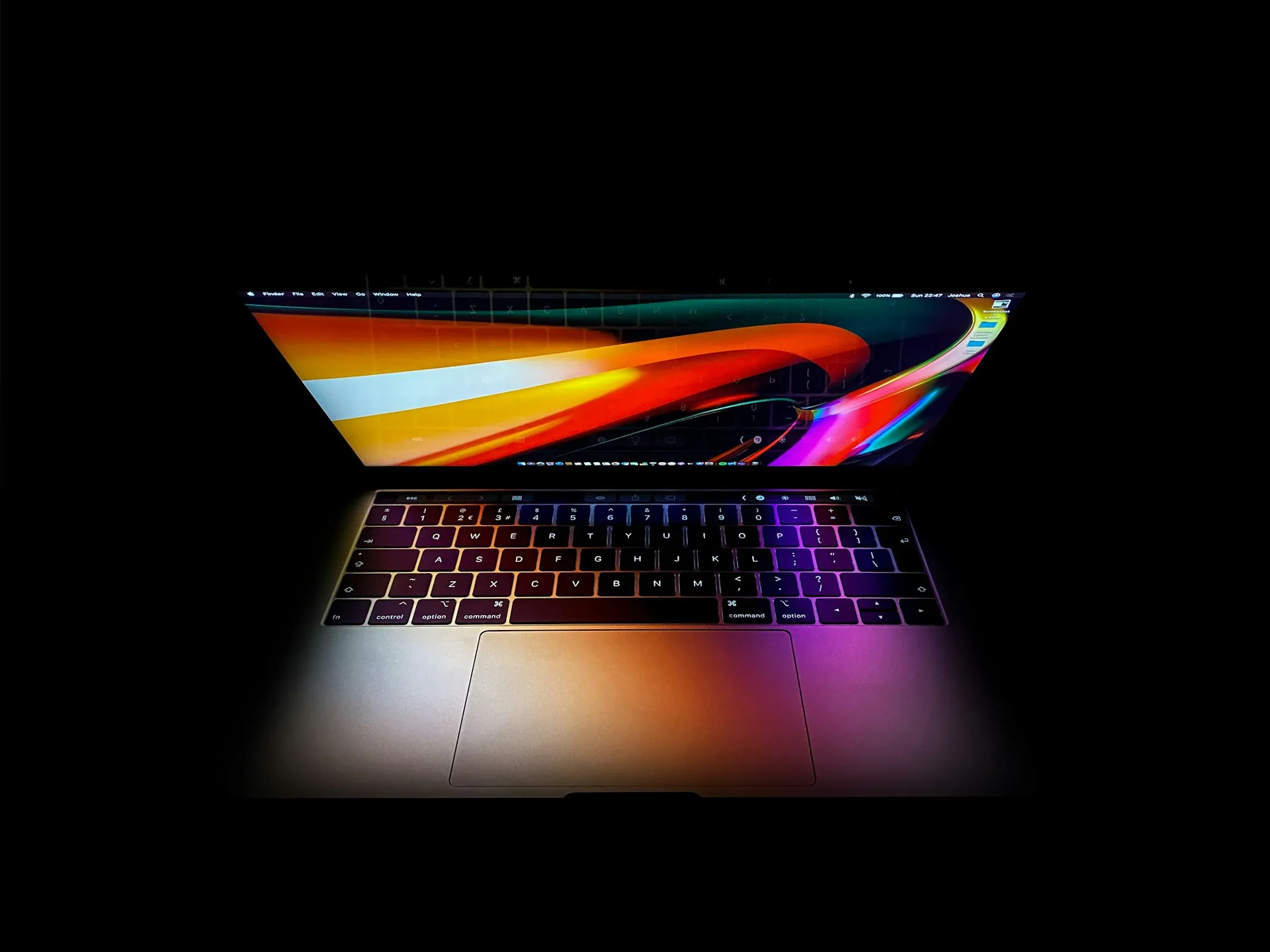
The MacBook Ultra rumors make the cleaner proof point because the numbers are concrete. Rather than replacing the M5 Pro and M5 Max MacBook Pros, the new OLED touchscreen model is expected to sit above them while the existing machines stay on sale (MacRumors). Gurman noted that when Apple introduced OLED displays on the iPhone X in 2017 and on iPad Pro in 2024, prices rose roughly 20% in each case, and he expects a comparable jump for the MacBook's first OLED panel (MacRumors). Absorbing a 20% price increase inside the MacBook Pro line would distort the lineup's internal logic. A new model above the Pro sidesteps the problem entirely. The Pro line stays intact; the new ceiling product captures buyers willing to pay for the display technology. Both survive.
As global smartphone growth has plateaued, Apple has shifted toward increasing revenue per customer through segmentation rather than volume (AppleInsider). Gurman described a deliberate expansion in both directions: the $599 MacBook Neo at the entry level, a new super-premium tier at the top (MacRumors). The tier would help solve a product-management problem and a revenue problem simultaneously. Camera-equipped AirPods fit the same pattern a new computer-vision capability that could justify a price point above AirPods Pro without disrupting it though the sourcing there is thinner than for the iPhone and MacBook, so treat that parallel as analysis rather than established reporting.
The hardest objection: Ultra should mean more, not less
None of this dissolves the most uncomfortable fact in the current rumor set. The foldable iPhone is expected to cost at least $1,999 while reportedly lacking five features present on the iPhone 17 Pro, which starts at $1,099: Face ID, a telephoto camera, MagSafe, the Action Button, and a physical SIM slot (MacRumors). The biometric regression alone is striking. The last flagship iPhone with Touch ID was the iPhone 7 in 2016, and the last iPhone of any kind to feature it was the budget iPhone SE 3 in 2022 (MacRumors). The most expensive iPhone in Apple's reported history would, if these rumors hold, be the first flagship in a decade without Face ID.
The reasonable objection follows directly: if Ultra signals the top of the lineup, consumers will expect it to surpass the Pro on every dimension. A product that charges a premium while delivering fewer features than a cheaper sibling inverts the logic of premium branding.
That objection deserves a direct answer. The missing features appear to be physical constraints imposed by the form factor, not product decisions made in a vacuum. The device is reportedly too thin to accommodate the TrueDepth camera array that Face ID requires (MacRumors). MagSafe and the Action Button appear absent for similar reasons of internal geometry. This is a first-generation product working within the limits of a genuinely new form factor. The missing specs are the cost of the form factor, not evidence that Apple skimped.
The counterargument also makes the tier more necessary, not less. A $2,000 foldable with Touch ID and no telephoto lens, positioned as the iPhone 18 Pro Max, would invite direct comparisons to a phone that costs half as much and does more. Positioned as iPhone Ultra a separate category, a different buyer, a different value proposition the same tradeoffs read as the honest constraints of a first-generation product. Apple Watch Ultra offered Apple a precedent for separating a higher-priced model from the standard line (AppleInsider). The separation is what makes the product defensible, and that's precisely the function this tier appears designed to serve.
What to watch for next
The three products Gurman described in March are each novel enough in form factor, and constrained enough in early manufacturing, to justify sitting outside the mainstream lineup. That convergence in a single product year suggests a deliberate architectural decision, and the reported alignment with iPhone and Mac cycles through 2027 points toward planning beyond a single launch (AppleInsider).
The expansion may not stop with iPhone and MacBook. Gurman expects future candidates to include a foldable iPad and a larger, more powerful iMac additional product lines where new form factors and elevated pricing would strain the existing lineup if forced inside it (MacRumors). Each of those announcements should be read through the same lens: does the separation protect the core lineup, and does the premium price reflect form-factor cost rather than feature completeness?
The thesis here would be falsified by one thing: an Ultra-labeled product that simply replaces a Pro model rather than sitting above it, or one that commands a premium while offering a superior spec sheet across every dimension. Neither of those would need a separate tier. They'd just be expensive. The distinction worth holding onto is between premium and strategic separation. A lot of Apple products are expensive. Ultra-tier products, if this reading is right, are expensive because they're experimental, and separate because Apple can't afford to make them the default yet. When that framing fits the announced product, the right question isn't whether it beats the Pro on a spec sheet. It's whether the form factor justifies the tradeoffs, and whether buyers are willing to accept that framing. That's the question Apple is implicitly putting to the market this fall.







Comments
Be the first, drop a comment!