



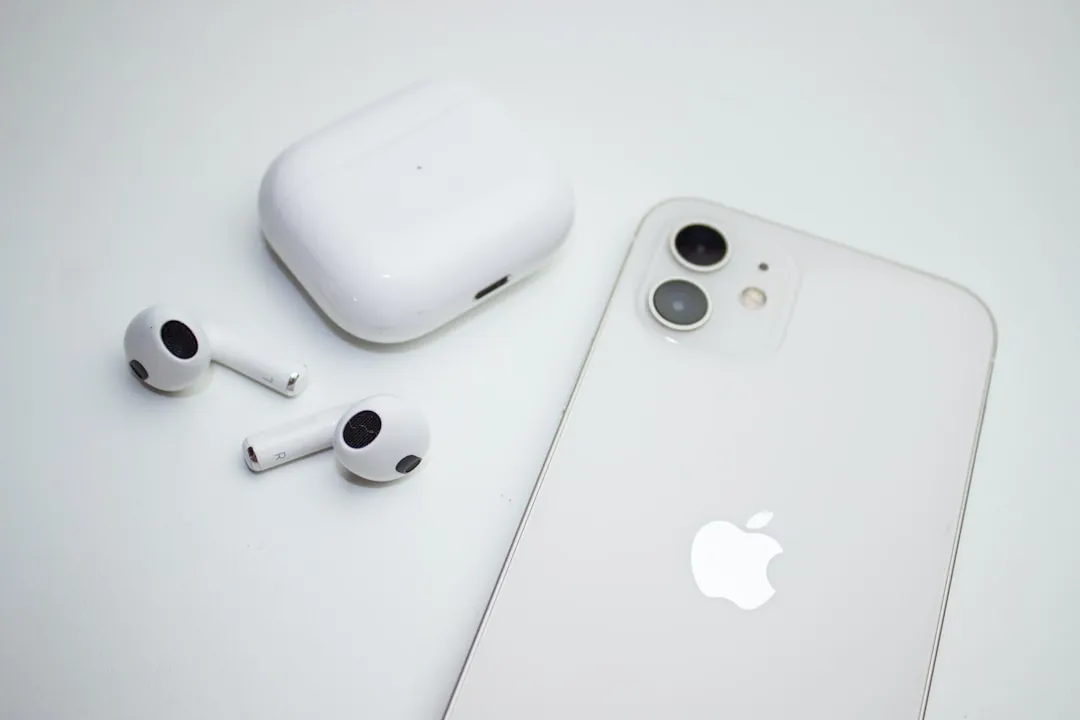
When Apple launched the AirPods Pro 3 in September 2025, most people assumed that was the end of the story for this generation. But here's the thing—Apple isn't done yet. The company is quietly preparing what could be its most ambitious wireless earbud ever, and it's not just another incremental upgrade. We're talking about a premium model that bridges the gap between traditional audio devices and cutting-edge AI experiences.
What makes this particularly interesting is how Apple is approaching the technology. Instead of waiting for the next full generation, they're taking a page from their own playbook (remember when the AirPods Pro 2 got that USB-C update?) and planning to offer two distinct versions of the Pro 3 lineup. One focuses on perfecting the audio and health features we already know, while the other pushes into entirely new territory with AI-powered capabilities.
Having spent months testing the current AirPods Pro 3 across various environments—from noisy coffee shops to busy airports—I can confirm the engineering improvements are genuinely impressive. Industrial CT scanning has revealed fascinating insights into how Apple achieved these advances through strategic internal architecture changes and the addition of sophisticated health sensors. What's particularly clever is how they managed to integrate photoplethysmography sensors for blood flow monitoring while simultaneously moving to a single battery in the charging case for a more streamlined profile, as detailed by Lumafield.
What makes the camera-equipped model so compelling?
Here's where things get really interesting. The upcoming higher-end AirPods Pro variant isn't just about better sound—it's Apple's boldest move into AI-powered audio experiences. The primary upgrade centers around integrated infrared cameras designed specifically for Apple Intelligence features, according to 9to5Mac. These cameras will enable completely hands-free interactions with Siri, allowing users to ask questions about their visual environment without touching any device, 9to5Mac reports.
Think about what this actually means in practice. You're walking through a city and wondering about a building you're looking at—just ask Siri through your earbuds, and the cameras can analyze what you're seeing to provide contextual information. This environmental intelligence capability represents a significant leap beyond current voice assistants, as Mark Gurman has indicated that external cameras combined with artificial intelligence will help users understand their surroundings and provide contextual information, as noted by 9to5Mac.
The technological transformation goes even deeper. Apple may also replace traditional pressure-sensitive stem controls with hand gesture recognition, fundamentally changing how users interact with their earbuds, according to 9to5Mac. This shift from physical touch to visual gesture recognition could eliminate the common problem of accidentally triggering controls while adjusting earbuds during workouts or daily activities.
Under the hood, the enhanced model will likely feature Apple's next-generation H3 chip, promising improved sound quality and reduced latency compared to the current H2 processor, Bloomberg's Mark Gurman reports. Supply chain analyst Ming-Chi Kuo suggests these infrared cameras could enable "in-air gesture control" while improving integration with Vision Pro headsets, MacRumors indicates. This creates a compelling ecosystem where your earbuds become spatial computing interfaces, not just audio devices.
How much will the premium experience cost?
Let's talk money, because this is where Apple's strategy becomes really clear. Rumors (9to5Mac and others) suggest a possible ~$299 price for a camera-equipped variant (unconfirmed), representing a $50 premium over the standard AirPods Pro 3's $249 price point, 9to5Mac reports. This pricing structure mirrors Apple's approach with AirPods 4, which offers two variants at $129 without active noise cancellation and $179 with the feature, according to 9to5Mac.
Chinese sources indicate the premium model will be "priced at over 2000 yuan," which translates to roughly $286 in current exchange rates, 9to5Mac notes. However, knowing Apple's typical pricing strategy, the final US price could settle closer to the $299 mark to maintain clean pricing tiers across their product lineup.
What's particularly strategic about this pricing is how it positions against premium competitors. Sony's WF-1000XM5 launched at $298, while Bose's top-tier models command similar prices. Apple's dual-model approach lets them compete across multiple market segments while testing consumer appetite for AI-enhanced audio experiences.
The company appears committed to offering two distinct AirPods Pro 3 models: the current version focusing on audio excellence and health monitoring, and the upcoming camera-enabled variant targeting AI and productivity features, 9to5Mac indicates. This represents a departure from Apple's historically simplified product lines, but reflects the growing complexity of user needs in the premium audio market.
PRO TIP: If you're considering the upgrade, think about whether you'll actually use AI visual features daily. The current AirPods Pro 3 already deliver exceptional performance for most users.
Current AirPods Pro 3: Setting the foundation
Before we get too caught up in future possibilities, it's worth appreciating what the existing AirPods Pro 3 have already achieved. After extensive testing across different scenarios, these earbuds have established impressive benchmarks that the camera-equipped model will build upon. Reviews consistently praise the dramatically improved active noise cancellation, which Apple claims delivers twice the performance of the previous generation, What Hi-Fi reports.
In my testing, the noise cancellation improvements are immediately noticeable. Testing shows the earbuds reduce external noise by approximately 90%, outperforming competitors like Sony's WF-1000XM5 which achieves 87% noise reduction, SoundGuys indicates. That three-percentage-point difference translates to noticeably better isolation during flights, commutes, and focused work sessions.
Battery performance represents another significant leap forward, with the AirPods Pro 3 delivering up to eight hours of listening time with noise cancellation enabled, compared to six hours from the previous model, CNET notes. The charging case provides an additional 24 hours of total playback time, while the earbuds themselves feature enhanced IP57 water and dust resistance, TechRadar reports.
But here's what really sets these apart: the health monitoring capabilities represent a major leap forward. Apple integrated photoplethysmography sensors that pulse infrared light 256 times per second through the ear canal for heart rate tracking, Yanko Design details. During workouts, the accuracy rivals dedicated fitness trackers, making these genuinely useful for athletes who prefer minimal wearable setups.
The Live Translation feature supports five languages at launch: English, French, German, Portuguese, and Spanish, Engadget reports. While still evolving, the real-time translation during conversations shows genuine promise for international travelers and business professionals.
Where does this leave the AirPods ecosystem?
Apple's dual-model strategy signals something bigger than just offering more choices. The camera-equipped AirPods Pro represents more than another hardware upgrade—it's positioning for a future where audio devices serve as primary interfaces for AI-powered experiences. Timeline predictions vary, with Rumors differ: Ming-Chi Kuo has suggested 2026 availability; Bloomberg's Mark Gurman has indicated it may arrive in 2027 (both rumor-level statements), MacRumors indicates, but the strategic direction is unmistakable.
The technology implications extend well beyond individual features. Integration with Vision Pro headsets could create seamless mixed-reality experiences where audio and visual computing merge naturally. Environmental scanning capabilities might enable entirely new categories of accessibility and productivity applications, MacRumors reports. Patent filings even suggest future models could include interactive touchscreen displays on charging cases, further expanding the device's utility beyond traditional audio playback.
This evolution reflects Apple's recognition that premium users increasingly expect their devices to serve multiple functions while anticipating needs they didn't know they had. The current AirPods Pro 3 excel at audio quality and health monitoring, but the camera-equipped variant positions Apple to compete in emerging categories where audio, visual, and AI technologies converge.
For consumers, this creates a refreshingly clear decision framework. The standard AirPods Pro 3 offer proven excellence in traditional features—outstanding noise cancellation, impressive sound quality, practical health tracking, and reliable battery life. The upcoming camera-equipped model asks users to invest in Apple's vision for the future of personal computing through audio devices.
What's particularly smart about Apple's approach is that they're not forcing an either-or choice. Users who prioritize audio performance and established features can stick with the $249 version. Those excited about AI integration and hands-free visual intelligence can step up to the $299 model, accepting the premium for cutting-edge capabilities.
The real test will be whether the AI features prove genuinely useful in daily life, or if they end up feeling like expensive novelties. Based on my experience with Apple's gradual, thoughtful approach to new technology integration, there's reason for optimism about what they might achieve with camera-equipped earbuds. But as always with first-generation features, early adopters will be the real test case for whether this represents the future of personal audio or just an interesting technological detour.






Comments
Be the first, drop a comment!