



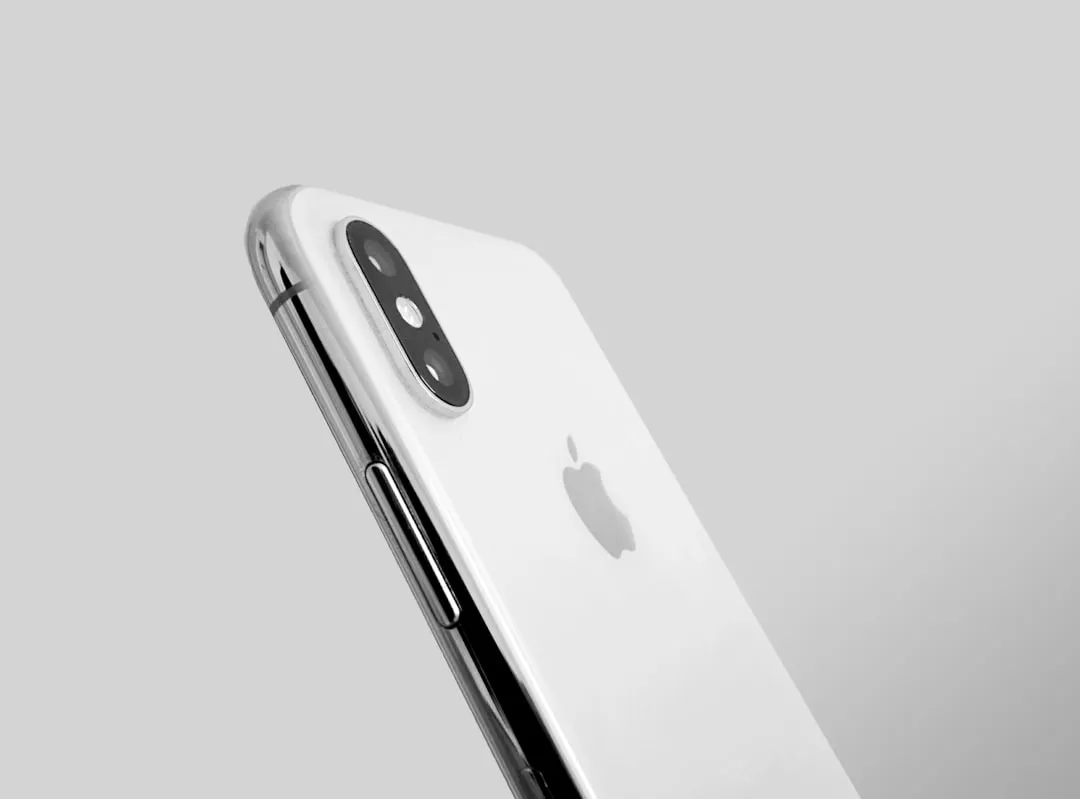
Foldable iPhone Hinge Issues: What's Stalling Apple's 2026 Plans
Apple's foldable iPhone is failing its own durability tests. The hinge, not the display, is the problem and with mass production targeted for July, the engineering calendar is getting tight.
Weibo leaker Instant Digital reported today that the foldable iPhone's hinge is consistently falling short of Apple's quality control standards under prolonged, high-frequency open and close testing. The leaker described it as a problem that "must be resolved with absolute perfection; otherwise, progress will simply have to be stalled," according to MacRumors. The foldable iPhone hinge issues land at a particularly exposed moment: Apple had already been warned by its supply chain in early April that "more issues than expected have emerged during the early test production phase" and that the mass production timeline was at risk, per Nikkei Asia via AppleInsider.
The stakes are high. The device is rumored to be priced between $2,000 and $2,500, which would make it Apple's most expensive iPhone ever, MacRumors reported five months ago. A hinge that fails to meet Apple's own standards would be a damaging debut for a product in that price range.
Why foldable iPhone hinge issues are so hard to solve
Industry reliability standards require foldable hinges to survive between 200,000 and 400,000 fold cycles, roughly 100 open and close operations per day over five to six years of use. Leading manufacturers have already validated their latest devices to the higher end of that range, according to Infinita Lab. Apple is entering a category where the durability baseline is established.
The hinge challenge goes beyond raw wear resistance. A foldable hinge must maintain consistent torque across its full range of motion, hold angular position without drift, resist particulate ingress from everyday use, and preserve waterproofing integrity, all simultaneously, across hundreds of thousands of cycles. Any single failure mode can disqualify a hinge in validation even if everything else is passing, Infinita Lab's testing documentation shows.
The foldable iPhone's physical design adds another layer of difficulty. The device is reportedly just 4.5mm thick when unfolded, an extreme constraint that leaves very little mechanical volume for the hinge structure to absorb stress, MacRumors reported six weeks ago.
Samsung's Galaxy Z Fold 5 offers a useful reference point. Its hinge, the product of multiple device generations, required a three-part assembly with a dual-rail structure for impact diffusion and a dedicated shock-dispersion layer to protect the display during closure, according to a teardown by Android Police in mid-2023. That accumulated engineering represents years of iteration. Apple is building its version in one go, in a thinner chassis, against a fixed production calendar.
Apple's liquid metal bet: the material choice behind the reliability problem
The hinge material itself may be part of what Apple is still working through. Analyst Ming-Chi Kuo reported that Apple plans to use liquid metal, a metallic glass whose disordered atomic structure gives it better resistance to bending and deformation than conventional metals, as the primary hinge material. Dongguan EonTec is the named sole supplier, per MacRumors today.
Apple has been studying and licensing liquid metal since a 2010 deal with Liquidmetal Technologies, more than 15 years of research. But it has only ever used the material in minor components like SIM ejector pins. A foldable hinge would be its first deployment in a critical, load-bearing mechanical part at production scale, MacRumors noted.
The material decision may not even be final yet. Leaker Fixed Focus Digital reported six weeks ago that Apple was still weighing liquid metal against 3D-printed titanium alloy during late-stage validation, with a final call expected during the Production Validation Test phase between July and early August. That would be the latest practical point for such a decision if the device is still intended to ship this year, according to MacRumors.
Two distinct scenarios explain what may be happening. Either liquid metal is failing in Apple's testing, which would account for both the reliability shortfall and the continued consideration of titanium, or the material has effectively been selected and the problem is achieving consistent manufacturing execution at scale. The first would mean Apple is working without a confirmed primary option. The second would mean it has a viable path but hasn't locked production repeatability yet. Either scenario would leave Apple with limited time before the reported July mass-production target.
The crease Apple appears to have solved
While the hinge situation remains unresolved, the display crease story looks considerably better. Instant Digital reported today that while some minor creasing is accepted as physically unavoidable, long-term testing shows the device can maintain a visually crease-free appearance over time, per MacRumors.
Production specs reportedly target a crease depth below 0.15mm and a crease angle under 2.5 degrees. Apple has reportedly pursued those tolerances "regardless of cost," through a dual-layer ultra-thin glass structure and precision-aligned optically clear adhesive. The crease was the defining visual flaw of early foldables, the thing reviewers photographed and consumers remembered. Apple appears close to solving it.
That progress reframes what the hinge problem actually represents. Sources going back to April point to hinge materials and manufacturing execution as the primary remaining obstacle, with pricing negotiations with Apple's assembly partner a secondary concern. The display, which absorbed years of industry anxiety, is no longer what is holding this product up. The structural mechanism underneath is, according to MacRumors.
What the foldable iPhone hinge issues mean for a fall 2026 launch
Three scenarios are now plausible, and they diverge significantly.
The optimistic read: Instant Digital's follow-up post suggested the hinge difficulties are unlikely to shift the overall release window, given the time still available. DigiTimes reported in April that production was running one to two months behind but that a fall launch remained viable, with mass production targeted for July, per MacRumors. Under this scenario, Apple announces alongside the iPhone 18 Pro in September with limited initial availability.
The more cautious read: Even with a September announcement, volume shipments may not normalize until 2027. Apple's production target of seven to eight million units is already less than 10 percent of its total 2026 iPhone plan, AppleInsider reported six weeks ago. Customer availability could slip as late as December, which would strain the distance between an announcement and actual product in stores.
The outer-bound risk: Mizuho Securities flagged the possibility of a full slip to 2027 if hinge finalization drags through summer, a scenario consistent with Nikkei Asia's earlier warnings, as MacRumors noted five months ago. Apple's marketing plan is built around a September-to-October window. A December availability date would create real pressure on that plan, and could pull the announcement itself. AppleInsider reported six weeks ago that if delays stretch far enough, the reveal could be held back entirely.
The July Production Validation Test window is the next hard checkpoint. That phase is when the hinge material decision must be finalized, manufacturing consistency gets stress-tested at scale, and Apple either confirms or abandons a fall shipment cadence.
Kuo's assessment, issued in a December research note, put smooth large-volume shipments no earlier than 2027 even under the then-current optimistic projections. The hinge failures reported today make that timeline look less like a conservative hedge and more like a realistic floor.
The foldable iPhone's story this summer comes down to one month. If mass production starts on schedule in July and the material decision holds, a fall announcement with constrained availability remains plausible. If it doesn't, Apple faces a harder choice: announce a product it cannot yet ship in volume, or hold the reveal until the hardware is actually ready. That decision point is about ten weeks away.








Comments
Be the first, drop a comment!