



iOS 27 Siri Redesign Explained: Capabilities, Access, and AI Choice
Many iPhone users have quietly developed a workaround for Siri's limitations: they open a different app. ChatGPT for questions requiring actual reasoning, Google for search, Claude for anything needing sustained back-and-forth. Apple's reported design choices for the iOS 27 Siri redesign suggest the company is trying to close that gap, not by making one big bet, but by targeting three specific problems at once.
Based on pre-release reporting from MacRumors and 9to5Mac over the past several weeks, the iOS 27 Siri overhaul reportedly has three distinct user-facing goals: make Siri capable enough to handle the questions people currently leave the iPhone to answer; make it accessible from anywhere on the device without interrupting whatever the user is already doing; and give users the freedom to swap in competing AI models rather than forcing them to settle for Apple's assistant alone.
Those three goals map to three concrete shifts in how Siri works. Together, they look more significant than a standard annual AI refresh. Whether they add up to a genuine win depends on execution that hasn't shipped yet. WWDC is June 8.
One caveat to establish early: it remains unclear whether the full Siri overhaul will be available on all iOS 27-compatible devices, or whether it will require Apple Intelligence-capable hardware, iPhone 15 Pro or newer (MacRumors reported seven weeks ago). For users on older hardware, the scope of what's changing may be considerably narrower.
What the iOS 27 Siri redesign is actually trying to fix
Today's Siri fails most predictably on questions that require synthesis: "What's a good approach to this document?", "How does this concept work?", "Help me draft something." Users have learned to route those questions elsewhere. The first goal of iOS 27 is to stop that routing.
The redesigned Siri is reportedly being built as a full conversational AI, with persistent chat threads modeled on iMessage, chat bubbles, a text entry field, a voice toggle, and the ability to upload photos and documents for analysis (9to5Mac, seven weeks ago). A dedicated Siri app is expected on the Home Screen for the first time, showing a searchable grid of prior conversations that users can resume, pin, or save (MacRumors, two weeks ago). Conversation persistence is underrated. The inability to pick up where you left off with Siri has been a practical limitation for years, and fixing it changes how the assistant fits into daily work.
The capability upgrades look substantial on paper. The new Siri is expected to handle "world knowledge" questions, search the web and return visually rich results with bullet points and images, summarize documents, and process multi-step requests in a single command, such as adjusting several smart home settings simultaneously (9to5Mac, seven weeks ago). Responses are reportedly designed as transparent result cards, with small contextual cards surfacing relevant information like calendar appointments, notes, and weather conditions (MacRumors, two weeks ago).
Three capabilities Apple previously promised and then deferred, personal context awareness, onscreen awareness, and cross-app actions, are reportedly still arriving as part of this overhaul (9to5Mac, seven weeks ago). Those delayed features matter more than basic chatbot parity. Context-aware, action-oriented assistance is what separates a useful AI from a slightly smarter search box. An "Extensions" framework, which would let agents from third-party installed apps work directly with Siri across iOS, iPadOS, and macOS, suggests Apple is building toward that standard (MacRumors, seven weeks ago).
The power of all this comes from those capabilities living natively in iOS. Success at WWDC would mean seeing these features demonstrated in working form rather than described in future tense again.
Goal 2: put Siri everywhere without getting in the way
Capability means nothing if users can't reach it without friction. The current Siri interaction model is disruptive enough that many users simply don't engage: invoking Siri today effectively pauses whatever is on screen while you wait for a response, then deposits you back where you were. It's a mode switch, and mode switches have a cost.
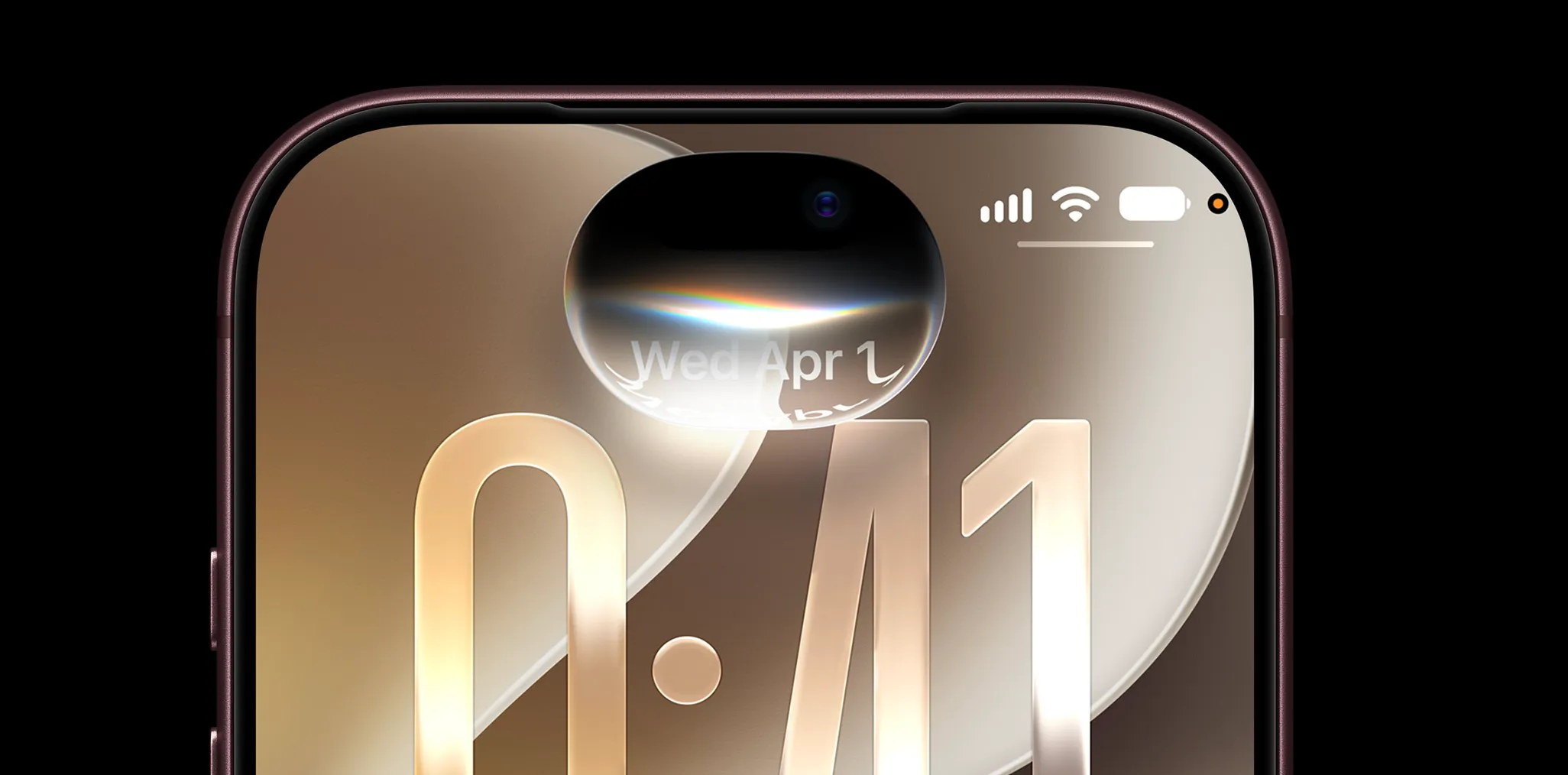
In iOS 27, Siri is reportedly moving into the Dynamic Island. When invoked, a pill-shaped indicator appears; longer tasks continue processing there while the user keeps using the phone normally (9to5Mac, seven weeks ago). The interaction model shifts from "stop what you're doing and wait" to "ask something and continue."
System-wide access is also expanding significantly. Swiping down from the top center of the display in any app is expected to open a "Search or Ask" bar in the Dynamic Island, replacing Spotlight with an interface that reportedly pulls deeper results from within apps (MacRumors, two weeks ago). "Ask Siri" buttons are reportedly coming to app menus, a "Write with Siri" option to the keyboard, and Siri integration to Mail, Messages, Photos, Apple TV, and Xcode (MacRumors, seven weeks ago). New conversations are expected to open with suggested prompts, lowering the barrier for users who aren't sure how to phrase a request.
All of this is reportedly slated for iOS 27, iPadOS 27, and macOS 27 this fall (MacRumors, two weeks ago). That cross-platform scope matters: it's the difference between an app update and a platform-level rethink.
The goal is ubiquity without intrusion. Whether the Dynamic Island implementation actually delivers that in daily use is a different question from whether the design is well-conceived, and one that developer betas will start answering in June.
Goal 3: let users choose the best model, not just Apple's
This is the sharpest break from Apple's historical posture, and the part with the most interesting strategic logic.
Apple reportedly plans to let users set third-party AI services as the default for Apple Intelligence features, including Writing Tools and Image Playground, extending well beyond the existing ChatGPT integration (MacRumors, two weeks ago). Within the new "Search or Ask" interface, users are expected to be able to switch from Siri to ChatGPT, Gemini, or other models on demand. The plan, according to MacRumors two weeks ago, positions Apple's devices as a thorough AI platform, with the iPhone becoming the best surface for accessing AI regardless of which model is doing the work.
The obvious counterargument: if Apple has to import competing models to make Siri useful, that's an admission of failure. The detail that the new Siri chatbot is reportedly set to rely on a custom AI model developed by the Google Gemini team, one described as comparable to Gemini 3 and more capable than Apple's in-house work, does not exactly defuse that reading (MacRumors, seven weeks ago). Apple building its AI ambitions on Google infrastructure is an unusual sentence.
But that framing misreads Apple's actual competitive position. Apple doesn't need to win the AI model race. It needs to own the interface layer.
The default surface for a task captures the user's time, attention, and data regardless of which model runs in the background. Apple controls OS-level context, the kind of personal and onscreen awareness that no third-party app can replicate from the outside. It controls distribution: Siri is pre-installed on devices reaching over a billion active users, requiring no download, no account creation, no subscription to access. And it controls switching costs: a user who builds habits around Siri's system integration stays on Apple hardware even if the underlying model changes. Locking users into an inferior assistant pushes them toward competitors' apps and, eventually, competitors' hardware. Opening the platform keeps them inside the ecosystem while Apple continues building toward capability parity.
What matters practically for users is whether third-party model switching works in a way that's genuinely accessible. Not buried in Settings, not restricted to certain regions, not gated behind paid subscriptions, not limited to specific Apple Intelligence tools while leaving system defaults untouched. None of those implementation details have been confirmed. The strategic logic is clear; the friction points are not.
What to watch at WWDC
The case for this being a genuine improvement is solid at the level of design intention. Three concrete goals, credible reporting behind each, a coherent strategic logic connecting them. That's more than Apple has delivered on the Siri front in several annual cycles.
The key things to watch at WWDC on June 8: whether the previously delayed capabilities, personal context, onscreen awareness, cross-app actions, are demonstrated in working form or described in future tense again (9to5Mac, seven weeks ago); whether third-party model support is available at launch or positioned as "coming later"; and whether Apple clarifies which devices get the full experience, given that the hardware compatibility question remains officially open (MacRumors, seven weeks ago). Developer betas are expected in June, with a broader public release expected in September.
The strongest version of this story isn't that Apple fixed Siri. It's that Apple stopped requiring Siri to do everything alone. A smarter assistant, made accessible without interruption, paired with the freedom to reach for something better when needed. If those three things actually ship in usable form, that changes how a large number of people interact with AI in daily life. Not "changes everything." Just changes enough to matter.






Comments
Be the first, drop a comment!