



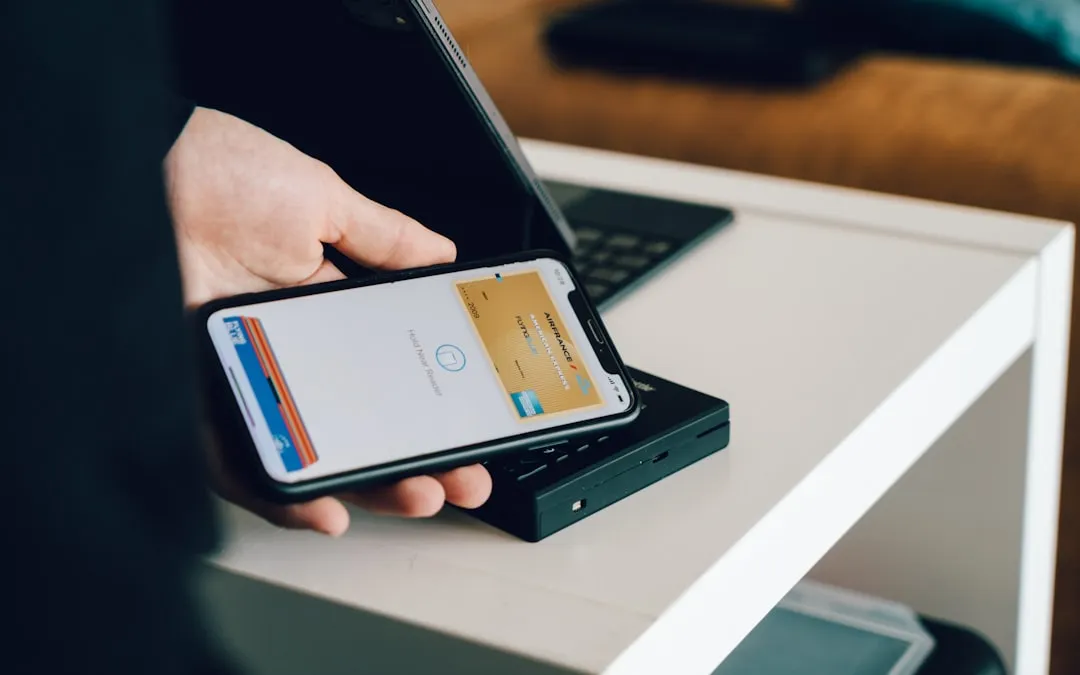
iOS 27 Wallet rumors: Why the fine print on transfers and digital IDs matters
Pre-WWDC reporting describes two features potentially coming to Apple Wallet: a peer-to-peer money transfer tool built directly into the app, and expanded acceptance for digital government IDs. Apple has not confirmed either feature. No second outlet has independently corroborated the technical specifics, and no developer beta containing either feature has surfaced publicly.
The source report did not name someone with direct knowledge of Apple's plans, cite specific code strings, or point to beta evidence. Both features may prove accurate when Apple takes the stage. The sourcing does not support a stronger statement than that, and everything below should be read accordingly.
What the report describes
The money transfer feature, as reported, would let users initiate a peer-to-peer payment without leaving Wallet or switching to a separate app. No detail has emerged on whether transfers would route between Apple accounts only, settle into any bank account, or require the recipient to have an iPhone. Those three facts are not secondary. They determine whether this is a closed-ecosystem convenience feature or something that competes with existing transfer infrastructure.
The government ID claim describes an expansion of Wallet's digital ID support into a wider set of acceptance contexts. The report has not specified whether that expansion targets new states, new acceptance venues, or both. Those are different things.
Why the fine print determines whether either feature matters
Three acceptance contexts exist for a digital government ID, and they are not interchangeable. TSA checkpoint acceptance covers domestic air travel without a physical card. Federal building entry covers a narrower, more specific set of situations. Commercial age verification at bars, pharmacies, and similar venues has the broadest everyday relevance but the least regulatory structure behind it.
An announcement that describes expanded "acceptance" without naming any of these contexts leaves practical utility completely open. A feature that works at TSA is not the same product as one that works at the liquor store down the street.
State enrollment runs in parallel. A digital ID in Wallet is only usable where the relevant state DMV system has activated support for it. Expanding acceptance venues without expanding the state enrollment list does nothing for users in states that aren't currently supported. Both lists need to grow for the feature to reach a substantially larger population, and from a keynote slide, that distinction isn't legible.
The same logic applies to money transfer. A transfer feature that settles only between iPhone users on Apple accounts is structurally different from one that routes to any bank account on any device. The receive side is not a detail: if the recipient needs an iPhone to collect funds, the feature's utility is capped from day one regardless of how clean the sending experience is. The fee structure matters for the same reason. A no-fee transfer competes with one set of use cases. A fee-bearing transfer competes with a much smaller one.
What WWDC would need to confirm
The expected venue for iOS 27's formal introduction is WWDC 2026, based on the same reporting that surfaced these feature claims. Apple has not publicly confirmed that schedule in any statement available from current reporting.
For the government ID feature, the details that turn a vague expansion into a concrete story are specific: which states are newly supported, which agencies or venue categories are named participants, whether TSA acceptance is confirmed. For money transfer, the equivalent facts are which banks are enrolled at launch, whether a fee applies, and whether the receive side requires an iPhone. Those questions separate a platform-level launch from a limited pilot, and none of them has been answered in the current reporting.
What these two features would mean together
If both ship with substantive partner commitments, Wallet moves closer to a surface that handles payment and identity in daily situations where a physical card or a third-party app is currently the default. That is a real shift in how the app functions.
The caveat runs through both features the same way. Where Wallet depends on bank settlement systems, state DMV databases, or federal agency enrollment, Apple is building a front end for existing infrastructure. For users, a well-executed front end can be indistinguishable from owning the underlying system. For the long-term picture, it's still a front end, and the partner depth at launch will tell most of the story.
Independent corroboration from a second outlet would materially change the confidence level on either feature. Until that surfaces, or until a developer seed makes the mechanics concrete, the reported descriptions are the only available account.
When Apple announces iOS 27, the details that matter aren't the feature names. They're the agency names, the state lists, and the bank commitments.










Comments
Be the first, drop a comment!