





iPhone 18 Pro vs iPhone Ultra: Cameras, Battery, and Risk
The iPhone 18 Pro vs iPhone Ultra decision is harder than any previous iPhone upgrade cycle. Not because both options are equally good, but because they're not really competing for the same buyer. For anyone currently on an iPhone 15 Pro or older and planning to spend $1,100 or more on a flagship this fall, that distinction matters more than any spec sheet comparison.
The structural picture, as of late April 2026: the iPhone 18 Pro is a refined slab phone with well-documented camera and efficiency improvements coming in September. The iPhone Ultra is Apple's first foldable, reportedly with a 7.8-inch inner display when open. The cover display size is one of the few points where sources disagree: MacRumors' roundup puts it at around 5.5 inches, while Tom's Guide reports 5.3 inches. Both sources treat "iPhone Ultra" as the working name for the foldable, and Tom's Guide argues the naming signals Apple intends to position it above the Pro tier, though that's an inference from the branding pattern rather than a confirmed Apple strategy.
Timing is also less settled than it appears. The iPhone 18 Pro and Pro Max are expected in September, but the foldable is another matter. MacRumors reports the foldable will follow the Pro launch rather than arrive alongside it, while MacRumors' separate coverage describes it launching together with the Pro models. Both pieces come from the same outlet within the same week, which tells you something about how unsettled this is. This piece assumes both are available this fall, but a delayed Ultra changes the practical calculus considerably.
The central argument: the iPhone 18 Pro and Pro Max make the most compelling case for most buyers in 2026. The Ultra is not a better Pro. It's a different product category with genuine engineering tradeoffs, and it makes sense only if the folding display is the specific thing you're buying. Three factors make that case.
Factor one: cameras the Pro has a richer story, the Ultra a shorter one
What the Pro brings
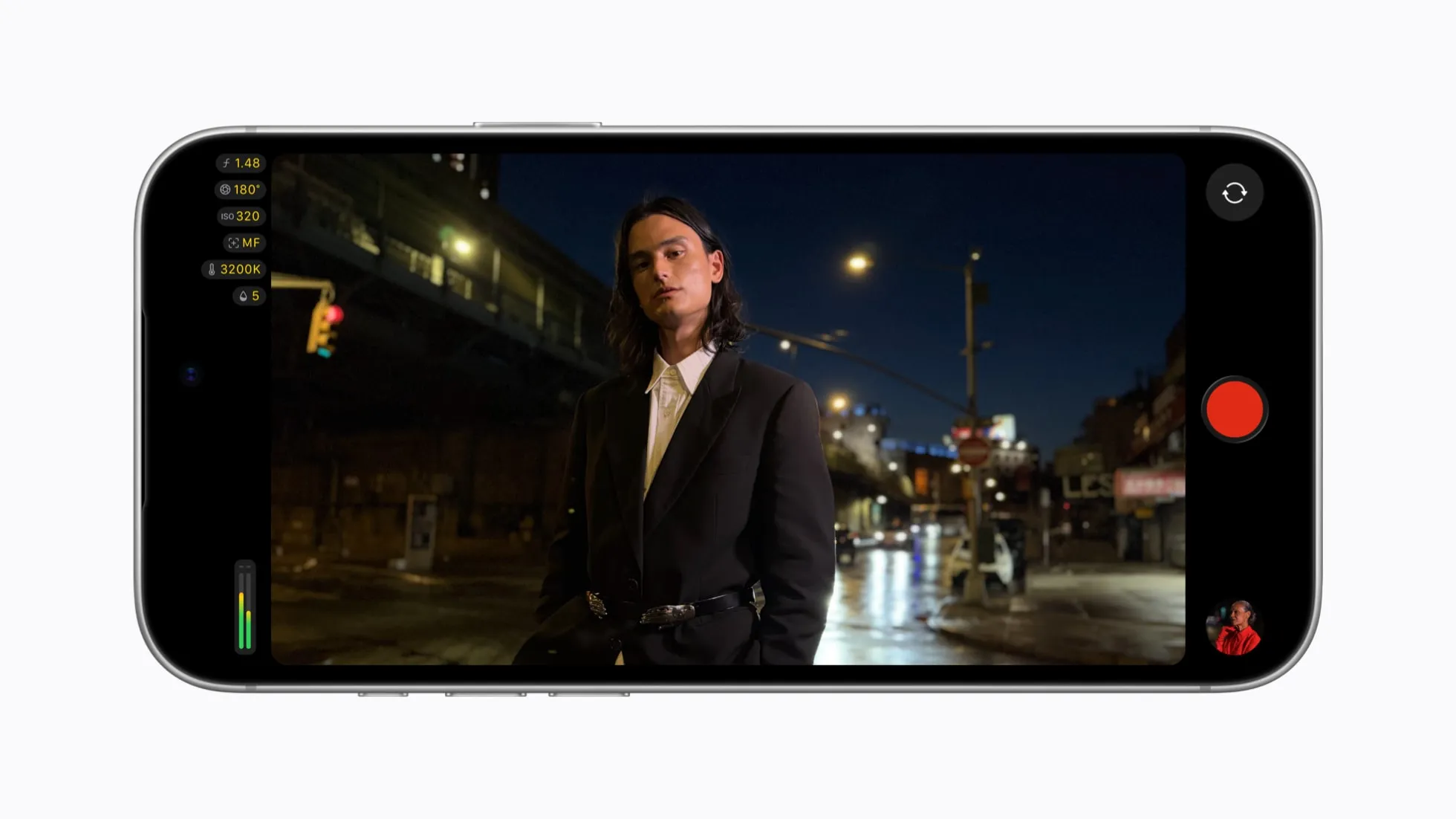
The headline camera addition on the iPhone 18 Pro is variable aperture on the main 48MP lens, a first for any iPhone. From the iPhone 14 Pro through the iPhone 17 Pro, the main camera has used a fixed ƒ/1.78 aperture the lens stays wide open regardless of conditions. Variable aperture lets the camera physically stop down in bright light and open wider in dim conditions, giving photographers real optical control over both exposure and depth of field rather than relying entirely on software to compensate. MacRumors reported last week that this applies to both the 18 Pro and Pro Max. Supply chain analyst Ming-Chi Kuo flagged it in December 2024, and Apple was reportedly in active supplier discussions by October a longer paper trail than most camera rumors carry.
Alongside variable aperture, leaker Digital Chat Station outlined a four-part camera roadmap that includes an eventual upgrade to a 1/1.12-inch main sensor, significantly larger than the 1/1.28-inch sensor in the iPhone 17 Pro, which would deliver meaningful gains in low-light performance, dynamic range, and noise reduction (MacRumors, last week). That sensor upgrade is not confirmed for the 18 Pro specifically the roadmap places it in a later cycle. More firmly in 2026 is a larger-aperture telephoto lens, Pro-exclusive, building on the 48MP / 8x telephoto introduced with the iPhone 17 Pro (9to5Mac, six weeks ago). Better low-light zoom performance, sharper results in less-than-ideal conditions. That lens stays on the Pro side of the lineup.
What the Ultra gives up
Two rear cameras on the Ultra versus three on the Pro models, confirmed by Macworld's dummy-unit reporting last week. No dedicated telephoto unit. Two 48MP sensors is a reasonable foundation for a foldable, but the missing third lens appears to be an engineering consequence of the folding chassis rather than a deliberate feature decision. There's simply less room to work with.
Camera-first buyers should choose the Pro. Nothing in the current rumor set suggests that gap closes before launch.
Factor two: battery and efficiency know which comparison you're actually making
The A20 chip
Both the iPhone 18 Pro line and the iPhone Ultra are expected to run Apple's A20 chip, built on TSMC's first 2nm process. Early estimates project the A20 at up to 15% faster performance and 30% better power efficiency than the A19 (MacRumors roundup). The efficiency figure matters more than the speed number for most users a chip doing 30% more work per milliwatt extends battery life without requiring a larger cell.
There's a chip distinction worth flagging. The MacRumors roundup notes the Pro models will receive the A20 Pro variant, while the Ultra is expected to run the standard A20. The gap between Pro and standard A-series chips has historically been modest, but the Pro variant typically carries additional GPU and Neural Engine headroom. This isn't confirmed across all sources, so treat it as probable rather than settled. If it holds, it's one more column in the Pro line's favor.
The battery comparison that actually matters
The iPhone 18 Pro Max is specifically rumored to carry a 5,100–5,200 mAh battery, combined with LTPO+ display technology that should reduce power draw during typical use (MacRumors, last week). No equivalent capacity figure exists for the standard iPhone 18 Pro. So the relevant battery comparison here is Pro Max vs Ultra, not Pro vs Ultra. The base 18 Pro doesn't have a confirmed endurance upgrade story any stronger than the foldable's.
The Ultra's battery situation is genuinely unknown. No credible source has attached a capacity figure to it. A 7.8-inch inner display draws substantially more power than a 6.9-inch slab, and the hinge mechanism adds weight without adding battery volume. The 11mm closed thickness leaves some internal space for a reasonable cell, but "some space" is not a battery estimate.
Buyers upgrading primarily because of battery life should look at the Pro Max. It's the only phone in this comparison with a well-sourced endurance story.
Factor three: first-generation risk what being early actually costs
What the Ultra is asking buyers to accept
Apple's first foldable carries a specific set of unknowns that no amount of engineering investment fully resolves before a product ships: hinge longevity over years of daily use, crease visibility after extended folding cycles, software optimization for a display that transforms between two sizes, repairability, and durability in drop scenarios the existing case ecosystem hasn't been designed around. Apple is reportedly investing heavily in eliminating the fold crease that has plagued Android foldables (Tom's Guide, this week). Investing heavily in solving a problem is not the same as having solved it.
The structural tradeoffs are already visible in the rumor data: no native MagSafe support (the leaker cited by Macworld says there simply isn't room in the chassis), and an 11mm profile when closed, noticeably thicker than the current Pro line. These appear across multiple independent sources and reflect genuine engineering constraints from the folding design, not oversights.
One note worth keeping in proportion: Tom's Guide argues that not tying the foldable to the iPhone 18 number may let Apple stagger future foldable releases independently of the annual Pro cadence the same pattern seen with the Apple Watch Ultra, now in its third generation. That's useful context for Apple's probable long-term intentions. It doesn't change the first-generation calculus for someone making a purchase decision this fall.
What the Pro's maturity actually buys you
The iPhone 18 Pro is nearly identical in physical footprint to the iPhone 17 Pro just 0.36mm taller and 0.39mm wider, per Macworld's dummy-unit measurements. Not an exciting headline. What it means in practice: MagSafe works as expected, iOS is fully optimized for the display, the triple-camera system has no hardware mysteries, and the accessory ecosystem is mature. No beta-testing required.
The Ultra may be Apple's most ambitious iPhone. It is also Apple's least proven. Those are not the same thing.
What the Ultra actually offers, and who should buy it
The Ultra's genuine case rests on one thing: the 7.8-inch inner display is a fundamentally different use case than any current iPhone. For users who regularly read long documents, work with reference material, edit photos, watch video, or want a portable screen that competes with an iPad mini for specific tasks, that canvas matters in ways no camera upgrade on the Pro line can replicate. The form factor is the feature. If it addresses a real gap in your daily workflow, the tradeoffs become more defensible.
The branding logic is real too, even if its practical implications are still forming. Early Apple Watch Ultra buyers got a device that has matured with each generation the same trajectory is plausible here. But the Watch Ultra didn't ask buyers to accept a reduced camera system or unproven hinge mechanics to get there.
Pricing remains unconfirmed. Whatever the Ultra lands at, it will carry a premium over the Pro's expected $1,099 starting price. TSMC has reportedly told Apple that 2nm chip manufacturing costs at least 50% more than 3nm processes, per the MacRumors roundup, and that pressure applies to the Ultra as much as the Pro. The higher the price, the more specific the justification needs to be.
The decision
Three distinct buyers, three distinct answers.
Camera-first buyers upgrading from an iPhone 15 Pro or older: the iPhone 18 Pro is the call. Variable aperture on the main lens is a structural upgrade that has been building in the supply chain for well over a year, and the larger-aperture telephoto is Pro-exclusive both improvements corroborated across multiple sources (MacRumors, last week; 9to5Mac, six weeks ago). The Ultra's two-camera setup doesn't compete.
Battery-first buyers: the iPhone 18 Pro Max specifically. The 5,100–5,200 mAh cell, LTPO+ display technology, and 2nm chip efficiency gains are well-sourced and stack in the same direction (MacRumors roundup). The Ultra's endurance story doesn't exist yet.
Buyers drawn to the foldable concept: unless the 7.8-inch display solves a specific, real need in your daily workflow, wait for Ultra generation two. The missing MagSafe, the two-camera limit, and the unresolved durability questions are dealbreakers for most buyers. The second-generation Ultra will have answers the first one can't.
The iPhone 18 Pro is the upgrade you can trust. The iPhone Ultra is the one you believe in. Both are legitimate positions they just require different things from the buyer.




Comments
Be the first, drop a comment!