



iPhone Liquid Glass Display Explained: Bezels Hidden, Not Removed
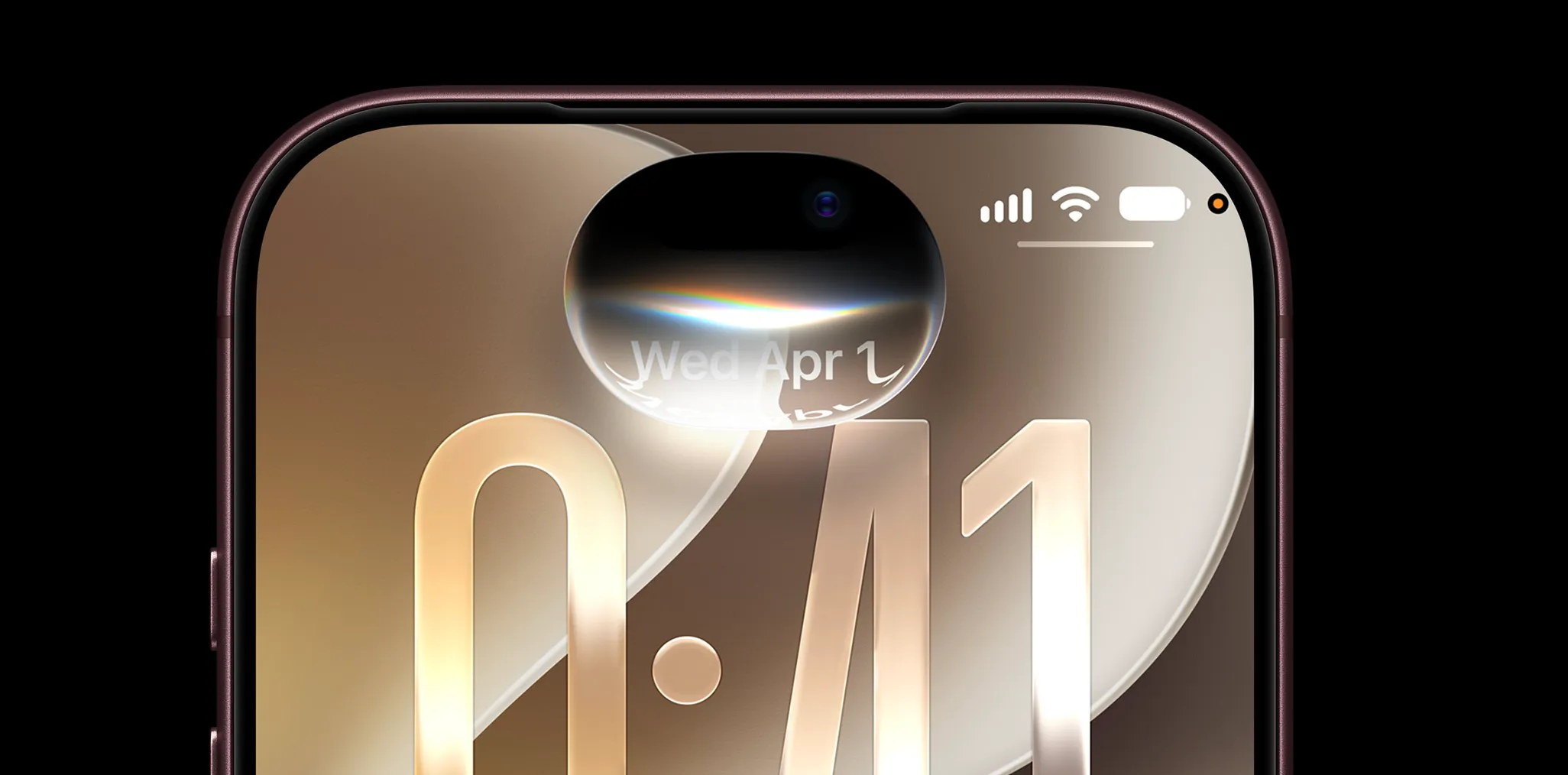
New supply chain reporting published today describes a display technology for the 20th-anniversary iPhone that Apple may call "Liquid Glass Display" and the most important thing to understand about it is what it almost certainly isn't. It isn't a true zero-bezel screen. It isn't Samsung's old waterfall glass. The bezel doesn't disappear; it gets engineered out of your line of sight.
Leaker Ice Universe, posting on X, described the effect as relying on "a sophisticated combination of optical refraction, light guiding structures, and carefully engineered visual illusion," with the border "nearly disappearing from sight" rather than being physically removed, according to MacRumors today. Separately, purported Apple engineers told Macworld earlier this year that "the OLED panel itself remains flat. The curvature is entirely in the cover glass" framing the whole concept as "an optical and industrial design solution, not a display architecture change."
That framing is the story. Apple may be on the verge of delivering a phone that looks genuinely borderless without actually solving the hardest display engineering problems which means it could ship a dramatically more seamless-looking design even if key technical challenges, including under-display sensors, aren't fully resolved in time.
Quick orientation on what's confirmed versus what's still rumored: Apple is pursuing quad-curved cover glass, a micro-curved OLED panel from Samsung, and COE display technology. The "Liquid Glass Display" name and a full under-display sensor package remain unconfirmed. Whether under-display Face ID will be ready in time is the live question.
How the iPhone Liquid Glass Display could make bezels seem to disappear
To understand Apple's reported approach, start with what it's deliberately avoiding. Samsung's curved "waterfall" displays extended active pixels onto the edges of the device a design Apple appears to be sidestepping entirely. TheElec confirmed in late 2024 that Apple's target is a panel modeled on Apple Watch flat in the center, with glass that flows down on all sides and that Apple explicitly does not want the curved edge portions to function as active display area.
What Apple appears to want instead is a layered optical solution with several interlocking components. First, the cover glass curves over all four edges using a quad-curved geometry, wrapping far enough that the underlying display boundary is hidden from normal straight-on viewing angles. Second, shallow micro-curves in the OLED panel itself far less aggressive than older Android waterfall edges help the display track that glass contour rather than ending abruptly beneath it. MacRumors reported four days ago that Apple is asking Samsung for an "equal-depth quad-curved" panel design specifically to keep these curves controlled and uniform. Third, light-guiding structures and a crater-shaped diffusion layer inside the display stack even out brightness across the curved surface, preventing the dimming or hotspots that would expose the transition between active and non-active areas, also per MacRumors.
The result is a bezel that, from the user's standard viewing angle, becomes hard to see. One purported Apple engineer summarized it to Macworld: "It looks radical, but technically it's a very conservative and very Apple solution."
There's a sourcing conflict worth flagging. MacRumors describes a custom micro-curved OLED panel, while Macworld's engineering sources say the OLED stays flat and only the cover glass curves. These accounts may describe different degrees of the same design shallow panel curves combined with more pronounced cover glass curves but the exact implementation isn't confirmed from outside.
The approach also carries a practical durability benefit. Curved cover glass distributes mechanical stress more evenly across the display surface compared to flat glass with sharp edges, which may reduce edge chipping regardless of how the phone looks in renders, according to Macworld.
One complication runs through all of this. Apple is also pursuing COE (Color Filter on Encapsulation) technology from Samsung, which removes the polarizer layer from the display stack entirely. Eliminating that layer makes the panel thinner, passes more light, and reduces power draw but reflections become harder to manage, MacRumors noted four days ago. Apple added a new anti-reflective coating in its latest iPhones and is expected to improve it further for the anniversary model, per MacRumors, but it remains a genuine engineering tradeoff rather than a clean upgrade.
The biggest risk to the design: under-display sensors
The optical concealment approach has one structural advantage: it may allow Apple to ship a phone that looks dramatically more seamless even if under-display sensors aren't fully solved. Whether it actually delivers an uninterrupted front face depends on the variable where sourcing is most divided.
Apple's stated goal for the 2027 model is a completely uninterrupted display with no cutouts Face ID and the front camera both hidden beneath the panel. Display analyst Ross Young has said Apple will not have under-display Face ID ready by 2027, while unnamed leakers maintain the timeline remains viable, according to MacRumors today. Young is among the more reliably sourced display analysts on Apple's pipeline; optimistic leaker timelines for under-display sensors have slipped repeatedly across the industry.
If sensors can't be fully concealed, the reported fallback is under-display Face ID with a small hole-punch cutout for the front camera alone a partial step that would still reduce front-face interruptions significantly, per MacRumors four days ago. The curved glass geometry may actually improve the odds of that fallback working well. Extra glass height in the vertical stack improves light transmission and diffusion for under-display cameras, and without it, contrast loss, flare, and color distortion increase significantly, Macworld reported. The glass isn't just hiding the bezel; it's doing optical work that makes the camera viable.
Both Samsung Display and LG Display were working through fundamental manufacturing challenges as recently as late 2024, including side-view distortion in the optical clear adhesive layer and the problem of routing antennas through curved sections, TheElec confirmed. Apple had originally targeted zero-bezel OLEDs for the 2025 or 2026 window a timeline that has now passed, per TheElec. LG Display is reportedly considering around $300 million in production line modifications to prepare for the anniversary model, MacObserver reported last December, which signals serious commitment to the program but not resolved technology.
What this means for the phone you'd actually use
The gap between bezel-less appearance and bezel-less technology carries direct practical implications that typical rumor coverage tends to flatten.
The optical approach means the design doesn't require active content to extend to the device's physical edge which is precisely what caused usability problems on curved Android phones. No active edge pixels means no accidental inputs from grip, no content distorted at the corners. That avoids the tradeoffs that plagued earlier curved phones. Whether the result is better to use day-to-day is a separate question from whether it looks better in photographs.
Several real unknowns aren't addressed in the current supply chain reporting. How the curved glass interacts with protective cases remains unclear. Glare could be more noticeable at the edges given the COE panel's removal of the polarizer layer. Whether users find the borderless aesthetic disorienting in practice is unknown.
The rumored "Liquid Glass Display" name echoes Apple's software design language, which rolled out across its platforms last year. Writing in September 2025, The Verge argued that the software execution often feels like clutter and works least well on iPhone, where the interface is encountered constantly every app is full-screen, and users are in and out of menus, notifications, and the home screen constantly. A hardware design extending that visual language to the physical form of the device may face the same scrutiny once people are actually using it rather than looking at renders.
The under-display sensor question is the one most worth watching in future supply chain reporting. A fully uninterrupted front surface glass flowing over all four edges, no holes, no cutouts is genuinely novel. A curved glass design with a small camera hole is a meaningful upgrade, but a much more modest story. The gap between those two outcomes is where the anniversary iPhone's design reputation will largely be decided, and the manufacturing evidence suggests it won't close cleanly until well into 2027.





Comments
Be the first, drop a comment!