



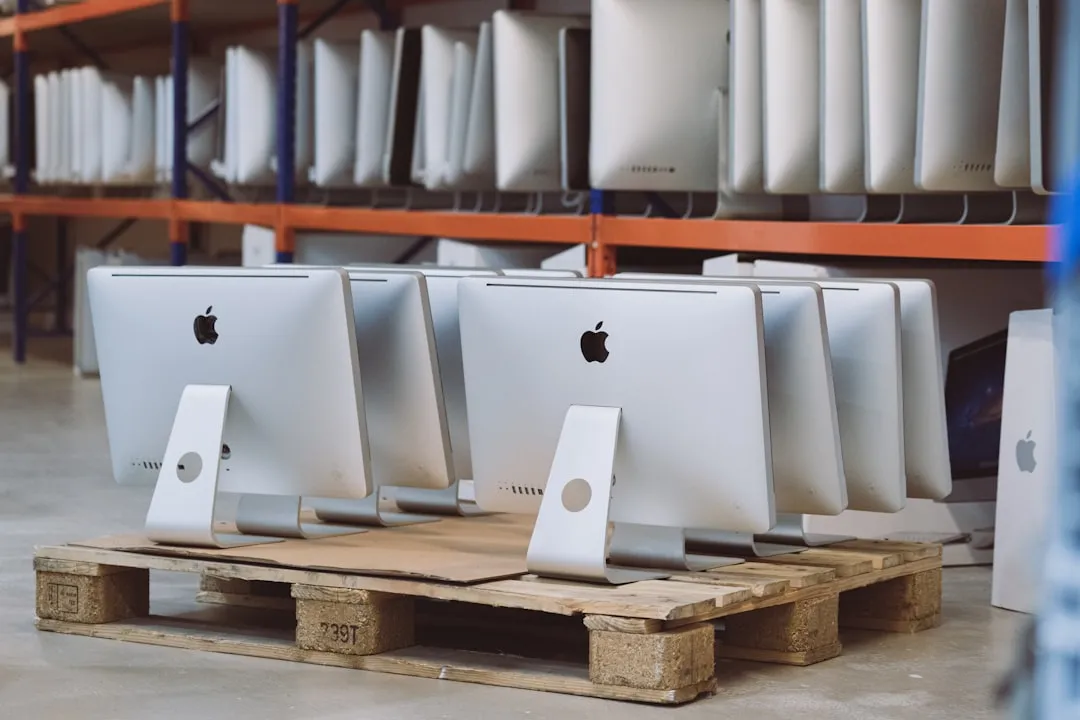
If you've tried to configure a Mac with a specific memory or storage tier lately, especially a Mac mini or Mac Studio, you may have run into something frustrating: the model you want is backordered, ships weeks later, or simply isn't available at the Apple Store nearest you. The component shortage explanation circulates quickly in tech coverage. RAM tight, SSDs scarce, supply chain broken somewhere upstream. The PC market data tells a more complicated story, and understanding it requires separating what the numbers actually show from what they merely suggest.
In a transcript of Apple's Q2 2026 earnings call, CEO Tim Cook said the Mac mini and Mac Studio may take "several months" to reach supply-demand balance, making those desktops the clearest current examples of constrained Mac availability. Newer PC shipment data also complicates the picture: in Gartner's Q1 2026 PC shipment report, the firm said worldwide shipments rose 4% year over year, but warned the increase was "artificially inflated" by inventory buildup ahead of expected memory, DRAM, and NAND flash price hikes.
One caveat before going further. The shipment data underpinning this piece, drawn from Gartner's quarterly PC market analyses, tracks vendor shipment estimates, not live retail availability. It does not measure Apple Store lead times, retailer stock levels, or whether a specific MacBook Pro configuration is sitting on a shelf in Sacramento. What it captures are demand signals and vendor trajectories, and those signals help explain why Mac availability may be tightening in some markets, even though shipment data alone cannot identify which components, configurations, or allocation decisions are responsible.
Global PC shipments totaled 62.9 million units in Q3 2024, down 1.3% year over year, while Apple was among the handful of vendors that actually grew shipments during that same period, Gartner reported. More recent data points in the same direction but with a different caveat. Gartner estimated Q1 2026 worldwide PC shipments at 62.8 million units, up 4% year over year, while IDC estimated Apple's Mac shipments rose about 9% as the overall PC market grew 2.5%. Apple's growth during Q3 2024's contracting market is a plausible contributing factor to localized stock gaps, though shipment data alone cannot confirm that link.
What "Mac shortages" usually means and what it means here
A manufacturing shortage and a channel allocation problem are indistinguishable to someone staring at a "ships in 4 weeks" notice. The causes are different. So are the timelines for resolution. The market data is better at showing demand and inventory behavior than diagnosing the cause; in 2026, the public record points to a mix of strong Mac demand, channel positioning, and component-cost pressure rather than a single simple shortage story.
The PC industry spent two full years working through a historic glut after the pandemic buying surge. Global PC shipments fell 14.8% in 2023, the worst annual decline on record, dropping to 241.8 million units from 284 million the year before. Annual volume fell below 250 million units for the first time since 2006, Gartner reported. By Q4 of that year, quarterly shipments had ticked up 0.3%, ending eight straight quarters of decline — the first positive quarter since the crash.
"The PC market has hit the bottom of its decline after significant adjustment," Gartner analyst Mikako Kitagawa said, per the same report. Channel inventory had normalized in Q4 2023, which Kitagawa described as having been "an issue plaguing the industry for two years."
That normalization arrived alongside a warning. The stable vendor rankings that had held throughout the downturn, all top six vendors maintaining position without notable share gains or losses, would "likely change due to the anticipated component price hike in 2024, as well as geopolitical and economic uncertainties," Gartner noted. The industry had just cleared a two-year overhang and was immediately walking into a new set of cost and geopolitical pressures.
That sequence is worth sitting with. Suppliers and channel partners who spent 2022 and 2023 burning down overstock were not in a position to rebuild buffer inventory aggressively as demand began to recover. A cautious posture was the rational default. When demand in specific segments or regions ran ahead of what a conservative supply chain had planned for, the result would be localized tightness. Not a broken component, but a mismatch between where inventory was positioned and where demand actually appeared.
Why Mac availability tightens when Apple grows in a shrinking market
Apple, Lenovo, HP, and Acer all posted year-over-year shipment growth in Q3 2024. Dell and ASUS declined. The top four vendor rankings held steady, meaning Apple didn't dramatically gain share. It held its position while two major competitors lost ground, Gartner found.
Holding ground in a contracting market is its own kind of pressure on a cautious supply chain, even if it doesn't look like a crisis from the outside. Supply chains plan around expected demand. If Apple's demand trajectory is running above what a cautious channel anticipated, the buffer simply isn't there to absorb it.
Geography sharpens the picture. The U.S. PC market grew 5.6% in Q3 2024, with over 17 million units shipped. Kitagawa pointed to stable macroeconomic conditions, U.S. federal budget cycles reaching fiscal year-end, and pandemic-era education devices hitting replacement age as the primary drivers, per Gartner. Japan recorded its first double-digit year-over-year PC shipment growth in three years during the same quarter. Both are markets where Apple's premium positioning is disproportionately strong relative to its global PC share.
The EMEA region, meanwhile, slipped 1.5% in Q3 2024, its first quarterly decline after three consecutive quarters of growth. Kitagawa attributed the softness partly to elections in France and the U.K. and major sporting events pulling consumer attention away from technology spending, per the same report. Gartner characterized the decline as stabilization rather than the start of a longer retreat, but the contrast with the U.S. and Japan is notable.
China's PC market fell 10% year over year in Q3 2024, pulled down by weakened government and state-enterprise purchasing, Gartner reported. The Asia-Pacific region as a whole declined 8.5% in Q3 2024, with China as the primary drag.
That divergence matters when thinking about how channel inventory gets allocated across regions. Weak demand in large markets can push vendors and channel partners to prioritize places where demand held up, which for Apple are precisely the markets where Mac supply shortages are most likely to be reported. Whether that mechanism is specifically driving Mac availability issues is an inference the data supports. It is not something the data states.
What the numbers establish and what they don't
Gartner had expected the Windows 10 end-of-support cycle to support stronger PC demand into 2025, but by 2026 the cleaner current signal is component-cost and inventory behavior rather than a simple refresh-cycle rebound. "PC demand will see more uptake toward the end of 2024 and more strong growth in 2025, when the PC refresh will be at its peak," Kitagawa said, per Gartner's Q3 2024 analysis. That refresh is primarily a Windows story. But broader demand increases across PC manufacturing put pressure on shared component supply regardless of which platform benefits most directly.
The Gartner data supports a specific set of conclusions. The PC market went through its worst two-year contraction in decades. Inventory normalized only in late 2023. Apple grew shipments while the broader market declined. U.S. and Japan demand recovered faster than China and parts of Europe. Component cost instability and geopolitical uncertainty were flagged as disruptors to supply chain stability heading into 2024.
What the data does not establish: whether any component is in shortage, whether Apple's supply chain is running lean by design or by constraint, or whether strong regional demand is directly causing the stock gaps Mac buyers are encountering. Those are plausible readings of the evidence. They are not the evidence itself.
Apple has now partly closed that gap by acknowledging that Mac mini and Mac Studio may take several months to reach supply-demand balance, but the company has not publicly detailed configuration-level lead times, allocation decisions across product lines, or supplier-level capacity figures. For Mac mini and Mac Studio, constrained supply is now publicly acknowledged; for other Macs, a broad "component shortage" headline still needs lead-time or supplier evidence. The smarter question for buyers and analysts to track is where demand is running hot and whether Apple's shipment trajectory in those regions is outpacing what the channel prepared for. For buyers, the practical takeaway is to check the exact configuration and region rather than relying on broad Mac shipment headlines: a strong shipment quarter can coexist with weeks-long waits for specific memory or storage tiers. That's a more specific question than "are components scarce," and the market data suggests it's also the more useful one.










Comments
Be the first, drop a comment!