



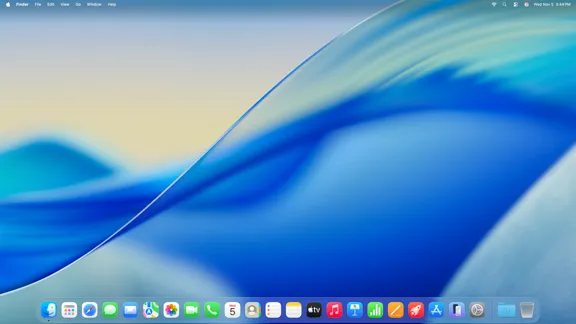
If you're a Studio Display owner running macOS Tahoe, chances are you've noticed something annoying happening since September: your premium display has started flickering. What began as an occasional quirk has turned into a persistent headache that's affecting users across multiple Mac models and display brands, according to 9to5Mac.
Here's what's particularly frustrating—this isn't getting better. Users have been reporting intermittent display problems that range from brief flickers to extended episodes lasting several seconds. Some users are even reporting that recent patches may have actually made things worse, which is exactly the kind of backwards progress that makes you question whether to stay current with OS updates.
Prop tip: If you're experiencing severe flickering, one of the quickest workarounds that worked for some is switching from the default P3-600 nits color profile to P3-D65. It's not ideal since you might sacrifice some color accuracy, but it can make your display usable while we wait for Apple to fix this mess.
What triggers the flickering behavior?
After months of user testing and documentation, the flickering follows some predictable patterns. Transitions between applications with bright white backgrounds tend to cause the most noticeable flickers, particularly when browsing web pages with light color schemes.
The most reliable trigger? Switching from dark content to light content can almost always trigger a flicker on affected systems. This makes the bug incredibly disruptive if you're someone who works with both dark and light applications throughout the day—which, let's be honest, describes most of us.
But here's where things get technically interesting (and frustrating): the issue isn't limited to these predictable scenarios. Any application can potentially cause flickering, and sometimes the behavior appears completely random. This randomness suggests we're dealing with a deeper display handling issue in macOS Tahoe rather than a simple trigger-based bug. You might be quietly working in a single app when your display decides to have a moment, making you question whether your expensive monitor is starting to fail.
Which devices and displays are affected?
This problem extends well beyond Studio Displays, and the hardware spread tells us something important about the root cause. Tech journalist Dan Moren has been documenting his experiences across multiple devices, including his Mac mini and MacBook Air, when connected to a Studio Display.
The issue spans a significant range of Mac hardware: it's been confirmed on various Mac models, including M1 MacBook Air, M4 MacBook Air, and Mac mini systems. This hardware diversity is actually a crucial clue—it suggests we're looking at a fundamental change in how macOS Tahoe handles external display communication rather than a chip-specific or model-specific problem.
What really expands the scope is that users with other external monitor brands have also reported similar problems. When you see identical symptoms across different manufacturers and multiple Mac generations, you're almost certainly dealing with a software compatibility issue at the OS level. It's as if macOS Tahoe introduced some fundamental change in display controller behavior that's causing widespread flickering across different manufacturers.
Troubleshooting attempts and their limited success
The challenge with intermittent bugs like this is determining whether any attempted fix actually works or if the problem just happened to stop temporarily. Dan Moren experimented with disabling several display features, including True Tone, Night Shift, and automatic brightness adjustments—the usual suspects when displays start misbehaving.
Some users found that turning off Night Shift seemed to help reduce the flickering, but here's the problem with that kind of anecdotal evidence: when you're dealing with an intermittent issue, it's nearly impossible to confirm causation versus correlation.
The most concrete breakthrough came from community research. Discussions revealed that the issue specifically occurs when using the Apple Display P3-600 nits profile, while other color profiles don't exhibit the same behavior. This is actually a significant technical clue—it suggests the problem lies in how macOS Tahoe handles the high-brightness P3-600 nits color space, possibly related to the display's HDR capabilities or color gamut management.
Here's your most reliable workaround: switch to the P3-D65 color profile in System Settings > Displays. The trade-off is that you're potentially losing some color accuracy and brightness range, which defeats part of the purpose of owning a premium display, but it beats dealing with constant flickering.
Apple's response and the path forward
This is where the story takes a familiar and frustrating turn: Apple has remained notably silent about this widespread issue affecting its premium display product. No official acknowledgment, no timeline for a fix, no communication about whether they're even investigating the problem.
What makes this silence particularly concerning is that recent updates haven't provided relief. The macOS 26.1 and 26.2 updates have failed to resolve the flickering, and some users report that version 26.2 may have actually worsened the situation. This suggests either Apple isn't prioritizing the fix or the underlying issue is more complex than initially anticipated.
The technical silver lining is that this appears to be software-related rather than a hardware failure. Given that multiple Studio Display owners are experiencing identical symptoms, this could potentially be addressed through updated display firmware rather than requiring costly hardware replacements. However, anyone familiar with Apple's approach knows that display firmware updates tend to arrive on their own mysterious timeline—sometimes bundled with major macOS updates, sometimes pushed quietly months later.
What this means for Studio Display owners
Bottom line: if you're a Studio Display owner, you're currently stuck in a waiting game with no clear resolution timeline. This isn't some obscure edge case either—the problem has been present since the earliest Tahoe beta versions back in June, which means Apple has had months to address it and simply hasn't prioritized a fix.
PRO TIP: If flickering is severely impacting your work, here's your best immediate solution:
Go to System Settings > Displays
Click on your Studio Display
Change the Color Profile from "Apple Display P3-600 nits" to "P3-D65"
Monitor the display for a few days to confirm the flickering stops
The trade-off is that you're losing some color accuracy and brightness range, but for many users, this compromise beats dealing with constant visual disruptions.
The broader lesson here reflects a pattern many Apple users have experienced: major OS updates sometimes introduce problems with expensive hardware that take far longer to resolve than they should. Until Apple addresses this issue directly, Studio Display owners need to weigh the inconvenience of occasional flickering against staying current with macOS updates—or implement the color profile workaround and hope for a proper fix in a future update.
It's not the kind of compromise you expect when investing in premium Apple hardware, but understanding the technical workaround at least gives you control over your display experience while we wait for Apple's engineering team to prioritize this fix.



Comments
Be the first, drop a comment!